
How to Stop Border Collie Slipping on Wet Bathroom Floor

Quick Answer
To stop a Border Collie slipping on a wet bathroom floor, dry the walking area, place a secure non-slip mat where the dog stands and steps out, and towel-dry the paws before walking onto tile. Check nail length and hair growing over the paw pads. Never assume a loose bathroom rug is safe; if slipping occurs on dry floors too, arrange a veterinary assessment.
Make the Bathroom Safe Before Your Dog Enters
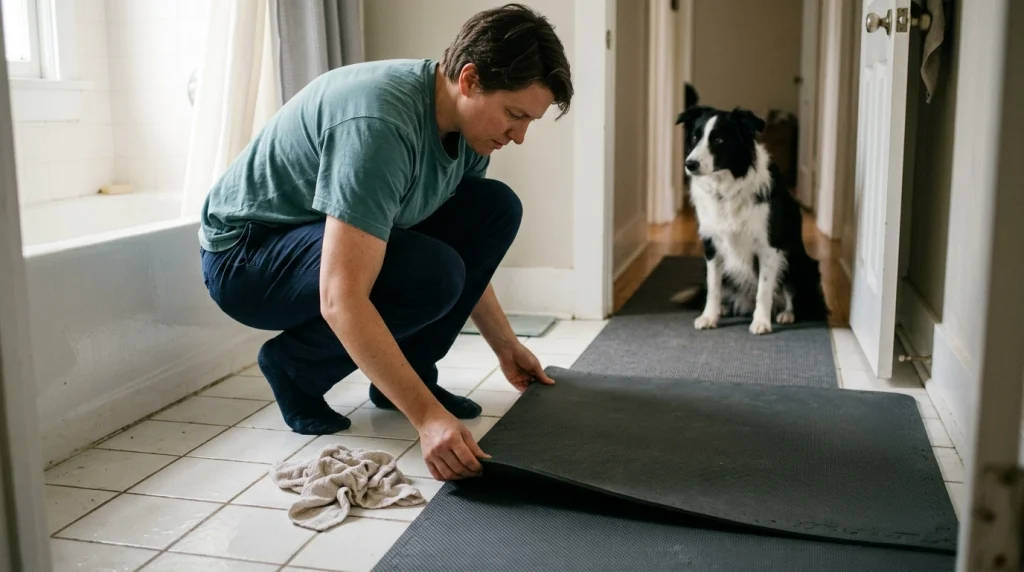
The quickest improvement is to prepare the floor before starting the bath. A Border Collie may shift direction suddenly, especially when water runs or a towel appears. If there is a puddle just outside the tub, even a dog that normally walks confidently can lose traction.
- Dry the floor first. Wipe up water, shampoo residue, and any slippery cleaner left from earlier bathroom use. Follow the cleaning product’s rinse directions and keep your dog away until the surface is safe.
- Create a continuous stable route. Position a bathroom-floor mat at the exit point, with additional secured coverage if the dog must cross polished tile to reach a dry room.
- Test every mat by hand. Press and gently push along the edges. If it skates, rolls, or bunches, do not rely on it while your dog is wet.
- Clear obstacles. Move bottles, laundry baskets, and cords away from the path. Keep towels within reach so you do not leave the dog standing unattended.
- Choose a calm exit. Have the dog walk onto a stable landing surface rather than leap from the tub or rush through the doorway.
These steps reduce two separate problems: water on the walking surface and the abrupt transition from a grippy area to bare tile. Covering only the middle of the bathroom can leave the most dangerous point—the first step out of the tub—unprotected.
Use the Right Non-Slip Surface in the Right Place
An inside-the-tub mat and an outside-the-tub rug solve different problems. The first gives paws traction while standing in water; the second gives a secure landing spot while you dry your Border Collie. They should not automatically be treated as interchangeable.
| Surface | Best use | Critical check |
|---|---|---|
| Textured tub mat | Standing during washing | Attachment suits the tub finish |
| Absorbent non-slip floor mat | Stepping out and towel-drying | Backing holds without folding |
| Rubber-backed runner | Route from bathroom to dry area | Edges lie flat; surface is not slick |
A suction-cup bath mat generally needs a compatible, smooth, clean tub surface. Suction may not hold properly on textured, uneven, or refinished surfaces, so follow the mat manufacturer’s instructions. A plush floor rug without secure backing can become another slipping hazard.
For a closer look at the features that matter, see our guide to non-slip dog bath mats. The compact bathing mat review also illustrates why a mat’s actual standing area matters for a medium-size, active dog.
Dry the Paws Before the First Steps on Tile
A wet Border Collie often carries water well beyond the bath, particularly in the hair around the toes and legs. Simply rubbing the back and sides with a towel does not address the moisture contacting the floor.
- Keep the dog on the secure bath or drying surface while you finish rinsing.
- Blot each paw with an absorbent towel, including the underside and between the toes. Do not scrub irritated skin.
- Pat the legs and underside, then towel-dry the rest of the coat to reduce drips.
- Check the landing mat for pooling water and swap it for a dry one if saturated.
- Guide the dog slowly along the covered route to a comfortable drying area.
Do not chase a startled dog around a wet bathroom with a towel. If your Border Collie dislikes having paws handled, practice short, gentle paw-touch sessions on a dry, stable surface at a different time.
The American Kennel Club’s guidance on cleaning and drying dog paws describes checking for debris and thoroughly drying the feet. A damp underside can remain even when the top of a paw looks dry.
Tip
Put one dry towel beside the bathing space exclusively for paws and another under or beside the dog for coat drying. This helps you avoid rewetting freshly dried feet with a saturated towel.
Check Nails, Paw Hair, and Pad Condition
Even a well-secured mat cannot fully compensate for poor paw contact. Long nails may alter how a dog bears weight, while tufts of hair extending over the pads can reduce contact between the pads and flooring. Border Collies have hair around the feet that deserves regular inspection.
Nails that need attention
Look at your dog’s nails while standing naturally on a stable surface. Nails that are noticeably overgrown or repeatedly catching deserve attention, though nail length cannot be judged by clicking sounds alone. Trim cautiously, avoiding the sensitive quick. Dark nails can be especially hard to assess; a veterinarian or experienced groomer can demonstrate a safe technique.
Hair covering the pads
Look underneath each foot. If long hair covers the gripping surfaces, ask a groomer to tidy only the excess hair around the pads. Avoid cutting into the pad, pulling hair, or shaving large areas of the foot unnecessarily. Do not attempt a close trim if your dog pulls away sharply.
Pads that look sore or damaged
Inspect for cuts, cracks, redness, swelling, or lodged debris. Sore paws need appropriate care, not more pressure to walk across a slick surface. If your dog is licking persistently, limping, or reluctant to place weight on a paw, contact a veterinarian.
VCA Animal Hospitals recommends non-slip home pathways and routine paw care to help dogs that struggle with smooth flooring. The principle matters for both older dogs and younger dogs that are losing confidence after a slip.
Help a Nervous Border Collie Move Without Rushing
One frightening slide can make a dog hesitate at the bathroom doorway, plant the front feet, or scramble when asked to move. Trying to pull the dog across the floor may create more panic and less controlled footing.
Start outside the bathroom on a dry, secure mat. Reward a relaxed stand, then one step forward, and eventually a few steps along the covered route. Let the dog choose to approach. Keep sessions short, and return to an easier step if the dog freezes or backs away.
If your Border Collie races after a bath, prepare a quiet room nearby and avoid calling excitedly from the far side of the hallway. Calm, predictable movement is more useful than speed. The American Kennel Club’s guidance on introducing dogs to different surfaces supports gradual, low-pressure exposure rather than forcing a fearful dog forward.
For the rest of the wash-day routine, keeping the coat manageable also reduces time spent standing in a damp bathroom. See the site’s guide to safer in-tub footing for a practical example of why full standing coverage and a secure attachment both matter.
What If Your Dog Still Slips After These Fixes?
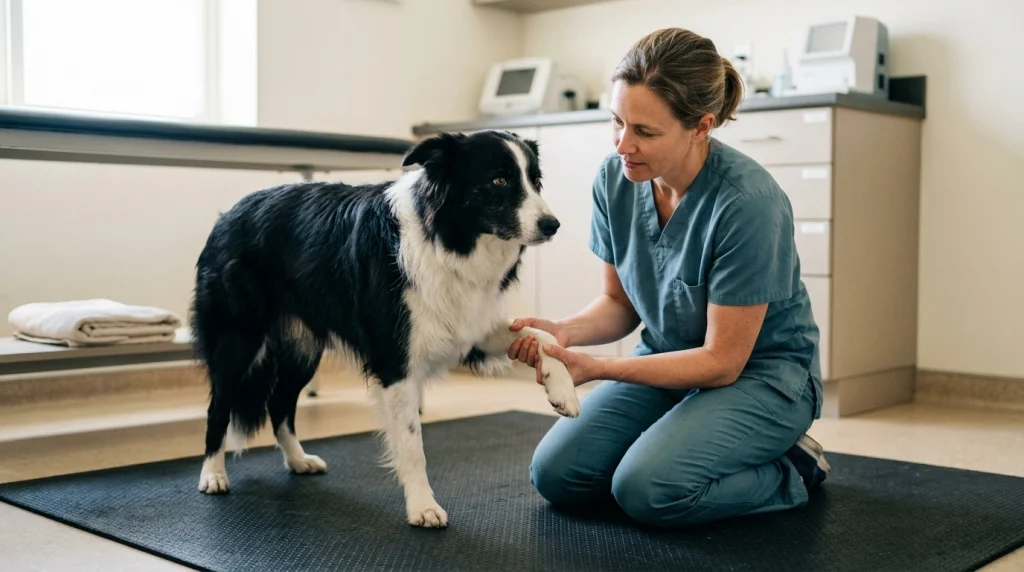
Watch where and when the slipping happens. A dog that loses traction only at the wet tub exit may mainly need better surface coverage and drying. Slipping during normal walking on dry carpet, grass, or a grippy runner raises different concerns.
- Only when water is present: recheck puddles, shampoo residue, drying technique, and mat stability.
- When the mat moves: remove it and use a correctly fitted, secured alternative instead of layering loose rugs.
- When turning or standing up: look for painful or hesitant movement and arrange a veterinary examination if it is new or persistent.
- On dry surfaces as well: ask a veterinarian to assess possible paw injury, joint pain, weakness, or a balance problem.
- After a fall: watch for limping, pain, difficulty standing, or behavior changes and seek veterinary care as appropriate.
Warning
Sudden inability to stand, repeated collapsing, severe pain, or obvious loss of coordination warrants prompt veterinary attention. Do not keep testing a dog’s grip on a slippery floor to work out what is wrong.
Arthritis and other mobility conditions may be more noticeable on slick floors, but a slippery bathroom alone does not diagnose them. A vet can assess gait, paw discomfort, joints, and neurological signs if concerns persist.
Make the Safer Setup Part of Every Bath
A practical system needs to work after repeated washing, not only the first time you place a new mat. Before each bath, inspect the mat’s underside for trapped hair or soap film and check that it still grips. Afterward, rinse or wash it according to its care instructions and allow it and the underlying floor to dry thoroughly.
Store the mat so moisture does not stay trapped beneath it. Replace it when the backing cracks, edges curl, or its grip becomes unreliable. If multiple people bathe your dog, show everyone the same exit route and paw-drying routine.
For an energetic Border Collie, consistency matters: same entry point, same standing surface, towel within reach, and a short route to a dry room. That is more dependable than trying to control a fast-moving dog after water has already spread across the tiles.
Relevant Product
Non-Slip Bathroom Floor Mat
A washable, absorbent mat with secure backing can create a safer step-out and paw-drying zone. Choose one that fits your floor and remains stable during a hand-tested grip check; it is not a substitute for an in-tub mat.
As an Amazon Associate, we earn from qualifying purchases.
Frequently Asked Questions
Can I use an ordinary bath towel instead of a non-slip mat?
A towel can absorb water but may slide or bunch under a dog’s feet. Use it for drying, not as the main traction surface unless it is secured in a way that genuinely prevents movement.
Are suction-cup mats safe on every bathroom floor?
No. Suction cups are designed for compatible smooth surfaces and may fail on textured or uneven finishes. Follow the manufacturer’s surface instructions and check the hold before every use.
Will dog socks stop slipping after a bath?
Some fitted traction socks may help on dry indoor floors, but wet socks can become uncomfortable or lose effectiveness. For bath exits, secure mats and careful paw drying are the more straightforward first steps.
Should I put paw balm on before bathing?
Do not apply balm solely to create traction unless a veterinarian recommends a specific suitable product. Oily products may leave the paws or tiles slick; products for cracked pads serve a different purpose.
Why does my Border Collie slip more while turning?
Turning changes the direction of force through each paw, so wet paws or a shifting mat may lose grip. If turning is also difficult on dry, grippy surfaces, seek a veterinary assessment rather than assuming the floor is the only issue.
Should I stop bathing my dog if it is frightened of the bathroom?
Pause the stressful attempt and rebuild confidence with short, rewarded visits to a dry, secure bathroom. For urgent hygiene needs or persistent fear, ask a veterinarian or qualified force-free groomer for help with a safe plan.
Final Thoughts
The best way to prevent bathroom slips is to manage the entire route: a secure standing surface, a stable place to step out, dry paws, and a clear path to the next room. Maintain nails and paw hair, replace mats that move, and take new or unexplained balance problems seriously. A calmer, more predictable bath becomes possible when your Border Collie can trust the ground under every paw.
