
What Is Too Cold for a Border Collie?

Quick Answer
There is no single temperature that is too cold for every Border Collie. A healthy adult Border Collie with a dry, weather-resistant double coat often handles cool conditions well, but temperatures below 32°F (0°C) deserve closer monitoring, while conditions around 20°F (-7°C) or lower can become dangerous with prolonged exposure, especially in wind or wet weather; general veterinary cold-weather guidance recommends extra caution at these temperatures.
When should you bring your Border Collie inside?
- Below freezing: Watch your dog more closely and reduce long periods of standing or resting outside.
- Around 20°F: Keep outdoor sessions purposeful and supervise closely for cold-related discomfort.
- Wind or wet fur: Treat the conditions as colder because heat can be lost much faster.
- Shivering or slowing: Go inside as soon as your dog starts showing discomfort.
- Puppies and seniors: Use more conservative limits because temperature regulation may be poorer.
The simplest rule
- Judge the temperature together with wind, moisture, activity, age, health, coat condition, and your individual dog’s behavior.
Border Collies often seem happiest when cold weather finally arrives. Their energy, working background, and thick double coat can make a crisp winter walk look effortless.
That doesn’t mean they’re immune to cold. This guide explains the temperatures I watch most closely, the warning signs that matter, and how I adjust winter exercise without unnecessarily keeping an active Border Collie indoors.
In This Guide
- What temperature is too cold for a Border Collie?
- Why can Border Collies handle cold better than many dogs?
- What makes cold weather more dangerous?
- How long can a Border Collie stay outside in cold weather?
- What are the signs a Border Collie is too cold?
- How should you protect a Border Collie in winter?
- Do puppies, seniors, or sick Border Collies need extra protection?
- Frequently asked questions
- Final takeaway
What Temperature Is Too Cold for a Border Collie?
For a healthy adult Border Collie, I start paying closer attention once temperatures approach freezing. Around 20°F (-7°C) and below, I treat prolonged outdoor exposure as a genuine cold-weather risk rather than normal winter exercise.
Definition: “Too cold” for a Border Collie means conditions where the dog can no longer maintain normal comfort and body temperature safely during the planned amount of outdoor exposure.
These numbers aren’t hard breed-specific limits. A dry adult running through snow can tolerate conditions differently from a wet dog standing still in strong wind.
| Air Temperature | Practical Risk Level | What I Would Do |
|---|---|---|
| Above 45°F / 7°C | Usually low for a healthy, dry adult | Normal supervised activity while watching the individual dog |
| 32–45°F / 0–7°C | Cool but often manageable | Watch puppies, seniors, thin dogs, and wet dogs more closely |
| 20–32°F / -7–0°C | Increasing cold-weather risk | Shorten inactive outdoor time and check paws, ears, behavior, and coat |
| Below 20°F / -7°C | Potentially dangerous with extended exposure | Keep outings purposeful, supervise continuously, and return indoors at discomfort |
The table is a monitoring guide, not a stopwatch. Wind chill, moisture, sunshine, snow depth, and how hard your dog is working can change the practical risk quickly.
I’ve always found behavior more useful than chasing a perfect thermometer number. A Border Collie that suddenly stops exploring and starts lifting its paws is giving you more useful information than the temperature alone.
Why Can Border Collies Handle Cold Better Than Many Dogs?
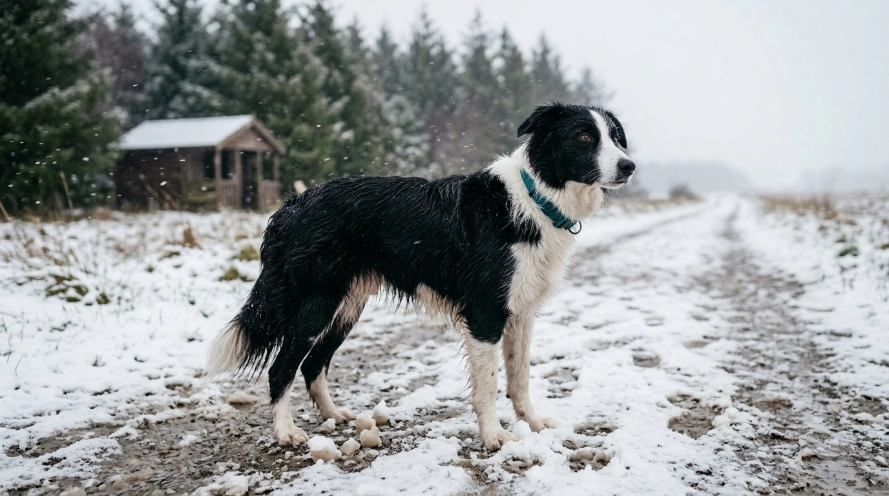
Border Collies have a double coat, which means they carry a protective outer layer plus a softer insulating undercoat. That combination helps protect the skin and hold warm air close to the body.
The American Kennel Club’s Border Collie guidance describes both rough- and smooth-coated Border Collies as having dense, weather-resistant double coats. The smooth variety may look less fluffy, but it is still double-coated.
What does the undercoat actually do?
The softer undercoat traps insulating air near the body. Guard hairs on the outside help protect that undercoat from dirt and moisture.
- Rough-coated Border Collies: Have longer visible feathering, especially around the neck, chest, legs, and tail.
- Smooth-coated Border Collies: Have shorter outer hair but still retain an insulating undercoat.
- Individual dogs: Can differ considerably in coat density, body condition, acclimation, and cold tolerance.
The breed’s working heritage also matters. Border Collies developed as active herding dogs capable of working outdoors in difficult weather, rather than as dogs designed to spend the day resting in a heated room.
Activity generates body heat, though. A dog chasing a ball for ten minutes may appear comfortable while the same dog becomes chilled when asked to wait quietly beside you.
Does a thick coat make a Border Collie cold-proof?
No. An insulating coat increases tolerance, but it doesn’t prevent hypothermia or frostbite under every condition.
A wet, matted, shaved, elderly, underweight, or unwell Border Collie may lose heat much faster. Even a healthy working dog needs a warm, dry place after prolonged winter activity.
What Makes Cold Weather More Dangerous?
Air temperature is only one part of cold exposure. I pay just as much attention to wind and moisture because both can turn a seemingly manageable winter day into a poor situation.
Wind chill
Strong wind removes the warm layer of air around the body more quickly. Exposed areas such as ears, paws, nose, and tail also become more vulnerable.
Rain, wet snow, and soaked fur
Wet conditions can reduce the practical protection provided by the coat. Cold rain around freezing can sometimes worry me more than dry snow at a lower temperature.
The ASPCA’s cold-weather safety guidance recommends drying pets after winter outings and checking their feet for snow, ice, salt, and irritation.
Low activity
A running Border Collie produces considerable body heat. A dog waiting in a vehicle, kennel, yard, or beside a handler isn’t generating the same warmth.
- Running and training: May temporarily increase comfort through movement and heat production.
- Standing still: Allows the body to cool faster.
- Deep snow: Increases effort while keeping the legs and underside in constant contact with cold moisture.
- Night conditions: Remove warming sunlight and may bring falling temperatures.
Coat condition
A clean, dry, well-maintained coat insulates better than one packed with mats or soaked to the skin. I wouldn’t shave a healthy Border Collie’s double coat simply because winter grooming feels easier.
Regular brushing removes loose hair and helps prevent compacted areas. Check feathering, belly fur, and hair between the toes after snowy outings.
How Long Can a Border Collie Stay Outside in Cold Weather?
There isn’t a universally safe number of minutes. Outdoor time should become shorter as temperature falls, wind rises, fur becomes wet, or the dog’s behavior changes.
I prefer several active, supervised outings over leaving a Border Collie outside for hours simply because the breed has a thick coat. Mental training indoors can replace some exercise when winter conditions become severe.
Use the activity as your guide
- Potty break: Usually brief enough to manage safely unless conditions are extreme.
- Active walk: Monitor paws, pace, posture, and willingness to continue.
- Fetch or training: Add warm-up breaks because excitement can hide early discomfort.
- Yard time: Avoid relying on the dog to decide when to come inside.
- Resting outdoors: Use much more caution because heat production drops when movement stops.
Below about 20°F (-7°C), I would make every outing purposeful and closely supervised. VCA’s winter guidance also recommends taking strong precautions at freezing temperatures and treating temperatures around 20°F or below with particular care.
Acclimation matters too. A Border Collie accustomed to a northern winter may respond differently from one that recently moved from a warm climate.
Watch the dog, not only the clock
If your Border Collie starts lifting paws after eight minutes, don’t stay outside because you planned a 30-minute walk. The dog’s behavior has already answered the question.
Likewise, an energetic dog wanting to keep chasing a toy isn’t proof that exposure remains safe. High-drive Border Collies can stay focused on a game even while conditions worsen.
What Are the Signs a Border Collie Is Too Cold?
Early cold discomfort often appears as a change in normal behavior. Bring your Border Collie somewhere warm and dry when you notice signs that the cold is becoming difficult to tolerate.
- Shivering or trembling: A common early warning of cold stress.
- Repeated paw lifting: The ground, ice, or packed snow may be painfully cold.
- Hunched posture: Your dog may tuck the body or tail to conserve warmth.
- Whining or anxiety: Some dogs become restless when they want shelter.
- Slowing down: A normally energetic dog may become reluctant to walk.
- Seeking shelter: Moving toward buildings, vehicles, doors, or protected areas is meaningful.
When does cold exposure become an emergency?
Hypothermia is more serious than simply feeling chilly. Weakness, stiffness, confusion, poor coordination, unusual lethargy, slowed breathing, collapse, or reduced responsiveness require urgent attention.
Shivering isn’t a perfect safety test. It can occur early, while severely hypothermic dogs may eventually stop shivering.
Frostbite often affects poorly insulated areas such as paws, ear tips, and the tail. The VCA frostbite guidance advises seeking veterinary care when frostbite is suspected rather than aggressively rubbing or directly heating damaged tissue.
Vet note: Suspected hypothermia or frostbite is a veterinary issue. Move your dog to a warm, dry place and contact your veterinarian or an emergency veterinary service promptly.
How Should You Protect a Border Collie in Winter?
Winter protection doesn’t mean dressing every Border Collie in heavy clothing. For most healthy adults, keeping the natural coat dry and checking the dog’s behavior are the first priorities.
Before going outside
- Check the conditions: Look at temperature, wind, precipitation, and expected changes.
- Brush the coat: Remove mats that can interfere with the coat’s normal insulating function.
- Inspect the paws: Cracks and irritation can become painful on frozen ground.
- Consider booties: They can help when ice, salt, chemicals, or extreme cold affect the paws.
- Use a coat selectively: Seniors, clipped dogs, thin individuals, or dogs with health problems may benefit more than a typical healthy adult.
After the walk
Dry the coat if rain, sleet, or snow has soaked through. Pay special attention to the belly, legs, feet, and thick areas where moisture can remain trapped.
- Remove snowballs from between the toes.
- Rinse or wipe away road salt and de-icing products.
- Check paw pads for redness or cracks.
- Provide fresh water after activity.
- Give your dog a dry, draft-free place to rest.
I also check under the paw feathering after snowy training sessions. Small balls of packed ice can make an otherwise enthusiastic Border Collie start walking awkwardly.
Don’t use intense direct heat on a dangerously chilled dog. The Merck Veterinary Manual’s emergency guidance recommends drying a wet animal and using gradual warming rather than very hot water.
Vet note: If your dog seems weak, confused, uncoordinated, unusually sleepy, or unresponsive after cold exposure, contact a veterinarian immediately.
Do Puppies, Seniors, or Sick Border Collies Need Extra Protection?
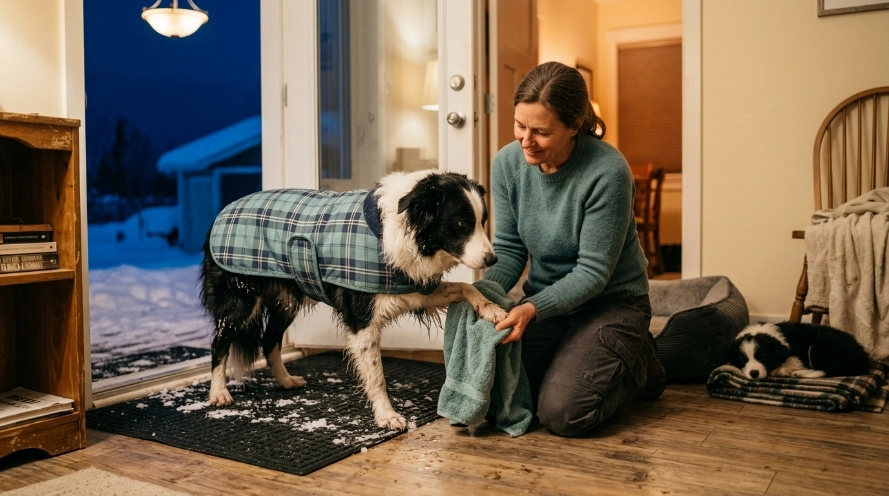
Yes. The typical adult Border Collie’s cold tolerance shouldn’t be used as the standard for every dog in the breed.
Border Collie puppies
Puppies have less reliable temperature regulation than mature dogs. Their small bodies can also lose heat faster, especially when wet or inactive.
Keep winter outings shorter and supervised. Indoor training games are a useful way to burn mental energy without unnecessary cold exposure.
Senior Border Collies
Older dogs may have less muscle mass and reduced mobility. A senior that walks slowly doesn’t produce as much heat as a young dog sprinting across a field.
Arthritis and other age-related problems can also make icy surfaces difficult. Use traction, shorter walks, and warmer resting areas when needed.
Underweight, clipped, or unwell dogs
Body condition, coat condition, circulation, and underlying illness can all change cold tolerance. A recently groomed or medically compromised Border Collie may need protection that another dog doesn’t.
- Recently clipped coat: Reduced natural insulation may increase cold sensitivity.
- Low body weight: Less body insulation can make chilling easier.
- Illness: Some health problems reduce a dog’s ability to maintain normal body temperature.
- Recovery from surgery: Activity may be limited, reducing heat production outdoors.
If your Border Collie has a medical condition, ask your veterinarian for an individual winter routine. Generic temperature charts can’t account for every health factor.
Vet note: Puppies, seniors, underweight dogs, and dogs with ongoing medical problems may require more conservative cold-weather limits than healthy adults.
Frequently Asked Questions
Can Border Collies sleep outside in winter?
I wouldn’t assume a Border Collie can safely sleep outdoors just because the breed has a double coat. Overnight temperatures, wind, dampness, bedding, shelter quality, age, and health all matter, and indoor sleeping removes many avoidable cold-weather risks.
Can a Border Collie walk in snow?
Yes, many healthy Border Collies enjoy walking and playing in snow. Supervise them, shorten outings during severe cold, and check their paws for packed ice, cuts, road salt, or de-icing chemicals when you return home.
Do Border Collies need winter coats?
Many healthy adult Border Collies with intact double coats don’t require a jacket during ordinary cool-weather exercise. A coat may help puppies, seniors, underweight dogs, clipped dogs, sick dogs, or individuals that consistently show discomfort in cold conditions.
Is 32°F too cold for a Border Collie?
Not automatically. A healthy, dry, active adult Border Collie may tolerate 32°F (0°C) comfortably, but freezing conditions deserve closer supervision because wind, moisture, inactivity, age, and individual health can increase the risk of cold injury.
Is 20°F too cold for a Border Collie?
At about 20°F (-7°C), I would limit unnecessary exposure and supervise closely. Veterinary cold-weather guidance warns that dogs can develop cold-related problems around this temperature, especially when exposure is prolonged or combined with wind, moisture, age, or illness.
How do I know whether my Border Collie likes cold weather?
Watch voluntary behavior rather than assuming from breed alone. A comfortable dog usually moves normally and stays engaged, while repeated paw lifting, shivering, slowing, whining, shelter-seeking, or refusing to continue suggests it’s time to return somewhere warm.
Can a Border Collie get frostbite?
Yes. Border Collies can develop frostbite despite their weather-resistant coat, especially during prolonged freezing exposure or wet, windy conditions. Paws, ear tips, and the tail are vulnerable areas, and suspected frostbite should be assessed by a veterinarian.
Final Takeaway: How Cold Is Too Cold for Your Border Collie?
There isn’t one magic cutoff, but freezing temperatures should increase your attention, and conditions near or below 20°F (-7°C) call for much more conservative outdoor exposure. Wind, wet fur, inactivity, age, and health can make higher temperatures dangerous too.
Your Border Collie’s behavior is one of your best warning systems. When that normally tireless dog starts shivering, lifting paws, slowing down, or searching for shelter, end the outing rather than trying to squeeze in a few more minutes.
Keep the double coat healthy, dry your dog after wet winter exercise, inspect the paws, and provide a warm indoor place to recover. When cold exposure causes weakness, confusion, poor coordination, or other concerning changes, contact your veterinarian promptly.
