
What Age Is a Dog Considered a Senior? A Practical Guide for Border Collie Owners

If you want the short answer: there is no single age when every dog becomes a senior. A dog is often considered senior when it has reached about 75% of its average lifespan, a useful general heuristic rather than a universal veterinary standard. That cutoff changes with breed and size, so age charts are best used as a starting point. In practical terms, giant breeds may be senior at 5 or 6 years, medium breeds often around 8 to 9 years, and small breeds closer to 10 to 12 years. VCA Animal Hospitals
For Border Collie owners, the useful question is not just “How old is my dog?” but “Is my dog beginning to show the kinds of changes that senior care should address?” A Border Collie may still look athletic at 8 or 9, yet start needing more careful monitoring for weight, mobility, dental health, and recovery after exercise. Senior timing can also vary by the individual dog’s health, activity level, and veterinary findings.
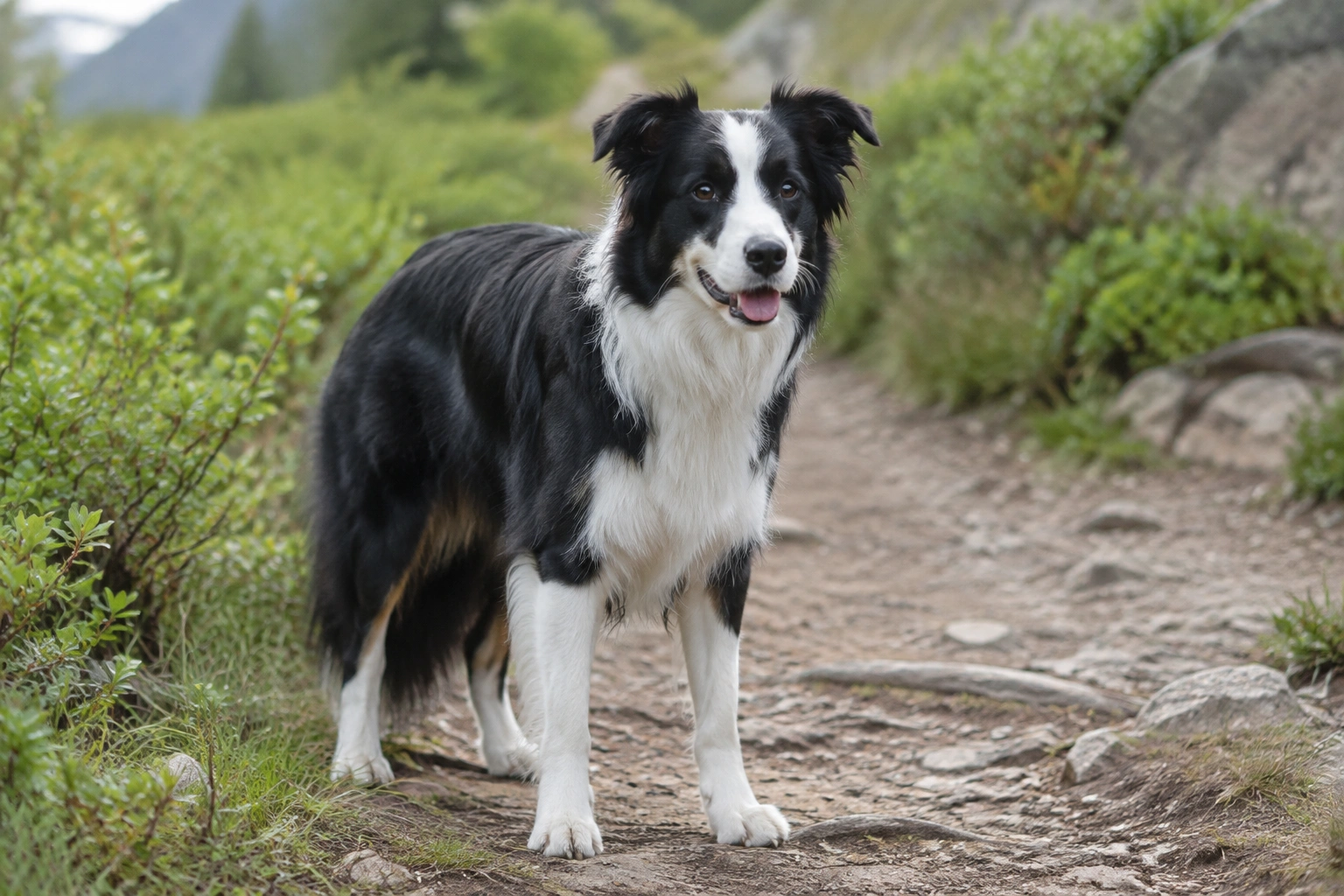
Quick answer: what age is a dog considered a senior?
A practical rule is this:
- Small dogs: often senior at 10 to 12 years
- Medium dogs: often senior at 8 to 9 years
- Large and giant dogs: often senior at 6 to 7 years
- Giant breeds: sometimes treated as senior even earlier, around 5 to 6 years
Those numbers are not hard laws. They are general veterinary guidelines meant to help owners know when to shift from routine adult care to more deliberate senior care. A dog’s actual age in years matters less than how its body is aging.
A simple comparison table
| Dog size | Typical senior age | What that usually means in practice |
|---|---|---|
| Small | 10–12 years | Aging signs may appear later; many stay active longer |
| Medium | 8–9 years | Senior discussions often begin in the middle-to-late adult years |
| Large | 6–7 years | Joint and mobility monitoring often becomes more important earlier |
| Giant | 5–6 years | Senior care may start surprisingly early because lifespan is shorter |
That table is useful because it shows the real trade-off: the bigger the dog, the earlier senior care usually begins.
Why senior age is not the same for every dog
The “one human year equals seven dog years” idea is too blunt to be useful. Dogs do not age on a straight line, and breed size changes the timeline a lot. A 6-year-old Great Dane and a 6-year-old Dachshund are not in the same life stage, even though their birthdays match.
The reason is practical: larger dogs tend to move into senior care earlier because they usually have shorter average lifespans and are more likely to show age-related wear sooner. Smaller dogs often stay in the adult stage longer.
That does not mean a small dog is “healthier” by default, or that a large dog is “old” the moment it turns 7. It means the owner should use age as a cue for closer observation, not as a diagnosis.
A better way to think about it is this:
- Age tells you when to watch more closely
- Signs tell you whether care needs to change now
- Your vet tells you whether the change is normal aging or a medical problem
That three-part approach is more reliable than any single birthday cutoff.
Where Border Collies usually fit in the senior timeline
Border Collies are generally a medium-sized breed, so they usually fit into the middle of the senior-age range rather than the early end reserved for giant breeds. For many Border Collies, senior conversations begin somewhere around 8 to 9 years old. Some may show signs earlier, and some stay robust well beyond that, depending on health and activity level.
This is where owners can misread the dog. Border Collies are famously capable of masking discomfort. A dog may still chase a ball, hold a focused working posture, and appear eager on walks while quietly slowing down in other ways:
- taking longer to warm up
- hesitating before jumping into the car
- sleeping more deeply after activity
- recovering more slowly after a busy day
Those changes matter because Border Collies are often treated like “forever young” dogs. In reality, a dog that still wants to work may still be aging.
A useful decision rule for Border Collies is this: by age 7 or 8, begin senior-style wellness conversations even if the dog looks fit. That gives you time to catch joint, dental, and weight changes before they become obvious problems.
Senior vs adult vs geriatric: the life-stage distinction
It helps to separate three stages:
Adult
This is the main maintenance stage. The dog is mature, stable, and usually at its physical peak or close to it.
Senior
This is the stage where aging starts to affect the body in more noticeable ways. A dog may still be active, but you begin to see slower recovery, stiffness, weight changes, or other subtle shifts.
Geriatric
This is the later stage, when age-related changes are more likely to affect daily comfort and function. A 2021 study proposed that dogs 7 to 11 years could be considered senior and dogs 12+ years geriatric, based on age-linked processes and greater cognitive impairment seen in older dogs. That is a research-based classification rather than a universal clinical cutoff, but it is useful for thinking about progression. PMC study on age groupings
The trade-off here is simple: if you wait for a dog to “look old,” you may miss the best window for prevention. If you label every middle-aged dog as geriatric, you risk overreacting and changing care too early. The middle ground is to treat senior status as a monitoring stage, not a decline label.
Signs your dog is entering senior years
Age alone is not enough. The most useful clues are small changes that build over time. Watch for these.
Physical signs
- Stiffness after resting
- Slower movement on walks
- Hesitation on stairs, couches, or into the car
- Longer recovery after exercise
- Weight gain or weight loss
- More noticeable dental issues or bad breath
- Coat changes, such as dullness or more shedding
- Reduced muscle tone, especially along the back and hind legs
Behavioral signs
- Sleeping more
- Less interest in intense play
- Getting annoyed more easily
- Restlessness at night
- Reduced tolerance for long activity
- Subtle confusion or slower response to cues
The key is pattern, not one-off behavior. A dog that is stiff after a long hike may simply be tired. A dog that is stiff most mornings for several weeks is telling you something different.
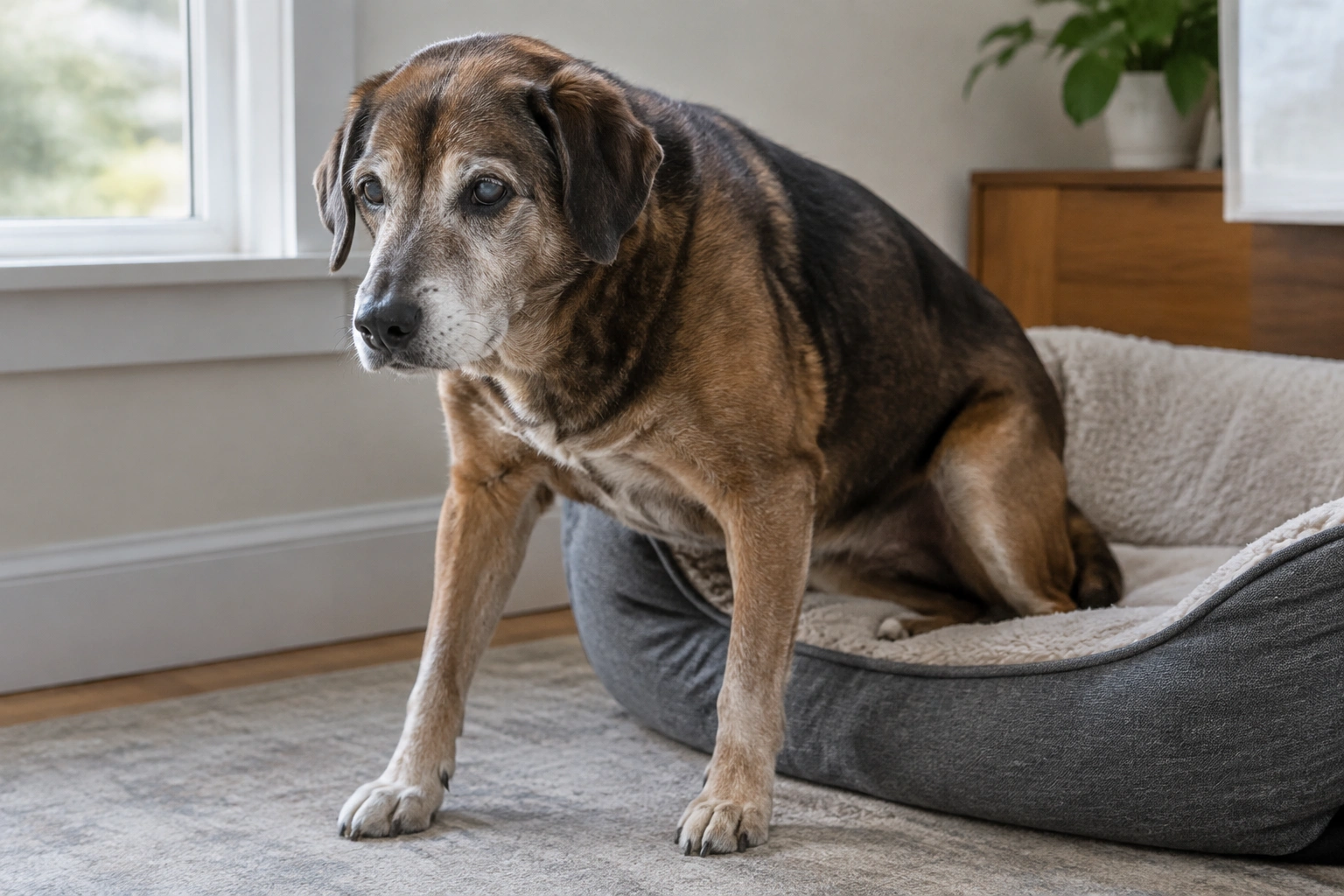
Border Collie owners should pay special attention to stamina changes. A dog may still want to work, but if it fades sooner than it used to, that is often one of the earliest signs that senior care needs to begin.
When age alone is not enough: red flags that need a vet check
Some changes should not be written off as “just getting older.” Book a veterinary visit if you notice:
- sudden limping
- appetite loss
- rapid weight loss
- confusion or disorientation
- new house-soiling
- marked behavior changes
- coughing or breathing changes
- pain when getting up or lying down
- a sudden drop in energy that lasts more than a day or two
These signs can overlap with aging, but they can also point to treatable medical issues. The practical mistake is assuming all slowing down is normal. Often, it is not.
If your dog’s behavior changes quickly, or if the change is obvious enough that you would notice it in a week, treat that as a vet issue rather than a lifestyle issue.
What senior dog care changes to make
Once a dog enters the senior stage, the goal is not to “slow everything down.” The goal is to make daily life easier on aging joints, teeth, and metabolism while keeping the dog active enough to stay strong.
Nutrition and weight management
Older dogs often need closer attention to weight because a small gain can make movement harder, while unwanted weight loss can signal illness or muscle loss. Adjust food based on body condition, not just the number on the bag.
A practical check: you should be able to feel the ribs without pressing hard, and you should see a waist from above. If your Border Collie’s outline is disappearing, the diet likely needs attention.
Do not cut food aggressively just because the dog is older. Some senior dogs need fewer calories, but others need the opposite if they are losing muscle or becoming less efficient at using food. That is why body condition and muscle tone matter more than age alone.
Exercise and mobility
Senior dogs still need exercise. What changes is how they get it.
Better choices usually include:
- more frequent, shorter walks
- controlled play instead of explosive bursts
- warm-up time before intense activity
- avoiding repeated jumping if joints are stiff
- using ramps or steps for cars and furniture when needed
The trade-off is important: too little exercise can worsen stiffness and muscle loss, but too much high-impact activity can increase pain or injury risk. The right amount is usually the level that keeps the dog moving comfortably without a long recovery afterward.
Dental attention
Dental disease becomes more consequential in older dogs because mouth pain can affect eating, behavior, and overall comfort. If your dog is suddenly chewing differently, dropping food, or resisting tooth brushing, do not assume it is stubbornness.
Mobility support
If stairs, flooring, or car access are becoming difficult, make the environment easier. Non-slip mats, ramps, and better bedding can reduce daily strain more effectively than many owners expect.
For broader senior-care guidance, the AKC’s senior dog resources are a useful starting point for owners who want to build a more structured care plan.
When to start senior wellness exams and screenings
A sensible rule is to begin senior-focused wellness discussions before the dog looks obviously old. For many medium breeds, that means around 7 to 8 years. For Border Collies, this is a good time to shift from “routine annual exam” to “what should we screen for now?”
Senior wellness visits are useful because they can pick up issues early, especially:
- arthritis or joint pain
- dental disease
- weight change
- heart or organ changes
- muscle loss
- subtle behavior shifts that may reflect discomfort
Some clinics recommend more frequent checkups for older dogs, often twice yearly once a dog enters the senior stage. Many vets recommend this because it can help detect dental disease, arthritis, kidney disease, and weight changes earlier. The exact schedule should be set with your veterinarian based on the dog’s age, breed, and health history. The practical benefit of more frequent visits is simple: problems are easier to manage when they are caught early.
If your dog has not had a senior-style exam yet and is around the age where its breed typically enters senior years, do not wait for visible decline. That is the point when screening is most useful.
How to decide whether your dog should be treated as a senior now
Use this quick framework.
Treat your dog as a senior now if:
- it is in the breed’s typical senior age range
- it is showing stiffness, slower recovery, or reduced stamina
- it has ongoing dental, weight, or mobility issues
- it has not had a senior wellness visit recently
Treat your dog as “adult but watch closely” if:
- it is near the senior age range but still moving and recovering normally
- there are no obvious physical or behavior changes
- recent veterinary checks have been normal
Book a veterinary visit sooner if:
- changes appeared suddenly
- the dog is losing weight, limping, or acting confused
- appetite, thirst, or sleep patterns have changed noticeably
That framework keeps the decision practical. It does not force you to over-label a healthy dog, but it also does not let age-related changes slide.
When to See a Veterinarian or Certified Trainer
See a veterinarian if your dog has pain, limping, appetite changes, confusion, or a sharp drop in energy. If the issue is more about activity tolerance, settling, or changing household routines, a certified trainer can help you adapt expectations without overtaxing the dog.
For Border Collies, that distinction matters. A dog that is less willing to do long fetch sessions may not be “disobedient”; it may be uncomfortable, under-conditioned, or simply aging into a different exercise need. A trainer can help you adjust the routine, but a vet should rule out pain first.
The bottom line for Border Collie owners
A dog is considered senior based on size, breed, and health, not one universal birthday. For Border Collies, the senior window often begins around 8 to 9 years, but the real signal is the combination of age plus changes in movement, recovery, weight, and behavior. If you watch for those changes early, senior care becomes much easier to manage—and your dog usually stays more comfortable for longer.
FAQ
Is 7 years old senior for a Border Collie?
It can be the beginning of the senior conversation, but many Border Collies are still in the adult-to-early-senior transition at 7. Watch for signs rather than relying on age alone.
What age is a dog considered a geriatric dog?
A research-based framework suggests dogs 12 years and older can be considered geriatric, though this varies by breed and health.
Should I change my dog’s food as soon as it becomes senior?
Not automatically. Change food when body condition, muscle tone, activity level, or your vet’s advice shows it is needed.
How often should a senior dog see the vet?
Often more than once a year, but the best schedule depends on your dog’s health and your veterinarian’s recommendation.
What is the biggest mistake owners make with older dogs?
Assuming slower movement or behavior changes are just normal aging and waiting too long to check for pain or disease.
