
What Causes a Border Collie’s Coat to Look Dull?

Quick Answer
A Border Collie’s coat can look dull because of dirt, loose undercoat, inadequate nutrition, overbathing, skin irritation, parasites, allergies, or an underlying health problem. If the coat stays dry, brittle, greasy, flaky, or patchy despite appropriate grooming, investigate the cause rather than relying on shampoo or supplements alone.
A healthy Border Collie coat should generally look clean, feel reasonably smooth, and protect the dog without persistent flaking, greasiness, or unexplained thinning. Both rough-coated and smooth-coated Border Collies have a double coat, so normal shedding and trapped undercoat can sometimes make the fur look less glossy than expected.
The important distinction is whether the coat simply needs cleaning and brushing or whether its texture has changed alongside other signs. A little dirt after outdoor activity is different from persistent dullness accompanied by itching, bald patches, weight changes, or irritated skin.
Why Does a Border Collie’s Coat Lose Its Shine?
The coat loses its healthy appearance when dirt and debris cover the hair, grooming leaves tangles or loose undercoat behind, the skin produces abnormal amounts of oil, or the hair itself becomes dry or damaged. Nutrition and general health also influence how new hair grows.
These causes can look similar from the outside, so start with the pattern of change. If your dog’s fur looks dusty after a muddy walk but returns to normal after brushing, surface buildup is a likely explanation. If it remains brittle or looks different across the body, consider diet, skin health, and other medical factors.
What Are the Most Common Causes of a Dull Border Collie Coat?
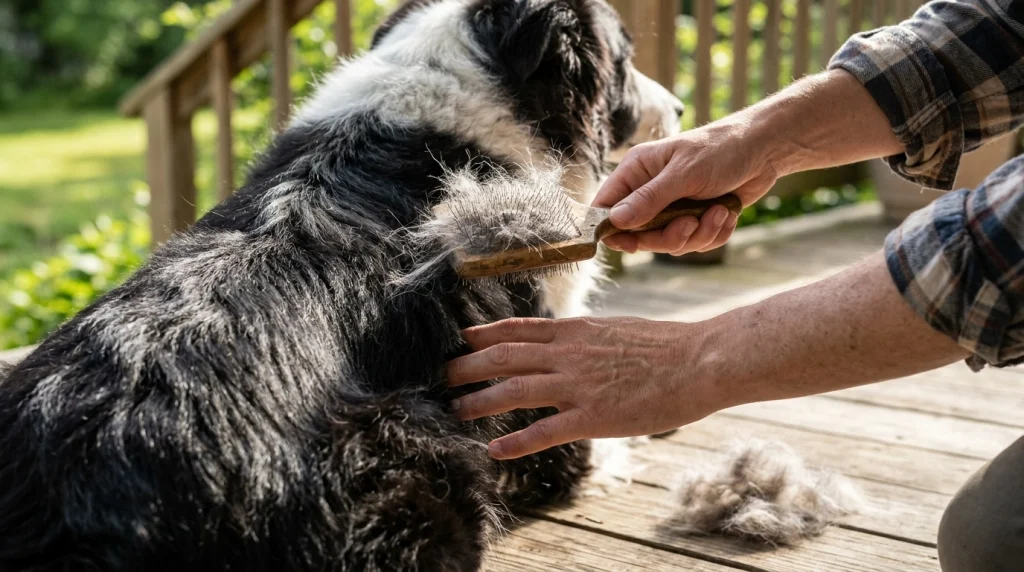
1. Dirt, loose undercoat, and inadequate brushing
Border Collies are active dogs, and their coats can collect dust, dried mud, grass, and other outdoor debris. Loose undercoat may also remain trapped beneath the longer outer hairs, especially during heavier shedding periods.
This buildup can make the coat look uneven, feel dusty, or develop tangles. Rough-coated Border Collies often need additional attention around the chest, tail, hindquarters, and feathering, while smooth-coated dogs still need their dense undercoat brushed out.
What to check: Brush gently through the coat and look for trapped loose hair, small tangles, and visible debris. If the coat looks cleaner and feels softer afterward, grooming may be a major part of the problem.
2. An unbalanced diet or inadequate nutrient intake
Hair growth depends on adequate protein, energy, essential fatty acids, and other nutrients. A diet that does not meet a dog’s nutritional requirements can contribute to dry, brittle fur, excessive shedding, changes in coat color, or hair loss.
Problems may arise when a dog eats an inadequately formulated homemade diet, receives excessive supplements that unbalance the overall diet, or has difficulty digesting or absorbing nutrients. A balanced, complete food appropriate for the dog’s life stage is a sensible starting point.
The VCA veterinary guide to nutrition, skin, and haircoat explains how protein, essential fatty acids, and minerals support normal coat condition.
What to check: Review the food’s nutritional adequacy statement, feeding amount, body condition, and any recent diet changes. Do not assume a dull coat automatically means your dog needs more protein, fish oil, zinc, or vitamins.
3. Overbathing or unsuitable grooming products
Bathing can improve the appearance of a dirty coat, but repeated unnecessary shampooing or using an irritating product can leave the skin dry or uncomfortable. Residual shampoo can also make the fur feel coated, sticky, or less clean.
Border Collies do not all need baths on the same schedule. Frequency should reflect the dog’s lifestyle, coat condition, skin health, and veterinary instructions rather than a rigid calendar.
Use a shampoo formulated for dogs, rinse thoroughly through the double coat, and dry the coat properly. If a veterinarian has prescribed a medicated shampoo, follow the prescribed directions instead of substituting a general grooming routine.
4. Allergies, parasites, or skin infections
Allergies, fleas, mites, and bacterial or yeast skin problems can interfere with normal skin function and coat appearance. Affected dogs may scratch, lick, chew, rub their faces, or develop redness, flakes, greasy patches, an unusual odor, or localized hair loss.
Flea allergy can cause significant irritation even when fleas are difficult to spot. Environmental or food-related allergies can also contribute to recurring skin problems, but coat appearance alone cannot identify which condition is responsible.
What to check: Look for persistent itching, inflamed skin, scabs, ear irritation, or areas where hair is thinning. A veterinarian may need to examine the skin and perform appropriate tests before recommending treatment.
5. Hormonal or other underlying health problems
Some illnesses affect hair growth, skin condition, and the normal replacement of the coat. Hypothyroidism, a condition involving insufficient thyroid hormone, is one example associated with dry, dull fur, hair thinning, and delayed regrowth.
Other possible contributors include digestive disorders that interfere with nutrient absorption and certain chronic illnesses. These conditions become more concerning when a coat change appears alongside changes in energy, weight, appetite, or general behavior.
According to the Cornell University College of Veterinary Medicine’s hypothyroidism guidance, affected dogs may show poor coat quality, abnormal hair loss, reduced activity, and weight gain. These signs are clues, not proof of thyroid disease.
How Can You Tell Whether the Problem Is Grooming or Health-Related?
The pattern of change provides useful clues, although it cannot replace a veterinary examination when symptoms persist.
| What you notice | Possible explanation | Reasonable next step |
|---|---|---|
| Dusty fur after outdoor activity | Surface dirt or debris | Brush and clean as needed |
| Loose hair and tangles during shedding | Normal coat replacement or grooming buildup | Increase gentle brushing |
| Dry, brittle fur with flakes | Grooming irritation, nutrition, or skin disease | Review care and seek advice if persistent |
| Itching, redness, sores, or odor | Possible allergy, parasites, or infection | Arrange a veterinary assessment |
| Dull fur with thinning hair, lethargy, or weight change | Possible systemic or hormonal problem | Arrange a veterinary examination |
One useful distinction is whether the coat change is superficial or accompanied by changes in the skin and the dog’s overall health. A clean coat that remains brittle or continues thinning deserves more attention than ordinary dirt that brushes away easily.
What Can You Do to Improve Your Border Collie’s Coat?
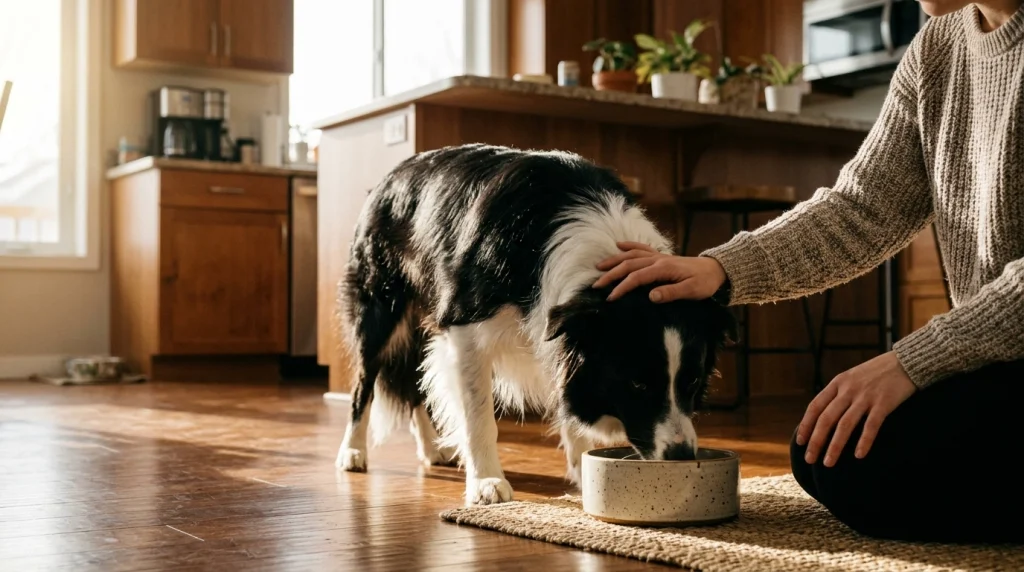
Start with simple, low-risk care while monitoring whether the coat returns to its usual condition.
- Brush regularly. Use a suitable brush for your dog’s coat length and work gently through loose hair and tangles. Increase brushing during heavier shedding, and avoid scraping or repeatedly brushing the same patch of skin.
- Bathe only when needed. Use dog-formulated shampoo and rinse carefully through the dense undercoat. Excessive washing is not a reliable way to create lasting shine.
- Dry the coat thoroughly. Towel-blot and allow the coat to dry completely, using a suitable low-heat drying method if needed. Avoid excessive heat and check dense areas for lingering moisture.
- Feed a nutritionally complete diet. Provide food appropriate for your dog’s age, activity, and health. If the diet is homemade, restrictive, or recently changed, ask a veterinarian about its nutritional adequacy.
- Maintain parasite prevention. Use an appropriate flea and parasite-control plan recommended for your dog and local risks. Do not apply household insecticides or unapproved products to the coat.
- Track changes. Note when the dullness began and whether it affects the whole body or specific areas. Record itching, shedding, diet changes, weight changes, and any new skin symptoms.
These steps can improve cleanliness and reduce grooming-related dullness, but they will not cure a hormonal disorder, infection, allergy, or nutritional absorption problem. Persistent changes need the underlying cause identified.
Tip
Take a clear photograph of the affected area before changing your grooming routine. Comparing it with later photographs can help you determine whether the coat is improving and give your veterinarian useful information about how the problem has progressed.
When Should a Dull Coat Be Checked by a Veterinarian?
Arrange a veterinary appointment if the coat remains dull despite appropriate routine care, especially if the change is new, progressive, or accompanied by other symptoms. An examination is also appropriate when you notice persistent itching, recurrent ear problems, unusual odor, greasy skin, scaling, or unexplained hair thinning.
Seek prompt veterinary advice for painful skin, open sores, rapidly spreading lesions, or significant hair loss. If your dog also develops marked weakness, collapse, difficulty breathing, or another sudden severe symptom, seek emergency veterinary care.
Depending on the findings, the veterinarian may examine the skin, check for external parasites, investigate infection, review the diet, or recommend blood tests. Thyroid testing may be appropriate when the clinical signs support that possibility; a dull coat alone is not enough to diagnose hypothyroidism.
Avoid trying several supplements, shampoos, and dietary changes simultaneously. Doing so can make it harder to identify what helps, and unnecessary supplementation can create nutritional imbalances.
Frequently Asked Questions
Can a Border Collie have a healthy coat that is not very shiny?
Yes. Natural coat texture, color, lighting, and individual variation affect how glossy a dog looks. A lack of dramatic shine is less concerning when the skin is comfortable, the coat is intact, and the dog is otherwise healthy.
Does seasonal shedding make a Border Collie’s coat look dull?
It can. Loose undercoat and trapped hair may make the coat appear uneven or less tidy. Regular, gentle brushing should help manage normal shedding, but bald patches or persistent skin irritation should not be dismissed as seasonal changes.
Will fish oil make my Border Collie’s coat shiny again?
Not necessarily. Fatty acids support skin health, but a supplement will not correct every cause of dullness. Ask your veterinarian whether supplementation is appropriate, particularly if your dog already eats a complete and balanced diet.
Can too many baths damage a Border Collie’s coat?
Frequent unnecessary bathing or an unsuitable shampoo can contribute to skin irritation and dryness. Choose a dog-safe product, rinse thoroughly, and adjust bathing frequency to your dog’s coat condition and any veterinary instructions.
How long does it take for a dull Border Collie coat to improve?
The timeline depends on the cause. Removing dirt may improve the appearance immediately, while nutritional or medical problems may require treatment and time for new hair to grow. Continued deterioration warrants reassessment rather than waiting indefinitely.
Should I shave my Border Collie to improve a dull coat?
No. Shaving is not a treatment for dullness and is generally unnecessary for a healthy double coat. If severe matting or a medical skin problem makes clipping necessary, ask a veterinarian or qualified groomer about the safest approach.
Conclusion
A dull Border Collie coat can result from simple dirt and trapped undercoat, but persistent dryness, brittleness, flaking, greasiness, or hair loss may indicate a nutritional, skin, or medical problem. Start with gentle grooming, appropriate bathing, a complete diet, and sensible parasite prevention.
Pay attention to changes in the skin and your dog’s overall behavior rather than judging coat shine alone. If the problem persists, worsens, or appears alongside itching, sores, thinning hair, lethargy, or weight changes, arrange a veterinary examination. Finding the cause is more useful than trying to make the coat shinier with extra products.