
What Causes Dogs to Have Diarrhea? A Practical Guide for Owners

Diarrhea is one of those problems that can look simple on the surface and still mean very different things underneath. A dog may have a single loose stool after stealing food, or it may be the first sign of parasites, infection, pancreatitis, or a more serious internal problem. The job is not to guess perfectly. The job is to sort the situation into “watch closely at home” or “call the vet now.”
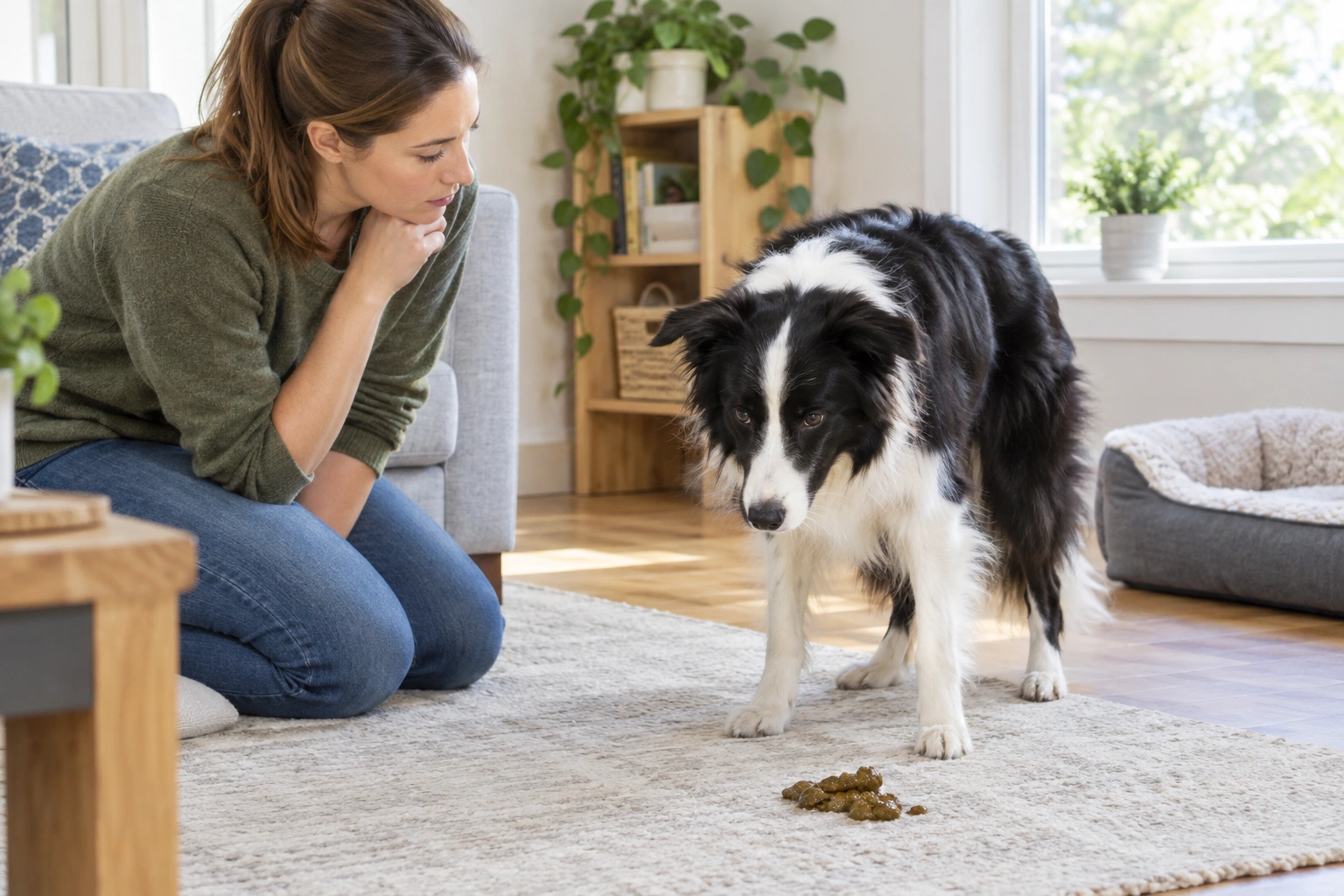
For Border Collie owners, that distinction matters because these dogs are active and often quick to get into things outside. A dog that raids a bin, drinks from a puddle, or gets stressed by travel can develop temporary digestive upset. But repeated diarrhea, blood in the stool, vomiting, or low energy should never be treated like a routine nuisance.
What Dog Diarrhea Means and Why the Cause Matters
Diarrhea means stool that is looser, more frequent, or more watery than normal. A single soft stool is not always true diarrhea. One loose bowel movement after a food slip may clear up on its own. Ongoing diarrhea, though, is a different problem because it can lead to dehydration and can point to illness deeper than the gut.
The cause matters because the response changes completely. A dog with mild food-related upset may need only close observation and a temporary diet adjustment. A dog with giardia, pancreatitis, or a swallowed toxin needs veterinary care, and waiting can make the problem harder to treat.
When Dog Diarrhea Is Urgent or an Emergency
Some dogs can be monitored briefly at home. Others need prompt veterinary attention.
Call a veterinarian quickly if diarrhea is paired with any of these:
- blood in the stool
- black, tarry stool
- repeated vomiting
- marked lethargy or weakness
- signs of dehydration such as dry gums or refusing water
- fever or obvious abdominal pain
- collapse
- repeated episodes over a short period
- diarrhea in a puppy, especially if the puppy is also vomiting or not eating
- possible toxin exposure, garbage ingestion, or foreign material
A practical rule: if your dog seems otherwise bright, is drinking, and has a single mild episode, that is usually less urgent than diarrhea plus any change in energy, appetite, or hydration. If the stool is black or clearly bloody, do not “wait and see” for long.
Common Causes of Diarrhea in Dogs
Veterinarians usually think in categories, not guesses. That helps narrow the likely cause without assuming everything is “just something they ate.”
Dietary indiscretion
This is the classic “got into something” cause. Trash, spoiled food, table scraps, greasy leftovers, rich treats, or scavenged outdoor debris can irritate the gut. These cases are often sudden and may improve if the dog otherwise stays bright and hydrated.
Sudden diet change
A fast switch from one food to another can upset digestion. Even a high-quality food can cause loose stool if the transition is too abrupt. The gut often tolerates change better when it happens gradually.
Stress-related diarrhea
Stress can affect the digestive tract. Boarding, travel, a new routine, a house move, or a disrupted schedule can trigger loose stool in some dogs.
Parasites
Parasites are a major cause of diarrhea, especially in puppies and dogs with outdoor exposure. Common concerns include giardia, hookworms, and roundworms. Parasites may cause soft stool, mucus, repeated diarrhea, weight loss, or a dog that seems otherwise off.
Infections
Bacterial and viral infections can also cause diarrhea. These are more concerning when the dog is sick in other ways too: vomiting, fever, low energy, refusal to eat, or rapid worsening. Exposure history matters here, especially contact with other dogs, contaminated water, or boarding facilities.
Medications
Some medications can upset the stomach or intestines. If diarrhea begins after a new medication, tell your veterinarian. Do not stop prescription drugs on your own unless you have been instructed to do so.
Food intolerance or food allergy
Food intolerance and food allergy are not the same thing. Intolerance usually means the dog does not digest a certain ingredient well. Allergy involves the immune system. Both can show up as recurring soft stool, gas, itching, ear problems, or chronic digestive upset. Food allergy is often over-suspected, so it helps to look for a pattern rather than blame the last meal immediately.
Inflammatory bowel disease
Inflammatory bowel disease can cause recurring or chronic diarrhea. These dogs may have symptoms that come and go, not just one isolated episode. Appetite may fluctuate, and stool problems often return after short improvements.
Pancreatitis
Pancreatitis can cause digestive upset and is more concerning than a simple stomach bug. Dogs may be painful, nauseated, tired, and unwilling to eat. Rich or fatty foods can be a trigger in some dogs.
Systemic illness
Sometimes diarrhea is a symptom of a broader illness affecting the body, not just the intestines. That is why persistent diarrhea, dehydration, or a dog that seems unwell should not be managed as a routine tummy upset.
For a broader look at related health concerns, see ASPCA’s pet care guidance.
How to Narrow the Cause by Timing, Stool Appearance, and Symptoms
Timing gives useful clues.

Acute diarrhea vs chronic diarrhea
Acute diarrhea starts suddenly and lasts a short time. It often fits diet mistakes, stress, or infection. Chronic diarrhea keeps coming back or lasts longer than a brief upset. That pattern raises concern for parasites, food intolerance, inflammatory bowel disease, or another ongoing medical issue.
What the stool may suggest
- Very watery stool: often means the intestines are irritated enough that water is not being absorbed well
- Mucus: can happen with large bowel irritation
- Blood: may mean inflammation, infection, parasites, or something more serious
- Black stool: can suggest digested blood and needs prompt veterinary attention
Symptoms that point beyond simple food upset
If diarrhea comes with vomiting, pain, fever, lethargy, or reduced drinking, the problem is less likely to be a simple one-off. Changes in behavior or hydration matter as much as the stool itself.
Exposure history matters
Ask yourself what changed in the last 24 to 72 hours:
- new food or treats
- access to garbage
- scavenging outside
- boarding, daycare, or travel
- drinking from puddles, streams, or shared bowls
- contact with sick dogs
- recent medication changes
That short checklist often tells you more than the stool appearance alone.
A Quick Comparison Guide
| Situation | More likely to be mild | More likely to need a vet |
|---|---|---|
| One loose stool, dog otherwise normal | Yes | Not usually, unless it repeats |
| Repeated watery diarrhea | No | Yes |
| Diarrhea after trash or rich food | Sometimes | If it continues or the dog seems unwell |
| Diarrhea with vomiting | No | Yes |
| Blood or black stool | No | Yes |
| Puppy with diarrhea | No | Often yes |
| Recurring soft stool for weeks | No | Yes |
| Stress after travel, dog bright and drinking | Sometimes | If it does not settle quickly |
What You Can Safely Do at Home First
If your dog has mild diarrhea but is bright, drinking, and not vomiting, the first goal is simple: prevent dehydration and avoid making the gut work harder.
Keep water available
Fresh water should always be available. Watch whether your dog is drinking normally. A dog that stops drinking, drinks and then vomits, or seems unable to keep water down needs a vet.
Decide between a brief fast and a bland diet
For an otherwise healthy adult dog with a single mild episode of diarrhea and no vomiting, a short fast may be reasonable in some cases, but only for a brief period and only if your veterinarian has not told you otherwise. After that, or if the stomach seems settled, a bland diet is usually the next step.
A bland diet is more appropriate when the dog is still bright but has ongoing loose stool and is able to keep food down. Keep portions small and simple, and avoid treats, rich food, and sudden diet changes.
Do not use either approach at home if your dog is a puppy, elderly, diabetic, already dehydrated, vomiting, painful, very lethargic, or has blood in the stool. In those situations, call the vet instead of trying to manage it yourself.
Monitor closely for changes
Track:
- how many times the dog has diarrhea
- whether the stool is getting better or worse
- whether the dog is eating and drinking
- energy level
- vomiting
- signs of pain
- any blood or black color in the stool
A short note on your phone can help you give the vet a clearer history if the problem continues.
What Not to Give a Dog With Diarrhea
Do not give human anti-diarrheal or stomach medications unless your veterinarian says they are safe. Some are dangerous for dogs, and others can hide the symptom without fixing the cause.
Also avoid:
- sudden food switches
- rich treats
- fatty leftovers
- “mixing in a little of everything” to tempt appetite
- assuming probiotics or supplements will solve every case
If diarrhea is caused by parasites, infection, pancreatitis, or a swallowed toxin, home remedies will not address the real problem.
For general dog safety and prevention reminders, the AKC’s dog health resources are a useful starting point.
When to Call the Vet and What to Bring
Call promptly if diarrhea is repeated, lasts beyond a short period, or is paired with vomiting, lethargy, dehydration, fever, pain, blood, or black stool. Puppies, seniors, and dogs with other health problems deserve a lower threshold for a vet call.
If parasites or infection are possible, bring a fresh stool sample if your clinic asks for one. That can save time and help the vet run a fecal exam or parasite testing sooner.
A same-day visit is often the better choice when the dog is not acting like itself. If the dog is bright and the stool is only mildly loose, your vet may advise monitoring first. The key is not to let “it might pass” become a delay when the dog is clearly worsening.
How Vets Diagnose the Cause
Vets usually start with the history: how long it has been happening, what the stool looks like, what the dog ate, and whether there was any toxin or trash exposure.
A stool sample is especially useful when diarrhea is new, when parasites or giardia are possible, or when the dog has had recent outdoor, kennel, daycare, or water exposure. In recurrent or chronic cases, stool testing may be repeated because one sample does not always catch the problem.
Common tests may include:
- fecal exam or stool test for parasites
- giardia testing when appropriate
- bloodwork to look for dehydration, infection, inflammation, organ problems, or effects of chronic illness
- imaging, such as X-rays or ultrasound, if the vet suspects a foreign body, pancreatitis, intestinal thickening, or another deeper issue
If diarrhea is recurring, your vet may also recommend a more structured diet trial or broader testing rather than treating it as a one-time upset.
How Treatment Changes Depending on the Cause
Treatment is cause-specific.
- Dietary upset: rest, hydration support, and a temporary feeding plan may be enough. Supportive care can also include anti-nausea medication or fluids if the dog is struggling to keep water down.
- Parasites: deworming or other targeted treatment may be needed, and giardia often requires specific follow-up testing or repeat treatment depending on the case.
- Infection: treatment depends on the organism and the dog’s overall condition. Some infections are managed with fluids and supportive care, while others need targeted medication.
- Food intolerance or allergy: the vet may suggest a controlled diet trial.
- Pancreatitis: treatment often focuses on supportive care such as fluids, nausea control, pain relief, and careful feeding guidance.
- Inflammatory bowel disease or chronic illness: longer-term management may be needed, sometimes including diet changes and medication.
That is why “diarrhea treatment” is not one thing. The right plan depends on what is causing the gut to misbehave in the first place.
How to Prevent Diarrhea From Coming Back
The most effective prevention is usually boring, but it works:
- keep diet changes gradual
- keep garbage, compost, and rich leftovers out of reach
- use parasite prevention as your vet recommends
- stay current on vaccination
- avoid risky water sources when possible
- prevent scavenging on walks and in the yard
- store food properly so it does not spoil
Border Collies may not have a unique diarrhea disease, but many are energetic problem-solvers. That means they are often good at finding things they should not eat. Prevention often comes down to management, not willpower.
If your dog tends to eat anything available, that is a practical issue to solve at the environment level rather than hoping the habit disappears on its own.
Border Collie-Specific Context: What Matters and What Does Not
Border Collies are not known for a special diarrhea cause. They get the same common problems other dogs get: diet mistakes, parasites, infection, stress, and underlying disease.
What does matter is lifestyle. Active dogs may:
- travel more
- experience routine changes more often
- drink from questionable water sources
- pick up things outdoors
- get stressed by long days, boarding, or overstimulation
That does not mean diarrhea is “normal for the breed.” It means owners may need to be more deliberate about prevention and quicker to notice when something is off.
Frequently Asked Questions
How long can dog diarrhea last before it needs a vet?
If it is mild and your dog otherwise seems normal, a brief episode may settle. If it keeps going, repeats, or comes with other symptoms, contact a veterinarian rather than waiting.
Should I stop feeding my dog?
Not without veterinary guidance. The right feeding approach depends on the dog’s age, symptoms, and whether vomiting or pain is present.
Is blood in diarrhea always an emergency?
Not always, but it is a red flag and should prompt a vet call. Black stool is especially concerning.
Could stress alone cause diarrhea?
Yes, stress can contribute. But it should be a diagnosis of context, not assumption. If the dog is ill in other ways or the diarrhea persists, look deeper.
Should I bring a stool sample to the vet?
If your clinic asks for one, yes. It can help speed up parasite testing and diagnosis.
Final Takeaway
When a dog has diarrhea, the most useful question is not “What can I give right now?” It is “Does this look like a short-lived upset, or does it need a vet?” Mild, isolated diarrhea in a bright, drinking dog can often be watched closely for a short time, with a brief fast or bland diet used only when appropriate. Diarrhea that is repeated, worsening, or paired with blood, black stool, vomiting, lethargy, dehydration, fever, or pain needs veterinary attention.
If you are unsure, err on the side of calling your vet. That is especially true for puppies, older dogs, and dogs whose behavior has changed along with the stool.
