
What Dog Hives Look Like: How to Spot Urticaria Fast and Decide What to Do

If you’ve found sudden bumps, welts, or swelling on your dog, the first question is usually the right one: are these hives?
Hives in dogs are also called urticaria. They are typically a sudden skin reaction, not a slow-developing skin problem. That timing matters. A bump that appears out of nowhere after a walk, a vaccine, a new shampoo, or a medication is a very different clue from a sore that has been building for days.
For active dogs, this can happen after yard exposure, insect contact, or something they brushed against on a walk, but you usually can’t tell the exact trigger from breed or activity level alone. The challenge is that hives can look mild at first and still be part of a bigger allergic reaction. So the goal is not just to identify the bumps, but to judge how quickly they appeared, whether they are spreading, and whether your dog seems otherwise normal.
What dog hives look like
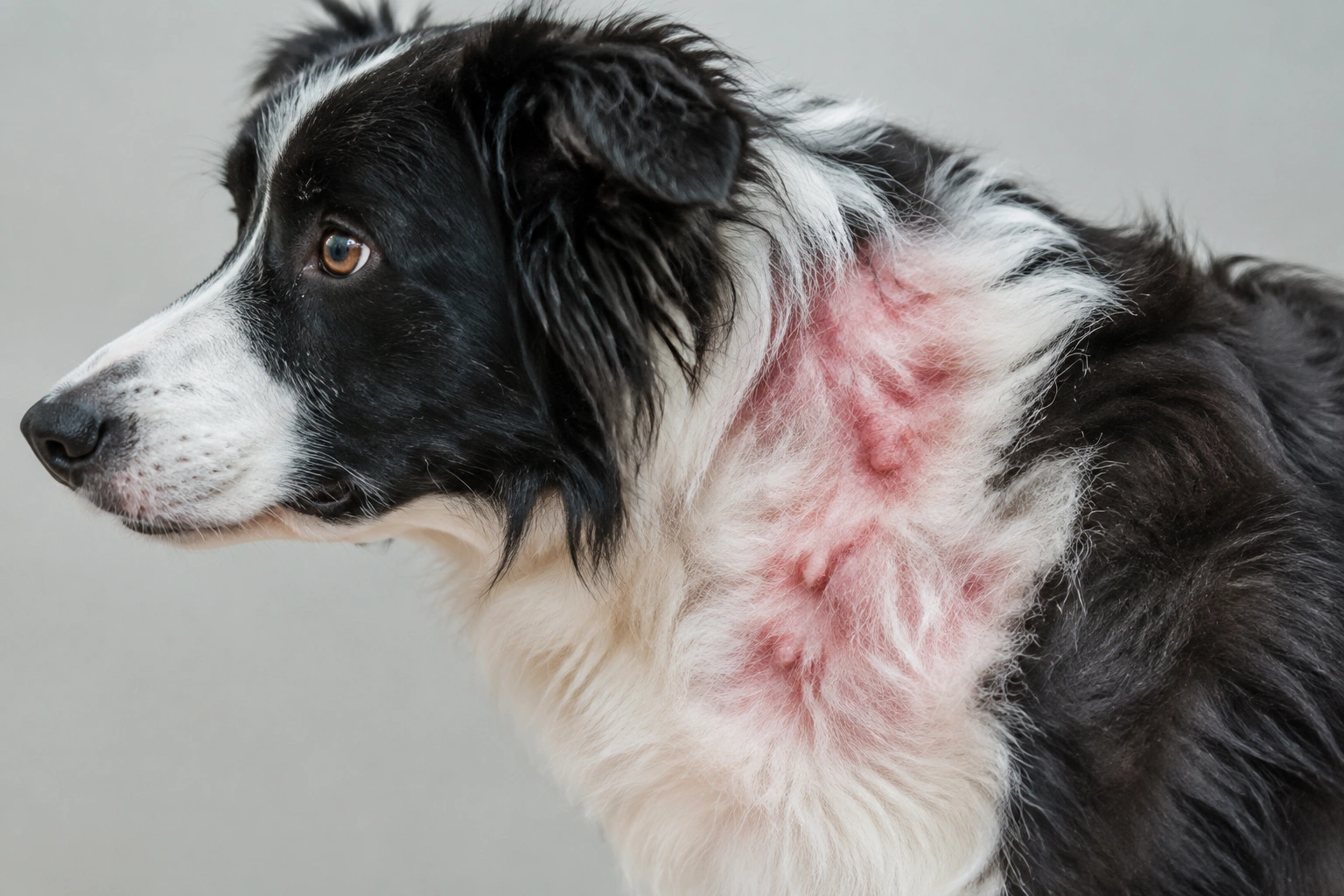
Dog hives usually look like raised, swollen patches or welts on the skin. They may be red, puffy, and itchy. Some are small, while others are larger and more obvious. In some dogs they look like a rash of rounded bumps; in others they blend together into irregular swollen areas.
A useful way to picture them is as soft, raised “lumps” under or within the skin surface rather than crusty scabs or open sores. They are often not dry and flaky. They are also often not painful in the way a hot spot or a wound is painful, though they can be very uncomfortable if they itch.
On short-haired dogs, the bumps are usually easier to see. They may resemble a cluster of large mosquito bites. On long-haired or thick-furred dogs, the skin changes can be hidden, so the coat may look lifted or uneven before you clearly see the welts themselves.
Merck Veterinary Manual describes hives in dogs as localized patches of red, swollen, usually itchy skin that often develop and disappear suddenly. That sudden appearance is one of the best clues you have. Merck Veterinary Manual
Common visual clues that point to hives
Look for these signs together:
- raised bumps or welts
- redness under or around the bumps
- puffiness or swelling
- itchiness or repeated scratching
- sudden appearance over minutes to hours
- changes in size or location over a short period
A single bump does not prove hives. A cluster of sudden, itchy, raised welts makes hives much more likely.
Where hives commonly show up and how they change
Hives can appear anywhere on the body. They may show up on the belly, chest, back, face, ears, legs, or muzzle. Swelling around the eyes, ears, and muzzle is especially common in allergic reactions.
The location matters less than the pattern. Hives often come on quickly and may spread or change over hours. A dog can go from a few bumps to multiple patches in a short time. Sometimes the skin changes seem to “move” because one area settles while another becomes more obvious.
That is why timing is so useful. If the bumps appeared after a trigger and then changed rapidly, hives move higher on the list. If the skin problem has stayed in the same place for days and become raw or infected, something else may be going on.
VEG ER for Pets notes that hives typically appear suddenly, often within minutes to hours of exposure to a trigger, and can appear anywhere on the body. VEG ER for Pets
Why timing matters more than one photo
A photo can help, but it can also mislead. Hives can flatten, fade, or spread quickly. A picture taken an hour later may look very different from the first one. That is why it helps to note:
- when you first saw the bumps
- whether they are increasing
- whether your dog is scratching, licking, or rubbing
- whether a new trigger happened recently
If the bumps are changing fast, treat the situation as more than a routine skin issue.
Hives vs flea bites, hot spots, rashes, and angioedema
This is where many owners get stuck. Several skin problems can look similar at a glance, but the details are different enough to guide your next step.
| Condition | What it usually looks like | Clues that help separate it from hives |
|---|---|---|
| Hives | Raised, soft welts or bumps; may be red and itchy; can appear suddenly | Often comes on within minutes to hours and may spread or fade quickly |
| Flea bites | Small itchy bumps, often on the rear, belly, or base of the tail | More likely to be linked to flea exposure and may not appear as broad raised welts |
| Hot spots | Moist, red, irritated, painful skin; often self-trauma worsens it | Usually looks raw or wet rather than like soft raised bumps |
| General rash | Flat or bumpy skin irritation | Often less puffy and less sudden than hives |
| Angioedema | Deeper swelling, often around face, muzzle, eyes, lips, or throat area | Swelling is the main feature, and it can be more serious than simple hives |
Hives vs flea bites
Flea bites often show up as small itchy bumps, especially where fleas like to feed. Hives are more likely to look like broader raised welts that appear suddenly across the body. If the skin changes are mostly near the tail base and your dog has a flea history, flea bites become more likely.
Hives vs hot spots
Hot spots are usually angry-looking, moist, and painful. Dogs often lick or chew them hard. Hives are usually more like raised swellings than wet, raw patches. If the skin is oozing or the dog is clearly in pain, hives may not be the main issue.
Hives vs a general rash
A rash can be flat, scattered, or patchy. Hives are usually more swollen and raised. That puffy texture is a key clue.
Hives vs angioedema
Angioedema is swelling deeper in the tissues, often around the face, muzzle, eyes, lips, or throat area. It can happen alongside hives. If the face is swelling, don’t assume it is “just hives.” That may be a more serious allergic reaction.
OVRS notes that swelling on or near the nose or throat is a veterinary emergency and requires immediate medical care. OVRS
What causes hives in dogs
Hives are usually an allergic-type reaction, but the trigger is not always obvious. Common causes include insect bites or stings, shampoos, medications, contact with toxic plants or chemicals, and inhaled or eaten allergens. Friction, sunlight, heat, exercise, stress, and genetic abnormalities may also contribute or make the rash worse in some cases.
That list matters because it gives you a practical way to investigate the trigger. Ask what changed in the last few hours:
- a new shampoo or grooming product
- a recent vaccine
- a new medication or supplement
- a walk through tall grass or brush
- a possible insect sting
- exposure to a plant, spray, or cleaning chemical
- unusual heat or heavy exercise
Merck Veterinary Manual identifies insect bites or stings, shampoos, and medications as the most frequent causes of hives in dogs. Merck Veterinary Manual
A practical way to think about likely triggers
If the hives started soon after a walk, yard time, or grooming session, think contact or insect exposure first. If they began after a vaccine or medication, report that timing to your veterinarian. If there is no obvious trigger, that does not rule out hives; it just makes the cause harder to identify.
When dog hives are an emergency
Mild hives can sometimes resolve on their own, but some cases are part of a more serious allergic reaction. That is the point where waiting is the wrong move.
Get urgent veterinary help if you see any of these:
- facial swelling, especially around the muzzle, eyes, lips, or throat
- trouble breathing
- vomiting
- collapse
- severe lethargy or low energy
- rapidly worsening swelling
- swelling near the nose or throat
PetMD notes that hives can sometimes indicate a more serious reaction called anaphylaxis. GSVS also notes that hives with facial swelling, breathing difficulties, or low energy require quick veterinary attention. PetMD GSVS
The decision rule I use
If the dog is acting normal except for the skin bumps, you may have a short window to monitor. If the dog is swelling, vomiting, breathing oddly, or becoming dull, treat it as urgent. Skin alone is one thing; skin plus whole-body signs is another.
What you can safely do at home
For mild hives, the safest home response is calm observation and trigger control.
Do this first:
- Remove the dog from the suspected trigger if that is possible.
- Take clear photos of the bumps from more than one angle.
- Note the time the bumps first appeared.
- Watch for swelling, vomiting, breathing changes, or worsening itch.
- Keep the dog quiet so you can see whether the reaction is settling or spreading.
- Try to prevent scratching, licking, or rubbing, since that can make the skin more irritated.
- Avoid bathing, applying creams, or giving human medications unless your veterinarian specifically tells you to.
If the dog seems comfortable and the hives are mild, short-term monitoring may be reasonable while you contact your veterinarian for advice. FirstVet notes that many cases resolve on their own within a few hours. FirstVet
What not to do
Do not give human medication without veterinary guidance. That includes antihistamines and pain relievers. The dose, the drug, and the dog’s health history all matter. A medication that seems harmless can complicate the situation or mask a worsening reaction.
Do not assume the bumps are harmless just because they are small. Small hives can still be the first sign of a larger allergic event.
What a veterinarian may do
A veterinarian will usually focus on two questions: how severe is the reaction, and is the dog stable?
Depending on the case, the vet may examine the skin, ask about recent exposures, and check for facial swelling or airway involvement. They may decide whether antihistamines, steroids, or emergency treatment are needed based on how the dog is breathing, whether swelling is progressing, and whether there are signs of a more serious allergic reaction.
The main reason to involve a vet early is that hives can change fast. What looks like a simple skin issue at 10 a.m. can look very different by lunchtime. If you have photos, a timeline, and a list of possible triggers, you make the vet’s job much easier.
How long dog hives usually last
Mild hives often improve within hours, and some clear up within a day. But the course can vary. If new welts keep appearing, the reaction is still active. If the swelling is getting worse instead of better, the problem is not resolving the way a simple mild case should.
A useful rule is this: if the bumps are fading and your dog is acting normal, that is reassuring. If the bumps are spreading, recurring, or paired with any whole-body signs, the case deserves veterinary follow-up.
Hives that keep returning also deserve a closer look at possible triggers. The goal is not only to treat the current episode, but to reduce the odds of the next one.
A quick checklist for Border Collie owners
Border Collies are active, curious, and often outdoors a lot, which means they can encounter more triggers than a couch-potato dog. If you spot sudden bumps, run through this checklist:
- Did the bumps appear within minutes to hours?
- Are they raised, soft, and swollen?
- Is there itching or repeated scratching?
- Are the eyes, muzzle, or ears puffy?
- Is the dog breathing normally?
- Has there been a vaccine, medication, insect sting, shampoo, or yard exposure?
If the answer to the first four questions is yes, hives are likely. If the last two questions raise concern, call a veterinarian right away.
When to see a veterinarian or certified trainer
For hives, the professional to call is a veterinarian. A certified trainer is not the right next step for a skin reaction, though a calm handling routine can help you keep the dog still while you assess the problem.
See a veterinarian promptly if the hives are spreading, keep returning, or came after a new medication, vaccine, or possible sting. Go urgently if there is facial swelling, vomiting, collapse, breathing trouble, or marked lethargy.
FAQs
What do dog hives look like in real life?
They usually look like sudden raised, red, swollen welts or bumps. On short-haired dogs they can resemble large mosquito bites. On long-haired dogs, you may notice the coat looking puffy before you see the skin changes clearly.
Are dog hives itchy?
Often, yes. They are commonly itchy or uncomfortable, and many dogs scratch, rub, or lick at them. But itchiness alone does not prove hives, so the shape and timing still matter.
Can hives disappear quickly?
Yes. Mild cases may improve within a few hours, and some fade on their own. That said, quick improvement does not tell you what caused them, and it does not rule out a more serious reaction if other symptoms appear.
Can hives show up on the face?
Yes. Hives can appear anywhere on the body, including the face, ears, and muzzle. Swelling around the face is one of the reasons hives sometimes need urgent care.
Are hives and angioedema the same thing?
No. Hives are usually raised skin welts. Angioedema is deeper swelling, often around the face or throat area. They can happen together, but angioedema is more concerning.
Should I wait and see if the hives go away?
Only if your dog is otherwise normal and the reaction seems mild. If there is facial swelling, vomiting, breathing trouble, low energy, or rapid worsening, do not wait.
Final take
If you remember one thing, make it this: dog hives are usually sudden, raised, swollen, and often itchy. Timing is the biggest clue. If they appear within minutes to hours of a possible trigger and your dog otherwise seems normal, you may be dealing with mild hives. If the face swells, breathing changes, or your dog starts vomiting or acting dull, treat it as urgent.
