
What Dog Hives Look Like and How to Tell If Your Dog Needs Help

If you’ve noticed sudden bumps, swelling, or itchy patches on your dog, hives are one of the first possibilities to consider. The tricky part is that dog hives do not always look dramatic. Sometimes they appear as obvious raised welts. Other times they’re small, puffy bumps hidden under the coat, especially on long-haired dogs.
The good news is that hives have a few common patterns that help narrow things down. They usually appear quickly, can show up in more than one area at once, and may change shape or fade within hours. That timing matters, because a skin problem that develops overnight is handled differently from a slow-moving rash or a hot spot that has been building for days.
This guide will help you recognize what dog hives look like, compare them with other common skin issues, and decide when a vet visit is urgent.
What Dog Hives Look Like on a Dog’s Skin
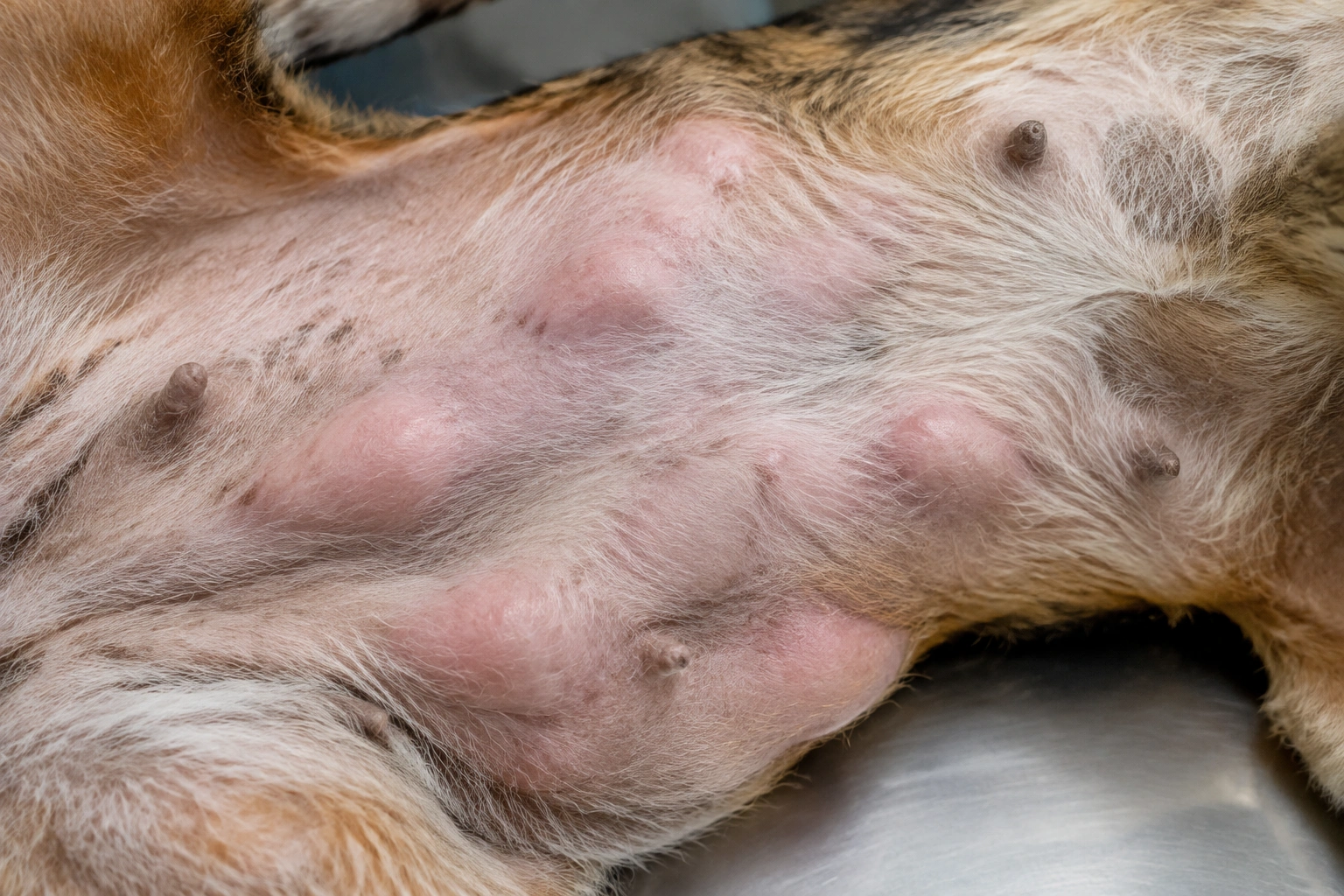
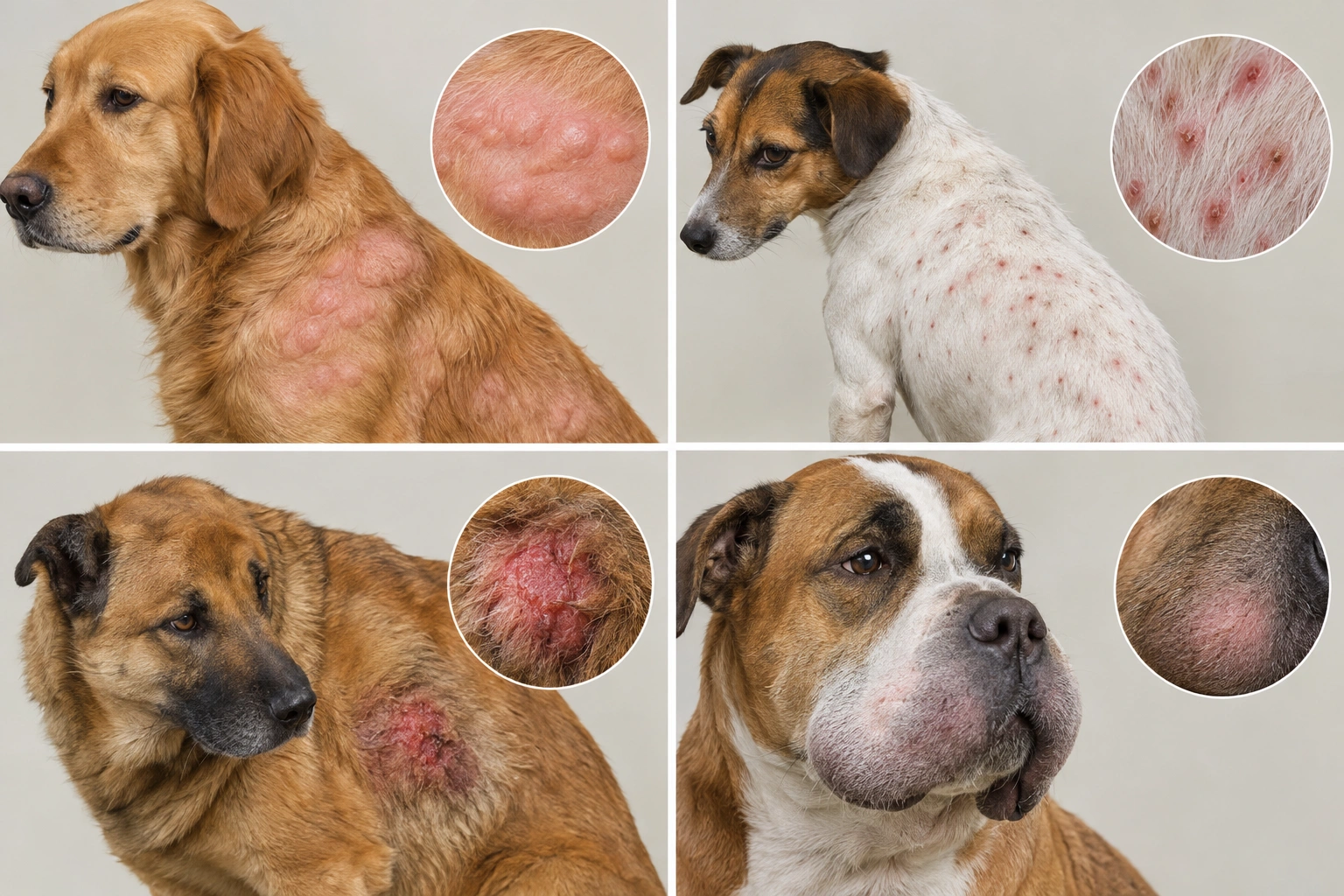
Dog hives, also called urticaria, usually look like raised, swollen bumps or welts on the skin. Depending on the dog and the severity of the reaction, they may appear:
- small and bumpy
- puffy and welt-like
- red, pale, or skin-colored
- scattered in one area or spread across several areas
- slightly fluid-filled in some cases
They can range from tiny discrete bumps to larger plaques or more generalized swelling, depending on how severe the reaction is.
On light-coated dogs, the redness may be easier to see. On darker skin or very dense coats, the raised texture may be more noticeable than the color. That’s why hives are sometimes easier to feel than to see.
A helpful clue is the shape. Hives often look like the skin has puffed up in spots rather than developing a flat, irritated patch. They can be round, irregular, or clustered together. In some dogs, the bumps are obvious enough to make the coat look uneven or “lumpy” in places.
In short-haired dogs, the welts may stand out right away. In long-haired dogs, parting the coat or running your hand over the skin may reveal the swelling before you can see it clearly.
Where Hives Can Show Up and How Fast They Appear
Hives can appear anywhere on the body. Common places include the belly, chest, back, sides, face, ears, and muzzle. They may also show up around the eyes or under the chin.
One of the most useful clues is how suddenly they appear. Veterinary sources note that hives often develop within minutes to hours of exposure to a trigger. That timing is a big reason owners should pay attention to what happened shortly before the bumps appeared.
For example:
- A dog may be normal in the morning and then develop raised welts after a walk through tall grass.
- A dog may get puffy bumps within an hour or two after a vaccine, medication, or new grooming product.
- A dog may have scattered swelling in several places at once, which is less typical of a single scratch or bite.
Hives can also come and go. A bump that was obvious an hour ago may flatten out, while a new one appears nearby. That shifting pattern is one reason hives can be confusing at first glance.
If the bumps are fixed in one spot, wet, raw, or getting worse over several days, that points more toward another skin problem than simple hives.
How Dog Hives Feel: Itching, Swelling, and Discomfort
Hives are often itchy, but not every dog scratches frantically. Some dogs seem mildly bothered and just keep licking, rubbing, or shaking their head. Others scratch enough to irritate the skin further.
A dog with hives may also seem:
- restless
- sensitive when touched
- puffy around the face
- bothered by the muzzle or eyelids
- less interested in settling down
The discomfort can be mild or more noticeable depending on the trigger and how widespread the reaction is. Scratching can make the skin look worse than the hives themselves, which is one reason owners sometimes mistake hives for a more severe rash.
Facial puffiness is especially important. Swelling around the eyes, ears, muzzle, nose, or throat area can mean the reaction is more than a simple skin issue and needs prompt veterinary attention.
Hives vs. Other Common Skin Problems
A lot of skin conditions can look bumpy at first, so it helps to compare them side by side rather than guessing from one photo.
| Skin problem | What it tends to look like | Common locations | Timing pattern | Urgency clue |
|---|---|---|---|---|
| Hives | Raised welts, puffy bumps, sometimes red or skin-colored | Anywhere on the body | Sudden, often within minutes to hours | Facial swelling, vomiting, breathing trouble, weakness |
| Flea bites | Small bumps, often with itching and irritation | Tail base, belly, back legs, neck | More gradual or recurring | Heavy scratching, hair loss, flea dirt |
| Insect bites | Localized bumps or swelling near the bite site | Exposed areas like face, legs, belly | Sudden but often limited to one area | Rapid swelling or signs of a stronger reaction |
| Rash/dermatitis | Flat redness, irritated patches, sometimes scaly skin | Belly, paws, groin, areas of contact | Often develops over time | Spreading redness, licking, persistent irritation |
| Hot spot | Moist, red, raw, painful patch | Neck, hips, thighs, ears | Can worsen quickly after licking or scratching | Oozing, pain, self-trauma |
| Angioedema | Deeper swelling, often not just surface bumps | Face, eyelids, muzzle, throat | Sudden | Can affect breathing and needs urgent care |
Hives vs. flea bites
Flea bites usually cause itching and may appear as smaller bumps, but they often show up in areas fleas like to target, such as the tail base and back half of the body. You may also see flea dirt or signs of ongoing scratching. Hives are more likely to appear suddenly in several places at once and are less tied to a single “flea zone.”
Hives vs. rash or dermatitis
A rash is often flatter, redder, and more diffuse than hives. Dermatitis tends to build over time, especially if the dog keeps licking or the skin is exposed to an irritant. Hives are usually more raised and abrupt.
Hives vs. hot spots
Hot spots are usually moist, inflamed, and painful, with a raw or sticky surface from licking and chewing. Hives are typically dry, raised, and puffy rather than wet and open.
Hives vs. insect bites
A bite from a bee, wasp, or other insect can create a local bump or swelling, but hives often spread beyond one bite site. If your dog has swelling in multiple areas, hives become more likely.
Hives vs. angioedema
Angioedema is deeper swelling, often around the face, eyelids, muzzle, or throat. It can happen alongside hives, but it is more concerning because it may affect breathing. If the face looks puffy rather than just bumpy, treat that as a more serious sign.
What Usually Causes Hives in Dogs
Hives are most often the result of an allergic reaction. Common triggers include:
- foods
- medications
- vaccines
- insect stings or bites
- grooming products
- environmental exposures such as pollen or plants
Sometimes the trigger is obvious because the hives appear shortly after a new food, a medication dose, or a walk in a new area. Other times the cause is harder to pin down, especially if the dog has been exposed to several possible triggers in the same day.
That uncertainty is one reason it helps to avoid repeating a suspected exposure until you’ve spoken with your veterinarian. If the hives appeared after a new shampoo, for example, it’s reasonable to stop using it until you know whether it was involved.
When Dog Hives Are an Emergency
Some hives stay mild. Others are part of a more serious allergic reaction that can escalate quickly.
Seek urgent veterinary care right away if your dog has hives along with any of the following:
- swelling on or near the nose or throat
- swelling around the eyes or muzzle that is getting worse
- trouble breathing
- vomiting
- diarrhea
- weakness
- collapse
- severe lethargy or distress
Swelling near the throat is especially concerning because it can interfere with breathing. Facial swelling can also signal that the reaction is spreading beyond the skin.
If your dog is having trouble breathing or seems to be deteriorating quickly, do not wait to see whether the bumps settle on their own. That is the moment to treat the situation as urgent.
What to Do First If You Think Your Dog Has Hives
Your first job is to gather useful information without irritating the skin further.
Do this:
- look at the whole body, not just one bump
- check the face, eyelids, muzzle, ears, and neck
- note when the bumps first appeared
- think about any recent food, medication, vaccine, walk, grooming product, or sting
- take clear photos from more than one angle
If your dog seems otherwise normal and the bumps are mild, those photos may help your veterinarian decide whether the problem is truly hives or something else.
Do not delay veterinary contact if you notice facial swelling, even if your dog is breathing normally and acting otherwise fine.
Avoid these common mistakes:
- do not squeeze or scratch the bumps
- do not apply human creams or ointments without veterinary guidance
- do not give human antihistamines, steroids, or pain relievers unless your vet has specifically told you to
- do not assume a sudden bump is harmless just because your dog is still eating or wagging
A short period of observation can be useful when the dog is comfortable and the swelling is mild, but that should never replace veterinary advice if the symptoms are spreading or the dog seems unwell.
When to Call Your Veterinarian
Call your veterinarian promptly if:
- you’re not sure whether the bumps are hives
- the swelling is spreading
- the dog is very itchy or uncomfortable
- the bumps appeared after a new food, medication, vaccine, or grooming product
- the hives keep returning
- the face looks puffy, even if breathing seems normal
When you call, share:
- when the bumps started
- how fast they spread
- where they are located
- whether your dog is itchy, licking, or rubbing
- whether there is facial swelling
- whether there has been vomiting, diarrhea, coughing, or breathing changes
- any recent exposures that could be relevant
That information helps the clinic judge whether the situation sounds like a simple skin reaction or a more urgent allergic event.
What to Photograph and Track for Better Vet Assessment
Photos are one of the most useful things you can bring to a skin problem visit, especially because hives can change quickly. Try to capture:
- a wide photo showing the body area
- a close-up of the bumps
- the face and muzzle if there is swelling
- a time-stamped series if the bumps are changing
If possible, take one photo when you first notice the bumps and another later the same day. That progression can show whether the swelling is fading, staying the same, or spreading.
It also helps to jot down:
- the time symptoms began
- what your dog ate
- any medications or supplements given
- recent walks, grooming, or bathing
- any new bedding, shampoo, sprays, or cleaning products
That record can be especially helpful if the hives disappear before the appointment. A dog that looks nearly normal by the time you arrive may still have had a significant reaction earlier.
A Simple Way to Judge What You’re Seeing
If you’re trying to decide whether the bumps are likely hives, use this quick filter:
- Sudden and raised? Hives become more likely.
- Multiple areas at once? Hives become more likely.
- Itchy but not wet or raw? Hives become more likely.
- Face, muzzle, or eyelids swollen? Treat it as more serious.
- Breathing, vomiting, weakness, or collapse? Seek urgent care immediately.
The more the skin changes look sudden, puffy, and migratory, the more they fit hives. The more they look wet, raw, fixed in one place, or slowly progressive, the more likely another skin issue is involved.
FAQ: Dog Hives and What They Look Like
Can dog hives disappear on their own?
Yes, mild hives can come and go within hours and may clear up without becoming severe. Even so, it’s still worth watching closely because some allergic reactions progress.
Are hives always red?
No. Hives may be red, pale, or skin-colored depending on the dog’s coat, skin tone, and the severity of the swelling.
Can hives happen on a long-haired dog without being obvious?
Yes. On long-haired dogs, the bumps may be easier to feel than see. Parting the coat or running your hand gently over the skin can reveal the raised areas.
Are hives the same as angioedema?
Not exactly. Hives are surface welts or bumps. Angioedema is deeper swelling, often around the face or throat, and it can be more dangerous.
Should I wait overnight if my dog has hives?
Only if your dog is comfortable, breathing normally, and not showing facial swelling or other warning signs. If the bumps are spreading or your dog seems unwell, call a veterinarian right away.
Bottom Line
When people ask what dog hives look like, the most useful answer is this: they usually appear as sudden, raised, puffy welts or bumps that may be red, pale, or skin-colored. They can show up anywhere, spread quickly, and sometimes fade within hours. The appearance matters, but the timing and the dog’s overall condition matter just as much.
If the bumps are mild and your dog seems otherwise normal, photos and a prompt call to your veterinarian can help you sort out the cause. If there is facial swelling, breathing trouble, vomiting, weakness, or collapse, treat it as an emergency.
