
What Happens If You Don’t Walk a Border Collie?

Quick Answer
If you regularly don’t walk a Border Collie and provide no equivalent exercise, enrichment, or training, the dog can become restless, frustrated, destructive, noisy, or overly focused on movement. Border Collies are high-energy herding dogs, and the AKC’s Border Collie ownership guidance emphasizes their need for regular activity and mental stimulation.
What you may notice
- Restless behavior: Your Border Collie may pace, stare at you, bring toys constantly, or struggle to settle.
- Destructive habits: Chewing, digging, stealing objects, and household mischief may provide self-made entertainment.
- More barking: Boredom and frustration can increase demand barking or reactions to outside movement.
- Herding behaviors: Chasing, stalking, circling, or controlling children and pets may become more noticeable.
- Reduced fitness: Long periods of inactivity can contribute to poor conditioning and unwanted weight gain.
- Frustration: A highly intelligent working dog may invent its own activities when you don’t provide appropriate ones.
Remember
- Missing one walk is usually not a crisis if you replace it with safe exercise, sniffing, training, games, and enrichment.
Border Collies, sometimes called Borders or BCs, were developed to work while thinking, moving, and responding to a handler. That combination makes them brilliant companions, but it also makes an inactive routine difficult for many of them.
I don’t judge a Border Collie’s day by miles walked alone. I look at whether the dog had chances to move, sniff, think, learn, interact, and then settle.
In This Guide
- What happens when a Border Collie doesn’t get walked?
- Why are walks so important for Border Collies?
- How can you tell your Border Collie needs more activity?
- Is a backyard enough for a Border Collie?
- How much exercise does a Border Collie need?
- Can mental stimulation replace a walk?
- What should you do when you can’t walk your Border Collie?
- When should you talk to a vet or trainer?
- Frequently asked questions
- Final takeaway
What Happens When a Border Collie Doesn’t Get Walked?
A Border Collie that repeatedly gets too little activity may start creating its own stimulation. That often appears as unwanted behavior rather than a dog simply looking “energetic.”
A Border Collie’s exercise need is its requirement for physical movement, mental work, exploration, social interaction, and appropriate recovery. Walking can provide several of these needs at once, which is why it is so useful.
Boredom can turn into self-made jobs
Remember what Border Collies were bred to do. They watched livestock, responded to subtle cues, controlled movement, and worked closely with people.
Remove all useful work, and that busy brain may find something else to monitor. The AKC’s guidance on canine boredom lists behaviors such as digging, restlessness, attention seeking, and excessive barking as possible boredom signals.
- Window watching: Fixating on pedestrians, dogs, bicycles, or cars.
- Household destruction: Chewing cushions, shoes, doors, or other objects.
- Movement chasing: Stalking children, cats, shadows, wheels, or reflections.
- Demand behavior: Barking, pawing, whining, or repeatedly dropping toys at your feet.
- Pacing: Wandering through the house without being able to relax.
These behaviors don’t prove that lack of walking is the only cause. Fear, pain, separation distress, incomplete training, and other problems can look similar.
One missed walk is different from chronic inactivity
If bad weather causes you to miss Tuesday’s walk, your Border Collie won’t suddenly become unhealthy. Replace the outing with indoor training, scent games, tug, food puzzles, or another suitable activity.
The concern is a repeated lifestyle with little movement or mental engagement. Days become weeks, and unwanted routines can become practiced habits.
Why Are Walks So Important for Border Collies?
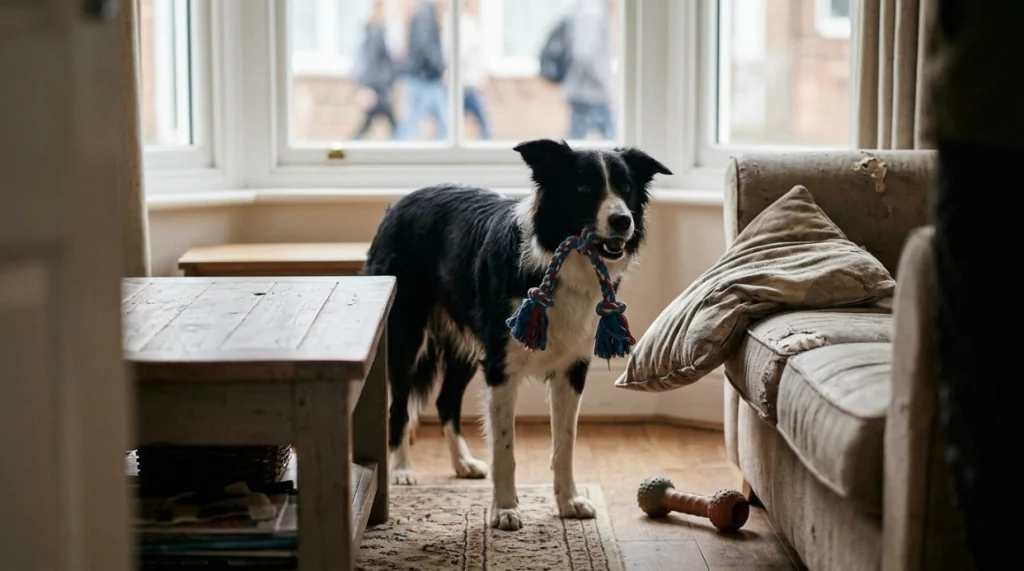
A walk does more than move your dog’s legs. A good walk offers exercise, smells, environmental information, training opportunities, and time with you.
Sniffing changes the value of a walk
I wouldn’t turn every outing into a strict heel exercise. Allowing a Border Collie to sniff gives the dog information that your eyes cannot provide.
- Let the dog investigate safe scent areas.
- Change routes when practical.
- Practice brief recalls and check-ins.
- Add short loose-leash training periods.
- Pause occasionally instead of marching continuously.
A 30-minute outing with exploration can offer a different experience from 30 minutes of repetitive ball chasing. Variety matters.
Walking also practices everyday behavior
Real-world walks let you reinforce calm responses around people, dogs, traffic, sounds, and movement. For a motion-sensitive herding breed, those skills matter.
A securely managed walk can also reduce opportunities for your Border Collie to spend the afternoon rehearsing fence running or window chasing.
How Can You Tell Your Border Collie Needs More Activity?
Look for a pattern rather than one isolated behavior. A dog that steals one sock isn’t automatically under-exercised.
I become more interested when several signs appear together and improve after a better daily routine.
- Can’t settle: The dog remains restless even during normally quiet periods.
- Constant attention seeking: Play demands seem almost continuous.
- Increasing destruction: Chewing, digging, shredding, or stealing becomes frequent.
- Excessive barking: Small sounds or outside movement trigger repeated barking.
- Intense chasing: The dog becomes highly focused on children, vehicles, cats, or moving objects.
- Over-the-top greetings: Stored energy appears as jumping, spinning, grabbing, or frantic movement.
- Difficulty concentrating: Training becomes harder because the dog arrives already over-aroused.
Don’t assume every active dog needs more running
This is one of the biggest mistakes I see in exercise plans. An owner notices restlessness and answers it with harder fetch sessions every day.
That can create a fitter dog who expects constant high-speed entertainment. Balance exercise with sniffing, thinking, impulse control, chewing, and genuine rest.
Is a Backyard Enough for a Border Collie?
Usually, a backyard alone isn’t enough. Space gives a Border Collie somewhere to move, but it doesn’t automatically provide meaningful activity.
A dog may spend an hour outside lying by the door. Another may spend that hour developing unwanted fence-running habits.
Make yard time interactive
A yard becomes more useful when you participate. Rotate activities instead of expecting your dog to exercise itself.
- Play structured tug with clear start and stop cues.
- Hide treats or toys for scent searches.
- Practice recalls between family members.
- Set up simple obstacle or body-awareness exercises.
- Practice obedience in short five-to-ten-minute sessions.
- Scatter part of a meal through safe grass for sniffing.
The goal isn’t to keep your Border Collie excited every waking minute. Good routines alternate purposeful activity with calm recovery.
How Much Exercise Does a Border Collie Need?
Many healthy adult Border Collies do well with roughly one to two hours of purposeful physical activity each day, combined with mental work. Individual needs vary with age, fitness, health, temperament, weather, and lifestyle.
PetMD’s Border Collie health and care guide likewise describes the breed as requiring substantial daily exercise and mental stimulation. It also notes that older dogs with mobility problems may need considerably less activity.
| Life stage | Useful activity pattern | Mental work | Main caution |
|---|---|---|---|
| Puppy | Several short, age-appropriate walks and play sessions | 3–5 minute training games | Avoid forced distance running and repetitive jumping |
| Healthy adult | Often around 60–120 minutes total purposeful physical activity | Several short training, scent, or puzzle sessions | Don’t rely only on high-speed exercise |
| Senior | Shorter, gentler sessions based on comfort and mobility | Scent games and easy learned skills | Watch stiffness, fatigue, pain, and slower recovery |
Those figures are starting points, not medical prescriptions. A conditioned working Border Collie may need a different routine from a family dog recovering from an injury.
Vet note: Puppies, senior dogs, overweight dogs, and Border Collies with orthopedic, heart, respiratory, neurologic, or other medical problems should have exercise adjusted with veterinary guidance.
Can Mental Stimulation Replace a Walk?
Mental stimulation can replace part of a missed walk, but it shouldn’t permanently replace normal physical activity in a healthy dog. Border Collies benefit most from a combination of movement and thinking.
Use the brain without creating constant excitement
The ASPCA’s canine enrichment guidance recommends opportunities for natural behaviors such as smelling, playing, chewing, scavenging, and problem-solving. These activities are particularly useful when outdoor exercise is limited.
- Scent search: Hide several pieces of food around one safe room.
- Trick training: Work on targeting, spins, toy names, or position changes.
- Food puzzles: Use part of a normal meal rather than constantly adding treats.
- Find the toy: Hide a familiar toy and teach the dog to search.
- Mat training: Reward quiet settling after an activity.
- Household jobs: Teach safe tasks such as carrying a toy to a basket.
Ten focused minutes of scent work can sometimes produce a calmer dog than another ten minutes of frantic ball chasing. The activities work different systems.
Dog sports can provide both
Agility foundations, rally, obedience, disc work, herding, tracking, and similar activities combine physical and mental effort. The AKC’s guide to sports for herding breeds explains why structured activities can suit active working dogs.
You don’t need to compete. Even carefully taught foundation exercises can give a Border Collie a useful job.
What Should You Do When You Can’t Walk Your Border Collie?
Sometimes walks aren’t possible. Storms, illness, unsafe heat, work emergencies, recovery periods, or other problems can change your routine.
Don’t panic and don’t try to exhaust your dog indoors. Build a temporary replacement plan.
- Start with five to ten minutes of training. Practice several familiar cues and one new skill.
- Add a scent activity. Hide food or toys in a safe area and let your Border Collie search.
- Use controlled play. Tug, indoor retrieves, or gentle movement games can add physical activity where space allows.
- Feed through enrichment. Use a puzzle feeder, scatter feeding, or another safe problem-solving activity.
- Practice settling. End the activity cycle with a chew, mat exercise, or quiet rest period.
Don’t “make up” missed exercise all at once
If your Border Collie has been inactive for several weeks, jumping straight into a long run isn’t a sensible comeback plan. Conditioning should increase progressively.
Start with manageable outings and watch how your dog feels later that day and the following morning. Stiffness, limping, unusual reluctance, or excessive fatigue means you should reduce the workload and investigate.
Vet note: Ask your veterinarian before restarting strenuous exercise after injury, surgery, prolonged illness, or a significant period of inactivity.
When Should You Talk to a Vet or Trainer?
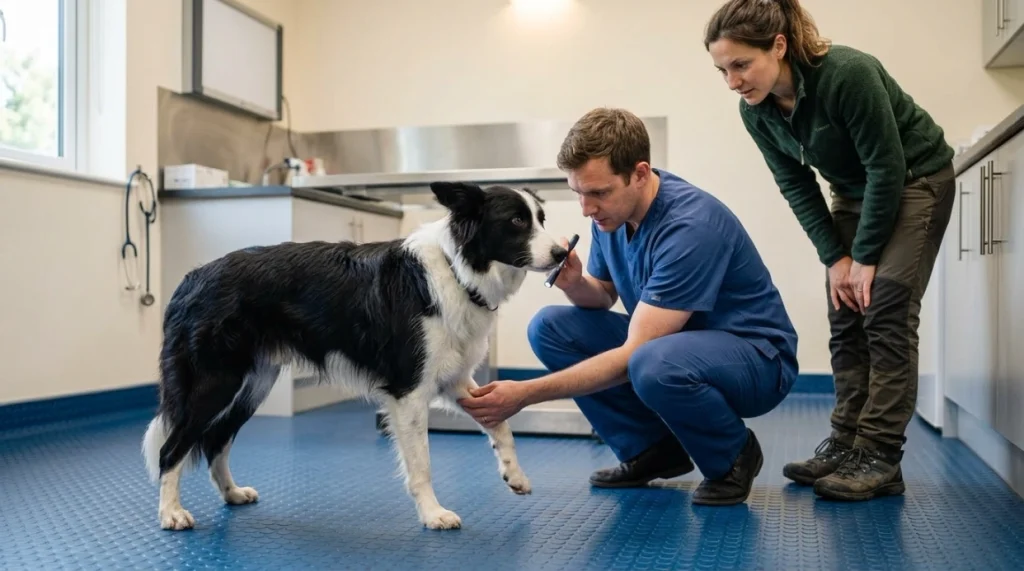
Exercise can improve boredom-related behavior, but not every behavioral problem is caused by too little walking. Increasing exercise blindly can delay the help your dog needs.
Contact your veterinarian when behavior changes suddenly
- Sudden reluctance to walk or climb stairs
- Limping or stiffness
- Unexplained drop in energy
- Major appetite or thirst changes
- Collapse, seizures, or unusual weakness
- Sudden aggression or sensitivity to touch
- Persistent panting or exercise intolerance
Pain can change behavior. A dog that suddenly refuses its normal walk may need examination rather than motivation.
Get training or behavior support when safety is involved
Seek qualified help if your Border Collie is chasing vehicles, biting, showing serious separation distress, reacting intensely to dogs or people, or developing difficult compulsive behaviors.
My preferred approach is simple: management first, humane training second, then gradual practice. Don’t give a dog unlimited chances to rehearse dangerous behavior while hoping exercise alone fixes it.
Frequently Asked Questions
Can a Border Collie go a day without a walk?
Yes. Most healthy Border Collies can handle an occasional day without a normal walk when you provide appropriate alternatives such as indoor training, scent work, controlled play, enrichment feeding, and calm interaction.
Will a Border Collie become aggressive without exercise?
Lack of exercise does not automatically make a Border Collie aggressive. However, chronic frustration, poor management, fear, pain, and repeated over-arousal can contribute to behavior problems, so aggression deserves proper assessment rather than simply adding more walks.
Is 30 minutes of walking enough for a Border Collie?
Thirty minutes is usually too little as the entire daily activity allowance for a young, healthy adult Border Collie. It may still be one useful part of a day that also includes additional exercise, training, sniffing, play, and mental enrichment.
Can I just play fetch instead of walking my Border Collie?
Fetch can provide useful exercise, but I wouldn’t use endless fetch as the only activity. Walking offers sniffing, novelty, environmental exposure, and calmer movement that repetitive high-speed chasing doesn’t provide in the same way.
How long can a Border Collie be inactive?
There is no universal safe number of inactive days because age, health, conditioning, and the reason for inactivity matter. When exercise restriction is medically necessary, follow your veterinarian’s plan and use approved mental enrichment.
Do Border Collies need exercise even if they have a large yard?
Yes. A large yard provides space, but many Border Collies won’t automatically meet their own physical and mental needs there. They still benefit from interactive exercise, training, exploration, games, and time working with their person.
Final Takeaway: Don’t Measure Your Border Collie’s Life Only in Walks
If you don’t walk a Border Collie occasionally, you can usually meet the dog’s needs in other ways. The larger problem is a lifestyle with too little physical exercise, mental work, exploration, interaction, and structured downtime.
As of 2026, my approach remains balance over exhaustion. I want a Border Collie that can work enthusiastically and then switch off comfortably.
- Provide daily movement: Use walks, play, hiking, sport, or another suitable activity.
- Exercise the brain: Add scent work, training, puzzles, and useful tasks.
- Allow sniffing: Not every outing needs to be fast or physically demanding.
- Teach calmness: Reward relaxation instead of only rewarding intense activity.
- Adjust for the individual: Age, health, temperament, and conditioning change exercise needs.
- Watch sudden changes: A Border Collie that unexpectedly stops wanting exercise may need veterinary attention.
You don’t need to spend the entire day trying to tire your Border Collie out. Build a predictable routine that gives the dog meaningful things to do and equally meaningful opportunities to rest.
