
What Hives on Dogs Look Like: A Practical Guide to Spotting Them Fast

If you’ve just noticed strange bumps on your dog’s skin, the first question is usually the simplest one: are these hives, or something else?
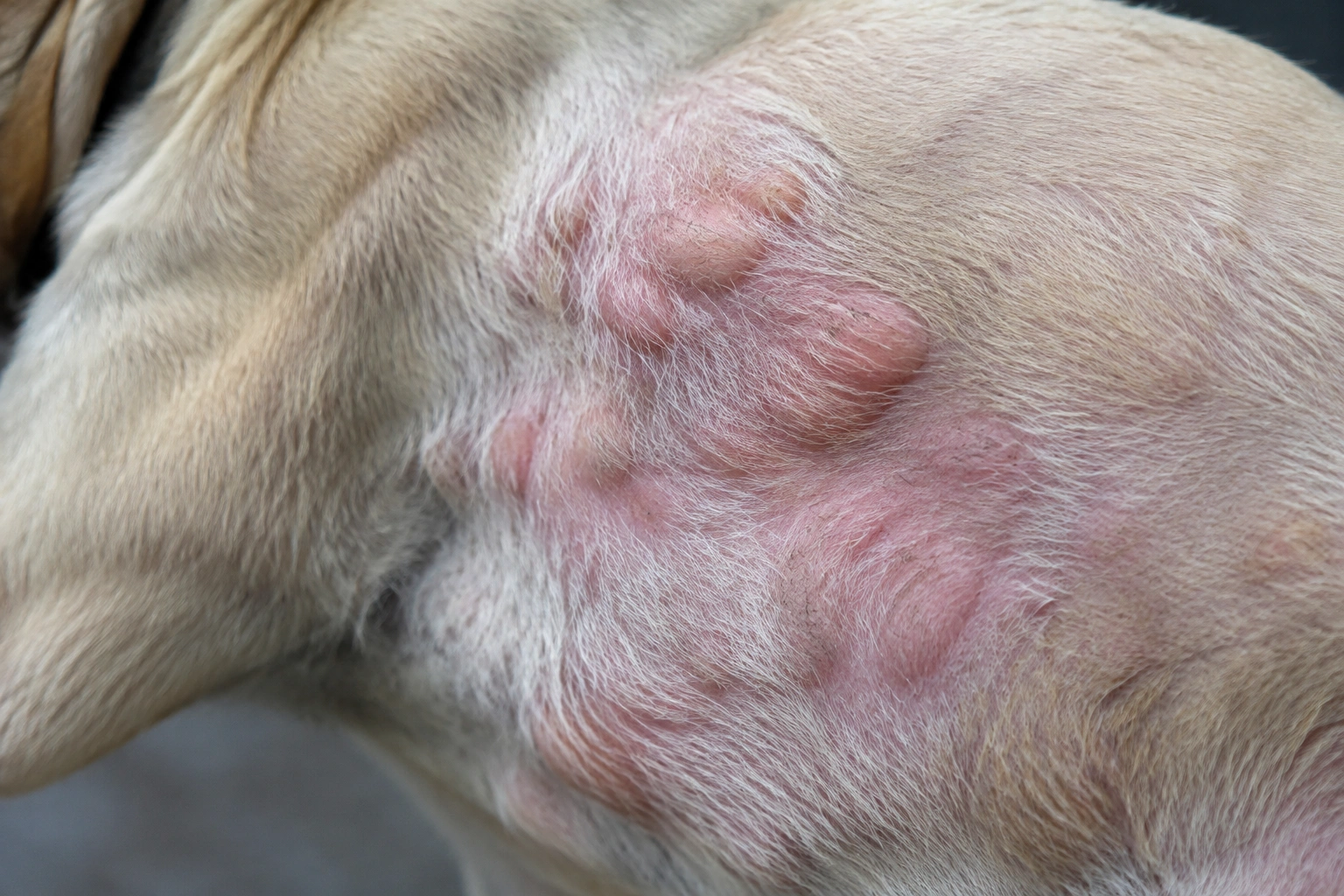
Hives in dogs are usually raised, puffy welts that appear suddenly. They may look pink, red, or pale compared with the surrounding skin. On a short-haired dog, they can look like obvious round or irregular bumps. On a thick-coated dog, they may be harder to see and easier to feel than to spot.
That matters because hives are not just “a rash.” They often point to an allergic reaction, and while some cases are mild, others can be the first sign of a more serious problem. The goal is not to guess perfectly from one glance. The goal is to recognize the pattern quickly enough to decide whether you can monitor briefly at home or need a veterinarian now.
If you want a broader reference for skin and allergy symptoms in dogs, you may also find VCA Hospitals’ pet allergy guidance useful alongside this article.
What hives on dogs actually look like
The easiest way to picture hives is to think raised skin swelling, not flat redness.
A dog with hives may have:
- Small raised bumps that feel like soft beads under the skin
- Round or irregular welts that look puffy rather than crusty
- Pink, red, or pale patches depending on coat color and skin tone
- Clusters of bumps or scattered individual welts
- Itching, restlessness, or repeated scratching
- Mild facial puffiness, especially around the eyes, lips, or muzzle
In some dogs, the bumps are obvious. In others, the fur hides most of the visual change, and you notice the texture first when you run your hand over the coat. Hives are often soft, movable, raised swellings that may be easier to feel than see, especially in thick-coated dogs. A thick-coated Border Collie may not show dramatic redness, but the skin can still feel uneven or swollen.
One useful rule: if the skin looks puffy, raised, and suddenly different from normal, hives move higher on the list. If the area is just red, sore, or greasy without raised welts, something else may be going on.
Where hives commonly appear and how they change
Hives can show up almost anywhere, but they often appear on the:
- Face
- Eyelids
- Lips
- Muzzle
- Ears
- Chest
- Belly
- Back
- Legs
The face tends to get attention first because swelling there is easy to see. But hives on the belly or chest are just as important, especially if they appeared suddenly after a walk, a new food, a medication, or a vaccine.
A useful clue is speed. Hives often appear quickly and may change just as quickly, sometimes coming and going within hours. One patch may fade while another becomes more obvious. That “here now, less there later” pattern is one reason hives can be confusing: they don’t always stay in one neat place.
That is also why checking the dog twice over a few hours can be more helpful than checking only once. If the bumps are fading, that supports hives. If the skin is becoming more swollen, the dog is getting itchier, or new symptoms are appearing, the situation deserves more caution.
Hives vs. flea bites, rash, hot spots, and facial swelling
This is where many owners get stuck. The skin changes can overlap, but the details usually separate them.
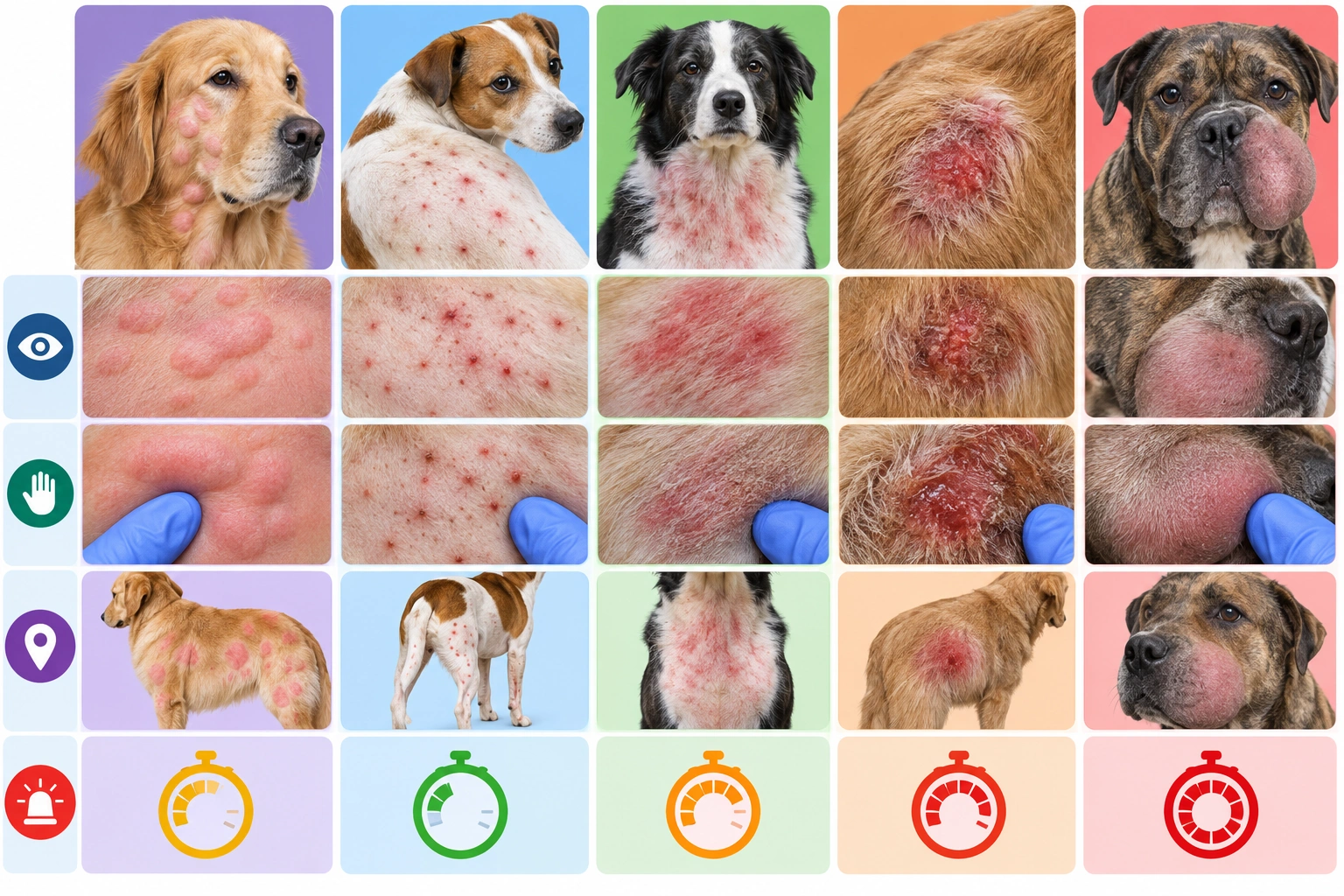
| Condition | What it looks like | Texture | Common locations | Speed of onset | Urgency |
|---|---|---|---|---|---|
| Hives | Raised welts, bumps, or puffy patches | Soft, swollen, sometimes itchy | Face, belly, chest, ears, back, legs | Sudden | Can be urgent if swelling or other symptoms appear |
| Flea bites | Small red bumps, often with scratching | Usually more pinpoint than puffy | Lower back, rump, tail base, belly | Gradual or noticed after exposure | Usually not an emergency unless there is a severe reaction |
| Rash | Flat redness, irritation, or scattered spots | Often flat, inflamed, or flaky | Anywhere the skin contacts an irritant | Varies | Depends on cause and severity |
| Hot spot | Red, moist, raw, painful patch | Wet, inflamed, often sticky | Neck, cheek, hip, thigh, chest | Can worsen quickly | Needs vet care, especially if painful or spreading |
| Facial swelling / angioedema | Puffy face, lips, eyelids, muzzle | Swollen, sometimes dramatic | Face, lips, eyelids, muzzle | Sudden | More concerning because it can accompany a serious allergic reaction |
Hives vs. flea bites
Flea bites are usually smaller and more pinpoint. They often show up where fleas like to feed or where the dog scratches most, such as the lower back or tail base. Hives are more likely to look like broad, raised welts rather than tiny dots.
If you see a few little bumps and your dog has been scratching, flea bites are possible. If you see puffy raised areas that appeared all at once, hives are more likely.
Hives vs. rash
A rash is often flat or only slightly raised. It may look red, irritated, flaky, or spread out in a patch. Hives are usually more obviously elevated. That raised quality is one of the most helpful clues.
Hives vs. hot spots
Hot spots are usually much wetter, rawer, and more painful. A dog with a hot spot often licks, chews, or guards the area intensely. Hives are more of a swollen-skin problem than a moist skin-wound problem.
Hives vs. facial swelling
This one matters because facial swelling can be part of the same allergic process as hives, but it raises the stakes. A puffy muzzle, swollen eyelids, or thickened lips may mean the reaction is moving beyond simple skin bumps.
If you see hives together with facial swelling, treat it as urgent even if breathing still seems normal.
What causes hives in dogs
Hives are usually linked to an allergic reaction, but that does not tell you the trigger by itself. Common causes include:
- Insect stings or bites
- Food reactions
- Medications
- Vaccines
- Environmental exposures
- Contact with something irritating or allergenic
A practical way to think about it is this: hives are often the skin’s reaction to something the dog encountered recently. If the bumps appeared after a walk, a new treat, a vaccine appointment, or a medication dose, that timeline matters.
Common real-world scenarios
- A dog comes in from the yard with sudden welts after likely contacting an insect or sting.
- A dog develops itchy bumps shortly after a new medication.
- A dog gets facial puffiness and hives after a vaccine visit.
- A dog eats a new treat and later develops swelling and skin bumps.
None of those examples prove the cause on their own. They just give you a starting point for the conversation with your vet.
When hives are mild vs. when they signal an emergency
Some hives are limited to the skin and the dog otherwise seems normal. Others are part of a broader allergic reaction.
More consistent with mild hives
- Raised bumps or welts only
- Mild itching
- Dog is alert, breathing normally, and acting mostly like itself
- No vomiting, weakness, or collapse
- No major facial swelling
More concerning for an emergency
- Breathing changes
- Repeated vomiting
- Weakness
- Collapse
- Rapidly worsening swelling
- Pale gums
- Swelling of the muzzle, lips, eyelids, or throat area
If you see hives plus any breathing trouble, vomiting, weakness, or facial swelling, do not wait to “see if it passes.” That combination can signal a more serious allergic reaction, including anaphylaxis.
The reason this is treated seriously is simple: skin signs can be the visible part of a reaction that is also affecting the airway or circulation. A dog may look only mildly uncomfortable at first and then worsen. That’s why the other symptoms matter more than the bumps alone.
For a broader look at emergency warning signs in dogs, the ASPCA’s pet safety resources are a reliable place to start.
What to do right away if you notice hives
If your dog has sudden bumps that look like hives and is otherwise stable, your first job is to reduce risk and watch for change.
Do this first
- Check the dog’s breathing
- Normal breathing makes home monitoring more reasonable for a short period.
-
Any strain, noise, or effort means you should escalate quickly.
-
Look at the face
- Check the lips, eyelids, and muzzle for swelling.
-
Facial puffiness is more concerning than isolated bumps on the body.
-
Think back over the last few hours
- New food?
- New treat?
- Medication?
- Vaccine?
- Outdoor exposure?
-
Insect sting?
-
Prevent more exposure
- Bring the dog indoors if the reaction started outside.
- Stop the suspected treat or new food.
-
Don’t give another dose of a new medication unless your vet instructs you to.
-
Call your veterinarian for guidance if the cause is unclear
- Even mild hives are worth discussing if they appeared suddenly.
What not to do
- Do not give human allergy medicine unless a veterinarian has specifically told you to.
- Do not assume the bumps are harmless just because your dog is still wagging.
- Do not wait if swelling is spreading or the dog is acting unwell.
A cool compress can be used only as optional comfort care if your dog tolerates it, but it is not a treatment and should not delay veterinary contact if the reaction is progressing.
When to call your veterinarian or go to an emergency clinic
Use this simple decision framework:
Call your veterinarian soon if:
- The bumps look like hives but the dog is otherwise normal
- The bumps are mild but new and unexplained
- You suspect a recent food, medication, or vaccine triggered the reaction
- The hives fade and return, or keep showing up over several hours
Go to an emergency clinic now if:
- There is any breathing difficulty
- There is vomiting
- There is weakness or collapse
- The dog has significant facial swelling
- The hives are spreading rapidly and the dog seems worse
If you are unsure, err on the side of calling. A quick phone conversation can help the clinic decide whether the dog needs to be seen right away.
Border Collies and allergy vigilance
Border Collies are not known for some special hive-specific skin disease, but many owners of active, outdoor dogs notice skin changes quickly because these dogs are out in grass, brush, fields, and parks so often.
That makes observation a real advantage. If your Border Collie suddenly comes in with a swollen muzzle, itchy bumps, or a change in energy after outdoor play, you are more likely to spot the pattern early.
The practical takeaway is not that the breed is uniquely prone to hives. It’s that an alert owner can catch a reaction while it is still limited to the skin, which gives you more time to respond appropriately.
FAQ: What dog owners ask most often
Are hives always itchy?
No. They are often itchy, but not always intensely so. Some dogs seem only mildly bothered.
Can hives disappear on their own?
Yes, mild hives can fade within hours, but that does not mean the trigger is harmless or that the reaction cannot worsen.
Do hives always mean an allergy?
They are commonly linked to an allergic reaction, but the exact trigger may be a sting, food, medication, vaccine, or environmental exposure.
Can hives be confused with bug bites?
Absolutely. Bug bites can look similar at first, which is why the raised, puffy, sudden pattern matters so much.
What if my dog has hives but seems fine?
Monitor closely and contact your vet for advice, especially if the cause is unknown. Watch for swelling, vomiting, weakness, or breathing changes.
Should I wait overnight if the bumps are small?
Only if your dog is otherwise normal, the bumps are mild, and there is no facial swelling or other warning sign. If anything is worsening, do not wait.
The bottom line
What hives on dogs look like, in plain terms, is sudden raised swelling of the skin: puffy welts, bumps, or patches that may be red, pink, or pale and may itch. They often show up on the face, belly, chest, ears, or legs, and they can fade or move around over time.
The most important part is not just identifying the bumps, but reading the whole picture. Hives with breathing trouble, vomiting, weakness, or facial swelling need urgent veterinary attention. Mild, isolated hives still deserve close watching and a call to your vet if the trigger is unclear.
