

Quick Answer
Don’t treat a Border Collie like a low-energy pet that only needs food, a short walk, and occasional play. This intelligent herding dog needs thoughtful exercise, mental work, clear training, rest, and humane handling; the AKC Border Collie breed overview also describes the breed as a bright, energetic worker that needs to stay occupied.
The biggest mistakes to avoid
- Don’t under-stimulate: A bored Border Collie may invent work such as chasing, barking, pacing, digging, or controlling movement.
- Don’t over-exercise: Endless ball throwing can build a fitter, more aroused dog instead of teaching calm behavior.
- Don’t punish harshly: Yelling, intimidation, and painful corrections can damage trust and increase stress.
- Don’t reward obsession: Repeating fetch, light chasing, or fence running can strengthen compulsive patterns.
- Don’t skip rest: Smart, driven dogs still need predictable downtime and sleep.
- Don’t ignore change: Sudden behavior, appetite, movement, or energy changes deserve veterinary attention.
A better rule
- Balance movement, thinking, training, sniffing, play, social time, and genuine rest instead of trying to exhaust your dog.
Border Collies, sometimes called Borders or BCs, learn patterns faster than many owners expect. That can be wonderful, but it also means we can accidentally teach the exact behavior we dislike.
As of 2026, my best advice is simple: don’t ask, “How do I tire this dog out?” Ask, “What daily routine teaches this dog how to live well?”
In This Guide
- What should you never do to a Border Collie?
- Why is physical exercise alone not enough?
- Why shouldn’t you punish a Border Collie harshly?
- Can you leave a Border Collie alone too long?
- Which training mistakes confuse Border Collies?
- What should you avoid with herding and chasing?
- Which care and health mistakes matter most?
- Frequently asked questions
- Final takeaway
What Should You Never Do to a Border Collie?
You should never repeatedly frustrate, frighten, isolate, or chronically under-stimulate a Border Collie. You also shouldn’t make high-speed exercise the answer to every behavior problem.
A Border Collie’s herding instinct is an inherited tendency to notice movement, control space, stalk, gather, and influence moving animals. The famous Border Collie “eye” is the intense visual focus often used while working stock.
That working heritage matters in ordinary homes. A dog bred to monitor movement may notice bicycles, running children, cats, cars, doors, shadows, and every change in your routine.
- Don’t expect a short leash walk to meet every need. Walking is useful, but many Borders also need purposeful play, sniffing, training, and problem-solving.
- Don’t tease with movement. Repeatedly triggering chasing with feet, hands, laser-like lights, or frantic games can make arousal harder to manage.
- Don’t be inconsistent. If jumping works on Monday but gets punished on Tuesday, your dog receives a confusing lesson.
- Don’t ignore calm behavior. Quiet choices should earn attention too, not only flashy tricks and intense work.
- Don’t force social contact. A reserved dog should be allowed distance instead of being pushed toward strangers or unfamiliar dogs.
I often think of Border Collies as pattern collectors. If a behavior works twice, many will try it a third time with impressive confidence.
So manage the environment before problems become habits. Close the blinds for window chasing, use gates around hectic doorways, and reward a settled mat behavior before guests arrive.
Why Is Physical Exercise Alone Not Enough for a Border Collie?
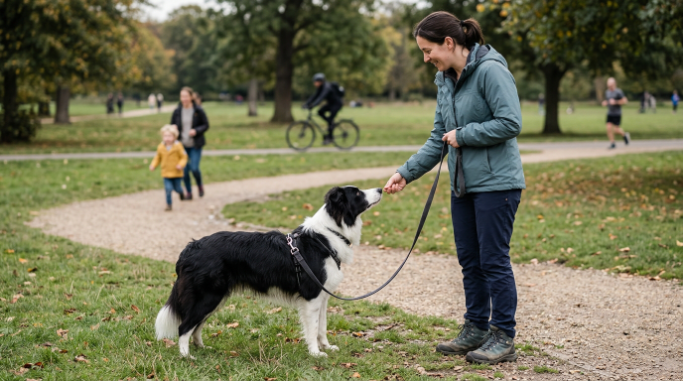
Physical exercise is important, but exercise alone doesn’t teach an off-switch. A Border Collie also needs mental enrichment and practice settling when nothing exciting is happening.
The trap is easy to fall into. A young Border seems restless, so the owner throws a ball longer and faster every day.
- Use movement with purpose: Mix brisk walks, hiking, safe free movement, tug, recall games, and age-appropriate sport.
- Add thinking work: Try scent searches, food puzzles, trick training, shaping games, and simple household tasks.
- Practice calm: Reward lying on a mat, chewing quietly, watching the world, or resting after activity.
- Rotate activities: Repetition can create obsession, while variety develops flexibility.
For a healthy adult, I prefer several purposeful activity blocks instead of one giant daily “burnout” session. Two 8-minute training games can sometimes leave a dog more satisfied than another 20 minutes of frantic ball chasing.
The AKC also highlights structured activities such as obedience, agility, rally, and herding for active herding breeds. Those outlets combine physical movement with thinking and handler focus.
| Life stage | Useful training block | Better activity emphasis | Avoid |
|---|---|---|---|
| Young puppy | 3–5 minutes | Exploration, recall games, gentle skills | Forced distance running and endless jumping |
| Adolescent | 5–10 minutes | Impulse control, sniffing, skill variety | Constant high-arousal fetch |
| Healthy adult | 5–15 minutes | Work, sport, hiking, scent and skill games | Using exhaustion as behavior treatment |
| Senior | 3–10 minutes | Low-impact movement, scent work, easy skills | Ignoring stiffness or slower recovery |
These are practical training-session ranges, not medical exercise limits. Your dog’s age, joints, health, conditioning, weather, and veterinarian’s advice should shape physical activity.
Why Shouldn’t You Punish a Border Collie Harshly?
Harsh punishment can make a sensitive, observant dog more worried without teaching the behavior you want. Show the Border Collie what works instead.
The ASPCA’s position on training methods supports humane methods that rely primarily on rewards and minimize stress. That approach fits Border Collies especially well because they notice tiny changes in voice, posture, timing, and routine.
- Avoid yelling after the fact. A dog can’t connect your anger to something that happened much earlier.
- Avoid intimidation. Cornering, looming, grabbing, or frightening a dog may suppress behavior while increasing stress.
- Avoid painful corrections. Pain can become associated with the handler, environment, other dogs, or the activity itself.
- Avoid emotional training. If you’re frustrated, end with an easy success and return later.
When a Border makes a mistake, I usually ask three questions: What triggered it, what rewarded it, and what should the dog do next time? Those questions lead to clearer training than anger does.
For example, don’t scream at a dog for rushing the front door. Use distance, a gate or leash, then reward a stationing behavior several feet from the door.
Can You Leave a Border Collie Alone Too Long?
Border Collies can learn to spend time alone, but chronic isolation is a poor match for a social working breed. The goal is comfortable independence, not simply enduring boredom.
There isn’t one universal number of hours that suits every dog. Puppies need more frequent toilet breaks and supervision, while adult tolerance varies with training, routine, health, and individual temperament.
- Don’t jump from minutes to a full workday. Build alone time gradually.
- Don’t leave the dog with nothing appropriate to do. Safe chews, food toys, and a comfortable rest area can help.
- Don’t make departures dramatic. Calm, predictable exits are easier to understand.
- Don’t assume destruction is revenge. Chewing or scratching may reflect boredom, distress, access to tempting items, or incomplete training.
If your dog panics when alone, treat it as more than a nuisance. Repeated howling, escape attempts, drooling, toileting, or self-injury deserves professional help.
True separation-related distress may need a veterinarian or qualified behavior professional. Simply exercising the dog harder before leaving doesn’t fix the underlying fear.
Which Training Mistakes Confuse Border Collies Most?
The biggest training mistake is being unclear. Border Collies are quick learners, but they can learn loopholes just as quickly as cues.
Don’t repeat cues until they become background noise
Say “come” once, then help the dog succeed. Repeating “come, come, come” teaches that the first cue doesn’t matter.
Don’t train only when something goes wrong
Practice easy behaviors before you need them. A five-minute session on place, leave-it, recall, and loose-leash walking can prevent many daily battles.
Don’t raise difficulty too fast
A dog who can stay in the kitchen may fail beside a soccer field. Increase distance, duration, and distraction one layer at a time.
- Start simple: Teach the behavior in a quiet room.
- Add duration: Ask for a few extra seconds.
- Add distance: Move one or two steps away.
- Add distraction: Introduce low-level movement before exciting environments.
- Reward success: Pay well when the task gets harder.
Don’t forget to train “nothing”
Many owners teach 30 tricks but never teach rest. I deliberately reward a Border for lying down, softening their eyes, disengaging from movement, and choosing a chew.
That isn’t wasted time. Calmness is a trained life skill for a dog whose brain naturally looks for the next job.
What Should You Avoid With Herding, Chasing, Children, and Other Pets?
Don’t punish the existence of herding instinct, but don’t allow unsafe chasing either. Give the instinct legal outlets while managing situations that invite trouble.
Moving children can trigger stalking, circling, body-blocking, or heel-directed behavior in some Borders. Supervision and calm interruption matter more than assuming the dog will “grow out of it.”
- Don’t let dogs rehearse car chasing. Use secure fencing and leashes near roads.
- Don’t encourage bicycle or runner chasing. Practice disengagement at a safe distance.
- Don’t use children as herding toys. Stop circling, nipping, or controlling games early.
- Don’t leave predatory-style chasing unmanaged. Cats, poultry, and small pets need careful introductions and safe separation when necessary.
- Don’t force dog-park play. Some Borders prefer structured activities over chaotic group play.
The better outlet depends on the dog. Herding lessons, treibball, agility foundations, rally, scent work, disc skills, and structured tug can all provide useful jobs.
The AKC’s guide to sports for herding breeds describes activities that channel working instincts into structured physical and mental tasks. Choose activities your dog enjoys rather than chasing titles.
Which Care and Health Mistakes Should Border Collie Owners Avoid?
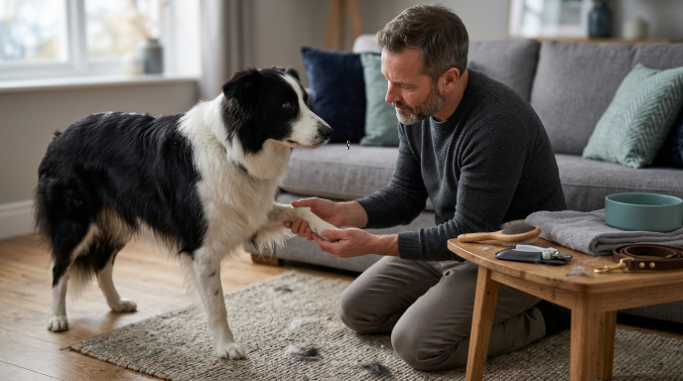
Don’t explain every behavior change as “just a Border Collie thing.” Pain, illness, fear, medication effects, and age-related changes can alter behavior.
Border Collies can be affected by orthopedic, neurologic, genetic, and eye-related conditions. The PetMD Border Collie health guide discusses issues including hip dysplasia, epilepsy, and the MDR1 medication-sensitivity mutation.
Vet note: New limping, seizures, collapse, major appetite changes, sudden aggression, persistent anxiety, or a sharp drop in energy should be discussed with your veterinarian.
- Don’t exercise through lameness. Rest and get veterinary guidance instead of assuming the dog is being stubborn.
- Don’t give human medication casually. Some common human medicines are dangerous for dogs.
- Don’t ignore recovery. Hard activity day after day can be a poor plan for muscles, joints, and arousal.
- Don’t skip grooming checks. Examine paws, nails, ears, skin, coat, and body condition regularly.
- Don’t assume coat length changes energy needs. Rough- and smooth-coated Border Collies share the same working-breed heritage.
A Border Collie’s double coat also needs sensible care. Regular brushing helps remove loose hair and lets you notice skin changes, burrs, ticks, or sore spots early.
Health and behavior are connected. When a normally eager dog suddenly avoids stairs, training, touch, or jumping into the car, I treat that change as information rather than disobedience.
Frequently Asked Questions About What Not to Do to a Border Collie
What is the worst thing you can do to a Border Collie?
One of the worst long-term mistakes is combining boredom with harsh punishment. The dog gets too little appropriate work, invents unwanted behavior, then gets corrected for solving its own need for activity.
Should you yell at a Border Collie?
No. A sharp emergency interruption may happen in real life, but routine yelling is poor training. Use clear cues, management, rewards, and rehearsed alternative behaviors so the dog understands what earns success.
Can you over-exercise a Border Collie?
Yes. More exercise isn’t always better, especially for puppies, injured dogs, seniors, or dogs doing repetitive high-impact activity. Build fitness gradually, include recovery, and ask your veterinarian about safe exercise when health or growth is a concern.
Is playing fetch bad for Border Collies?
Fetch isn’t automatically bad. Problems arise when it becomes endless, highly arousing, or obsessive. Mix fetch with sniffing, obedience, searching, tug, walking, and calm breaks so one activity doesn’t control the dog’s entire day.
Should a Border Collie be left outside all day?
Usually not as a default lifestyle. A yard provides space, but it doesn’t replace companionship, training, enrichment, or supervision. Some Border Collies left outside invent fence running, barking, digging, or chasing routines.
How do you discipline a Border Collie?
Think in terms of teaching, not punishment. Prevent rehearsal of the unwanted behavior, interrupt safely, cue an alternative, and reward the better choice. Consistency and timing matter more than force.
What happens if a Border Collie gets bored?
Boredom can show up as barking, pacing, chewing, digging, stealing objects, shadow chasing, fence running, or obsessive attention to movement. Add appropriate mental work while also teaching the dog how to settle.
Final Takeaway: Build Balance, Not Exhaustion
The key to living well with a Border Collie is balance. Give the dog enough to do, but also teach that life includes quiet mornings, boring afternoons, visitors, leash walks, grooming, and rest.
I’d rather have a Border Collie who can think and settle than one who can chase a ball for two hours. That calm flexibility makes daily life safer and more enjoyable for everyone.
- Meet the breed’s working needs. Use physical exercise and mental challenges together.
- Protect trust. Choose humane, reward-based teaching over fear or pain.
- Manage instinct. Don’t let chasing and herding become dangerous rehearsed habits.
- Teach an off-switch. Reward rest as deliberately as you reward action.
- Watch health changes. Sudden behavior shifts deserve curiosity and, when needed, veterinary care.
Start with one change today. Pick the mistake you recognize most, replace it with a clearer routine, and give your Border Collie a week to learn the new pattern.
