
What to Do After a Dog Has a Seizure: A Calm, Practical Guide for Owners

A seizure ends before the danger is fully over. The next few minutes matter because your dog may be confused, unsteady, temporarily blind, thirsty, frightened, or ready to seize again. Your job is simple: keep the dog safe, watch for warning signs, and gather enough information for your veterinarian to make sense of what happened.
For Border Collie owners, this often feels especially urgent because these dogs are active, alert, and easy to overstimulate. A dog that normally looks sharp and athletic can seem deeply unlike itself after a seizure. That contrast is unsettling, but it also makes careful observation more valuable. The calmer and more methodical you are, the better chance you have of spotting whether this is a normal recovery or a situation that needs emergency care.
What to do in the first 5 minutes after the seizure ends
Once the seizure stops, follow this order:
- Move the dog only if the location is unsafe. If they are near stairs, a pool, a road, a hot surface, or another hazard, guide them gently to a safer spot once they can be moved without risk. If they are already safe on the floor, leave them there.
- Dim the lights and reduce noise. Keep the room quiet and calm.
- Separate other pets and children. Give the recovering dog space and prevent crowding.
- Check breathing. Look for steady breathing without obvious struggle, gasping, or repeated pauses.
- Start timing recovery. Note the exact time the seizure ended and watch for the dog to begin improving.
- Call the vet if the dog is not improving. If your dog is not clearly trending toward normal within a short period, or seems worse instead of better, contact your veterinarian or an emergency clinic.
Keep your hands away from the mouth and do not try to hold the dog down. Cornell’s veterinary guidance notes that dogs may be disoriented afterward, which is why crowding or handling them too much can backfire. Cornell’s seizure guidance is worth reading if your dog has a seizure history.
If you have other pets or children nearby, separate them now. A post-seizure dog may not want contact and may react unpredictably if startled. The goal is not comfort through touch; it is calm, space, and observation.
Check breathing, awareness, and ability to stand
Once the dog is still, do a quick check.
Look at breathing first. You want steady breathing without obvious struggle, gasping, or repeated pauses. If breathing looks labored, that moves the situation toward urgent veterinary care.
Next, assess awareness. A dog in the postictal phase may seem confused, glassy-eyed, restless, clingy, or temporarily unaware of where they are. Cornell notes that the minutes to hours after a seizure can bring disorientation or confusion, and some dogs may show aggressive behavior during that phase. That does not mean they are “mean”; it means their brain is not fully reset yet.
Then check movement. Can the dog stand? Can they walk without collapsing, circling wildly, or falling over? Wobbly walking can happen after a seizure, but a dog that cannot get up, keeps falling, or seems unable to coordinate at all needs closer attention.
A practical rule: if your dog is gradually improving, that is more reassuring than a dog that stays the same or gets worse. Improvement does not have to be fast, but it should be visible.
Normal post-seizure recovery vs emergency warning signs
This is the part most owners need help with, because some post-seizure signs are expected while others are not. The table below gives a practical way to separate the two.
| What you may see | Usually fits normal recovery | More concerning / call a vet |
|---|---|---|
| Confusion, pacing, clinginess, restlessness | Yes, especially soon after the seizure | If it is severe, worsening, or not easing over time |
| Temporary unsteady walking | Yes, if the dog is gradually improving | If the dog cannot stand or keeps collapsing |
| Temporary vision problems or “staring through you” | Can happen during recovery | If the dog seems unable to orient at all or does not improve |
| Tiredness or wanting to lie down | Common | If the dog is hard to rouse or unresponsive |
| Hunger or thirst | Can happen later in recovery | If swallowing seems unsafe or the dog cannot coordinate |
| One seizure, then steady recovery | Often manageable with monitoring | If this is a first seizure, a cluster, or recovery is not normal |
| Repeated seizures in a short period | Not normal | Emergency care is needed |
| Trouble breathing, collapse, repeated vomiting, pale gums, suspected toxin exposure | Not normal | Emergency care is needed |
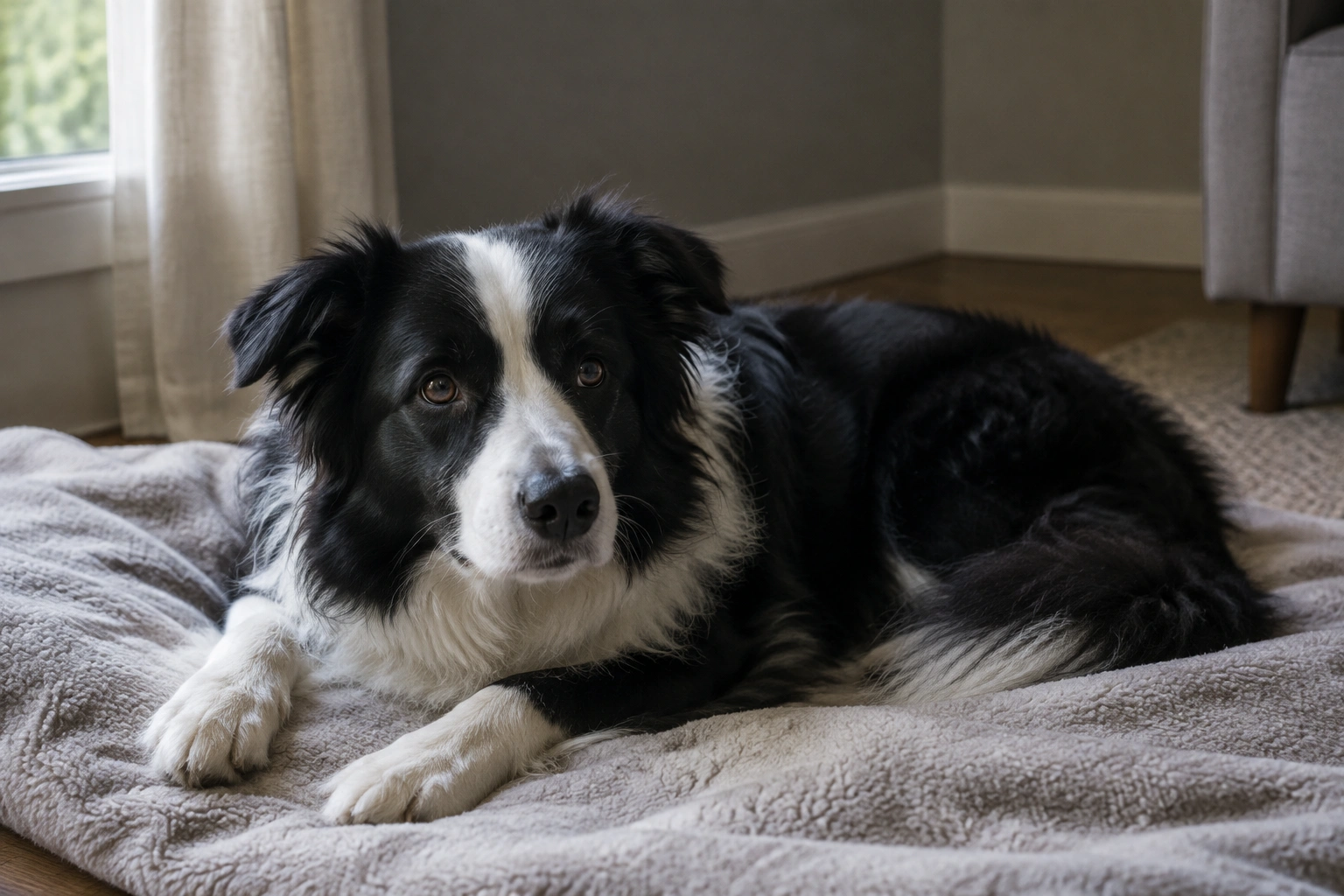
The key question is not “Does my dog look perfect?” It is “Is my dog moving back toward normal in a predictable way?” If the answer is no, treat that as a warning sign.
When to go to an emergency vet right away
Some situations should not wait for a routine appointment.
Seek emergency veterinary care if the seizure lasts more than 5 minutes, if your dog has more than one seizure in 24 hours, or if the dog does not start returning toward normal afterward. Any seizure lasting over 5 minutes is an emergency. So is a cluster pattern, meaning more than one seizure in a 24-hour period.
Other red flags include trouble breathing, collapse, repeated vomiting, suspected toxin exposure, pale gums, or seizure activity that keeps returning. Those signs matter because they suggest the problem is no longer just the seizure itself; the dog may also be dealing with a secondary emergency.
If your dog has a known seizure disorder and you already have a vet-approved rescue plan, follow that plan exactly. Do not improvise with medication you have not been told to use for this situation.
How long to monitor your dog after a seizure
Most dogs need close observation for at least the recovery window after the seizure ends, and some need overnight monitoring. The practical standard is simple: stay with the dog until they are clearly improving and can move, breathe, and swallow normally.
If your dog is still disoriented after a reasonable period, if the confusion is getting worse, or if they are not returning toward their usual behavior, call your veterinarian. Emergency clinicians also advise that prolonged confusion should not be ignored.
For overnight care, confine the dog in a quiet, safe space such as a crate, exercise pen, or small room on the main floor. Block stairs, remove sharp objects, and keep bedding low and simple. Check on the dog every 1 to 2 hours at first, then at least a few times overnight if they are still recovering. Look for breathing, ability to stand, and whether they seem calmer or more disoriented.
It is unsafe to leave the dog alone if they are still wobbly, vomiting, having repeated seizures, struggling to breathe, unable to stand, or acting so confused that they could injure themselves. A Border Collie may be especially likely to try to move, climb, or pace, so a quiet room with blocked stairs is safer than letting a restless dog wander the house.
A useful decision rule: if you would not trust the dog to walk calmly across the room without falling, do not leave them alone yet.
Should you offer food, water, rest, or medication after a seizure?
Rest is the default. Let the dog recover in a calm, low-stimulation area before offering anything else.
Water can be offered in small amounts once the dog is coordinated enough to swallow safely, usually after they are clearly more alert and steady. Do not rush this. If the dog is still stumbling, staring, or unable to focus, wait. A dog that is not fully coordinated can choke or gulp too fast.
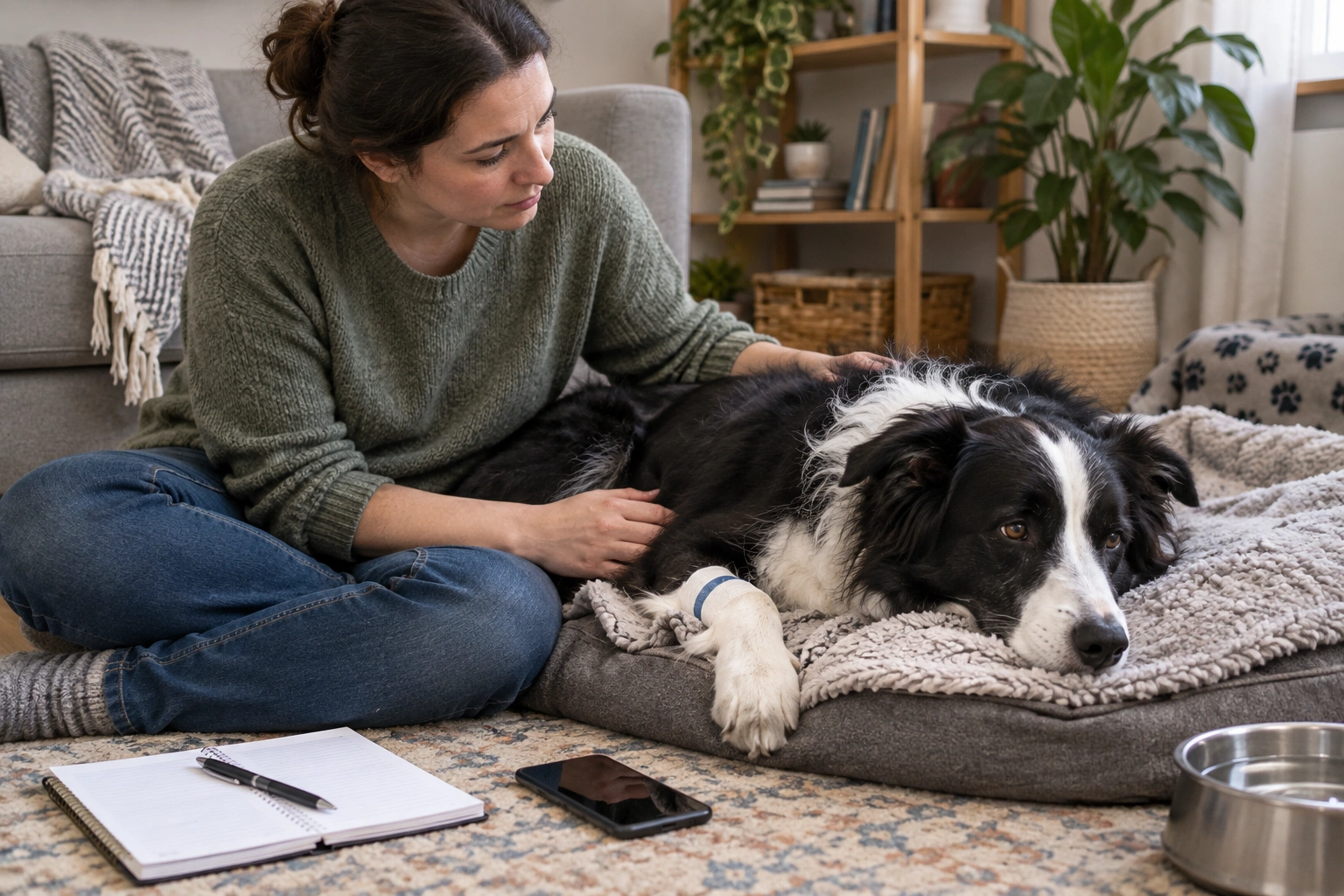
Food is the same story. If the dog is alert, steady, and interested, a small meal or snack may be fine later. If they are still foggy or nauseated, hold off.
Medication requires the most caution. Give routine maintenance seizure medication on schedule unless your veterinarian has told you otherwise. If your dog missed a dose, call your vet for instructions rather than guessing. Rescue medication is different: only give it if it was specifically prescribed for this dog and you were taught exactly when and how to use it.
That last point matters because seizure medications are not interchangeable. A drug such as phenobarbital, levetiracetam, or diazepam may be part of a long-term or emergency plan, but the correct use depends on your dog’s history and your veterinarian’s directions.
What to document for your veterinarian
Good notes can turn a vague story into a useful medical record. Write down the details while they are fresh.
Include:
– The date and exact time the seizure started
– How long it lasted, even if you have to estimate
– What the dog was doing right before it happened
– Whether the seizure was the same as previous episodes or different
– Any body changes you noticed, such as paddling, stiffening, drooling, vocalizing, urination, or defecation
– How long recovery took
– Whether the dog walked normally afterward
– Any vomiting, collapse, unusual weakness, or breathing changes
– Whether the dog missed medication or had a dose change
– Any possible trigger, such as exertion, stress, sleep disruption, or toxin exposure
– A video, if it was safe to record one
That last item can be especially useful. Even a short clip often tells a veterinarian more than a long description does.
Single seizure vs recurring seizures
The first seizure and a recurring seizure pattern are not the same situation.
A first seizure should always be followed up with a veterinarian, even if your dog seems normal afterward. The episode may be brief, but it can still point to an underlying problem that needs evaluation.
Recurring seizures are more concerning because they suggest an ongoing disorder or a pattern that may worsen without treatment. If seizures are happening repeatedly, your veterinarian may discuss a longer-term management plan, and in some cases a rescue medication plan for future episodes.
The practical takeaway is simple: a first event deserves veterinary follow-up, and repeated events deserve faster, more urgent attention.
What to do after your dog seems back to normal
Even if your dog appears normal again, the event is not over from a medical standpoint.
Contact your regular veterinarian after a first seizure, or if the pattern has changed, recovery was not straightforward, or your dog had more than one seizure. A routine follow-up visit is appropriate when the dog is back to normal, the seizure was brief, and there are no emergency warning signs. Share your notes, the video if you have one, and any medication timing details. This helps your vet decide whether your dog needs follow-up testing, a management plan, or rescue medication for future episodes.
Seek same-day veterinary care if your dog is back to normal but the seizure was prolonged, recovery was slow, or you suspect the episode was triggered by illness or toxin exposure. Seek emergency care if the dog is not returning toward normal, has repeated seizures, or shows trouble breathing, collapse, pale gums, repeated vomiting, or more seizure activity.
If your dog already has diagnosed epilepsy, update the log every time a seizure happens. Patterns matter. Your vet can only judge frequency, severity, and treatment response if the timeline is accurate.
For owners who want a broader reference on seizure response and follow-up, this practical guide on what to do when a dog has a seizure is a useful companion read.
How to reduce the chance of another seizure soon
You cannot control every trigger, but you can reduce avoidable risk.
The first priority is medication adherence if your dog is already on a seizure plan. Missed doses are a common reason seizure control breaks down. Keep medication timing consistent and set reminders if needed.
Next, keep the dog’s environment calm for the rest of the day. Avoid hard exercise, rough play, intense training, and chaotic social situations immediately after a seizure. A Border Collie may seem ready to work again before the brain is fully settled. That is a bad time to test endurance or obedience.
Also watch for common stressors: sleep disruption, overheating, travel, and excitement. If your dog has a known seizure history, it is smart to note whether a seizure followed an unusually intense day. That does not prove cause and effect, but it can help your vet identify patterns.
If your dog has recurring seizures, ask your veterinarian about a long-term seizure management plan and whether a rescue medication makes sense for future episodes. That conversation is much easier when you already have a record of timing, frequency, and recovery.
When to see a veterinarian or certified trainer
A veterinarian should be your first call after a first seizure, a cluster of seizures, a prolonged seizure, or any recovery that does not look normal. If your dog’s seizures are linked to fear, panic, or handling issues during recovery, a certified trainer can help you build a safer household routine around the medical plan your vet provides.
For Border Collies in particular, the practical goal is not just “calm the dog down.” It is to create a recovery setup that prevents bolting, stairs, overheating, and unnecessary stimulation while the brain resets.
FAQ
How long is a dog confused after a seizure?
Confusion can last minutes to hours in the postictal phase. If your dog is not steadily improving, or the confusion is severe, call your veterinarian.
Can I give my dog water after a seizure?
Yes, but only when the dog is coordinated enough to swallow safely. Small sips are better than letting a disoriented dog gulp.
Should I let my dog sleep after a seizure?
Yes, if they are breathing normally and recovering. Keep the area quiet and safe, and check on them regularly.
Is one seizure always an emergency?
A first seizure should be reported to a veterinarian promptly, even if your dog seems normal afterward. If the seizure is prolonged, repeats, or recovery is abnormal, seek emergency care.
What if my dog has another seizure the same day?
That is a cluster pattern and should be treated as urgent. Contact an emergency vet.
Can Border Collies be more stressed after a seizure?
Any dog can be stressed or disoriented afterward, but active, alert breeds may be more likely to try to move, pace, or overdo it before they are truly ready.
Should I give seizure medicine right after the episode?
Only if your veterinarian has already prescribed that medication and given you exact instructions for when to use it.
What if my dog seems blind after the seizure?
Temporary vision problems can happen during recovery, but if it does not improve or seems severe, contact a veterinarian promptly.
What should I tell the vet?
Give the time, duration, recovery behavior, any triggers, medication schedule, and video if you have it.
How can I prepare for the next one?
Keep a seizure log, protect the environment, stay consistent with prescribed medication, and ask your vet whether a rescue plan should be in place.