
What to Do When Your Dog Bites Another Dog: A Practical Owner’s Guide

If your dog has bitten another dog, the next hour matters. Not just for the injured dog, but for your own dog’s safety, your legal exposure, and what happens next with vets, animal control, and insurance.
This is one of those situations where panic makes everything worse. The goal is simple: separate safely, check for injuries, document what happened, and make the right calls in the right order.
The first 10–30 minutes: keep both dogs safe
The immediate priority is to stop the incident without creating a second one.
First 10 minutes
1. Stay calm and keep your hands out of the middle of the dogs.
2. Use the safest separation method available: call your dog away if it will respond, or use a leash, barrier, gate, chair, trash can lid, or other physical divider if you can do so without stepping into the dogs.
3. Once separated, move your dog away and create distance.
4. If the other dog is still loose and dangerous, keep yourself out of reach and leave only if you can do so safely.
5. If the other owner is present, ask them to secure their dog and exchange contact information once both dogs are controlled.
First 30 minutes
1. Check both dogs for bleeding, punctures, limping, swelling, or signs of pain.
2. If either dog needs urgent care, get the dog to a veterinarian first.
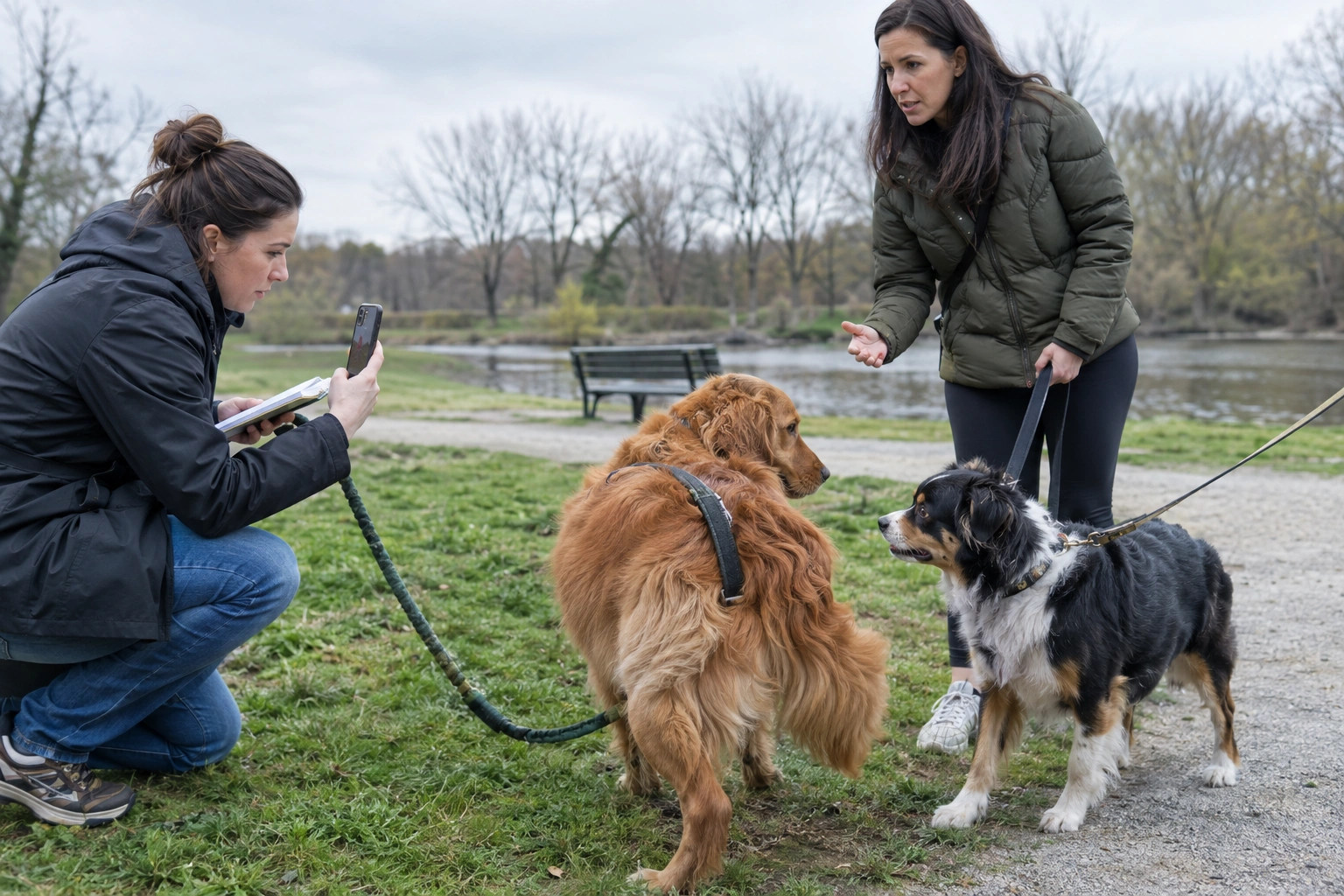
3. Take photos of visible injuries, the scene, and any torn leashes, collars, gates, or fencing.
4. Write down the time, location, what happened, and whether either dog was on leash or off leash.
5. Exchange names, phone numbers, and vaccination information if it is safe to do so.
6. If the other owner leaves or refuses to share information, record what you can: description of the dog, license plate if available, witnesses, and the exact location.
If the dogs are still engaged, do not reach into the middle of the fight with your hands. Pulling a dog away can injure you or worsen the bite if the other dog has not let go.
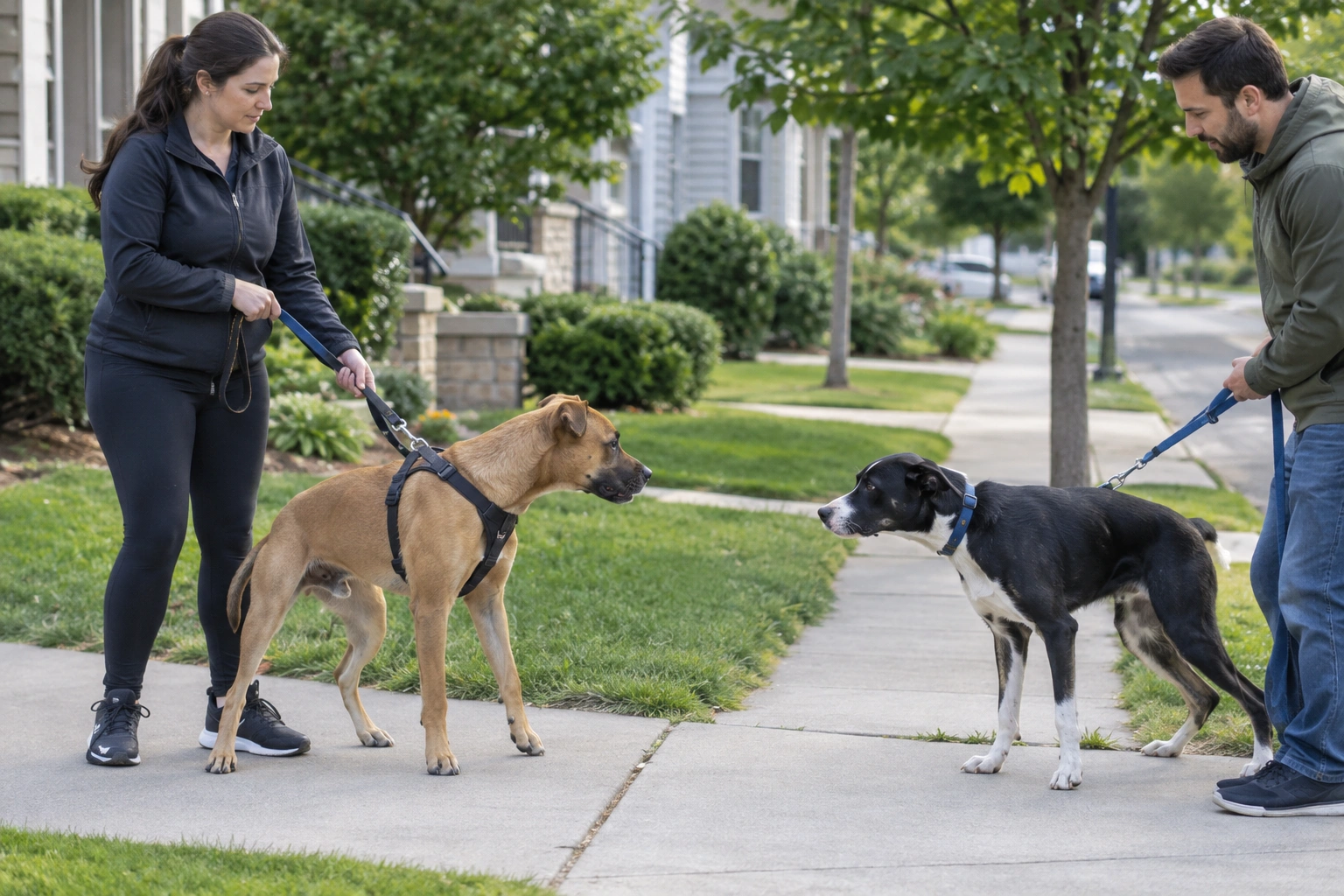
If your dog is in a harness or leash and still aroused, don’t keep forcing face-to-face contact with the other dog. That often turns a brief scuffle into a full fight. The real objective is not “winning” the moment; it is creating enough space for both dogs to settle.
Once separated, do a quick scan of the area. If the other dog is loose and still dangerous, leave only if that can be done safely. If a person is injured while trying to help a dog, the situation becomes more complicated fast.
Check both dogs for injuries before assuming it was minor
A dog-on-dog bite can look small on the surface and still hide deeper damage.
Look for:
- punctures, torn skin, or bleeding
- limping or reluctance to bear weight
- swelling that appears within minutes or hours
- yelping, trembling, hiding, or sudden shutdown
- stiffness, flinching, or guarding a body part
- rapid breathing, weakness, or signs of shock
A bite that seems minor can still need veterinary care, especially if the wound is deep, painful, or near the eye, neck, chest, abdomen, or joints. A vet may recommend imaging or other diagnostics if the injury is not obvious on the outside. In more serious cases, there may also be damaged tissue that needs surgical cleaning or a drain to reduce pooling infection. A vet may also recommend an Elizabethan collar to stop licking and lower infection risk.
If either dog has a deep puncture, heavy bleeding, obvious pain, a limp, a wound near the eye, neck, chest, abdomen, or joints, or any sign of collapse, that dog needs veterinary attention right away.
A useful rule: if you are debating whether it “looks bad enough,” err on the side of a vet exam. Bite wounds often worsen after the adrenaline wears off.
For a broader health baseline on canine wounds and follow-up care, VCA Hospitals’ pet health resources are a solid starting point.
What information to exchange with the other owner
If it is safe to do so, exchange details before everyone leaves.
Get:
- full name
- phone number
- email address
- home address if possible
- the other dog’s name, breed, age, and description
- rabies vaccination status and the date of the last rabies shot
- whether the other dog is currently on any medical treatment
- your own dog’s vaccination status, especially rabies
- names and contact details for any witnesses
Take photos of:
- both dogs, if safe
- visible wounds
- torn collars, broken leashes, or damaged equipment
- the location where it happened
- any relevant signs, gates, fences, or leash setup
Then write down the facts while they are fresh:
- date and time
- exact location
- what each dog was doing before contact
- whether either dog was on leash or off leash
- who approached whom
- whether there was growling, stiff posture, staring, barking, or repeated lunging beforehand
- whether food, toys, space, or a gate was involved
This record matters because memory gets fuzzy quickly after a stressful event. It also helps if vet bills, insurance, animal control, or a later dispute become involved.
Should you report the bite to animal control, public health, or police?
These are different calls, and they are not used for the same reason.
Animal control is usually the right place to start for a dog-on-dog bite when you need help with local reporting rules, leash-law questions, bite records, or possible quarantine procedures. In some places, reporting is required after a bite; in others, it is optional but still useful if the injury is serious or the other dog’s vaccination status is unclear.
Public health is the right contact when rabies exposure or rabies observation rules are the main concern. If you do not know whether the other dog is current on rabies vaccination, or if local officials tell you an observation period is required, public health may be the agency that explains the quarantine or confinement process.
Police are usually relevant only if the situation involved people being threatened or injured, a dangerous confrontation, trespassing, a refusal to stop, or another public-safety issue beyond the dog bite itself. For a straightforward dog-on-dog bite, police are often not the first call unless your local rules say otherwise.
Sometimes yes, sometimes no, and sometimes it is required.
That depends on local law, rabies rules, the severity of the injury, and whether either dog is already on a watch list or has a bite history. If you are unsure, call your local animal control office or public health department and ask what they require for dog-on-dog bites in your area.
Even when reporting is not mandatory, it can still be smart if:
- the bite broke skin
- vaccination status is unclear
- the other owner wants a formal record
- there was a serious injury
- you suspect your dog may be labeled dangerous or placed under restrictions
- the incident happened in a place with strict leash or park rules
The trade-off is straightforward: reporting creates a paper trail and may trigger quarantine or a formal review, but it can also protect you later if the facts are disputed. Not reporting may feel simpler in the moment, but it can backfire if the other owner reports it first or if there is a rabies concern.
Dog park, daycare, or boarding facility: who handles what?
If the bite happened at a dog park, daycare, or boarding facility, the staff may already have an incident process in place.
In those settings, ask for:
- the facility’s incident report
- the names of staff who witnessed it
- the names and contact details of the other owner, if available
- any camera footage or written notes the facility keeps
- the facility’s rules on reporting, quarantine, and pickup
The facility may handle part of the reporting, but that does not replace your responsibility to check for injuries, get veterinary care if needed, and keep your own records. If the other owner leaves before you can exchange information, staff records may become especially important.
Who pays the vet bills?
There is no single universal rule. Liability usually depends on local law, whether your dog was provoked, whether leash laws were followed, whether either dog was off leash, and who was considered at fault.
Here is the practical way to think about it:
- If your dog was the clear aggressor, you are more likely to be responsible for the other dog’s injury costs.
- If the other dog rushed your dog, was off leash where it should not have been, or provoked the incident, responsibility may be shared or shift depending on local rules.
- If both owners contributed through poor control, the outcome may be more complicated.
Local leash-law violations and off-leash status can matter a lot. If one dog was where it was not supposed to be, that can affect fault, reimbursement, and how insurers or animal control view the incident. Provocation can matter too, but it usually does not erase the need to document the event and follow local rules.
Do not assume “the other dog started it” automatically ends the issue. It may matter legally and ethically, but it does not erase the need to document the incident, exchange information, and follow local reporting rules.
If the other owner asks for reimbursement, keep the conversation calm and factual. It is usually better to avoid admitting fault on the spot before you know the injury severity, the full sequence of events, and your local legal position.
Will homeowners or renters insurance help?
Often, yes — but only if your policy covers dog-related liability and the incident falls within the policy terms.
Homeowners and renters insurance may help with the other dog’s vet bills or related claims, but the exact coverage depends on the policy, exclusions, breed restrictions, prior incidents, and the insurer’s process. Some policies exclude dog-related liability entirely. Others may exclude certain breeds, prior incidents, or bites that happen in specific settings. Some policies require prompt notice. Some will want a written incident report.
Here is the trade-off:
- Paying directly can resolve tension quickly and keep the situation from escalating.
- Filing through insurance may protect your finances if the bills are high or if the claim grows into a larger dispute.
If the injury is more than a surface scratch, or if the other owner mentions major treatment, ask your insurer how they want the incident reported. Do not wait until a demand letter arrives.
Dog bite vs. dog fight: what actually happened?
These are not always the same thing.
A dog fight often looks mutual: both dogs are engaged, aroused, and reacting to each other. A bite can happen inside a fight, but it can also happen as a defensive snap, a warning that escalated, or a quick grab during a brief conflict.
That distinction matters because the likely cause changes what you should do next.
Common patterns
- Defensive response: your dog was cornered, crowded, or pinned.
- Fear or stress: your dog tried to create distance and used its mouth when escape felt blocked.
- Overarousal: too much excitement, too little space, and a fast escalation.
- Resource guarding: toys, food, beds, or people triggered the reaction.
- True aggression pattern: repeated, predictable biting or escalating attacks across different situations.
A Border Collie can be especially quick to escalate when overstimulated. These dogs often notice movement fast, react fast, and struggle when another dog invades their space too abruptly. That does not excuse a bite, but it does help explain why management matters so much.
If the other dog started it, does that change anything?
It can change fault, but it does not change your immediate responsibilities.
Even if the other dog rushed, barked, or initiated contact, you still need to:
- separate safely
- check for injuries
- exchange information
- document the scene
- follow local reporting rules if required
- watch your own dog for delayed injury or behavior changes
That is because the practical consequences are the same: both dogs may need care, and both owners may need records. A provoked incident can still become a legal or insurance issue if someone refuses to cooperate later.
What quarantine, rabies, or dangerous-dog rules could apply?
This is where local law matters most.
Depending on your area, a bite can trigger:
- rabies observation or quarantine
- a confinement period at home or in a facility
- an investigation by animal control
- a dangerous or vicious dog hearing
- restrictions on where your dog can go afterward
If your dog has already been formally designated dangerous and bites again, the consequences can become more serious, including possible criminal charges in some places.
Vaccination status matters here. If rabies vaccination is not current, you may face stricter confinement or observation requirements. If you do not know the other dog’s status, ask for proof and contact your local authority if the rules are unclear.
When the behavior points to fear, stress, pain, or true aggression
A single bite does not automatically mean your dog is “vicious.” It does mean you should look for the cause.
Ask three questions:
-
Was my dog trying to get away?
If yes, fear or defensive behavior is more likely. -
Was my dog over threshold?
If your dog was barking, lunging, spinning, or fixating before contact, arousal may have been the real problem. -
Could pain be involved?
A dog that suddenly becomes snappy, reactive, or less tolerant of other dogs may need a vet exam, especially if the change is new.
Pain, anxiety, and overarousal can all look like “bad behavior” from the outside. They are not solved the same way. A dog that is acting out of fear or pain may need medical assessment before training can work properly.
How to prevent this from happening again
Prevention is mostly management, not wishful thinking.
The most reliable changes are:
- increase distance from unknown dogs
- avoid narrow paths where your dog cannot move away
- skip crowded off-leash areas for now
- use a well-fitted leash and secure harness
- watch for early warning signs: hard staring, freezing, closed mouth, weight shift, repeated barking
- change routes if your dog is more reactive at certain times or places
For many Border Collies, the biggest problem is not “aggression” in a simple sense. It is often frustration plus speed plus poor recovery once aroused. A dog that can think at 20 feet may not be able to think at 2 feet.
That means your new rule should be simple: if your dog cannot stay under threshold, create more distance before the reaction starts.
When to see a veterinarian or certified trainer
Use a veterinarian when:
- the bite may have caused injury to your dog
- your dog shows sudden behavior change
- pain, illness, or neurological issues could be involved
- the bite was severe or repeated
Use a certified trainer when:
- your dog is reactive but otherwise medically sound
- you need help with distance, leash handling, and trigger management
- the incident seems tied to overarousal, fear, or poor social skills
Use a veterinary behaviorist when:
- the aggression is escalating
- there have been multiple incidents
- your dog is unsafe around familiar dogs
- anxiety, compulsive behavior, or pain-related aggression may be in play
A trainer can help you manage behavior. A veterinary behaviorist is better when the problem may have a medical or psychiatric layer.
Common mistakes after a dog-on-dog bite
The biggest mistakes are usually the quiet ones:
- leaving without exchanging details
- assuming a small puncture is harmless
- failing to check for swelling later that day
- ignoring vaccination or quarantine rules
- apologizing in a way that sounds like a legal admission before you understand the facts
- going back to the same setup and expecting a different result
- using punishment instead of changing distance and triggers
The last one is especially common. Punishment may suppress a warning sign, but it does not teach the dog how to feel safe around other dogs.
A simple decision guide for the next 24 hours
If you want a clean way to think through the incident, use this:
- Visible puncture, swelling, limping, or pain? Vet visit.
- Rabies status unclear or local rules strict? Call animal control or public health.
- Other owner wants reimbursement? Document everything and contact insurance.
- Your dog has bitten before or is getting worse? Book a behavior consultation.
- The incident involved crowding, rushing, or leash tension? Change management immediately.
First 24 hours: compact checklist
- Confirm both dogs have been checked for injuries.
- Get veterinary care for any wound, limp, swelling, or pain.
- Save photos, notes, witness details, and any facility incident report.
- Report to animal control or public health if local rules require it or if rabies/quarantine guidance is unclear.
- Notify your insurer if a claim is possible.
- Make immediate management changes so the same setup does not happen again.
That is the practical path. Not perfect, not theoretical — just the sequence that protects both dogs and gives you the best chance of preventing a repeat.
FAQS
What should I do immediately after my dog bites another dog?
Separate the dogs safely, avoid putting your hands between them, check for injuries, exchange information if it is safe, and get veterinary help if either dog may be hurt.
Do I have to pay the other dog’s vet bills?
Maybe, depending on local law, fault, provocation, leash-law violations, off-leash status, and insurance coverage. If the other owner asks for reimbursement, document the incident and contact your insurer before making promises.
Should I report the bite to animal control?
If local law requires it, yes. Even when it is optional, reporting can be wise if there is a bite wound, rabies concern, repeated history, or a risk of dangerous-dog classification.
Do I call animal control, public health, or police?
Animal control usually handles bite reports, quarantine rules, and leash-law issues. Public health is the best contact for rabies guidance. Police are usually only needed if people were threatened, injured, or there is a broader safety issue.
Can my dog be quarantined after biting another dog?
Yes, in some places. Rabies observation or confinement rules may apply, especially if vaccination status is unclear or local regulations require it.
What if the other dog started the fight?
That may affect responsibility, but it does not change the need to document, exchange information, and check both dogs for injury.
What if the bite happened at a dog park or daycare?
Ask for the facility’s incident report, witness names, and any records they keep. The facility may handle part of the reporting, but you should still document the event and get veterinary care if needed.
Should I call my insurance company right away?
If the bite caused injury or may turn into a claim, yes. Early notice is often better than waiting until the other owner’s bill arrives.
Does one bite mean my dog is aggressive forever?
Not necessarily. It may point to fear, stress, overarousal, pain, or poor management. Repeated incidents are more concerning and deserve professional assessment.
