
What to Do If Your Dog Eats Rat Poison: A Practical Emergency Guide

If your dog may have eaten rat poison, treat it as an emergency now — even if your dog looks completely normal. Rodenticides can act fast, act late, or hide damage until the situation is much harder to reverse.

The safest response is not to wait and watch. It is to gather the facts, get expert help, and move.
What to Do in the First 5 to 10 Minutes
Your first job is to stop the exposure and get professional guidance without delay.
-
Move your dog away from the poison immediately.
If the bait is still accessible, pick up the dog and remove access to the area. Keep other pets away too. -
Check the package, bait station, or area for clues.
Take a photo of the label, the bait, the box, or anything nearby that might identify the active ingredient. If you can safely collect the package, do that. -
Estimate when it happened and how much may be missing.
You do not need a perfect answer. A rough estimate is useful: one bite, several pieces, a chewed block, or an unknown amount. -
Call a veterinarian or pet poison hotline right away.
Do this before symptoms appear. If your regular vet is closed, call an emergency clinic. If you have a poison hotline available in your region, it can help you triage quickly while you arrange care. If possible, have someone call while you drive, or call the clinic en route so they are ready when you arrive. -
Keep your dog calm and restrict movement on the way to care.
Avoid exercise or unnecessary handling, and head to the clinic immediately. If you can, have another person call ahead while you transport your dog. -
Do not give food, milk, oil, or home remedies unless told to.
These can delay proper treatment or complicate what the clinic needs to do. -
Do not induce vomiting on your own unless a professional tells you to.
Whether vomiting is helpful depends on the poison type, how long ago it was eaten, and whether your dog is alert and stable.
If your dog is actively seizing, unconscious, or having trouble breathing, skip the home steps and go directly to emergency care.
Why Rat Poison Exposure Is Urgent
Rodenticides are dangerous because different products damage different body systems, and some signs do not show up right away.
That delay is exactly what makes them risky. A dog can seem fine for hours or even longer while internal damage is building. By the time bleeding, weakness, wobbliness, or seizures appear, treatment may be more difficult.
The practical rule is simple: if you suspect ingestion, act as though it matters now, not later.
Call a Veterinarian or Pet Poison Hotline Immediately
When you call, the goal is not to explain everything perfectly. The goal is to give enough information for fast triage.
Have this ready:
- Your dog’s weight
- The approximate time of exposure
- The product name or active ingredient, if known
- A photo of the package or bait
- How much might be missing
- Any symptoms you have seen so far
- Whether the dog has vomited
- Whether there are other pets involved
If you are choosing between a regular vet and an emergency clinic, use this rule:
- Call your regular vet first if they are open and can see you immediately.
- Go to an emergency hospital now if the dog has symptoms, the poison is unknown, or your vet cannot see you fast enough.
- Use a poison hotline when you need help identifying the toxin or deciding whether vomiting is appropriate, but do not let the call delay travel if the dog is already symptomatic.
For general poison-response guidance, the ASPCA Animal Poison Control Center is a useful reference point, and VCA Hospitals has practical emergency-care articles that explain why fast treatment matters.
Do Not Induce Vomiting Unless a Professional Tells You To
This is one of the most important decisions, and it is also where owners make the most dangerous mistakes.
Vomiting can sometimes help if the ingestion was recent and the dog is alert, but it is not automatically safe. The wrong choice can make things worse, especially if:
- the poison type is unknown,
- the dog is drowsy or unsteady,
- the dog is having seizures,
- the dog has trouble swallowing or breathing,
- the product may cause rapid neurologic signs,
- too much time has passed for vomiting to help.
A veterinarian or poison expert may decide vomiting is appropriate, or they may skip it and use another approach such as activated charcoal, blood work, or hospitalization. The key point is that the decision depends on the toxin, timing, and the dog’s condition.
Identify the Rodenticide If Possible
If you still have the box, bait station, or a photo of the label, look for the active ingredient. That matters because different ingredients cause different problems and different timelines.
Here is a practical comparison.
| Rodenticide type | Common concern | Typical signs | When signs may appear |
|---|---|---|---|
| Anticoagulant rat poison | Internal bleeding and clotting problems | Weakness, pale gums, coughing, bruising, nosebleeds, blood in stool or urine, lethargy | Often delayed, so the dog may seem normal at first |
| Bromethalin | Brain and nerve toxicity | Wobbliness, tremors, seizures, abnormal behavior, weakness | Can be delayed or progress quickly depending on exposure |
| Cholecalciferol | Dangerous calcium imbalance and organ injury | Vomiting, poor appetite, weakness, increased drinking and urination, lethargy | May be delayed and easy to miss early |
| Sodium fluoroacetate | Severe neurologic and metabolic toxicity | Agitation, tremors, seizures, collapse, rapid deterioration | Often serious and urgent |
Do not worry if you cannot identify the exact product. A photo of the bait, the color, the packaging, and where it was found can still help a veterinarian narrow it down.
If the Poison Is Unknown, Treat It as High Risk
Unknown rodenticide exposure should be handled conservatively. That means you assume the worst reasonable possibility until a professional rules it out.
That approach matters because a bait block in a garage, a pellet in the yard, and a loose granule under a cabinet are not the same problem. The label may be missing, the source may be old, or the dog may have eaten more than you found.
If you do not know what it was:
- bring the packaging if you have it,
- photograph the bait and the surrounding area,
- estimate how much is missing,
- note whether the dog may have had access to more than one location,
- call a vet or poison expert immediately.
The safest mindset is simple: unknown rodenticide is not a wait-and-see situation.
How Symptoms Differ by Type of Rat Poison
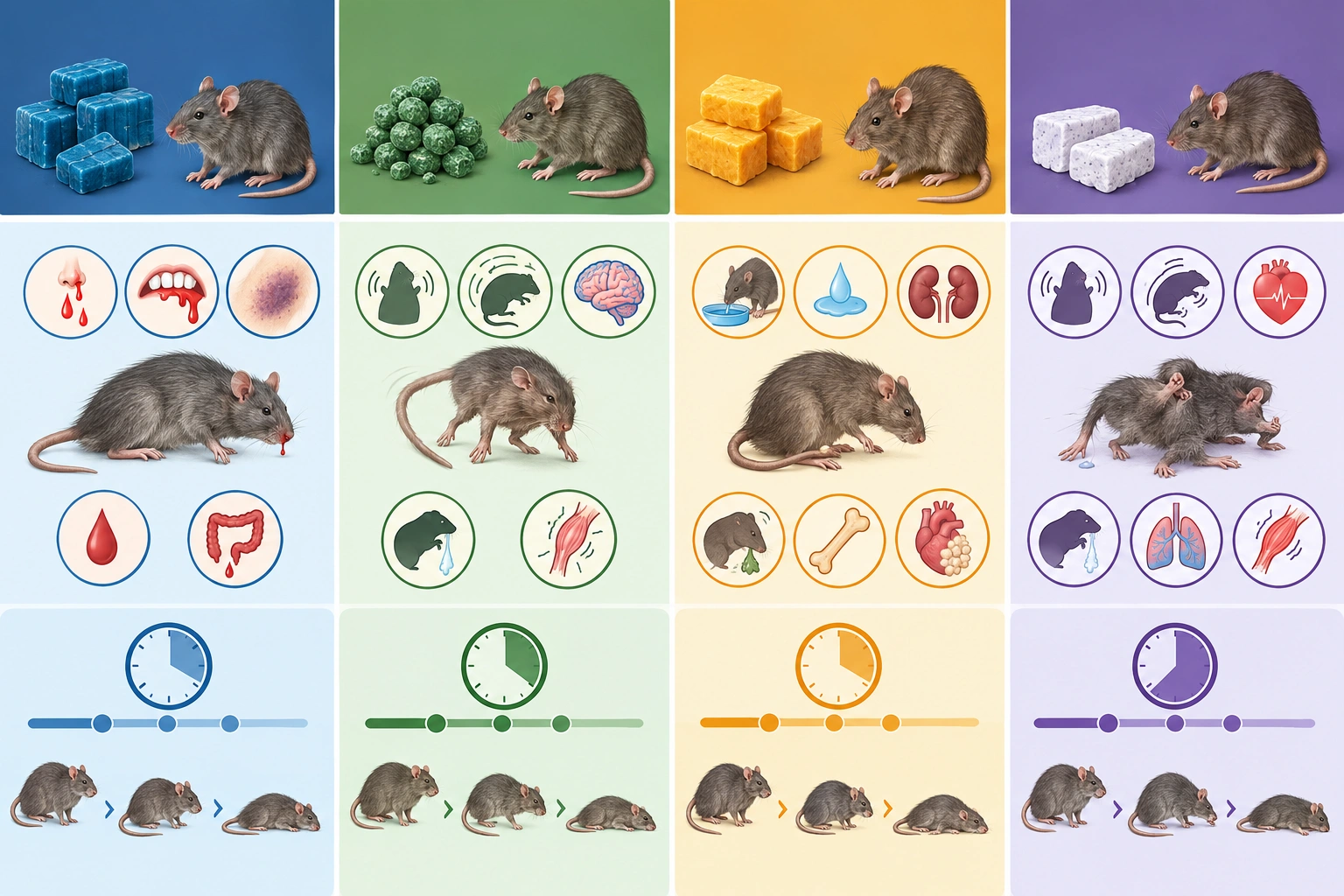
This is where owners get misled. A dog can look fine and still be in trouble.
Anticoagulant rodenticides
These interfere with normal clotting. The danger is internal bleeding, which may not be obvious right away. Watch for:
- pale gums
- weakness
- coughing
- fast breathing
- nosebleeds
- bruising
- black or bloody stool
- blood in urine
- collapse
The delay in symptoms is why people are often caught off guard.
Bromethalin
This toxin affects the nervous system. Signs may include:
- wobbliness
- abnormal walking
- tremors
- seizures
- strange behavior
- severe weakness
If you see neurologic signs, this is an immediate emergency.
Cholecalciferol
This can cause a dangerous rise in blood calcium and damage organs. Signs can include:
- vomiting
- poor appetite
- lethargy
- drinking more water
- urinating more often
- weakness
Because the early signs can look like a stomach upset, owners sometimes underestimate it.
Sodium fluoroacetate
This is a very serious toxin. It can cause rapid neurologic and metabolic collapse. If this ingredient is suspected, do not delay.
What the Veterinarian Will Likely Do
The clinic’s plan depends on the poison, the time since ingestion, and whether symptoms have started.
Common steps may include:
- examining your dog’s neurologic and cardiovascular status
- deciding whether decontamination is still useful
- inducing vomiting in the clinic if appropriate
- giving activated charcoal in some cases
- running blood work
- checking clotting values if anticoagulant poisoning is suspected
- starting IV fluids
- giving vitamin K1 when an anticoagulant rodenticide is involved
- hospitalizing the dog for monitoring or repeated treatment
Vitamin K1 is the key antidote for many anticoagulant rodenticides, but it is not a universal fix for all rat poisons. That is why identifying the active ingredient matters.
If the dog has already developed bleeding, tremors, or seizures, treatment becomes more intensive and monitoring becomes more important.
How Urgent Is It, Really?
Use this decision rule:
Go to an emergency hospital now if:
- the poison is unknown,
- your dog has any symptoms,
- the dog may have eaten a significant amount,
- the label suggests bromethalin, cholecalciferol, or sodium fluoroacetate,
- your dog is actively seizuring, unconscious, or having trouble breathing,
- your regular vet cannot see you immediately.
Call your regular vet urgently if:
- the product is confirmed and they can see the dog right away,
- the dog is currently normal,
- the exposure was very recent,
- you are still within the window where the vet may recommend decontamination.
Do not wait at home if:
- your dog is wobbling,
- your dog is bleeding,
- your dog is breathing abnormally,
- your dog is seizing,
- your dog collapses.
If you are unsure where to go, choose the place that can treat the dog the fastest. Distance matters less than capability in a poison case.
What to Bring and Say When You Arrive
Bring anything that helps the clinic identify the toxin and estimate exposure:
- the box or bait station
- a clear photo of the label
- any remaining bait
- the time you think it happened
- your dog’s weight
- a note about symptoms and when they started
- any vomit sample, if the dog vomited before arrival
When you speak to the veterinarian, be direct:
- “I think my dog ate rat poison.”
- “I found this packaging.”
- “I do not know how much was missing.”
- “Here is when I last saw the dog normal.”
- “These are the symptoms I’ve noticed.”
That short, factual summary is more useful than a long theory about what might have happened.
Monitoring and Recovery After Exposure
Even after treatment, monitoring matters. Some poisonings require follow-up blood work or repeated medication. Others need observation for delayed neurologic or bleeding signs.
Watch for:
- new weakness
- pale gums
- coughing
- black stool
- nosebleeds
- vomiting
- tremors
- wobbliness
- seizures
- increased drinking or urination
- unusual tiredness
If your vet sends your dog home, ask exactly what would mean “come back now.” That threshold should be clear before you leave.
Recovery can be straightforward when the exposure is caught early, but delayed treatment makes everything harder. That is why early action is so valuable.
How to Prevent a Second Exposure
After the emergency is handled, make the environment less risky immediately.
- Remove all remaining bait from accessible areas.
- Store rodenticide in a locked cabinet, not a garage shelf or utility bin.
- Check yards, sheds, crawl spaces, and under appliances.
- Tell everyone in the home where the poison was found.
- If you have multiple pets, assume they are all curious enough to investigate the same spot.
A dog that found poison once may find it again unless the environment changes.
When to See a Veterinarian or Certified Trainer
This is a veterinarian issue, not a training problem. If you suspect ingestion, the right professional is a vet or poison expert, not a trainer.
A trainer can help later with prevention habits like leave-it work, recall, and boundary training, but none of that replaces emergency medical care. Once the dog is safe, those skills can reduce future risk around dropped food, bait stations, and unsafe areas.
FAQ
Should I wait for symptoms before calling?
No. By the time symptoms appear, some rodenticides have already caused serious damage.
Can I give my dog milk or food?
Not unless a veterinarian or poison expert tells you to do so. Home remedies can interfere with proper treatment.
What if I only think my dog ate a tiny amount?
Still call. Small amounts can still be dangerous, and the type of poison matters more than guesswork.
What if I have no package?
Treat it as unknown rodenticide exposure and seek help immediately.
Will my dog definitely get sick?
Not necessarily, but you should not assume safety just because your dog looks normal right now.
How long will treatment last?
That depends on the poison. Some cases need only decontamination and monitoring; others need medication and follow-up testing.
If you want a practical next step, call your vet now, gather the packaging or a photo, and keep your dog away from the area until a professional tells you what to do next.
