
What to Do If Your Dog Is Allergic to Grass: A Practical Owner’s Guide

If your Border Collie comes back from the park itchy, red, and desperate to lick their paws, grass may be part of the problem. The tricky part is that “grass allergy” is often shorthand for a few different things: direct contact irritation, grass pollen exposure, or a broader environmental allergy pattern that flares when your dog is on grass.
The goal is not to guess. It is to spot a pattern, calm the skin, and decide when home care is enough and when your dog needs a vet.
How to tell whether grass is really the trigger
The best clue is timing.
If your dog looks fine indoors, then starts scratching, paw licking, belly rubbing, or face rubbing shortly after running through grass, that pattern matters. If the itching is seasonal, worse after park visits, or repeatedly follows yard time, grass becomes a strong suspect.
A single itchy day does not prove anything. Dogs get dirty, pick up burrs, and irritate their skin for all sorts of reasons. What matters is repetition. Keep a simple note of:
- where your dog was
- how long they were on grass
- what symptoms showed up
- how fast the symptoms improved
That log is useful because it separates “my dog was itchy once” from “my dog reliably flares after grass exposure.”
Common grass allergy symptoms in dogs
Grass-related reactions usually show up on the skin first. The most common signs are:
- itching
- paw licking or chewing
- redness on the belly, legs, or armpits
- face rubbing
- rash or small bumps
- ear scratching or recurrent ear irritation
- hot spots from repeated licking or scratching
The reason paws, bellies, and lower legs are so often involved is simple: those areas touch grass most directly. Border Collies, in particular, may rack up a lot of exposure in active play because they move fast, turn sharply, and spend more time in contact with grass, pollen, and damp ground.
A dog with a mild reaction may only lick their paws for an hour after a walk. A dog with a more serious pattern may keep chewing one area until the skin breaks down. That is when the problem shifts from “itchy” to “medical.”
Grass allergy vs fleas, food allergy, and other environmental allergies
This is where owners get misled. Grass is a common trigger, but it is not the only one.
Here is a practical comparison:
| Possible cause | Typical pattern | Common signs | What points toward it | Next step |
|---|---|---|---|---|
| Grass exposure | Flare after walks, yard play, or spring/summer outdoor time | Paw licking, belly redness, face rubbing, itching | Symptoms track with grass contact or high-pollen days | Rinse, wipe, log the pattern, and call the vet if it repeats |
| Flea allergy dermatitis | Itching often centered on rump, tail base, and back legs | Intense scratching, scabs, hair loss | Even one flea bite can trigger major itching in sensitive dogs | Check flea prevention and ask the vet for a skin exam |
| Food allergy | Often year-round rather than only outdoors | Itching, ear issues, paw licking, sometimes GI signs | No clear link to walks or seasons; symptoms tend to be nonseasonal and persistent | Vet-guided diet trial, not guesswork |
| Broader environmental allergies | Seasonal or persistent, not just after grass | Itching, ears, paws, red skin | Symptoms continue even without obvious grass exposure; often affects multiple areas and may wax and wane with pollen or weather | Vet workup for atopic dermatitis and related triggers |
A useful rule: if your dog only itches after grass exposure, grass is more likely. If they itch everywhere, all the time, or in places that do not make sense for grass contact, look harder at fleas, food, or broader atopic dermatitis.
For a deeper general allergy overview, see the AAHA guidance on dog allergies, testing, and treatment.
What to do right now after grass exposure
If your dog just came in from grass and is starting to react, focus on removing what is on the coat and calming the skin.
Use this order:
- Wipe the paws and legs
- A damp cloth, plain water, saline, or a pet-safe wipe can remove pollen and grass residue.
- Pay attention to the spaces between the toes and around the wrists.
-
Avoid fragranced wipes or human skin products unless your vet specifically recommends them.
-
Check the belly and lower chest
- If those areas were in the grass, wipe them too.
-
This matters more for dogs that lie down, roll, or sprint through long grass.
-
Dry the coat well
-
Moisture trapped in the coat can make irritated skin feel worse.
-
Watch the next few hours
- If symptoms settle quickly, the exposure may have been mild.
- If the dog keeps scratching, licking, or rubbing, the reaction is more than a passing irritation.
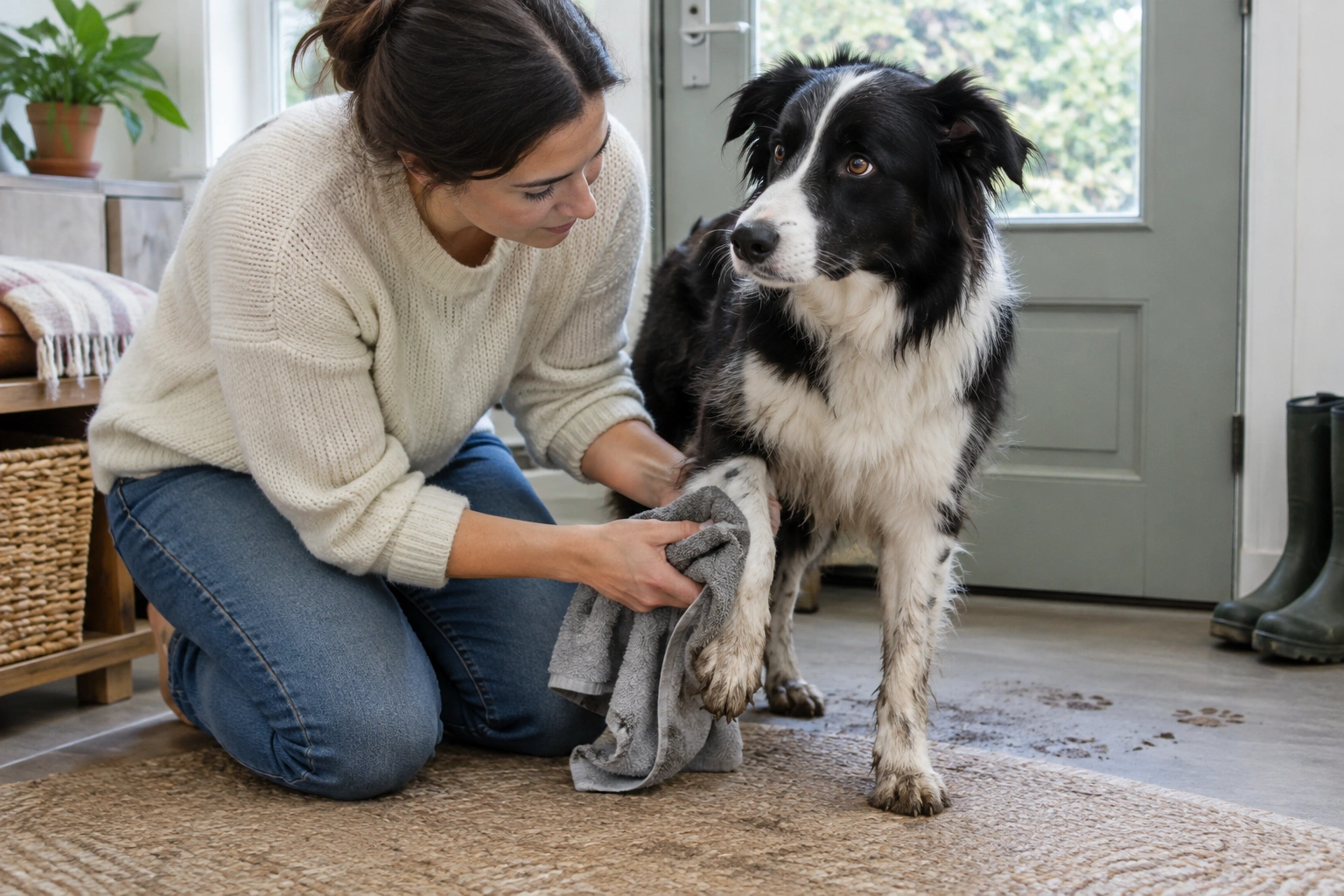
A bath is not always necessary. In fact, over-bathing can dry the skin if you use the wrong shampoo or bathe too often. For many dogs, wiping after walks is enough for routine exposure, with bathing saved for heavier flare-ups or vet-directed skin care.
Vetster notes that wiping paws and legs after walks may help reduce what your dog brings back indoors, and that air conditioning or an air purifier may be useful during high-pollen periods for some households. Their grass allergy overview also suggests limiting outdoor activity when pollen is high. You can read that guidance here: Vetster’s grass allergy symptom guide.
How to clean your dog after walks or yard time
When grass is a repeat trigger, a predictable cleanup routine helps more than occasional deep cleaning.
A practical post-walk routine looks like this:
- wipe paws immediately
- check between the toes
- wipe the lower legs and belly if they touched grass
- brush out loose debris from the coat
- dry damp areas thoroughly
If your dog had a heavy grass session, a lukewarm bath with a vet-recommended shampoo may be more effective than wiping alone. The trade-off is skin dryness: more washing can help remove allergens, but only if the products are appropriate for sensitive skin.
This is why a tiered approach makes sense:
– light exposure: wipe
– moderate exposure: wipe plus targeted rinse
– heavy flare-up or repeated symptoms: ask the vet whether a medicated shampoo or topical treatment makes sense
Do not assume any shampoo labeled “soothing” is safe or useful for allergic skin. If your dog already has inflamed areas, the wrong product can sting or make the coat feel worse.
When home care is enough and when it is not
Home care is reasonable when the symptoms are:
– mild
– short-lived
– clearly linked to a single exposure
– not causing skin damage
That means a little paw licking or brief scratching after a grassy run, followed by normal behavior again.
Home care is not enough when:
– the itching keeps coming back
– your dog is chewing the same spot repeatedly
– the skin is getting redder, thicker, or raw
– the ears are becoming a recurring problem
– you see odor, crusting, swelling, or discharge
The difference matters because constant licking changes the skin. Once the barrier is damaged, the dog becomes more likely to develop a secondary skin infection, and that can turn a manageable allergy into a much bigger problem.
When to see a veterinarian or certified trainer
A veterinarian should see your dog if the pattern is recurring, worsening, or affecting the ears, paws, or skin integrity.
Book promptly if you notice:
– hot spots
– pus or crusting
– strong odor from the skin or ears
– swelling
– intense paw chewing
– open sores
– repeated ear infections
– signs of pain, not just itch
Urgent care is warranted if your dog has severe swelling, trouble breathing, or any sudden whole-body reaction. True anaphylaxis from grass exposure is uncommon, but any rapid, severe reaction is an emergency. See this overview here: PetMD on grass allergies in dogs.
If the itching is chronic, your vet may also help you rule out fleas, infection, or other dermatitis causes. That diagnostic step matters more than trying random products for months.
What veterinarians may prescribe or recommend
Treatment depends on how severe the problem is and whether your dog already has inflamed or infected skin.
Your vet may recommend:
- antihistamines for some dogs
- topical treatments such as sprays, wipes, creams, or ointments
- medicated shampoos to calm skin and reduce debris
- anti-itch medications such as oral or injectable options, depending on the case
- topical parasite control if fleas are part of the differential
- treatment for secondary infection if the skin barrier has broken down
- immunotherapy in longer-term allergy management plans
The key point is that allergy treatment is usually layered. One tool rarely solves everything. A dog with mild seasonal itching may do fine with cleanup and a simple medication plan. A dog with repeated flare-ups, ear problems, or hot spots often needs a more structured approach.
AAHA notes that veterinarians may use skin scrapes, fungal cultures, blood tests, or fecal analysis to rule out other non-allergy health concerns before settling on an allergy plan.
How vets diagnose grass allergy and rule out other causes
A good diagnosis begins with pattern recognition, not a single test.
Your vet will usually want to know:
– when the itching started
– whether it is seasonal
– where the dog spends time outdoors
– whether the dog has flea prevention
– whether the ears, paws, belly, or face are involved
– whether food changes have been made recently
From there, they may rule out fleas, infection, parasites, fungal issues, or other skin disease. If the pattern still fits an environmental allergy, your vet may discuss allergen testing or a management plan that treats the symptoms while narrowing the trigger.
This is where owner observations matter. A short log of flare-ups can be more useful than a vague memory of “he seems itchy in spring.”
How to prevent future flare-ups
Prevention is mostly about reducing exposure where you can and making the skin less likely to react when exposure happens.
The most useful strategies are:
- wipe after every grassy outing
- avoid the worst areas when possible
- change routes during high-pollen periods
- limit time in tall or damp grass
- use booties if your dog tolerates them
- keep resting areas clean and dry
- use air conditioning or an air purifier indoors during peak seasons
Booties can be effective, but they are a trade-off. They reduce contact, yet they also take training and may annoy an active dog. For a Border Collie, that matters. A dog that works, runs, or hikes a lot may need a more aggressive prevention plan than a couch dog that only touches grass briefly.
I also like to think in terms of exposure budget. If a dog flares after 20 minutes in the park, then two 10-minute sessions in lower-trigger areas may be better than one long, high-contact outing.
Protecting the skin barrier and preventing secondary infections
Once a dog starts licking, the real damage often comes from the licking itself.
Repeated moisture and friction weaken the skin barrier, which makes it easier for bacteria or yeast to move in. That is why hot spots, smell, crusting, and discharge are such important warning signs. By the time those appear, the problem is no longer just allergy control; it is skin management.
A simple rule helps here: if the skin is getting worse despite reducing grass exposure, the dog needs a vet exam rather than more home experiments.
Why active dogs and Border Collies may need a more aggressive plan
Border Collies are not delicate, low-exposure dogs. They work, run, turn, dig, and cover ground. That lifestyle increases the odds of repeated grass contact, especially in spring and summer.
For an active dog, a “wait and see” approach can fail because the exposure keeps happening before the skin has time to settle. That is why the best plan often combines:
– cleanup after every outing
– seasonal route changes
– closer monitoring for paw licking and belly redness
– earlier vet involvement if symptoms repeat
The more active the dog, the more important it is to prevent the first few small flare-ups from becoming a chronic skin problem.
FAQ: what owners usually ask next
Can grass allergies cause paw licking and ear infections?
Yes. Paw licking is one of the most common signs, and recurring ear irritation can happen as part of broader allergic skin disease.
Should I rinse my dog after being on grass?
If your dog tends to flare after grass exposure, rinsing or wiping can help remove residue. For many dogs, wiping paws and legs is enough for routine outings; heavier exposure may justify a rinse or bath.
Are some grasses worse than others?
Some dogs react more during certain seasons or when pollen levels are high, but the exact trigger is not always easy to identify without a vet-guided workup.
Could this be food allergy instead?
It could be. Food allergy is more likely when itching is year-round or not clearly tied to outdoor exposure.
When should I stop trying home care?
If the itching keeps returning, the skin is breaking down, or the ears and paws are getting worse, it is time for a veterinary exam.
Final takeaway
If your dog seems allergic to grass, think in three steps: reduce exposure, calm the skin, and confirm the cause if the problem keeps returning. The dogs that do best are the ones whose owners notice the pattern early and act before the itching turns into infection.
