
When Is a Dog Considered Senior? A Practical Guide for Border Collie Owners

If you’re asking when is a dog considered senior, the honest answer is that there isn’t one universal birthday. Most dogs are considered senior somewhere between 6 and 12 years old, with the exact timing depending on breed size, expected lifespan, and individual health.
That range is broad for a reason. A giant breed may begin senior care years earlier than a small breed. A Border Collie usually falls in the middle: not as early as a giant breed, but often earlier than many small breeds. The practical takeaway is simple: don’t wait for obvious slowing down before paying attention to aging.

A better question than “How old is old?” is: Is my dog entering the stage where senior screening, weight control, joint support, and behavior monitoring matter more? That shift can begin before your dog looks visibly “senior.”
Quick Answer: When a Dog Is Considered Senior
There is no single age that applies to every dog.
As a general guide:
- Small breeds: around 9 to 12 years
- Medium breeds: around 8 to 10 years
- Large breeds: around 8 to 9 years
- Giant breeds: around 5 to 7 years
Veterinary guidance also commonly frames senior status as roughly 75% of average lifespan rather than a fixed age. That makes more sense than a hard cutoff, because a 6-year-old Great Dane and a 6-year-old Chihuahua are not aging on the same schedule.
For a Border Collie, the senior transition often lands in the medium-breed range, but the dog in front of you matters more than the number on a chart. If your dog is approaching that range, it’s a good time to start planning senior screenings rather than waiting for obvious decline.
Why Senior Age Varies by Breed Size and Life Expectancy
Dogs do not age at the same rate.
Smaller dogs tend to mature into senior life later, while larger dogs often reach that stage sooner. The reason is not just size itself, but the way body size, growth rate, and lifespan tend to line up. Larger dogs usually have shorter average lifespans, so they reach the last third of life earlier.
That’s why veterinary organizations avoid a single “senior at age X” rule. VCA Animal Hospitals notes that dogs are generally considered senior when they’ve reached about 75% of their average lifespan. That approach is more useful than human-year math, which oversimplifies aging and can mislead owners into waiting too long.
The practical value of using lifespan instead of birthday alone is this: it helps you adjust care before the dog’s body starts showing obvious decline.
Typical Senior Age Ranges by Dog Size
Here’s the simplest way to think about it.
| Dog size | Typical senior range | What that means in practice |
|---|---|---|
| Small breeds | 9–12 years | Often still energetic, but senior screening and weight monitoring should begin |
| Medium breeds | 8–10 years | Senior care usually becomes relevant during this window |
| Large breeds | 8–9 years | Joint, mobility, and screening changes often start earlier |
| Giant breeds | 5–7 years | Senior care may begin surprisingly early |
These are guidelines, not rules. A lean, fit dog may age more gracefully than a heavier dog of the same age. A dog with chronic dental disease, arthritis, or previous injury may need senior-style care sooner.
If you want one decision rule, use this: when your dog is nearing the last quarter of its expected lifespan, treat it like a senior for care planning purposes.
Is a Border Collie Senior at the Same Age as Other Medium Dogs?
Usually, yes—Border Collies generally fit within the medium-breed aging pattern.
That means many Border Collies begin entering senior territory around 8 to 10 years old, though some will show age-related changes earlier and some later. A very active, lean Border Collie may look and behave younger than the calendar says. Another dog of the same age may already be showing stiffness, reduced stamina, or subtle behavior changes.
Border Collies create a common trap for owners: because they are so driven and athletic, early aging can be easy to miss. A Border Collie that still wants to work, chase, and train may be masking discomfort well. That does not mean the dog isn’t aging; it means the dog is compensating.
If your Border Collie is around 7 to 8 years old, that is a sensible time to begin thinking like a senior owner even if the dog still seems “young.”
Signs Your Dog May Be Entering the Senior Years
Aging usually shows up in small, practical ways first.
Common early signs include:
- Slower recovery after exercise
- Stiffness after rest, especially in the morning
- Hesitation on stairs or jumps
- Less interest in intense play
- Sleeping more deeply or for longer periods
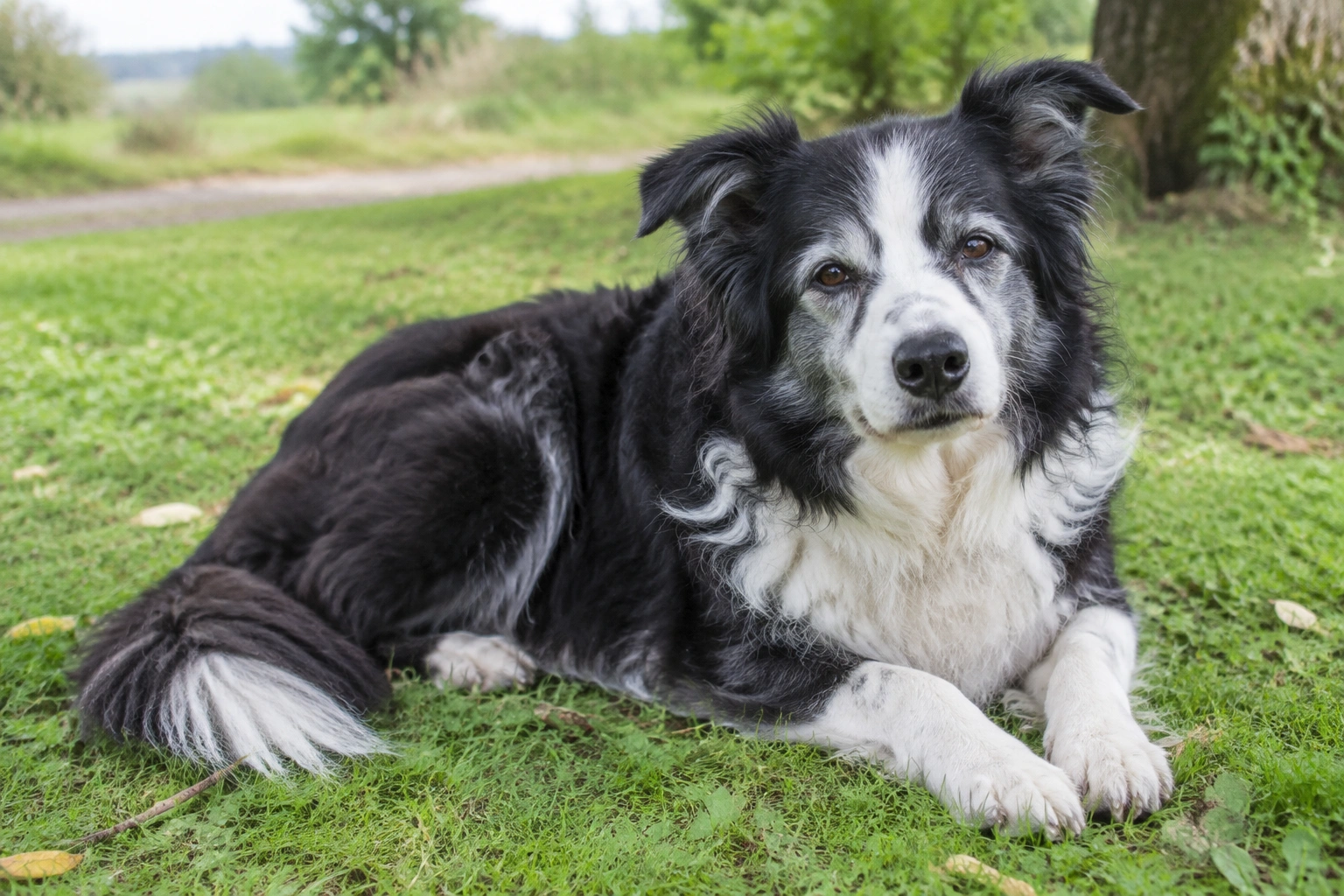
- Greying around the muzzle, eyes, or face
- Weight gain with the same food and routine
- Mild hearing or vision changes
- More sensitivity to cold or damp weather
Behavior can shift too. Some older dogs become less tolerant of rough play. Others seem more clingy, less confident, or slower to respond to cues they once knew well.
The key is not to look for one dramatic change. Aging usually arrives as a pattern: a little slower here, a little stiffer there, a little less enthusiasm for repeated effort.
Normal Aging vs. Signs of Illness or Pain
This is where many owners get tripped up. They see a change and assume, “He’s just getting old.”
Sometimes that’s true. Often it isn’t.
Common aging changes
These are often consistent with senior aging:
- Taking longer to warm up
- Needing more rest between activities
- Mild stiffness that improves after moving
- Slightly reduced stamina
- Gradual hearing or vision decline
Red flags that need veterinary attention
These are not “just age” until proven otherwise:
- Sudden or worsening limping
- Trouble rising, slipping, or collapsing
- Rapid weight loss
- Increased thirst or urination
- Coughing
- Repeated vomiting or diarrhea
- Noticeable pain when touched
- New anxiety, confusion, or disorientation
- House-soiling that starts suddenly
- Loss of appetite or difficulty chewing
A useful rule: slow, gradual change often fits aging; sudden change usually suggests illness, pain, or both. Even if a symptom seems mild, bring it up sooner rather than later. Older dogs hide problems well.
If you’re unsure whether a change is normal, ask yourself: Did this happen over months, or did it appear in days or weeks? Faster changes deserve more urgency.
What Senior Care Should Start Before Obvious Aging Shows
Senior care should not wait until your dog “looks old.”
The best time to adjust care is when the dog is still functional but entering the age range where risk begins to rise. That usually means:
- Tracking weight more carefully
- Watching body condition, not just appetite
- Noting changes in stamina, posture, and gait
- Scheduling regular wellness exams
- Keeping dental care current
- Adjusting exercise before injuries or weakness appear
This is especially useful for Border Collies, because a dog that still wants to run can easily outpace its joints, teeth, or recovery ability. The dog may seem fine after an intense outing and then stiffen up later that night or the next morning.
Think of senior care as maintenance, not rescue. The goal is to preserve comfort and function, not to wait for a problem and then try to reverse it.
Senior Veterinary Checkups and Screening Frequency
As dogs age, regular veterinary visits matter more because many senior issues begin quietly.
A common veterinary practice is to move from annual wellness care to twice-yearly exams once a dog enters senior years or begins showing age-related changes. Your vet may recommend a different schedule based on your dog’s health status, and some clinics recommend earlier or more frequent visits for larger breeds or dogs with known health risks.
A senior screening commonly includes:
- Bloodwork
- Urinalysis
- Dental assessment
- Weight and body condition review
- Mobility or gait evaluation
That extra visit frequency matters because it gives your vet more chances to catch trends such as:
- Weight gain or loss
- Joint pain
- Dental disease
- Heart or kidney concerns
- Changes in mobility or behavior
The ASPCA notes that there is no set age for senior status, but gives size-based guidelines that place small dogs around 9 to 11 years, medium dogs around 8 to 10 years, large dogs around 8 or 9 years, and giant breeds around 6 years. That’s a useful cue for when to start thinking about more proactive care. You can read their guidance on caring for senior pets.
If your dog is in the senior age band, ask your vet whether a baseline senior screening panel makes sense now rather than later.
Nutrition Changes for Older Dogs
A senior dog does not automatically need a senior formula.
What matters more is body condition, muscle maintenance, and calorie needs.
Some older dogs need fewer calories because they move less. Others need the same or even more nutrition support because they’re losing muscle, becoming picky, or burning energy through chronic health issues. A food labeled “senior” may help some dogs, but it is not automatically better.
Use these decision points:
- If your dog is gaining weight: reduce calories and reassess treats first
- If your dog is losing muscle: focus on preserving lean mass, not just cutting calories
- If appetite drops: dental pain or illness may be the real issue
- If stools change after a diet switch: the change may be too abrupt or unnecessary
A senior food can be useful when it helps with calorie control or digestibility. It can be a poor choice if it lowers protein too much for a dog that still needs muscle support. That’s why body condition score and muscle condition matter more than the word “senior” on the bag.
For active, lean senior dogs, an adult diet may still be perfectly appropriate if it continues to maintain weight and muscle. In other words, if your Border Collie is staying lean, strong, and energetic on its current food, a senior formula is not automatically necessary.
Make diet changes gradually over several days to reduce stomach upset.
Exercise, Mobility, and Joint Support in Senior Dogs
Older dogs still need exercise. They just need it managed more carefully.
Reducing exercise too much can backfire. It can lead to weight gain, muscle loss, and stiffer joints. On the other hand, pushing an aging dog through the same workload it handled at four years old can trigger soreness or injury.
A practical middle ground works best:
- Keep walks regular but shorter if needed
- Favor more frequent, lower-impact movement
- Add warm-up time before intense activity
- Watch for next-day stiffness
- Avoid repeated high-impact jumping if joints are sensitive
For a Border Collie, mental work becomes especially valuable when physical output needs to be moderated. Scent games, obedience refreshers, food searches, and controlled fetch can preserve engagement without overloading the body.
The goal is not to “slow the dog down.” It is to keep the dog fit enough to move comfortably and stay mentally sharp.
Behavior Changes, Cognitive Decline, and When to Worry
Older dogs often change behavior in ways that owners mistake for stubbornness.
Watch for:
- Pacing at night
- Restlessness or disrupted sleep
- Increased anxiety
- Getting “stuck” in corners or behind furniture
- House-soiling after years of reliability
- Seeming confused in familiar places
- Less response to cues
- New clinginess or withdrawal
These signs can point to hearing loss, vision loss, pain, or cognitive decline. They can also reflect medical problems that are treatable, which is why they should not be brushed off.
A dog that suddenly seems less obedient is not necessarily being difficult. It may be struggling to process information, hear you, see clearly, or move without discomfort.
If behavior shifts are paired with physical changes, treat that combination as a strong reason to call your vet.
Practical Decision Guide: Should You Start Senior Care Now?
Use this simple checklist.
Your dog likely needs senior-style care now if two or more of these are true:
- The dog is in the typical senior age range for its size
- Stiffness appears after rest
- Recovery from exercise is slower
- Weight is creeping up or down
- Dental issues are present
- Sleep, hearing, vision, or behavior has changed
- The dog is less comfortable on stairs, slippery floors, or jumps
If only one item applies, you may not need a major change yet, but you should keep watching closely.
If the dog is a Border Collie around 7 to 9 years old and still active, that often means pre-senior planning is the smart move: schedule the senior dog checkup, track weight, note mobility changes, and adjust exercise before the dog starts to struggle.
That approach is usually easier than waiting for a clear problem and then trying to fix it all at once.
When to See a Veterinarian or Certified Trainer
See a veterinarian promptly if your older dog has sudden limping, collapse, persistent vomiting, rapid weight loss, increased thirst, coughing, major appetite loss, or a sudden behavior change.
A certified trainer or behavior professional can also help if your senior dog seems anxious, confused, reactive, or less responsive to cues and you want to adapt routines safely. In older dogs, behavior support works best when it is paired with a medical check, because pain and cognitive changes can look like training issues.
FAQs
At what age is a dog considered senior?
There is no single age for every dog. Many small dogs reach senior status around 9 to 12 years, medium dogs around 8 to 10 years, large dogs around 8 to 9 years, and giant breeds around 5 to 7 years.
Is a Border Collie a senior at 7 years old?
Not always, but 7 is a reasonable time to start watching closely. Many Border Collies enter the senior transition around 8 to 10 years, though health and body condition matter more than the number alone.
Should I switch to senior dog food as soon as my dog turns senior?
Not automatically. Base the decision on body condition, muscle mass, appetite, and activity level. Some senior dogs do well on adult food; others benefit from a diet change.
How often should senior dogs see the vet?
Twice-yearly wellness exams are commonly recommended once a dog is in the senior stage or showing age-related changes. Your vet may recommend a different schedule based on your dog’s health status.
What is the biggest mistake owners make with senior dogs?
Assuming stiffness, slowing down, or behavior changes are simply normal aging. Those signs can also point to pain or disease, and they’re worth checking.
Can an older dog still exercise normally?
Yes, but “normally” may need a new definition. Many senior dogs do best with regular, lower-impact activity, fewer repeated jumps, and more recovery time.
Why does my senior dog seem confused at night?
Night-time confusion can be related to cognitive decline, vision loss, hearing loss, or another medical issue. It should be discussed with a veterinarian, especially if it’s new or getting worse.
How do I know if my dog is aging or sick?
Gradual changes often fit aging. Sudden changes, pain, weight loss, coughing, vomiting, increased thirst, or major behavior shifts are more concerning and need veterinary attention.
