
When Is My Dog Considered a Senior? A Practical Age Guide for Border Collie Owners

If you want the short answer: many dogs are considered senior somewhere around 7 years old, but that is not a universal cutoff. Size, breed, and overall health matter just as much as the number on the calendar. Small dogs often stay “middle-aged” longer, while large and giant breeds may enter senior life earlier.

For Border Collie owners, the practical answer is usually around 8 to 10 years old, with some dogs showing senior needs a little earlier and others later. A healthy, active 8-year-old Border Collie may still look and act youthful, but it can still be worth starting senior-style monitoring, especially if you notice stiffness, slower recovery after exercise, or subtle behavior changes.
The useful rule is this: don’t wait for your dog to look old before you start thinking like a senior owner. Senior care is less about a dramatic age switch and more about catching small changes early enough to stay ahead of them.
Quick Answer: When a Dog Is Considered a Senior
A dog is generally considered a senior when it reaches the age range typical for its size and breed:
- Small breeds: about 10 to 12 years
- Medium breeds: about 8 to 9 years
- Large and giant breeds: about 6 to 7 years
These are approximate ranges, not fixed cutoffs. Individual dogs may move into senior life earlier or later depending on health, activity level, and lifestyle. The AAHA senior pet life-stage guidance also notes that dogs with chronic health issues may age earlier than their peers.
If you want a simple decision rule, use this:
- Check your dog’s size and breed.
- Compare that with the typical senior age range.
- Look for signs of aging in movement, energy, senses, and behavior.
- If age and signs line up, begin senior care now.
Why Senior Age Is Not the Same for Every Dog
A common mistake is assuming all dogs become seniors at the same age. They do not.
Body size changes how quickly dogs tend to move through life stages. Larger dogs usually reach senior status earlier than smaller dogs, even though they may look physically mature at a similar age. That happens because large and giant breeds tend to have shorter lifespans on average, so their later life stage starts sooner.
Health matters too. A dog with arthritis, chronic pain, heart disease, or another long-term condition may function like a senior before it reaches the “expected” age range. That is why age alone is a starting point, not the full answer.
The practical takeaway: use age to flag attention, but use symptoms to guide action.
Senior Age Ranges by Dog Size
Here is the simplest way to place your dog in the right category.
| Dog size | Typical senior age range | What that means in practice |
|---|---|---|
| Small breeds | 10–12 years | Often stay active longer, but still need senior screening once they enter this range |
| Medium breeds | 8–9 years | Many begin showing subtle age-related changes around this stage |
| Large breeds | 6–8 years | Senior care often starts earlier because aging can show up sooner |
| Giant breeds | 6–7 years | These dogs often need senior monitoring relatively early |
Use the table as a planning tool, not a label. A 7-year-old small dog may not need the same care changes as a 7-year-old giant breed. The age is the same; the life stage is not.
Where Border Collies Typically Fit
Border Collies sit in an interesting middle ground. They are not giant dogs, but they are also not tiny breeds that often stay youthful longer. In practice, many Border Collies begin entering their senior years somewhere around 8 to 10 years old.
That range makes sense when you look at how Border Collies age. They are usually athletic, mentally sharp, and capable of staying active well into later life. But their work ethic can hide early aging. A Border Collie may still want to run, herd, fetch, and stay engaged even while joints, stamina, or vision are starting to change.
Here is how I would think about it in real life:
- At 7 years: many Border Collies are still clearly adult dogs, but this is a good time to begin watching for subtle changes.
- At 8 to 9 years: many are entering the senior transition, even if they still look fit.
- At 10 years and beyond: senior care should usually be the default unless your veterinarian says otherwise.
If your Border Collie still seems “young,” that does not automatically mean you should ignore age. It may simply mean you are catching the transition early, which is exactly where good care makes the biggest difference.
You can also compare this with broader age guidance in our related guide on how old a dog is considered a senior.
Signs Your Dog Is Entering the Senior Stage
Age is useful, but the body usually tells the truth first. Watch for changes in these areas.
Physical signs
These are the most obvious early signals:
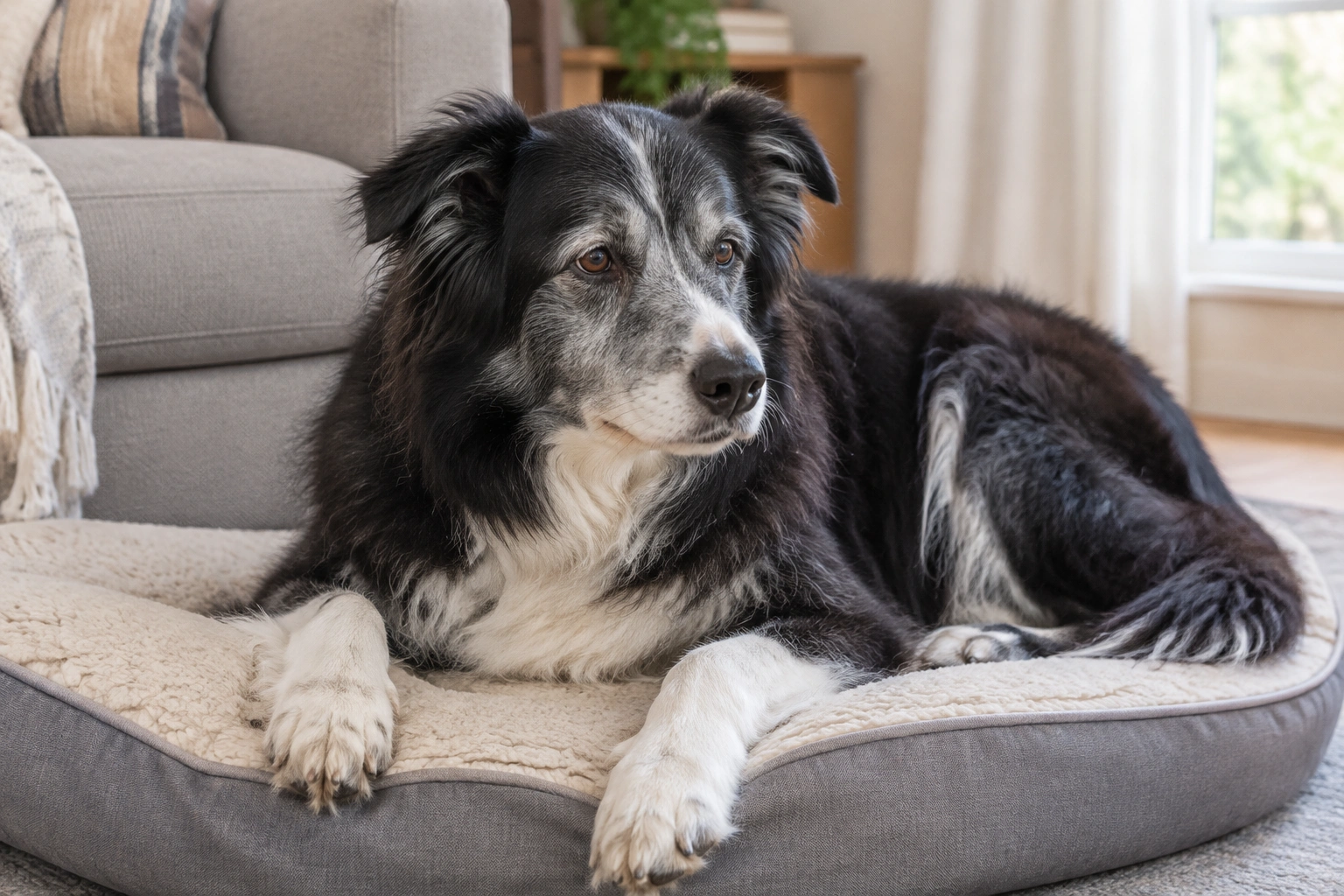
- A little gray on the chin or muzzle
- Cloudier eyes
- Slower movement after resting
- Stiffness when getting up
- Slower recovery after exercise
- Less enthusiasm for jumping into the car, onto furniture, or up stairs
A slight stiffness in gait is one of the most useful clues because it often shows up before obvious limping. It can be mild enough that owners dismiss it as “just a lazy day,” when it is actually the first sign of joint discomfort.
Behavioral signs
Senior dogs often change their routines in small ways:
- Sleeping more
- Wanting shorter play sessions
- Choosing rest over interaction more often
- Becoming less tolerant of long, intense activity
- Showing less eagerness to go out at certain times of day
For Border Collies, this can be easy to miss because many will still try to keep up. A dog may still chase a ball but need longer afterward to settle down. That recovery time matters.
Sensory and cognitive signs
As dogs age, hearing and vision can change gradually. You may notice:
- Not responding as quickly to sounds
- Startling more easily when approached
- Bumping into objects in dim light
- Hesitating in unfamiliar places
- Seeming a little confused at times
These changes do not always mean disease, but they do mean your dog needs closer observation.
A simple home check
If you want a practical way to judge aging, ask yourself:
- Is my dog slower to rise?
- Does recovery take longer after normal exercise?
- Is my dog sleeping more than before?
- Has appetite, weight, or thirst changed?
- Is my dog less steady on stairs or slippery floors?
If you answer yes to several of these, your dog may be entering the senior stage even if the birthday number seems “too early.”
When Age Alone Is Enough to Start Senior Care
You do not need to wait for obvious decline to begin senior care. Once your dog enters the typical senior age range for its size, it makes sense to shift into preventive mode.
That means:
- scheduling a senior wellness exam
- tracking weight more carefully
- watching mobility and recovery after exercise
- paying attention to appetite, thirst, and bathroom habits
- checking whether food and activity still match your dog’s current needs
This is especially important for Border Collies because they can stay mentally and physically engaged while still aging underneath the surface. A dog that still wants to work may be asking for help in quieter ways, such as needing more rest or moving a little differently.
If your dog is in the senior age range and you have not changed anything yet, that is not a mistake. It simply means now is the right time to start.
What Changes to Make in Senior Dog Care
Senior care is usually about small, targeted adjustments rather than a complete overhaul.
Diet
Older dogs often need closer attention to body condition. Many become less active, which means the same amount of food can lead to gradual weight gain. Extra weight puts more strain on joints and can make stiffness worse.
Instead of changing food based on age alone, use three questions:
- Is my dog maintaining a healthy weight?
- Has appetite changed?
- Has activity level changed enough to justify a diet review?
For a senior Border Collie, a practical first step is to recheck portions against your dog’s current body condition, not just the feeding chart on the bag. If your dog has slowed down, even a modest portion reduction may be worth discussing with your veterinarian. You can also use treats more strategically during training or enrichment so calories do not creep up unnoticed.
If the answer to any of those is yes, ask your veterinarian whether a senior diet or portion adjustment makes sense.
Exercise
Senior dogs still need exercise. The goal is usually less strain, not less movement.
For many older Border Collies, that can mean:
- swapping one long, intense outing for two or three shorter walks
- replacing repeated ball throws with gentler scent work or puzzle games
- choosing steady leash walks instead of lots of sprinting, jumping, or sharp turns
- adding more warm-up and cool-down time before and after activity
The trade-off is straightforward: if you reduce exercise too much, stiffness and weight gain can worsen; if you keep the intensity too high, you may aggravate joints or fatigue. The sweet spot is regular movement that your dog can handle comfortably and recover from well.
Rest and home setup
A few simple changes can make daily life easier:
- Add non-slip rugs on slick floors
- Provide a supportive bed
- Make water easy to reach
- Reduce repeated stair use when possible
- Make car entry easier with a ramp or step if needed
For a Border Collie with mobility changes, these adjustments can make a real difference. If your dog hesitates on hardwood floors, for example, adding runners in common paths can help. If jumping onto the couch has become harder, offering a lower resting spot may reduce strain without limiting comfort.
These changes are not cosmetic. They reduce strain in the exact places older dogs struggle most.
Veterinary Checks Senior Dogs Should Get
A senior wellness exam is one of the best investments you can make in an older dog’s health. The goal is to catch changes early rather than waiting for something to become obvious.
Many veterinarians recommend senior dogs have at least annual exams, and for some dogs—especially those with ongoing health issues, mobility concerns, or faster-changing needs—twice-yearly visits may be more appropriate.
A typical senior wellness exam may include:
- a full physical exam
- weight and body condition review
- mobility and joint assessment
- dental assessment
- bloodwork to screen organ function and other changes
- urinalysis to check kidney health, hydration, and urinary issues
- discussion of behavior, appetite, thirst, and activity changes
The exact screening schedule should come from your veterinarian, but the general idea is simple: older dogs benefit from more frequent checkups and more careful tracking.
If your dog has already shown stiffness, weight change, or behavior changes, do not wait for the next routine visit. Bring it up sooner.
Normal Aging vs. Warning Signs That Need a Vet
Some changes are expected with age. Others should not be brushed off.
Usually consistent with aging
- Mild gray around the muzzle
- Slightly slower movement
- More sleep
- Needing a little more warm-up before exercise
- Mild sensory changes that happen gradually
Needs veterinary attention
- Sudden limping
- Clear pain when standing or climbing stairs
- Rapid weight loss or gain
- Increased thirst or urination
- Reduced appetite
- Confusion or disorientation
- Repeated slipping or trouble getting up
- Sudden behavior change
- Noticeable decline over days or weeks
The difference between “normal aging” and “medical problem” is often speed and severity. Gradual change is more likely to be age-related. Sudden change deserves a vet visit.
Common Mistakes Dog Owners Make About Senior Age
The biggest mistakes are usually simple ones.
Treating age as the only factor
A dog can be young on paper and still need senior-style care if health issues are present.
Waiting until the dog looks old
By the time aging is obvious, the dog may already have been compensating for a while.
Keeping exercise exactly the same
That can be too much for older joints, especially in athletic breeds that do not naturally want to slow down.
Ignoring small changes
A little stiffness, a little more sleeping, or a slight change in recovery time often matters more than one dramatic symptom.
Overfeeding an older dog
A less active dog can gain weight quickly if the food stays the same but the workload drops.
The goal is not to panic over every gray hair. It is to notice patterns early enough to make sensible adjustments.
When to See a Veterinarian or Certified Trainer
See a veterinarian promptly if your dog has pain, limping, confusion, appetite loss, increased thirst, repeated accidents, or any sudden decline in mobility or behavior.
A certified trainer can also help if aging is changing your dog’s day-to-day behavior in practical ways. For example, a senior Border Collie that becomes more reactive when startled, less confident on walks, or more frustrated by routine changes may benefit from training support that respects the dog’s physical limits.
If you are unsure whether a change is medical or behavioral, start with the vet. Pain and discomfort often show up as behavior first.
FAQ: Senior Dog Age and Border Collies
Is 7 years old considered senior for a dog?
Often yes, but not always. Seven is a useful general marker, especially for larger dogs, but small dogs may not reach senior status until later.
Is a Border Collie a senior at 8 years old?
Many Border Collies are entering senior years around 8, though some may still seem very youthful. This is a good age to begin senior monitoring and preventive care.
Do Border Collies age faster than other dogs?
Not necessarily faster in every case, but they do benefit from breed-specific attention because their athleticism can hide early aging signs.
Should I change my dog’s food when they become a senior?
Not automatically. Food changes should be based on weight, activity, appetite, and your veterinarian’s advice, not age alone.
How often should senior dogs see a vet?
Your veterinarian can recommend the right schedule, but senior dogs often benefit from more regular wellness checks than younger adults.
Final Takeaway
A dog is considered a senior based on size, breed, and health, not just a birthday. For Border Collies, senior life commonly begins somewhere around 8 to 10 years old, but the real clue is how the dog is moving, recovering, and behaving.
If your dog is in that range, take the next step now: book a senior wellness exam and review your dog’s current food, exercise, and home setup so you can make small changes before bigger problems develop.
