
When to Get a Border Collie Puppy Fixed: The Practical Timing Guide

If you want the short answer, many puppies are fixed somewhere in the 6 to 9 month window, but Border Collies deserve a more careful look than a simple calendar rule. That age range is a common starting point, not a universal standard. Their athletic build, high activity level, and the fact that they are often still maturing physically after the “cute puppy” stage can make timing more individual than many owners expect.
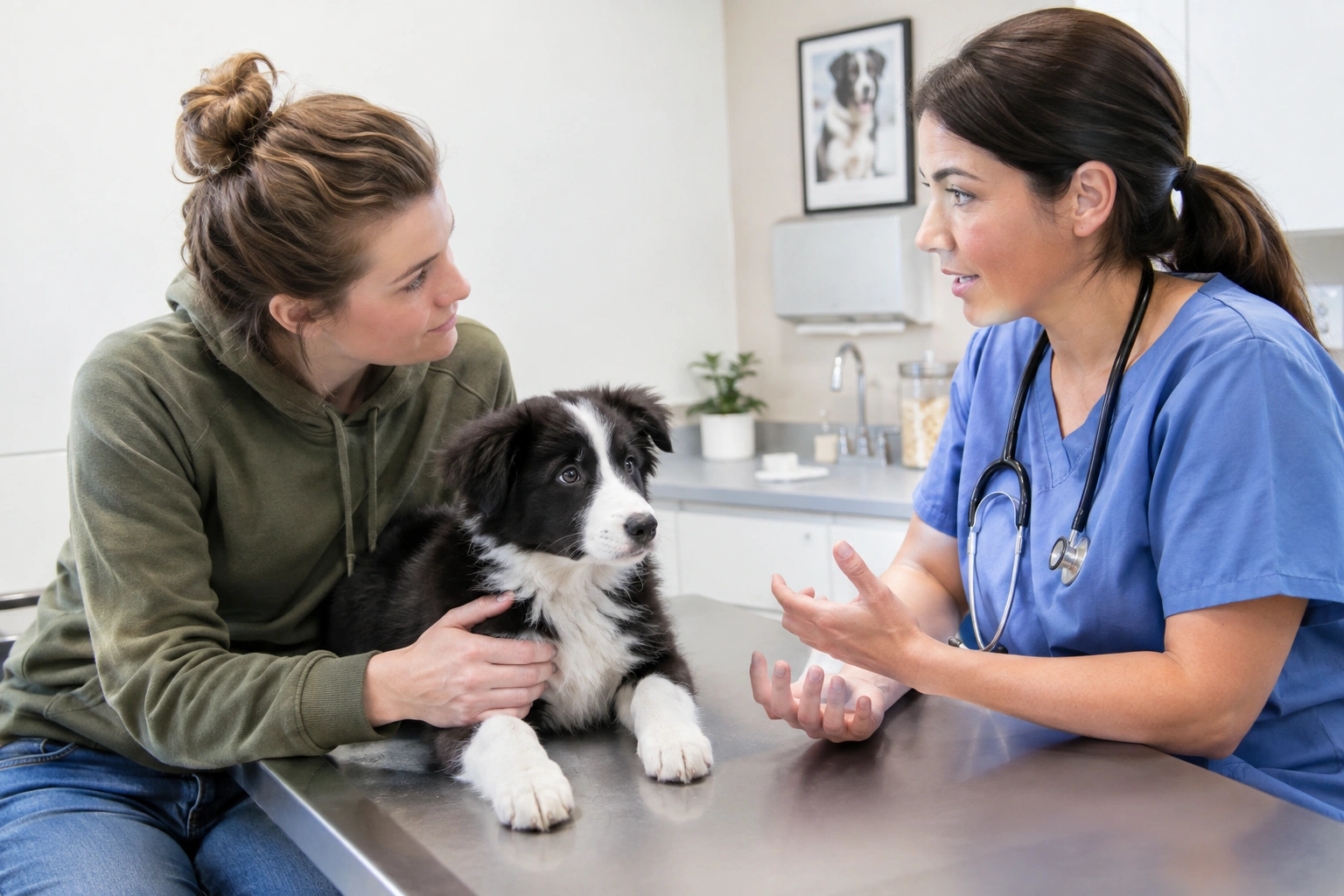
For a Border Collie, I would treat age as the starting point, not the decision. The better question is: Is this puppy physically mature enough, behaviorally manageable intact, and medically ready for surgery? That’s the conversation that gives you a safer answer than “six months because that’s what people say.”
The bottom line: most puppies get fixed in a general age window, but Border Collies may need more nuance
A healthy puppy can often be spayed or neutered before 6 months, and some are altered as young as 8 weeks in shelter settings. But that does not mean every puppy should be. Traditional guidance often places the procedure around 6 to 9 months, while some larger or giant dogs may benefit from waiting longer, sometimes until 12 to 18 months or more, depending on breed, sex, growth, and veterinary advice.
Border Collies sit in an interesting middle ground. They are not giant dogs, but they are active, athletic, and prone to owners pushing them hard early because they seem physically capable long before their skeleton is fully mature. That is where timing matters.
A practical Border Collie decision framework looks like this:
- Consider around 6 months if your puppy is healthy, growing steadily, has a normal body condition, and your vet does not see orthopedic concerns. This is often the point where owners start the conversation, especially if accidental breeding risk is low and the puppy is coping well with handling.
- Consider waiting until after first heat for a female if your veterinarian thinks a bit more maturity may help and you can reliably manage heat, supervision, and pregnancy prevention. This can be especially reasonable if your puppy is still quite lean, immature, or physically awkward for her age.
- Consider delaying further if your Border Collie is underweight, still obviously immature, has abnormal gait or joint findings, is recovering from another issue, or your vet wants more time for growth and orthopedic assessment. Delay also makes sense if your household cannot safely manage a high-energy dog through recovery or cannot prevent accidental breeding while waiting.
The goal is not to chase a perfect age. It is to choose the safest timing for your dog.
Why there is no universal “right age” for spay/neuter
The biggest mistake I see is treating spay/neuter timing like a single rule that applies to every puppy. It doesn’t.
Population-level advice is useful because it gives owners a starting point. Individual veterinary advice is more useful because it accounts for the puppy in front of you: sex, size, body condition, growth rate, orthopedic risk, and household risk of accidental breeding.
That difference matters. A family with a securely fenced property and a calm male puppy may have more flexibility than someone living around intact dogs, open gates, or frequent dog park exposure. A female puppy approaching her first heat cycle has different timing pressure than a male puppy whose main risk is roaming or marking.
You will see broad guidance from reputable sources that reflects this nuance. The ASPCA notes that healthy puppies can be neutered as young as eight weeks, while the AKC says six to nine months may suit toy and small breeds, with larger or giant breeds sometimes waiting until 12 to 18 months. Both can be true because they are answering different questions.
One is a general safety window. The other is a breed-and-development conversation.
For Border Collies, the practical takeaway is this: use population guidance to start the discussion, then let growth, body condition, and lifestyle determine the final timing. A puppy that is still very lean, still changing rapidly, or likely to be difficult to confine during recovery may need a different plan than a similar-age puppy that is stable and easy to manage.
Border Collie-specific factors that affect timing
Border Collies are not just “medium dogs.” They are intensely active, quick to mature in some ways, and often physically capable before they are structurally finished. That combination is why timing deserves more thought.
Athletic drive can hide physical immaturity
A Border Collie puppy may run, leap, and pivot like a mini adult long before growth plates have fully closed. That can fool owners into thinking the dog is ready for adult-level physical demands, including early surgery timing decisions. But energy is not the same thing as skeletal maturity.
Joint development matters more in active dogs
In dogs where joint health is a major concern, the timing of hormone removal can matter because hormones play a role in growth and development. The research is not identical across all breeds, and breed-level findings do not automatically translate to every Border Collie, but the general concern is consistent enough that many vets avoid rigid one-size-fits-all advice.
The UC Davis veterinary team has discussed breed differences in how early sterilization may relate to certain cancers and joint disorders. Border Collies are not the breed most commonly singled out in public-facing summaries, but the principle still matters: timing can affect orthopedic risk, and active dogs deserve an individualized discussion.
Temperament can complicate the decision
Border Collies are highly responsive, highly trainable, and often very sensitive to routine and household structure. That does not mean hormones define their behavior, but it does mean owners should be careful not to mistake adolescent energy or stress for a hormone problem. Fixing a Border Collie does not replace training, impulse control work, or exercise planning.
Early vs. delayed spay/neuter: what changes medically
This is the part most owners want to understand before they book surgery.
Here is the trade-off in plain language:
| Timing choice | Potential advantages | Potential drawbacks |
|---|---|---|
| Earlier spay/neuter | Reduces risk of accidental breeding sooner; may be simpler surgery and recovery; can reduce some hormone-driven behaviors | May interrupt development before the dog is physically mature; may not be ideal for every active breed or individual puppy |
| Delayed spay/neuter | Gives more time for growth and maturation; may fit better with orthopedic concerns in some dogs | Longer window for unwanted mating, heat cycles, roaming, marking, or hormone-driven behavior |
That trade-off is why you should not pick a date just because a neighbor’s dog had the same procedure at the same age.
Growth plates and joint health
Growth plates are areas of developing tissue near the ends of long bones. They close as the dog matures. In some dogs, early hormone removal may affect how those bones and joints develop. The concern is not that every early-fixed dog will have a problem. It is that the risk profile can shift, especially in dogs with athletic builds or breed-specific orthopedic sensitivity.
Puberty exposure and health protection
Waiting longer can allow a puppy to pass through more of its natural developmental timeline before surgery. For some dogs, that may be part of a healthier long-term plan. For female dogs, delaying also means the dog may go through a heat cycle, which brings practical management issues and pregnancy risk if she is not carefully supervised.
Disease prevention trade-offs
Spaying and neutering can reduce the risk of some reproductive problems. That benefit is real, but the timing changes the balance. For female puppies, the question often becomes whether to spay before the first heat or after it. For males, the discussion is more about behavior, reproduction control, and orthopedic timing.
The best answer is usually not “as early as possible” or “as late as possible.” It is “early enough to prevent the risks you care about, but not so early that you ignore development.”
Male vs. female puppies: does timing differ?
Yes, the decision points are different.
Female Border Collies
For females, the main timing pressure is the first heat cycle. Avoiding that cycle can reduce the hassle of heat management and eliminate the risk of accidental pregnancy. But many vets prefer not to schedule surgery while a female is actively in heat. The AKC specifically advises not to knowingly spay a female dog during her heat cycle.
That means if you are aiming to spay before heat, you need to watch development closely and plan ahead with your vet. If you miss that window, don’t panic. It simply becomes a different timing conversation.
Male Border Collies
For males, the pressure is usually less about a biological deadline and more about behavior, home management, and breed-specific development. Neutering may help reduce some hormone-driven behaviors such as roaming or marking, but it will not erase adolescent impulsiveness or poor manners.
Male Border Collies that live in secure homes with strong training may give you more flexibility on timing than a male dog with access to intact females nearby. The practical question is not “When do males have to be neutered?” It is “How much risk am I willing to manage while I wait?”
Behavior effects: what fixing can change—and what it usually won’t
This is where a lot of owners get disappointed.
Spaying or neutering can help reduce hormone-driven behaviors, but it will not automatically fix training or obedience issues. That point matters a lot with Border Collies, because many of the behaviors owners dislike are not hormone problems at all. They are adolescent habits, overarousal, underexercise, poor impulse control, or inconsistent handling.
A fixed puppy may still:
- bark at movement
- chase shadows, bikes, or livestock
- jump on guests
- mouth when overstimulated
- struggle with arousal around other dogs
What surgery may help with in some dogs:
- roaming
- some marking behavior
- some mounting
- heat-related behaviors in females
- reducing the drive to seek mates
The key word is may. If your Border Collie is already rehearsing bad habits, the procedure will not train those habits out of the dog. You still need structure, reinforcement, and clear rules.
A useful mindset is this: spay/neuter can remove some hormonal fuel, but it does not install manners.
How vets decide a puppy is ready for surgery
A good veterinarian is not just looking at the birthdate. They are looking at the whole dog.
Expect the decision to be shaped by:
- age
- sex
- body condition
- puberty stage
- overall health
- orthopedic concerns
- household breeding risk
A puppy that is underweight, medically unstable, or showing signs of developmental delay may need a different timeline. A Border Collie that is physically robust but still very young may also benefit from waiting a bit longer.
Before scheduling, a vet may also do a more specific pre-op check, such as:
- a full physical exam to listen to the heart and lungs and check hydration
- an orthopedic exam to look for pain, loose joints, uneven gait, or soreness after movement
- a review of growth rate and body condition score to see whether the puppy is too lean, too heavy, or still changing rapidly
- a check of weight stability and whether the dog is large enough for safe anesthesia and surgery
- a review of vaccination status and parasite prevention
- bloodwork or other tests if the puppy has a medical concern, is very young, or has a history that makes anesthesia planning more important
This is also where a pre-op exam matters. The point is not paperwork. It is to make sure the dog is healthy enough for anesthesia and surgery and that the timing makes sense for that dog’s development.
Questions to ask your veterinarian before scheduling
If you want a truly useful vet conversation, bring specific questions. These help move the discussion away from generic age rules and toward a plan for your puppy.
Ask:
- Based on my puppy’s size and body condition, what timing do you recommend?
- Do you see any orthopedic concerns that would make waiting safer?
- Has my puppy reached a suitable developmental stage for surgery, or should we wait for more growth?
- If this is a female, should I aim for before or after the first heat?
- If this is a male, what behavior or management reasons would justify earlier neutering?
- Are there reasons to delay because of health, weight, vaccination timing, or growth?
- What pre-op tests or exam findings would change your recommendation?
- What recovery restrictions should I plan for at home?
- Should I change exercise or feeding before surgery?
- What signs after surgery would mean I should call you right away?
If your vet gives you a date without explaining why, ask for the reasoning. A good recommendation should be explainable.
How to prepare for the procedure and recovery
Recovery is where energetic Border Collie owners need to be realistic.
The ASPCA advises providing a quiet indoor recovery space and preventing running and jumping for up to two weeks after surgery. That is not a casual suggestion for a breed that likes to move. It is the part of the plan that most often gets underestimated.

Before surgery
Prepare by:
- confirming fasting instructions with your vet
- arranging a calm recovery area away from other pets
- removing opportunities for stairs, jumping, and rough play
- lining up a cone or recovery suit if your vet recommends one
- planning for leash-only potty breaks
After surgery
Most puppies are ready to resume normal activity only after the incision is healed and your veterinarian clears them, which is often around the 10- to 14-day recheck period for routine cases, though your vet may give a different timeline. Until then, the main restrictions are no running, no jumping, no wrestling, and no off-leash zoomies.
With Border Collies, the hardest part is usually not the incision itself. It is keeping a smart, active dog calm enough to heal. That may mean more crate time, more leash control, more mental enrichment that does not involve running, and more supervision than you expected. Short, calm leash walks for potty breaks are usually easier to manage than free play, and puzzle toys or quiet training games can help burn mental energy without stressing the incision.
When to delay or reconsider the timing
There are times when postponing surgery is the smarter move.
Reconsider timing if your puppy:
- is still very immature for age
- has orthopedic concerns
- is underweight or overweight
- is recovering from another illness
- has an abnormal heat pattern or reproductive issue
- lives in a setting where surgery timing could be coordinated more safely with development
Also reconsider if your household can’t manage the recovery period properly. A Border Collie that cannot be kept from jumping, sprinting, or wrestling may need a more carefully planned surgery date, not a rushed one.
When to see a veterinarian or certified trainer
See a veterinarian if you are unsure whether your puppy is ready, if puberty seems early or delayed, if your female dog has started a heat cycle, or if your puppy has any health or orthopedic concerns.
See a certified trainer if you are hoping spay/neuter will solve reactivity, jumping, roaming, or impulse-control problems. Surgery can change some hormone-driven behavior, but training still does the heavy lifting.
FAQ
Can a puppy be fixed before 6 months?
Yes, some can. The ASPCA notes that healthy puppies as young as eight weeks old can be neutered. But being able to do it does not mean it is the best choice for every puppy.
Is 6 months the right age for a Border Collie?
It can be a reasonable starting point, especially for some dogs, but it is not a universal answer. Border Collies often deserve a more individualized discussion because of their activity level and development.
Should I wait until after the first heat?
Sometimes, especially if your vet thinks more maturity is beneficial. But waiting means managing a heat cycle and the risk of accidental breeding. There is a real trade-off.
What signs might mean my puppy is ready for surgery?
Your vet will usually look at more than age. Readiness may include a normal physical exam, stable weight, appropriate body condition, no orthopedic red flags, up-to-date vaccines, and a development stage that fits the planned procedure.
Will fixing calm my Border Collie down?
It may reduce some hormone-driven behaviors, but it will not replace training or exercise planning. A high-drive Border Collie will still be a high-drive Border Collie.
What if my puppy is already older than 6 months?
That is still common. Dogs can be altered as adults too, though the ASPCA notes there is a slightly higher risk of post-operative complications in older dogs, overweight dogs, or dogs with health problems. Your vet can help you decide whether to proceed now or wait.
How long is recovery?
Many puppies need about 10 to 14 days of restricted activity, but the exact timeline depends on your vet’s instructions and how the incision is healing. Normal activity should only resume after veterinary clearance.
The best timing for fixing a Border Collie puppy is the one that balances development, health, and household risk. That usually means using age as a guide, then letting your veterinarian refine the decision based on the dog in front of you.
