
Which Direction to Brush a Border Collie

Quick Answer
Brush your Border Collie mainly in the direction its hair grows, using gentle strokes that follow the natural lay of the coat. Work in small sections, following the body from the neck toward the back and sides, then brush down the legs and from the base toward the tip of the tail. For a thick double coat, gently lift or part the hair to reach loose undercoat without scraping the skin.
The best brushing direction for a Border Collie is generally with the grain of the fur, not forcefully against it. This helps smooth the outer coat, remove loose hair and reduce unnecessary pulling. Because Border Collies have a protective double coat, the technique matters as much as the direction.
A rough-coated Border Collie has longer feathering around areas such as the chest, legs and tail, while a smooth-coated dog has shorter fur. Both benefit from gentle, methodical brushing, but longer areas need more attention to tangles. The goal is to work through the coat comfortably rather than repeatedly dragging a brush over its surface.
Which Way Should You Brush Each Part of a Border Collie’s Body?
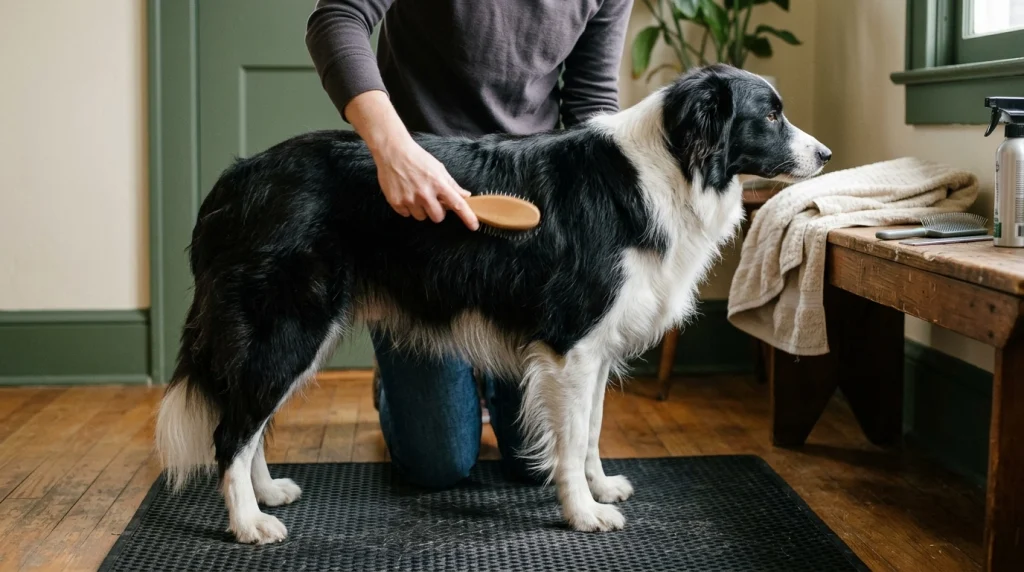
Follow the direction in which the hair naturally lies. On most of the body, this means brushing from the neck toward the shoulders and back, then along the sides toward the hindquarters. Adjust your strokes wherever the coat changes direction.
- Neck and shoulders: Brush backward and downward along the way the coat naturally lies.
- Back and sides: Use smooth strokes from the shoulders toward the hindquarters, following the hair’s growth pattern.
- Chest and mane: Work downward or outward in the direction the hair falls, separating longer sections gently.
- Legs: Brush downward toward the paws, using short strokes on feathered hair.
- Tail: Start near the base and work toward the tip, supporting the hair and removing small tangles carefully.
- Belly and armpits: Use light, controlled strokes that follow the local hair growth, taking extra care with sensitive skin.
These are starting directions rather than rigid rules. A Border Collie’s fur does not grow in one uniform direction across the entire body, so watch how each section lies instead of forcing every stroke along the same path.
Why Does Brushing With the Hair Growth Matter?
Brushing with the grain helps the coat lie smoothly and makes routine grooming more comfortable. It also reduces the temptation to use excessive pressure when the brush meets resistance.
Border Collies have a soft, dense undercoat beneath a more weather-resistant outer coat. These layers serve different functions: the undercoat provides insulation, while the outer coat helps protect the skin from environmental exposure. The Border Collie Club of South Australia’s grooming guidance explains this double-coat structure and the importance of maintaining it.
Brushing is not simply about making the fur look neat. It helps remove loose hair, separates developing tangles and gives you an opportunity to check the skin for irritation, debris or unusual changes.
Brushing against the grain is not always wrong, but it should not be the default for ordinary grooming. A few gentle strokes that lift the coat can help expose loose undercoat when needed. If the dog flinches, the skin becomes pink, or the brush catches repeatedly, stop and change your technique rather than brushing harder.
How to Brush a Border Collie Step by Step
A section-by-section method is easier to control than repeatedly brushing the entire dog from head to tail. It is particularly helpful for rough-coated Border Collies, whose longer fur can conceal tangles close to the skin.
- Let your dog settle. Choose a comfortable, well-lit place where your Border Collie can stand or lie naturally. Begin with a few gentle strokes in an area the dog enjoys.
- Check the coat before brushing. Look for burrs, dried mud, mats and sensitive patches. Loosen removable debris gently rather than pulling it through the fur.
- Start at the neck and shoulders. Brush with the direction of hair growth, using short, light strokes. Avoid pressing the brush hard against the skin.
- Work across small sections. Move along the back and sides toward the hindquarters. Part longer fur with your free hand so you can see what is happening underneath.
- Reach the undercoat carefully. Use a suitable brush to work through loose undercoat with controlled strokes. The goal is to release loose hair, not scrape or repeatedly rake the same patch of skin.
- Brush the feathered areas. Carefully work through the chest, rear legs, tail and hair behind the ears. If a knot resists, hold the hair near its base to reduce pulling on the skin.
- Finish with a gentle check. A suitable comb can help reveal small tangles that remain. Move through the coat without forcing the teeth through a knot.
For general guidance on gentle brushing, the RSPCA’s dog-grooming advice recommends brushing in the direction of hair growth and stopping if the animal becomes uncomfortable or stressed.
Should You Brush a Border Collie’s Undercoat Against the Grain?
Sometimes, gentle lifting of the undercoat can help loosen dead hair, but routine brushing should still finish in the direction of growth. Avoid forcefully brushing the entire coat backward, especially with a stiff brush or a tool designed to remove large amounts of undercoat.
For a rough-coated Border Collie, separate a small section of fur and use short strokes to reach loose hair underneath. Work gradually, keeping the brush close enough to remove loose fur but not so close or forceful that its teeth scrape the skin. Then smooth the outer coat back into place.
If your dog has a smooth coat, you may not need to lift or separate the fur as extensively. A suitable soft brush or grooming tool can often remove loose hair with simple strokes along the coat.
The key distinction: lifting the coat is a technique for accessing loose undercoat, not a reason to brush aggressively against the hair growth. If the coat is tightly tangled or matted, repeated brushing in either direction can cause discomfort.
What Brush Should You Use for the Direction of Hair Growth?
Choose a tool that suits your Border Collie’s coat length and the task you need to perform. No single brush is ideal for every area or every coat condition.
- Slicker brush: Useful for carefully working through loose hair and minor tangles, particularly in longer coats. Use light pressure to avoid irritating the skin.
- Pin brush: Can help smooth and maintain longer feathering without aggressive scraping when used gently.
- Long-toothed metal comb: Useful for checking behind the ears, around the tail and through other areas where knots can hide.
- Soft bristle brush: Suitable for smoothing the outer coat and removing some surface debris or loose hair.
A brush that works well on the back may be too harsh for the belly or the thinly covered areas of the legs. Choose the gentlest effective tool, and avoid forcing a comb through a knot that does not release easily.
How Can You Avoid Pulling, Mats and Skin Irritation?
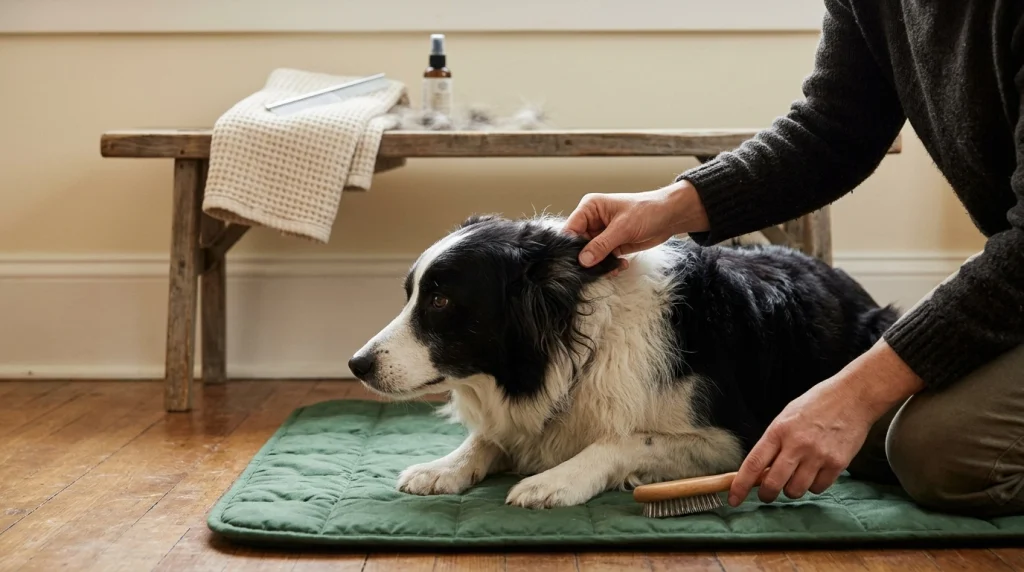
Most brushing problems can be reduced by using small sections, controlling pressure and responding to resistance early. A knot should be loosened carefully, not pulled out by force.
- Do not brush repeatedly over one spot. Excessive friction can irritate the skin, even when the brush is suitable.
- Hold tangled hair near its base. This reduces the pulling force transmitted to the skin as you work on a small knot.
- Do not yank at tight mats. Mats close to the skin can be painful and difficult to remove safely at home.
- Use extra care around sensitive areas. The ears, armpits, belly, toes and joints need lighter pressure and controlled strokes.
- Keep sessions positive. Offer breaks and rewards, especially if your dog is new to grooming.
Stop if your Border Collie repeatedly pulls away, cries, snaps, or shows signs of pain. Persistent itching, redness, sores, unusual hair loss or a sudden change in coat condition also deserves veterinary attention rather than more brushing.
Never cut a tight mat out with scissors held close to the skin. Dog skin can be drawn into a mat, making it difficult to judge where the skin ends and the tangled hair begins. A professional groomer or veterinarian can help remove stubborn mats safely.
How Often Should You Brush in This Direction?
Brush regularly enough to prevent tangles and remove loose hair, adjusting the schedule to your dog’s coat and shedding. The VCA’s Border Collie breed-care guidance suggests brushing once or twice weekly, depending on coat length.
A rough-coated dog may need extra attention behind the ears, under the legs and around the tail. During heavier seasonal shedding, more frequent gentle sessions can help keep loose undercoat under control. A smooth-coated Border Collie may need less time per session.
Use the condition of the coat as your guide. If it remains free of tangles and loose hair is manageable, your routine is probably sufficient. If knots repeatedly develop, check whether particular areas need more frequent attention or whether your technique or grooming tool needs adjusting.
Related Product
A Gentle Dog Slicker Brush
A suitable slicker brush can help work through loose hair and minor tangles in a Border Collie’s coat when used with light pressure and strokes that follow hair growth.
As an Amazon Associate, we earn from qualifying purchases.
Frequently Asked Questions
Should I brush my Border Collie from head to tail?
Generally, yes, as a starting pattern for the back and sides. Follow the coat’s natural growth and adjust the direction around the chest, legs, belly and tail rather than forcing every section to lie the same way.
Can I brush my Border Collie backward to remove shedding fur?
Gentle lifting or short strokes against the grain may help release loose undercoat in some areas. Avoid forceful backward brushing, scraping the skin or repeatedly working the same patch.
Should I brush a Border Collie when its coat is wet?
Avoid forcefully brushing wet fur because it can stretch, tangle or break more easily. After bathing, gently dry the coat and use an appropriate grooming method as the fur becomes dry enough to brush safely.
Which areas of a Border Collie mat most easily?
Pay particular attention to the fine hair behind the ears, under the front legs, around the chest and at the base of the tail. Longer feathering can hide knots close to the skin.
How do I know if I am brushing too hard?
Watch for flinching, repeated attempts to move away, redness or brush marks on the skin. Reduce pressure, switch to a gentler tool or stop the session if your dog seems uncomfortable.
Should I brush a Border Collie against the grain before brushing with it?
Not necessarily. Most routine grooming can be done with the grain. If you need to lift loose undercoat, use a gentle, controlled technique and finish by smoothing the coat in its natural direction.
Conclusion
Brush your Border Collie mainly in the direction its fur naturally grows, using light strokes and working through one section at a time. Follow the coat backward along the body, downward along the legs and from the base toward the tip of the tail, adjusting wherever the hair changes direction.
For a double coat, gently separate the fur to reach loose undercoat without scraping the skin. Pay extra attention to the ears, armpits and tail, where tangles can hide. If brushing causes pain or a mat will not loosen easily, stop rather than pulling harder. A calm, consistent routine helps keep the coat manageable while making grooming more comfortable for your dog.