
Why Are My Dog’s Eyes Red? A Practical Guide to Causes, Warning Signs, and What to Do Next

Red eyes in a dog are a symptom, not a diagnosis. That matters, because the same bloodshot look can come from something mild, like dust or pollen, or from a problem that can damage vision if you wait too long.
For Border Collie owners, it can be tempting to “watch and see.” Sometimes that is reasonable for a few hours. Sometimes it is the wrong move entirely. The key is learning which signs suggest simple irritation and which ones point to pain, infection, injury, or pressure inside the eye.
Quick triage: is a red eye in a dog an emergency?
Use this fast check before you do anything else.
Seek urgent veterinary care today if your dog has any of these:
– keeps the eye shut or is clearly squinting
– paws at the eye repeatedly
– has a cloudy or bluish-looking eye
– has a visibly swollen eye or eyelids
– has thick yellow or green discharge
– seems to be in pain when you touch near the eye
– has a visible foreign body, scratch, or blood in the eye
– seems to be losing vision, bumping into things, or acting disoriented
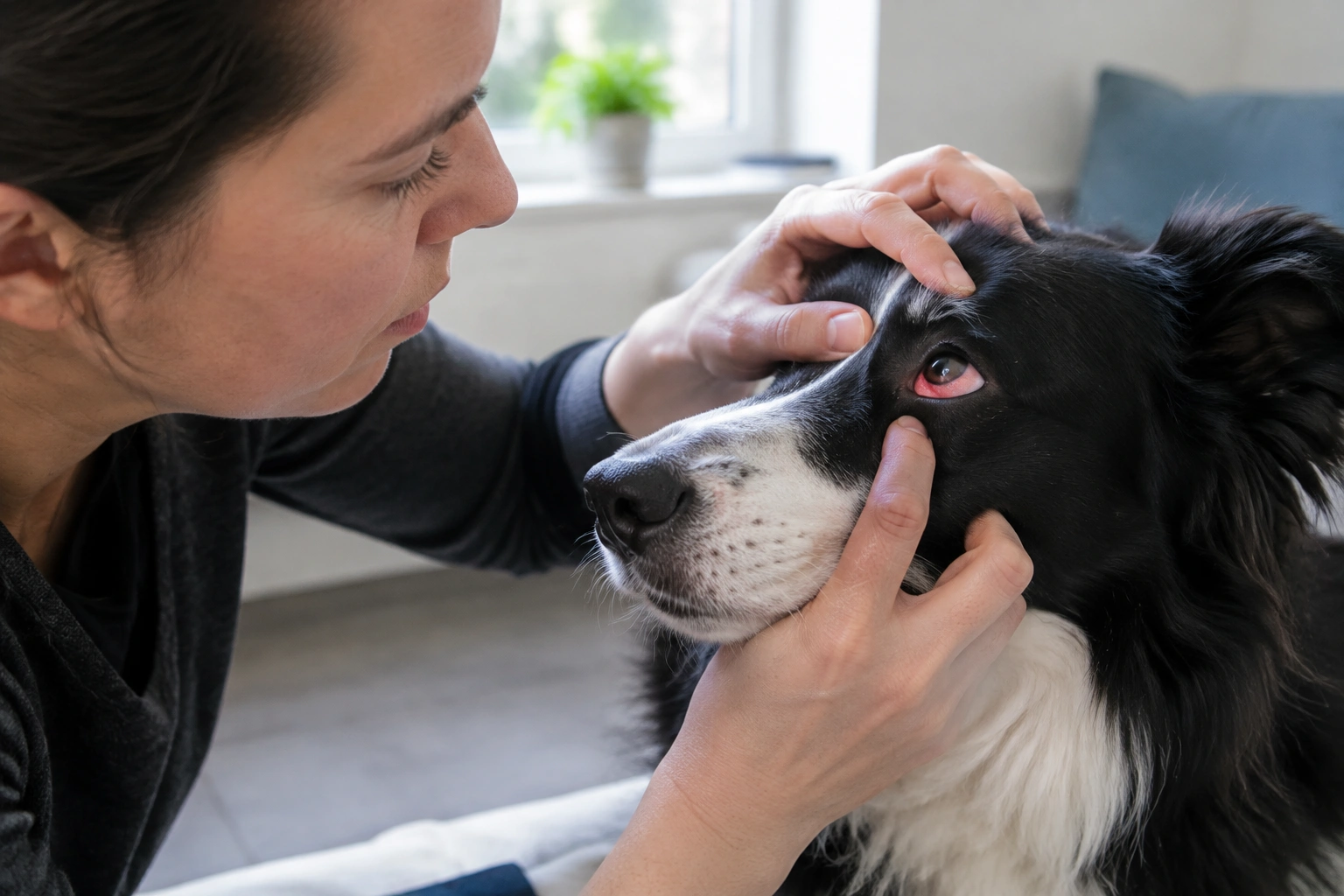
Those signs move the problem out of the “maybe irritation” category. They can point to a corneal ulcer, glaucoma, uveitis, trauma, or infection, and those conditions should not wait.
If the eye is red but your dog is comfortable, blinking normally, eating, and acting like itself, the problem may be less urgent. Even then, a veterinarian should still be consulted as soon as possible if the redness does not clear quickly or keeps returning. PetMD’s overview of red eyes in dogs is a useful reminder that redness can range from minor to serious.
What red eyes in dogs usually mean
Redness happens when blood vessels in or around the eye become enlarged or inflamed. That inflammation can come from several different directions:
- Allergy or irritation: pollen, dust, smoke, shampoo, or wind
- Infection: bacterial or viral irritation of the eye surface
- Injury: a scratch, poke, or blunt trauma
- Dry eye: not enough tears to protect the surface
- Foreign body: grass seed, dirt, hair, or debris trapped in the eye
- Inflammation inside the eye: conditions such as uveitis
- Pressure-related disease: glaucoma, which can be vision-threatening
The important part is this: the color change is the body’s reaction. It does not tell you the cause by itself. Two dogs can both have red eyes and need very different treatment.
A dog with a dusty, itchy, both-eyes-red problem after a windy walk may have a minor irritant issue. A dog with one red, painful eye after running through brush may have a scratch or foreign body. Same symptom, very different risk.
One red eye vs both eyes: what the pattern suggests
Laterality gives you one of the best clues.
When both eyes are red
Both eyes turning red at the same time often points toward something affecting the environment or the whole body:
– allergies
– dust or smoke exposure
– mild irritation from wind, grass, or shampoo
– some forms of conjunctivitis
That does not automatically make it harmless. It just makes a localized injury a little less likely.
When only one eye is red
One red eye deserves more suspicion for:
– a scratch
– a foreign body
– a corneal ulcer
– trauma from play, a branch, or a collision
– glaucoma or uveitis affecting one eye first
If one eye is noticeably worse than the other, especially if the dog is squinting or rubbing at it, think “something is wrong with this eye” rather than “general allergy.”
Common causes of red eyes in dogs, from mild to serious
Here is the practical version, moving from more common or milder causes to the ones that need faster action.
Allergies
Allergies can make a dog’s eyes look red, watery, and itchy. You may also see rubbing, sneezing, or skin itching.
Clue: both eyes, mild tearing, and itchiness rather than pain.
Trade-off: allergies are common, but they are easy to confuse with infection. If there is thick discharge, squinting, or one eye is much worse, do not assume it is “just allergies.”
Conjunctivitis
Conjunctivitis, or pink eye, causes redness and irritation of the tissues lining the eyelids and the white of the eye. It may come with discharge and a sticky look to the eye.
Clue: red, irritated eye with discharge, often in younger dogs or dogs with allergies.
Why it matters: conjunctivitis can be manageable, but it can also be a sign of something deeper, including a foreign body or dry eye. VEG’s explanation of conjunctivitis in dogs makes the key point well: pinkeye can turn the eye red or pink and make it irritated.
Foreign body
A piece of grass, dirt, or another irritant can lodge in the eye and keep it red and uncomfortable until removed.
Clue: sudden onset, one eye, pawing, blinking, and a history of running through grass, brush, or dust.
Decision rule: if you can see something obvious sitting on the surface, that is not a reason to dig at the eye. It is a reason to protect the eye and get veterinary help.
Corneal ulcer
A corneal ulcer is a scratch or open sore on the clear surface of the eye. This is one of the causes I take seriously because it can worsen quickly and is often painful.
Clue: one red eye, squinting, tearing, light sensitivity, and obvious discomfort.
Conjunctivitis vs corneal ulcer: conjunctivitis often looks irritated and sticky; a corneal ulcer usually looks painful. If your dog is keeping the eye closed, treat it like more than simple irritation until a vet checks it.
Dry eye
Dry eye happens when the eye does not make enough tears to stay properly protected. That leaves the surface inflamed and vulnerable.
Clue: redness with a dull, uncomfortable look, recurrent discharge, or a sticky film.
Why it matters: untreated dry eye can lead to ongoing damage, not just temporary redness.
Eye infection
Eye infections can cause redness, swelling, and discharge. Thick yellow or green discharge is a stronger infection clue than clear tearing.
Clue: discharge that is yellow or green, redness, and worsening irritation.
Practical note: infection is not the only explanation for discharge, but thick colored discharge pushes the case toward a vet visit sooner rather than later.
Trauma
A bump, scratch, or rough play session can leave the eye red and painful.
Clue: one eye, sudden redness, squinting, and a clear trigger such as chasing through brush, wrestling, or hitting furniture.
Trade-off: with trauma, waiting to see if it improves can cost time if there is a scratch or ulcer underneath.
Uveitis and glaucoma
These are more serious inflammatory or pressure-related eye problems. They are less “home triage” and more “get the dog seen.”
Clue: severe redness, pain, cloudiness, odd pupil size, or vision changes.
Why it matters: these conditions can threaten sight and sometimes progress quickly.
Cherry eye
Cherry eye is a prolapsed gland in the third eyelid. It can look like a red or pink mass near the inner corner of the eye.
Clue: obvious red bulge rather than just bloodshot whites.
Action: this needs veterinary evaluation, even if the dog seems otherwise normal.
Redness plus symptoms: how to tell irritation from pain or vision risk
The red color is only the first layer. The accompanying signs tell you how worried to be.

| What you see | What it often suggests | How quickly to act |
|---|---|---|
| Mild redness in both eyes, clear tearing, no pain | Allergy or environmental irritation | Monitor briefly and book a vet visit if it persists |
| One red eye after outdoor play, pawing, squinting | Foreign body or scratch | Same-day vet care |
| Red eye with thick yellow or green discharge | Infection is possible | Vet visit soon, same day if worsening |
| Red eye with cloudiness | Corneal or pressure-related problem | Urgent vet care |
| Red eye with the dog keeping it closed | Painful eye problem | Urgent vet care |
| Red eye with swelling or odd pupil size | Serious inflammation or glaucoma | Urgent vet care |
| Red eye plus bumping into objects | Possible vision change | Emergency or urgent vet care |
A useful rule: pain signs matter more than redness alone. Squinting, pawing, and keeping the eye shut are not subtle clues. They usually mean the dog is uncomfortable enough that home monitoring is no longer the best plan.
What to do at home right now
If your dog is alert, breathing normally, and the eye is not obviously injured or clouded, these are the safest first steps:
- Stop the rubbing. If your dog is pawing at the eye, use an e-collar or cone if you have one. Rubbing can turn a small problem into a larger one.
- Keep the dog calm. Avoid rough play, fetch, or running until you know what is happening.
- Look without pressing. Check for obvious debris, swelling, or discharge, but do not press on the eyeball.
- Gentle flushing may help only in limited cases. If the redness seems mild, the dog is not in pain, and you suspect loose dust or another superficial irritant, a careful rinse with sterile saline may help wash it away. Do not force the eyelids open.
- Do not flush if the dog is in severe pain, you suspect a scratch, or you can see something embedded. In those cases, flushing can make the problem worse or delay proper care.
- Call your vet if it does not settle quickly. If redness remains, worsens, or comes with any pain sign, the clock is ticking.
That is the balance: enough first aid to reduce irritation, not so much handling that you risk making a scratch worse.
What not to do with a red eye
These mistakes are common and easy to avoid:
- Do not use human eye drops without veterinary approval. Some products are inappropriate for dogs, and the wrong drop can delay proper treatment.
- Do not try to pull out an embedded object. If something is stuck, you can worsen the injury.
- Do not press on the eye. Pressure can be dangerous, especially if the eye is swollen or painful.
- Do not assume redness is “just allergies” if only one eye is affected.
- Do not wait through the weekend if the dog is squinting, clouded, or pawing constantly.
If you remember only one thing here, make it this: a painful red eye is not a home-monitoring problem for long.
When to see a veterinarian
This is a vet issue when eye redness is involved. The eye itself needs medical judgment.
Same-day veterinary visit
Book the dog in the same day if:
– one eye is red and the dog is squinting
– the eye is painful to touch near the face
– discharge is yellow or green
– redness followed a scratch, bump, or rough play
– the eye keeps getting worse over a few hours
Urgent or emergency care
Go urgently if:
– the eye is cloudy
– the eye looks enlarged
– the dog may not be seeing normally
– there is blood in or around the eye
– the eye is stuck closed with obvious pain
– your dog has collapsed, has trouble breathing, or seems systemically unwell
Red eyes alone are not always an emergency, but serious problems can present with an obvious foreign body, an enlarged eye, or an eye that has come out of the socket. When in doubt, get veterinary guidance quickly.
Border Collie eye considerations
Border Collies are active dogs, so they may spend more time in grass, brush, dust, and wind, which raises the odds of irritation or a foreign body. Their energy can also make rubbing, racing, and accidental face bumps more likely.
That means a Border Collie with a red eye after outdoor work or high-speed play should not be dismissed casually. If the redness is one-sided, if the dog is squinting, or if the eye looks cloudy, treat it as a prompt vet case rather than a “wait and see” problem.
For Border Collie owners who like to stay ahead of health problems, it helps to keep a simple note of when the redness started, whether it is one eye or both, and whether there was recent dust, brush, or rough play. That pattern often helps your vet narrow the cause faster.
How veterinarians usually sort out the cause
Expect your vet to look for the pattern behind the redness, not just the redness itself. A typical eye exam may include:
– checking whether one or both eyes are affected
– looking for discharge, swelling, or visible debris
– checking whether the cornea is scratched or ulcerated
– assessing tear production if dry eye is suspected
– looking at pupil size and how the eye responds to light
– checking eye pressure if glaucoma is a concern
That examination is what separates “looks irritated” from “needs treatment now.” It also explains why guessing at home can be risky: several eye problems look similar at first.
Bottom line
If your dog’s eyes are red, the most useful questions are not “How red is it?” but “Is it one eye or both?” and “Is my dog in pain?” Mild, both-eye redness with no discomfort is more likely to be irritation or allergies. One red eye with squinting, cloudiness, discharge, or pawing is a different situation and deserves faster veterinary attention.
When in doubt, protect the eye, stop the rubbing, and get the dog seen.
FAQ
Should I flush my dog’s red eye with saline?
A gentle sterile saline rinse can be reasonable only if the redness seems mild, your dog is not in pain, and you suspect loose dust or another superficial irritant. Do not flush if your dog is severely painful, if you suspect a scratch, or if you can see something embedded in the eye. In those cases, veterinary care is the safer move.
Is one red eye more serious than both red eyes?
Often, yes. Both eyes being red can fit allergies or environmental irritation, while one red eye raises more concern for a scratch, foreign body, trauma, or another localized eye problem.
Can I wait overnight if my dog’s eye is red?
If the dog is comfortable, blinking normally, and acting otherwise normal, a short period of monitoring may be reasonable. But if there is squinting, cloudiness, discharge, pawing, or any sign of pain, do not wait.
What’s the difference between conjunctivitis and a corneal ulcer?
Conjunctivitis often causes redness and discharge, while a corneal ulcer is usually more painful and may cause squinting, tearing, and light sensitivity. A vet exam is needed to tell them apart.
When is a red eye an emergency?
Treat it as urgent if the eye is cloudy, enlarged, very painful, or affecting vision, or if there is a visible foreign body, blood, or the eye is stuck closed.
Does Border Collie activity make eye problems more likely?
Active dogs may be more exposed to grass, dust, brush, and accidental bumps, which can increase the chance of irritation or injury. That does not mean every red eye is serious, but it does mean eye changes should be checked promptly.
