
Why Your Border Collie Always Seems Hungry: What’s Normal, What’s Not, and What to Do

Border Collies are not casual eaters. They are active, alert, and often intensely food-motivated, which makes “always hungry” a common worry for owners. Sometimes that hunger is just a personality trait plus a high-energy lifestyle. Other times it is a sign the dog needs more calories, a better feeding schedule, or a veterinary checkup.
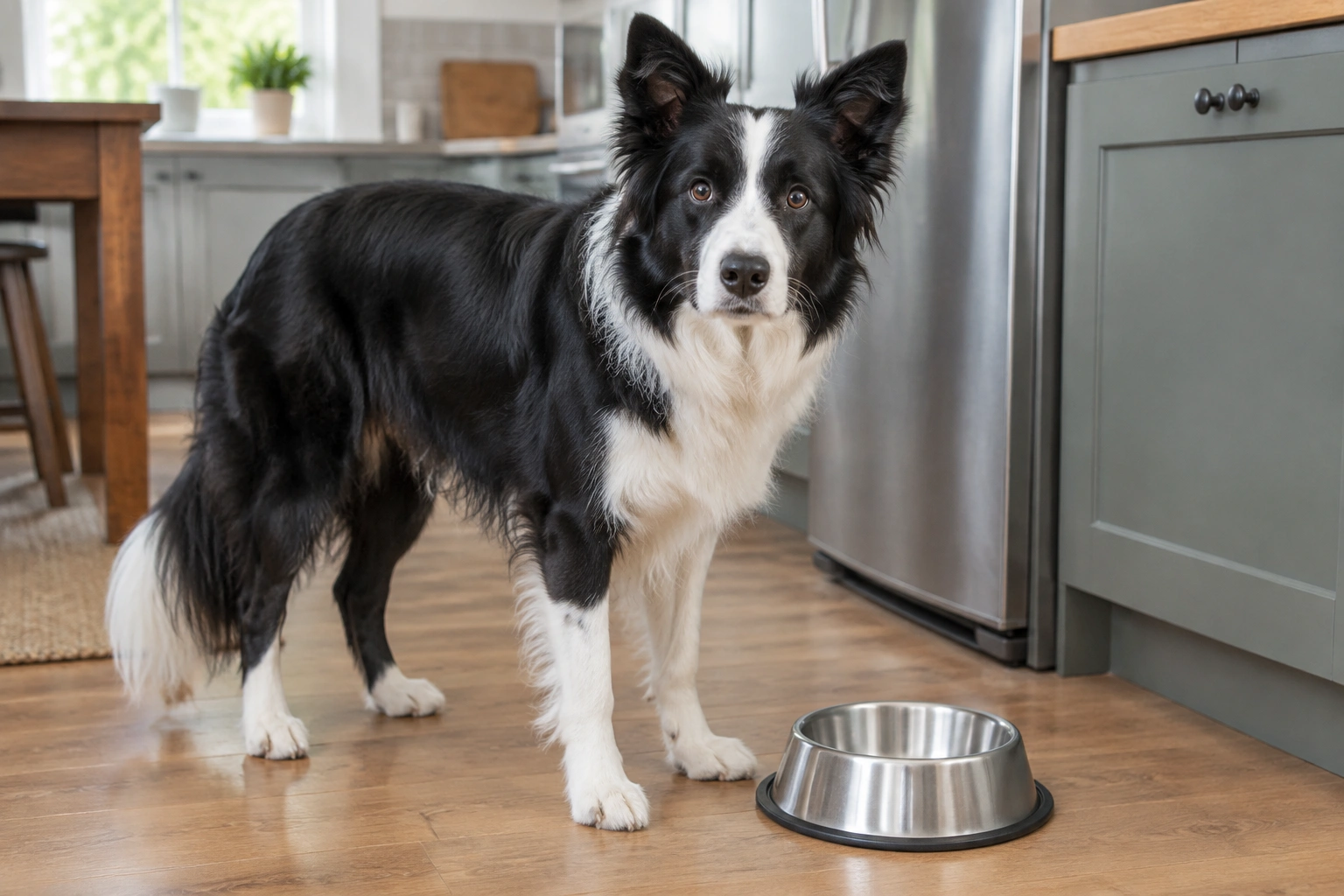
The key is not to guess. A Border Collie that begs at the counter can be perfectly well fed. A Border Collie that is truly underfed usually shows it in the body, not just the behavior. And a Border Collie that suddenly seems ravenous may be telling you something medical is going on.
Why Border Collies Seem Hungry All the Time
Border Collies were bred to work hard, think fast, and stay engaged. That combination often creates a dog that acts food-driven even when its actual calorie needs are being met. They learn quickly that food gets attention, training rewards, and access to the things they want.
A few breed-related reasons can make hunger look constant:
- High energy output: A dog that runs, trains, herds, hikes, or plays intensely may burn through calories faster than a more sedentary dog.
- Fast eating: Some Border Collies inhale meals and then act as if they never ate. That can be a speed issue, not a true hunger issue.
- Learned begging: If begging has ever worked, the behavior tends to stick.
- Mental drive: Intelligent dogs often seek stimulation through food because it is predictable and rewarding.
That means a Border Collie can look “starving” while still being at a healthy weight. One practical clue is whether the dog is asking for food but otherwise holding steady in body condition and energy. If so, you may be dealing with food-seeking behavior more than a calorie deficit.
How to Tell If Your Border Collie Is Actually Underfed
The most useful check is not appetite. It is body condition.
A Border Collie that needs more food often shows one or more of these signs:
- ribs that are easy to see or feel with very little fat cover
- a tucked-up waist that looks too sharp
- hip bones or spine becoming more prominent
- weight loss over time, even if meals seem normal
- finishing meals and still appearing unsatisfied, especially with a lean body
If you are unsure, compare your dog’s body today with photos from a month ago. Border Collies can change gradually, and owners often miss slow weight loss because the dog is still active and bright.
A simple at-home rule: if your dog is begging but maintaining a healthy body shape, the problem may be behavior or feeding routine. If your dog is begging and getting leaner, the food amount deserves a closer look.
Also count the “extras.” Training treats, chews, table scraps, and stuffed toys with food can add up quickly. A dog can appear underfed at dinner time while quietly getting plenty of calories all day.
How Much a Border Collie Should Eat
There is no single correct amount for every Border Collie. Age, body size, neuter status, and activity level matter more than breed alone.
Use the package feeding guide as a starting point, then adjust based on body condition and weight trend. That advice is consistent with veterinary guidance to follow feeding recommendations and adjust for age, activity, and weight rather than relying on guesswork.
A practical way to think about it:
- Puppies usually need more frequent meals and more careful growth support than adults.
- Adult Border Collies often do well on measured meals, but active working or sport dogs may need more than a couch-potato pet.
- Senior dogs may need fewer calories if activity drops, even if appetite remains strong.
For many adults, two meals a day is a useful baseline. Puppies usually need three to four meals a day because they have smaller stomachs and steadier energy needs. A Border Collie that is very active may also need a calorie review if it is training hard, herding, or doing agility work.
A Border Collie-specific decision path can help:
- Increase calories if your dog is losing weight, ribs are becoming too visible, or the waist is too tucked despite measured meals.
- Maintain calories if weight is stable, the dog has a healthy waist, and the ribs are easy to feel but not prominent.
- Reduce calories if the dog is gaining fat, losing a visible waist, or getting softer through the ribs and tail base.
Activity level matters a lot. A young Border Collie doing daily herding practice, long hikes, or agility sessions may need a different portion than an older companion dog that mostly walks and naps. Age matters too: a growing puppy should not be fed like a sedentary adult, and a senior Border Collie that has slowed down may need less food even if it still acts eager at mealtime.
The safest decision rule is this: change food only when body condition and weight trend justify it. If weight is stable and the body condition score looks good, do not keep increasing portions just because the dog acts hungry.
Best Feeding Schedule for a Hungry Border Collie
Meal timing can change how full a dog feels, even when total calories stay the same.
Fewer larger meals
This is simple and convenient, but some Border Collies finish quickly and then act hungry for the rest of the day. A single large meal can also encourage scarfing.
More frequent smaller meals
This can help dogs that seem hungry between meals or eat too fast. It may also reduce the “empty bowl, now what?” behavior that fuels begging.
Same food, different structure
If your dog is already getting the right number of calories, splitting the daily amount into two or three meals often improves satisfaction without overfeeding.
For puppies, more frequent meals are usually the better choice. For adults, consistency matters. Feed at the same times each day if possible. Border Collies tend to do well with routine, and predictable meals can reduce food anxiety.
A slow feeder can also help if your dog gulps food. It does not add calories, but it can make mealtime last longer and reduce the sense that dinner disappeared in seconds.
What Kind of Food Helps a Border Collie Feel Fuller
Satiety is about more than calories. It is also about food volume, digestibility, protein, fat, and fiber.
Here is the trade-off to keep in mind:
- Higher-calorie foods can be useful for very active dogs, but they may not create much fullness per bowl.
- Less calorie-dense foods may give the dog more physical volume, but you need to make sure the dog still gets enough nutrients.
- Protein and fiber often help with fullness more than very rich, low-fiber foods.
- Wet food can add moisture and volume, which some dogs find more satisfying.
- Dry food is convenient and easier to measure, but some dogs finish it so fast that it seems unsatisfying.
When comparing foods, look for a complete-and-balanced diet that matches your dog’s life stage and activity level. On the label, prioritize formulas with:
- appropriate protein for a lean, active dog
- enough fiber to support fullness without upsetting digestion
- a calorie level that fits the dog’s workload
- a format your dog can eat at a measured pace
Dry food also increases water needs compared with wet food, so make sure fresh water is always available. If your Border Collie is on kibble and still seems hungry, the issue may be portion size, calorie density, or how fast the meal disappears rather than the format itself.
A useful test is to ask: does the dog seem hungry because the food is gone in 20 seconds, or because the dog is truly not getting enough? A slower meal and a more measured portion often answer that question.
Treats, Training Rewards, and Begging: What to Count
Many Border Collies are fed more than their owners realize. Training treats, chew sticks, table scraps, and “just a little bit” from the counter can quietly turn into a large part of the day’s calories.
That matters for two reasons:
- Calories add up. A dog can gain weight or lose meal appetite if treats are heavy enough.
- Begging gets rewarded. If the dog learns that hovering near the kitchen produces food, the behavior becomes stronger.
A practical rule is to count all treats as part of the daily intake. If training is heavy on a given day, reduce meal portions slightly or use pieces of the regular kibble as rewards. That keeps calories more controlled without taking food motivation away from training.
For a Border Collie that is always scanning for snacks, structure helps:
– feed in a quiet place
– avoid random handouts
– use measured training rewards
– keep chews on a schedule instead of all day access
You do not need to eliminate treats. You do need to make them visible in the daily calorie picture.
When Constant Hunger Could Mean a Health Problem
If your Border Collie’s appetite changes suddenly, do not assume it is just breed behavior.

Several medical problems can increase hunger in dogs, including:
– parasites or worms
– diabetes
– hypothyroidism
– Cushing’s disease
– malabsorption or other digestive problems
A dog with an underlying medical issue may act unusually hungry, beg, or whine even after eating. Hunger alone does not tell you what the problem is. What makes the situation more concerning is when it shows up with other changes, such as weight loss, increased thirst, increased urination, vomiting, diarrhea, or a noticeable change in body shape. You can read more about the general warning signs in this overview of why dogs may always seem hungry.
Here is the practical distinction:
- Normal food drive: dog begs, but weight and body condition are stable
- Feeding problem: dog is lean, meals are too small, or treats are not counted
- Medical concern: dog is suddenly ravenous, losing weight, vomiting, having diarrhea, drinking more, or acting differently
If the hunger appeared quickly, or if it comes with any other symptom, treat it as a health issue until proven otherwise.
Red Flags That Mean It’s Time to Call the Vet
Book a veterinary visit if your Border Collie is hungry and also has any of the following:
- weight loss
- vomiting
- diarrhea
- increased thirst
- increased urination
- lethargy
- a noticeable change in body shape
- sudden behavior changes
- hunger that came on abruptly
These signs matter because appetite changes can be one of the first visible clues that something internal is off. A dog that is eating more but slimming down should be seen promptly.
If your dog has had a recent stomach upset and then becomes ravenous or stops eating, that is another reason to call. Digestive illness can swing appetite in either direction.
Simple Next Steps: What to Do Today
If your Border Collie seems constantly hungry, use this short checklist before changing anything drastic:
- Measure the food. Do not eyeball portions.
- Count treats, chews, and scraps. Include them in the day’s total.
- Check body condition. Feel the ribs, look at the waist, and compare with older photos.
- Review activity level. A dog doing more exercise or training may need more calories.
- Split meals if needed. Two meals for adults, more frequent meals for puppies.
- Slow the eating. Try a slow feeder if meals vanish too quickly.
- Use this decision guide:
- Monitor if your dog is begging but weight, thirst, stool, urination, and body condition are stable.
- Adjust measured calories if the dog is losing condition, is too lean, or is clearly not getting enough once treats are counted.
- Call the vet if hunger is sudden or comes with weight loss, vomiting, diarrhea, increased thirst, increased urination, or other behavior changes.
If your dog is lean and active but stable, a small measured increase may be reasonable. If your dog is at a healthy body condition, keep portions steady and manage the behavior. If the hunger is sudden or comes with other symptoms, do not keep adjusting food at home—get the dog examined.
When to Ask Your Veterinarian
Ask your veterinarian if you are unsure whether your Border Collie’s appetite is normal, if the dog is losing weight, or if hunger comes with any other symptom. A vet can check body condition, review diet, and look for medical causes such as parasites or endocrine disease.
That exam is especially worth it if you have already measured food accurately and the dog still seems unable to maintain weight. At that point, the problem is no longer just “my dog acts hungry.” It may be “my dog is not using food normally,” and that deserves proper testing.
FAQ
Is it normal for a Border Collie to always act hungry?
It can be. Border Collies are often highly food-motivated and quick to beg, especially if they are active or have learned that begging works. The real question is whether their body condition and weight are stable.
How often should I feed my Border Collie?
Many adults do well on two meals a day. Puppies usually need three to four meals a day. Very active dogs may also benefit from splitting calories into smaller, more frequent meals.
Should I switch to wet food if my dog seems hungry?
Not automatically. Wet food may add volume and moisture, but the bigger issues are usually calorie amount, food density, and feeding routine. Some dogs feel fuller on a different formula; others just need a measured portion change.
Do training treats count?
Yes. Treats, chews, and scraps should be counted as part of daily calories. If training is heavy, use smaller rewards or pull some calories from meals.
What if my Border Collie is hungry all the time but not losing weight?
That often points to food drive, fast eating, or learned begging rather than true underfeeding. Keep portions measured and focus on routine, meal structure, and training management.
When should I worry?
If hunger is sudden, intense, or paired with weight loss, vomiting, diarrhea, increased thirst, increased urination, or behavior changes, call your veterinarian.
Can worms make a dog seem hungry?
Yes, parasites can be one cause of increased appetite in dogs. If the hunger is new or comes with digestive signs, a vet check is the right move.
Should I just feed more until the begging stops?
Not blindly. Increasing food without checking body condition can lead to overfeeding. First confirm whether the dog is actually underweight, underfed, or simply very food-driven.