
Why Did My Dog Pee in His Bed? Causes, Warning Signs, and What to Do Next

Finding urine in your dog’s bed is unsettling, but it does not automatically mean he is “being bad” or forgetting his training. In most cases, the cause falls into one of four buckets: a medical problem, stress or anxiety, age-related bladder changes, or a simple accident in a dog who still has limited bladder control.
The key question is not just “why did this happen?” but “does this look like a one-off accident, or is my dog showing signs of illness or loss of bladder control?” That distinction matters because some causes can wait for a routine vet visit, while others need prompt attention.
If your dog seems otherwise normal and this happened once, monitoring may be reasonable. If the accident is repeated, sudden, or paired with pain, blood, increased thirst, or lethargy, call your veterinarian sooner rather than later.
Quick Answer: What It Usually Means When a Dog Pees in His Bed
A dog peeing in his bed is usually a sign of one of three things:

- A medical issue affecting the urinary tract or bladder control
- A stress-related or fear-related accident
- A training or age-related lapse, especially in puppies or senior dogs
The most useful clue is the pattern. A single accident after a long nap, travel day, or stressful event may be just that: an accident. But repeated bed wetting, especially in a dog who used to be reliable, deserves a veterinary check because it can point to urinary tract infection, bladder irritation, incontinence, kidney disease, diabetes, or another health issue.
The Most Common Reasons a Dog Pees in His Bed
1) Urinary tract infection or bladder irritation
Urinary tract infections and other bladder problems can make a dog feel like he has to go urgently, frequently, or with less control than usual. Some dogs dribble a little urine. Others have a full accident before they can get outside.
A dog with a urinary issue may also:
– squat more often than normal
– lick his genitals
– seem uncomfortable while peeing
– ask to go out repeatedly
– have blood-tinged urine
The bed is often where the accident shows up because it is soft, absorbent, and usually where the dog is relaxed enough to sleep through the urge until it is too late.
2) Urinary incontinence
Incontinence means a dog is leaking urine without fully meaning to. This is different from “choosing” to pee in the bed. The dog may be asleep, resting, or unaware that urine is escaping.
This is more common in some senior dogs, but it can happen for other medical reasons too. A dog that wakes up damp, especially more than once, may be dealing with reduced bladder control rather than a training problem.
3) Kidney disease or diabetes
Both kidney disease and diabetes can change how much a dog drinks and pees. When a dog is producing more urine than usual, accidents become more likely simply because his bladder fills faster than before.
A major clue is that the bed accident is not the only change. You may also notice:
– more water intake
– more frequent urination
– larger puddles
– weight loss
– low energy
– changes in appetite
These are not conditions to “watch for a few weeks” if they are new. They need a vet assessment.
4) Stress, fear, or anxiety
The American Kennel Club notes that fear, loud noises, and separation anxiety can be associated with bed peeing. A frightened dog may look for a safe place, and the bed often feels secure because it smells like you. In some cases, the same fear that drives the dog to the bed also makes it hard for him to hold urine.
Common triggers include:
– fireworks or thunderstorms
– moving homes
– a new pet or baby
– changes in work schedules
– boarding or a recent shelter stay
– conflict in the home
The accident may happen during the stressful event or shortly after, which is one reason timing matters so much. If medical causes have not been ruled out, it is better to think of stress as a likely trigger rather than a definitive explanation.
5) Incomplete house training or regression
Puppies, newly adopted dogs, and dogs whose routines have been disrupted may not yet have enough bladder control or habit strength to make it through long rest periods. Even a previously trained dog can regress if the schedule changes, supervision drops, or he is not getting enough opportunities to potty.
A bed accident in this context often looks like:
– happening after a long nap
– occurring when the dog is left alone too long
– improving quickly once the routine is tightened up
That said, a training issue should still be considered carefully if the pattern changes suddenly. New accidents in an adult dog are not automatically “behavioral.”
6) Marking or scent-driven behavior
Some dogs urinate on soft, scent-heavy surfaces because the bed carries a strong owner smell. That does not mean the dog is “dominant” in the simplistic sense people often assume. More often, it is a mix of security, habit, and scent reinforcement.
This is more likely when the dog is otherwise healthy and the accidents are small, repeated, and tied to specific bedding. But because marking and medical urgency can look similar at first, it is safer not to assume behavior before ruling out health issues.
Medical vs. Behavioral: How to Tell the Difference
A useful way to sort this out is to look at timing, symptoms, and repetition.
| Clue | More suggestive of a medical cause | More suggestive of a behavioral or situational cause |
|---|---|---|
| Onset | Sudden change in a previously reliable dog | Happens after a move, schedule change, or stressor |
| Pattern | Repeated accidents, day or night | Often linked to specific events or settings |
| Urination signs | Straining, frequent urges, blood, pain | No obvious pain; accident occurs during fear or excitement |
| Water intake | Increased thirst or larger volumes of urine | Normal drinking and normal bathroom habits outside the event |
| Dog’s behavior | Lethargy, discomfort, licking, restlessness | Otherwise normal once the stress passes |
A simple rule: if your dog is acting physically unwell, think medical first. If the accident lines up tightly with a clear stressor and your dog otherwise seems normal, a behavioral trigger becomes more likely.
Still, the distinction is not perfect. A fearful dog can have an accident without a disease, and a dog with a urinary problem can seem only mildly off. When in doubt, especially with a sudden change, a vet visit is the safer choice.
Age Matters: Puppies, Adult Dogs, and Senior Dogs
Puppies
Puppies have small bladders and limited control, so a bed accident may simply mean they were left too long between potty breaks or slept longer than expected. That said, puppies can also get urinary issues, so repeated accidents should not be dismissed as “just puppy stuff.”
A practical way to judge it:
– One accident after a long nap: often a schedule issue
– Repeated accidents despite frequent potty breaks: worth a vet call
Adult dogs
In an adult dog, a new bed-wetting accident deserves more attention than a puppy accident. Adult dogs usually have enough control that sudden changes are worth investigating.
If your adult dog has been reliable for months or years and then starts peeing in bed, ask:
– Did anything change at home?
– Is he drinking more?
– Is he having trouble getting outside in time?
– Does he seem uncomfortable?
– Did he recently start a new medication, which could sometimes change urination or accident frequency?
If the answer is “yes” to any of those, don’t assume it is a training lapse.
Senior dogs
Senior dogs are more likely to develop incontinence or age-related illnesses that affect urination. If an older dog suddenly wakes up damp, that is a meaningful change, not just a nuisance.
For seniors, the threshold for calling the vet should be lower because bed wetting can be one of the first signs that bladder control, kidney function, or another body system is changing.
Red-Flag Symptoms That Mean You Should Call a Vet
Some signs mean you should not wait and see:
- blood in the urine
- straining to pee
- whining, pacing, or obvious pain
- repeated accidents in a short time
- increased thirst
- vomiting
- fever
- lethargy or weakness
- strong-smelling urine with other illness signs
- inability to urinate normally
Emergency note: If your dog is unable to urinate, keeps straining, or is only producing a few drops, seek immediate veterinary attention. That can be a urinary blockage or another urgent problem.
If your dog seems unable to pass urine, that can become urgent quickly. Likewise, a dog that suddenly starts drinking much more and peeing much more may be showing signs of diabetes, kidney disease, or another systemic problem.
What to Do Right After You Find Urine in the Bed
Your first job is to assess the dog, not just the bedding.
-
Check how your dog looks and acts.
Is he alert, comfortable, and moving normally? Or is he restless, licking, straining, or seeming off? -
Think about timing.
Did this happen after a long nap, during a storm, after a move, or while alone? Timing can help separate stress from illness. -
Note the urine pattern.
Was it a small leak, a full soak, or a repeated accident? A full soak or repeated accidents raise more concern about medical causes. -
Watch the next bathroom trips.
If he pees normally outside and seems fine, that is reassuring. If he strains, produces tiny amounts, or rushes to pee repeatedly, call the vet. -
Save a urine sample if your vet asks for one.
Fresh urine can help with testing, but only collect it if you can do so cleanly and your vet recommends it.
Do not scold the dog after the fact. He will not connect a delayed correction with the accident, and punishment can make a stressed dog more anxious, which may worsen the problem.
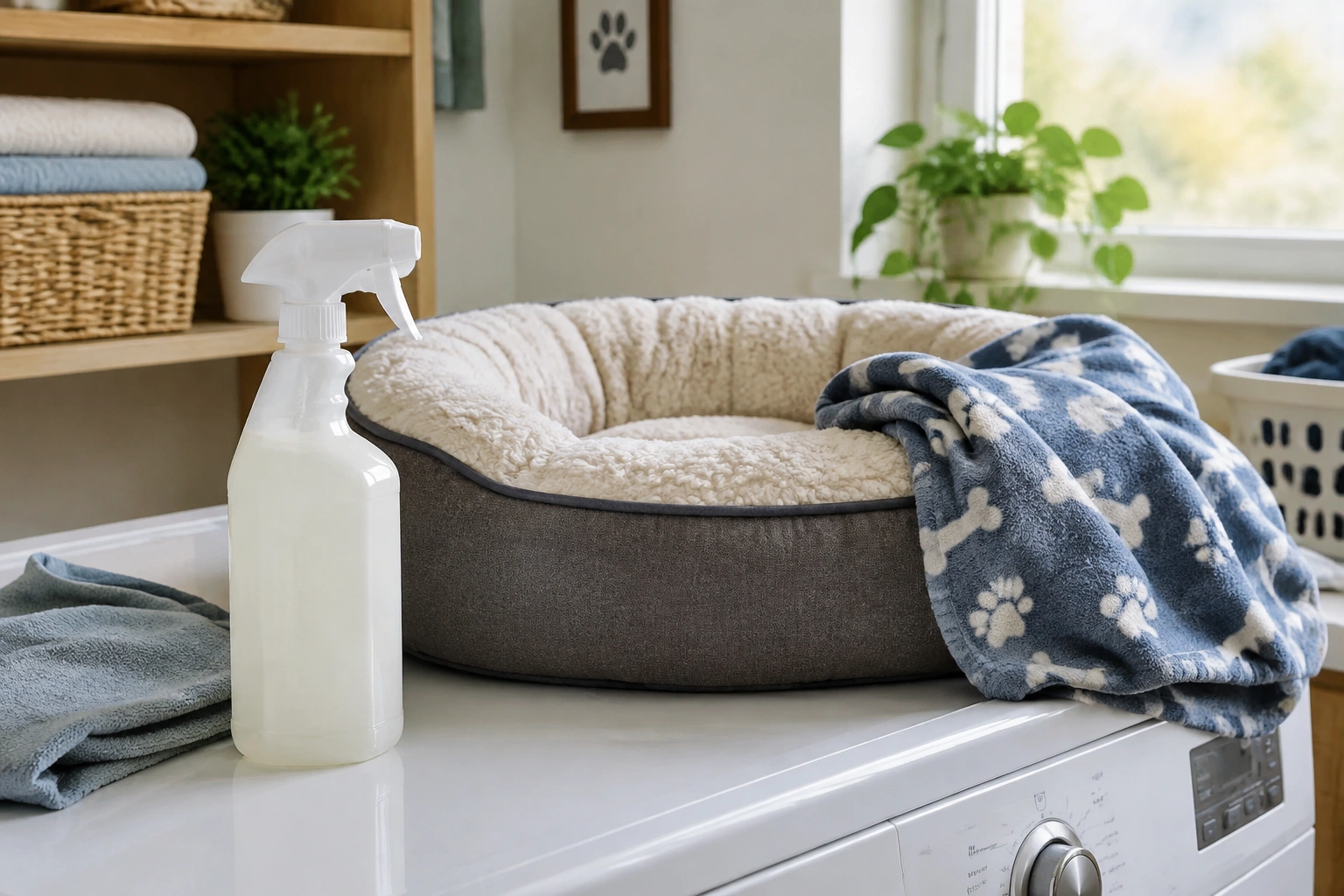
How to Clean Dog Bedding So the Smell Does Not Bring Him Back to It
Cleaning matters for more than appearance. If urine odor remains, your dog may be drawn back to the same spot.
Use this approach:
- Blot up as much urine as possible right away
- Wash the bedding according to the care label
- Use an enzyme cleaner on the affected area so the odor compounds are broken down rather than masked
- Air-dry fully and check for smell before reusing
- Replace the bedding if the odor lingers or the fill is deeply soaked
Regular soap can make the bed look clean while leaving behind scent traces your dog can still detect. If the bed has thick foam, a removable cover helps, but heavily soaked foam that still smells after cleaning is often better replaced than reused.
A practical test: if you can still smell urine after the bedding is dry, your dog probably can too.
How to Prevent It From Happening Again
The best prevention depends on the cause, but a few steps help in almost every case:
Tighten the potty schedule
Give your dog more chances to urinate, especially before naps, overnight, and after drinking a lot of water. This is especially useful for puppies, seniors, and dogs recovering from a stressful change.
Watch for patterns
If accidents happen after storms, guests, or long workdays, the trigger may be environmental rather than random. Tracking the timing for a week can reveal a pattern that memory misses.
Make the sleeping area easier to manage
If your dog has a history of accidents, choose bedding that is easy to wash and dry. Keep a backup cover ready so you are not forced to reuse a urine-smelling bed while it is still being cleaned.
Reduce stress where possible
For dogs with anxiety-related accidents, predictability helps. Keep feeding, walks, and bedtime routines steady. If a specific trigger keeps appearing, such as fireworks or separation, bring that up with your vet or a qualified behavior professional.
Recheck if it happens again
One repeat accident changes the picture. Two or more accidents, especially close together, are a practical reason to move from monitoring to veterinary evaluation.
When Home Monitoring Is Reasonable vs. When to Schedule a Vet Visit
Home monitoring is reasonable when all of these are true:
– the accident happened once
– your dog otherwise seems normal
– there is a clear explanation, such as a long nap or a stressful event
– there are no red-flag symptoms
– your dog has not started drinking or peeing more than usual
Schedule a vet visit soon if:
– the accident repeats
– your dog is a senior
– the dog was previously house-trained and this is new
– you notice increased thirst, frequent urination, blood, pain, or lethargy
– the bed wetting appears to happen without warning or while asleep
– the dog seems unable to control urine rather than simply having a lapse
A general rule of thumb: one isolated accident can be watched; a pattern should be investigated. If anything suggests pain, straining, blood, or trouble urinating, skip the waiting period and call the vet.
When to Call Your Veterinarian
Call your veterinarian promptly if your dog pees in his bed and you also notice any of the following:
– blood in the urine
– straining or pain
– repeated accidents
– increased thirst
– vomiting
– fever
– weakness or lethargy
– inability to hold urine
– sudden changes in a senior dog
– inability to urinate, repeated straining, or only producing drops
If your dog is otherwise healthy but the problem keeps happening, that is still worth a visit. Recurrent bed wetting is often the body’s way of saying something has changed.
FAQ
Is peeing in bed always a medical problem?
No. Stress, fear, incomplete house training, and routine disruption can all contribute. But because medical issues are common and sometimes subtle, repeated accidents should be checked by a vet.
Can anxiety make a dog pee in his bed?
Yes. Fear, separation anxiety, and stressful events can lead to accidents. The AKC’s guidance on dogs peeing on beds notes that frightened dogs may seek a safe spot and may also lose bladder control.
My puppy peed in the bed once. Should I worry?
Not necessarily. A one-time accident after a long sleep can happen in puppies. If it starts repeating or your puppy seems unwell, ask your vet.
Why does the bed seem to be the only place this happens?
Beds hold scent, feel safe, and are soft enough that a dog may not notice a small leak right away. If urine odor remains, it can also encourage repeat accidents in the same spot.
Should I throw the bed away?
Only if the bedding still smells like urine after a deep clean or the material cannot be properly cleaned. If odor remains or the foam is soaked through, replacing it is often the better choice.
Can I wait a few days to see if it happens again?
If your dog is otherwise normal and it was a single accident, short-term monitoring can be reasonable. If the problem repeats, your dog is a senior, or any red-flag symptoms appear, do not wait.
Why did my dog pee in his bed after being scared?
A sudden fright can trigger an accident or make a dog too anxious to get outside in time. Loud noises, storms, and other stressors are common examples.
What if my dog is drinking more water too?
That combination is more concerning for a medical cause such as diabetes, kidney disease, or another health issue. Call your veterinarian.
If you want, I can also turn this into a tighter Border Collie Hub house style version with a more conversational intro and a stronger internal-linking plan for related urinary health articles.
