
Why Do Border Collies Have Feathering?

Quick Answer
Border Collies have feathering because their double coat naturally grows longer around areas such as the chest, belly, front legs, thighs, and tail. It is especially noticeable in rough-coated Border Collies and is a normal breed trait recognized in the Border Collie breed.
What Border Collie feathering usually looks like
- Leg feathering: Longer hair grows behind the front legs and around the thighs.
- Chest furnishings: Rough-coated dogs often develop a fuller chest and neck area.
- Feathered belly: Longer hair may hang along the dog’s underside.
- Fuller tail: Many Border Collies develop a noticeably bushy or feathered tail.
- Individual variation: Genetics, coat type, age, and seasonal coat growth affect how much feathering you see.
One useful check
- Normal feathering should look like healthy longer coat growth rather than sudden patches of thinning, broken, irritated, or missing hair.
If your Border Collie suddenly seems to have fluffy legs, a fuller chest, or a dramatic tail, you are probably seeing feathering. I’ve seen owners mistake this normal coat development for their dog becoming unusually shaggy.
There is more variation than many people expect. Rough-coated dogs may carry impressive furnishings, while a smooth-coated Border Collie can have only a small amount.
In This Guide
- What Is Feathering on a Border Collie?
- Why Do Border Collies Have Feathering?
- Where Does Border Collie Feathering Grow?
- Do Rough and Smooth Border Collies Have the Same Feathering?
- When Does a Border Collie’s Feathering Develop?
- How Should You Groom Border Collie Feathering?
- Should You Trim a Border Collie’s Feathering?
- When Can Changes in Feathering Signal a Coat Problem?
- Frequently Asked Questions
- Final Takeaway
What Is Feathering on a Border Collie?
A Border Collie’s feathering is the longer hair that grows away from the body on specific areas of the legs, chest, belly, thighs, and tail. It creates the flowing outline you often notice on rough-coated dogs.
Feathering isn’t a separate layer of fur. It’s part of the dog’s normal outer coat and grows longer in particular places.
Feathering isn’t the same as the undercoat
Border Collies have a double coat. This means they have a softer, dense undercoat beneath a more weather-resistant outer coat.
The undercoat helps insulate the dog. Feathering describes the visibly longer outer hair growing around certain body areas.
- Outer coat: The more visible protective hair.
- Undercoat: Soft, dense insulation beneath the outer coat.
- Feathering: Longer outer hair around areas including the legs, chest, belly, and hindquarters.
- Ruff: Fuller hair surrounding the neck and upper chest.
The official Border Collie standard recognizes both rough and smooth coats. It specifically describes feathering on the forelegs, haunches, chest, and underside of rough-coated dogs.
Why Do Border Collies Have Feathering?
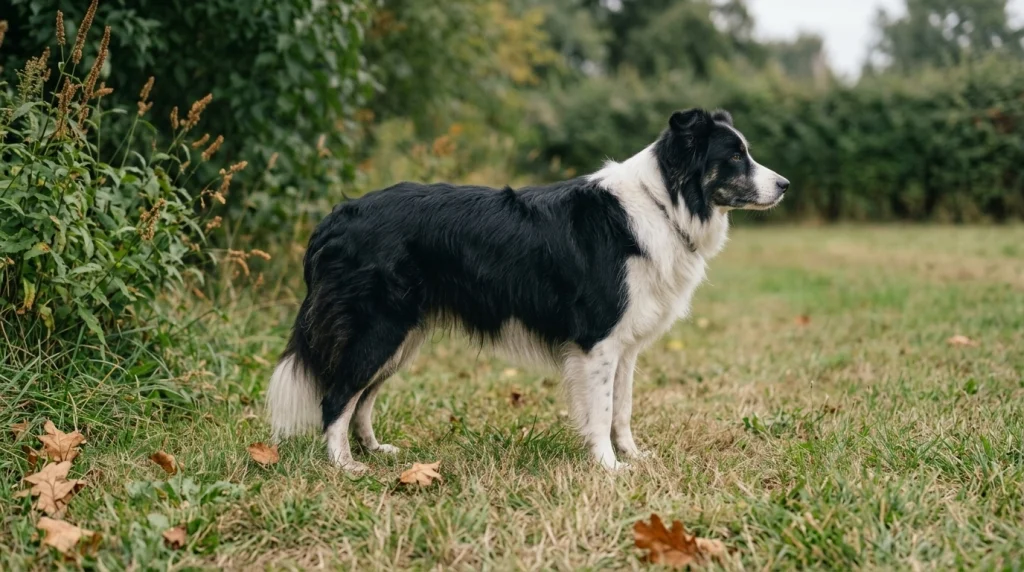
Border Collies have feathering primarily because of their inherited coat genetics. Generations of working-dog breeding produced considerable variation in coat length while preserving a practical, weather-resistant double coat.
The breed developed around the border country of Scotland and England. Working ability mattered more historically than producing one identical appearance.
It is part of the breed’s natural coat pattern
Dogs don’t grow all their hair to one uniform length. Genes influence the length, texture, distribution, and growth pattern of the coat.
A rough Border Collie’s longer coat naturally becomes more prominent around certain areas. Those longer furnishings create what owners call feathering.
Did feathering help working Border Collies?
The Border Collie’s overall double coat suited dogs expected to work outdoors in changing conditions. However, it would be too simplistic to say every individual feather exists for one specific working purpose.
What we can say confidently is that the breed’s coat developed alongside generations of working sheepdogs. The AKC’s history of the Border Collie describes how terrain, climate, livestock, and working requirements helped shape the breed.
Even today, Border Collies vary widely in appearance. That doesn’t make one coat more authentically “Border Collie” than another.
Where Does Border Collie Feathering Grow?
Feathering commonly appears on the legs, chest, underside, hindquarters, and tail. Its exact length and density vary considerably between dogs.
When I check a Border Collie’s coat, I look at several areas rather than judging the dog by its tail alone.
Common feathered areas
- Forelegs: Longer strands often extend behind the front legs.
- Chest: Rough coats can create a thick, full appearance across the chest.
- Underside: Longer hair can hang beneath the abdomen.
- Haunches: Dense furnishings may develop around the rear thighs.
- Tail: Longer hair can produce the classic bushy Border Collie tail.
- Neck: Rough-coated dogs may develop a pronounced ruff.
The face, fronts of the legs, feet, and ears usually look much shorter and smoother than the feathered areas. That contrast makes feathering especially noticeable.
A heavily feathered black-and-white Border Collie can look quite dramatic after the adult coat develops. Another dog from working lines may have much less coat.
Do Rough and Smooth Border Collies Have the Same Feathering?
No. Rough-coated Border Collies usually have substantially more visible feathering, while smooth-coated dogs generally have short hair and may show only slight furnishings.
Both are normal Border Collie coat varieties. Neither coat type makes a dog more or less legitimate as a member of the breed.
| Feature | Rough Coat | Smooth Coat |
|---|---|---|
| Overall length | Medium to longer coat | Short over most of the body |
| Leg feathering | Usually obvious | May be slight |
| Chest and underside | Often noticeably feathered | Usually much shorter |
| Undercoat | Dense double coat | Dense double coat |
| Grooming focus | Tangles, loose undercoat, feathering | Loose coat and seasonal shedding |
Why can two rough coats look different?
“Rough” covers quite a range. One Border Collie may have moderate feathering, while another develops a long ruff and heavily furnished hind legs.
Family genetics matter. Dogs have historically been selected from different working and breeding lines, so coat appearance isn’t completely uniform.
As of 2026, the official breed description still permits both coat varieties. The standard emphasizes natural presentation rather than excessive sculpting.
When Does a Border Collie’s Feathering Develop?
Feathering becomes more noticeable as a Border Collie moves from its puppy coat toward an adult coat. Don’t expect every young puppy to show its eventual coat length.
Development is gradual. Genetics also means two puppies of similar ages can mature differently.
Puppy coat
Young Border Collies may feel soft and fluffy without having clearly defined adult furnishings. Their tails and legs can look surprisingly modest at first.
As the coat matures, longer hairs begin giving the chest, legs, belly, and tail a more finished adult appearance.
Adult coat
By adulthood, the dog’s basic coat pattern becomes much easier to recognize. Rough-coated dogs normally show the clearest feathering.
Seasonal shedding can temporarily change how dense the coat appears. A dog carrying a full seasonal coat can look much fuller than the same dog after shedding.
Why coat length can change throughout the year
Border Collies shed throughout the year and can shed more heavily during seasonal coat changes. Loose undercoat can make grooming needs increase sharply for a period.
PetMD’s Border Collie care guide also describes the breed as having a double coat that sheds and benefits from regular brushing.
How Should You Groom Border Collie Feathering?
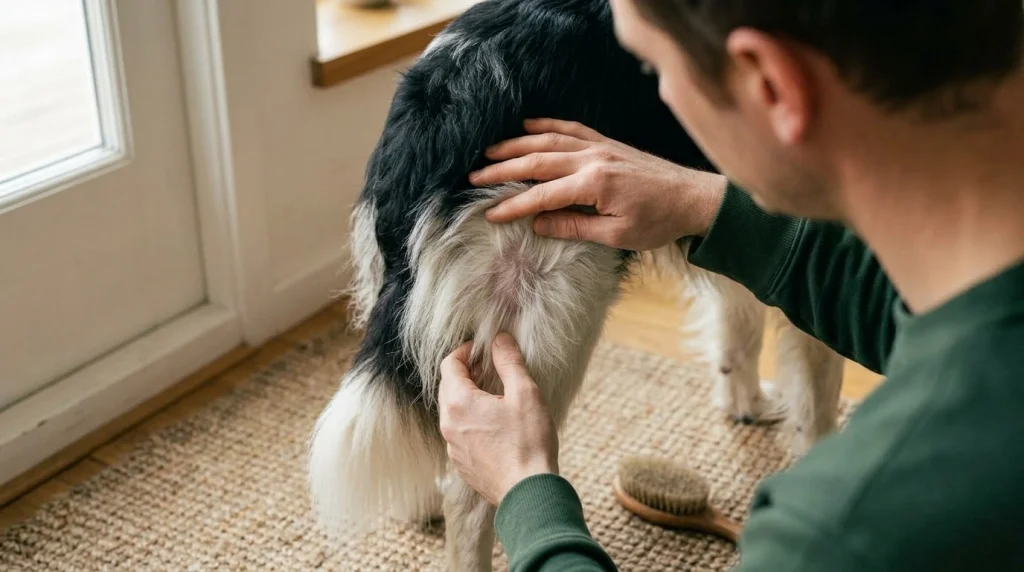
The goal is to keep feathering clean, separated, and free of mats without stripping healthy coat. Rough areas deserve special attention because longer hair catches debris more easily.
I prefer short, routine grooming sessions over waiting until the coat becomes tangled. Border Collies tend to cooperate better when brushing is simply part of normal life.
A practical grooming routine
- Check with your fingers first. Feel behind the ears, legs, armpits, belly, thighs, and tail for tangles.
- Brush the outer coat gently. Work in manageable sections rather than dragging through the whole coat at once.
- Reach the undercoat. Surface brushing alone can leave loose hair packed underneath.
- Work through feathering carefully. Hold hair near the skin when loosening small tangles to reduce pulling.
- Inspect after outdoor activity. Remove burrs, seeds, mud, and plant material before they become embedded.
The American Kennel Club recommends regular brushing for Border Collies and more frequent grooming during heavier shedding periods. The ASPCA dog-care resources also provide broader grooming guidance for dog owners.
Areas I would check most often
- Behind and below the ears
- Armpits
- Backs of the front legs
- Inside and behind the thighs
- Belly feathering
- Under the collar or harness
- Base and underside of the tail
A quick finger check after a muddy walk can save a lot of work later. Small tangles are much easier to handle before they tighten.
Should You Trim a Border Collie’s Feathering?
You usually don’t need to cut off healthy Border Collie feathering. Light tidying may be useful, but the coat should still retain its natural appearance.
The AKC Border Collie standard permits excess hair around the feet, hocks, and pastern areas to be neatened for showing. It also states that dogs should be presented naturally rather than excessively sculpted.
When minor trimming can make sense
- Feet: Tidying excessive hair can reduce mud collection and improve neatness.
- Hygiene areas: Careful sanitary trimming may help some dogs stay cleaner.
- Persistent tangles: A groomer may carefully manage damaged sections when brushing isn’t practical.
- Medical care: A veterinarian may clip a specific area for examination or treatment.
Should you shave a Border Collie?
Routine shaving isn’t a standard way to manage a healthy Border Collie double coat. Brushing and appropriate grooming usually preserve the coat more naturally.
There are exceptions for medical procedures or serious coat problems. Those situations are different from shaving simply because the dog sheds.
Vet note: If your dog’s coat is badly matted against the skin, painful, inflamed, or hiding skin problems, ask your veterinarian or an experienced groomer about the safest way to remove it.
When Can Changes in Feathering Signal a Coat Problem?
Normal feathering is simply longer hair. Sudden thinning, bald spots, broken hair, intense itching, redness, sores, or major coat changes deserve closer attention.
Don’t assume every unusual patch is just seasonal shedding. Look at the skin beneath it.
Signs worth investigating
- Persistent scratching: Especially when paired with redness or broken skin.
- Bald areas: Distinct hair loss is different from ordinary feathering variation.
- Repeated licking: Constant licking can damage the coat and indicate irritation.
- Skin odor: A persistent unusual odor can accompany skin problems.
- Scabs or sores: These warrant closer inspection and veterinary advice.
- Sudden coat deterioration: A major unexplained change shouldn’t be dismissed as normal feathering.
Mats can also pull tightly against the skin. Check dense feathering carefully because irritation may stay hidden beneath the longer hair.
The American Veterinary Medical Association’s pet-owner resources are a useful starting point for general veterinary guidance, but they don’t replace an examination of your own dog.
Vet note: Contact your veterinarian when feathering changes alongside hair loss, skin inflammation, wounds, persistent itching, pain, or other signs of illness.
Frequently Asked Questions
Do all Border Collies have feathering?
No. Rough-coated Border Collies usually have obvious feathering, while smooth-coated Border Collies have much shorter hair and may show only slight feathering. Both coat varieties are normal within the breed.
Why does my Border Collie have fluffy back legs?
The longer hair around the haunches is a normal form of feathering. It can create a fluffy or trouser-like appearance, especially in rough-coated adults with fuller coats.
Why is my Border Collie’s tail so bushy?
A bushy tail usually results from longer outer coat and natural feathering. The amount varies with genetics, coat type, age, and seasonal coat condition.
Does more feathering mean my Border Collie is purebred?
No. Feathering alone cannot prove whether a dog is purebred. Border Collies legitimately come in both rough and smooth coat varieties, and coat length can vary considerably between individuals.
Can a smooth Border Collie have feathering?
Yes. Smooth Border Collies may have slight feathering around areas such as the forelegs, haunches, chest, or neck. It is usually far less dramatic than the furnishings seen on a rough-coated dog.
Should I cut the feathers behind my Border Collie’s legs?
Usually, no major trimming is needed if the coat is clean and tangle-free. Light tidying can be practical, but avoid removing healthy coat unnecessarily. Persistent mats are better handled carefully before they tighten near the skin.
Why is my Border Collie’s feathering getting thinner?
Seasonal shedding can temporarily reduce coat fullness. However, clearly abnormal hair loss, bald patches, itching, redness, sores, or major unexplained changes should be discussed with your veterinarian.
Final Takeaway
Border Collie feathering is a normal part of the breed’s coat. It comes from inherited coat characteristics and is most obvious on rough-coated dogs around the legs, chest, underside, haunches, neck, and tail.
Don’t worry if your Border Collie has less feathering than another dog. Smooth coats, moderate rough coats, and heavily furnished rough coats can all occur naturally.
The most important thing is coat condition rather than coat length. Keep the feathering brushed, watch areas that tangle easily, and investigate sudden hair or skin changes instead of assuming they are normal shedding.
With a little routine care, those flowing feathers can remain one of the most distinctive and practical features of your Border Collie’s natural coat.
