
Why Does My Dog Have Green Eye Boogers? What the Color Can Mean and What to Do Next

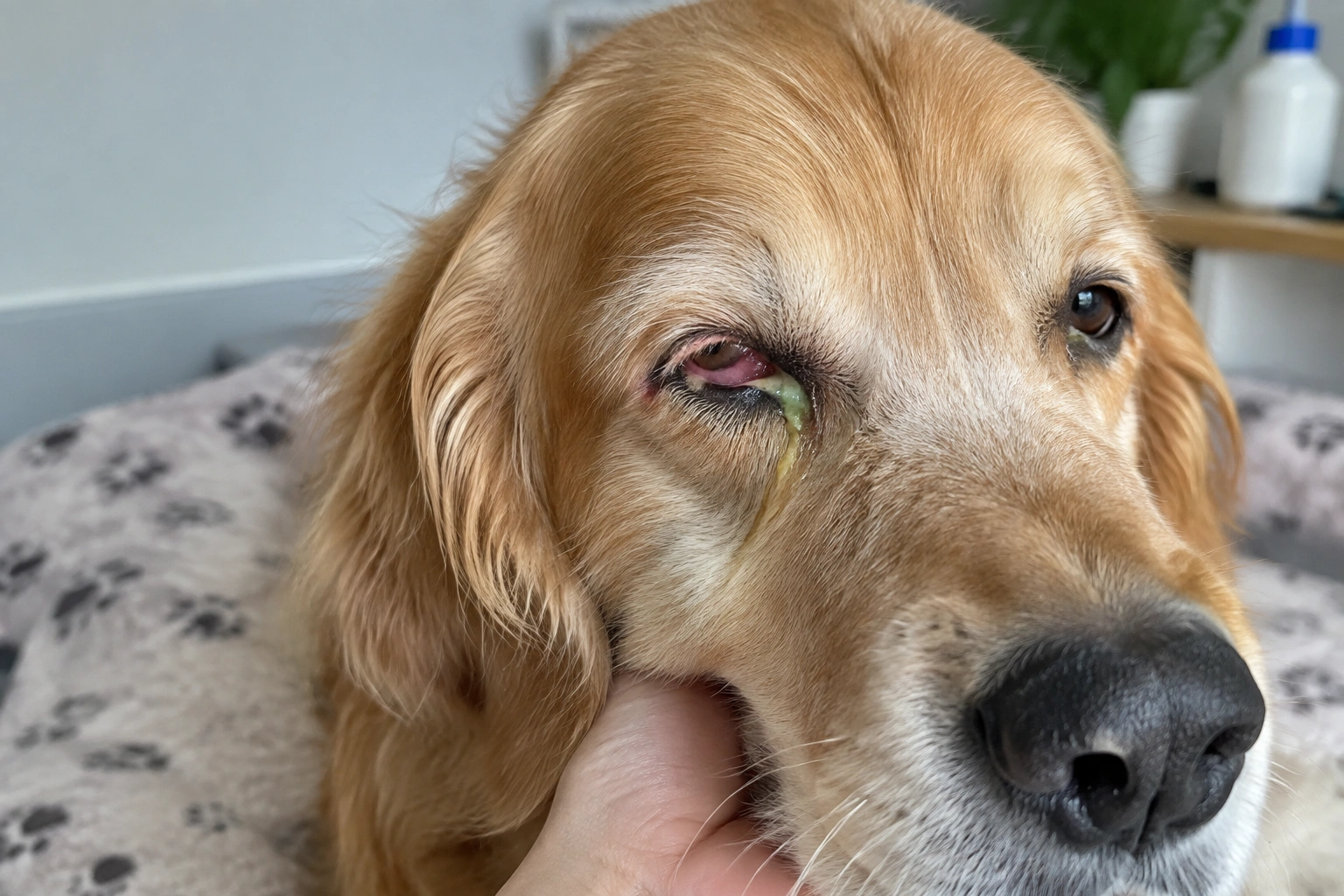
Green eye boogers in a dog usually mean the eye is making more discharge than normal, and the color can point toward infection, inflammation, or irritation. It does not automatically mean a simple bacterial infection, and the color alone cannot tell you whether the cause is infection, inflammation, or injury. It also should not be dismissed as ordinary sleep crust.

The practical question is not just “What color is it?” It is “What else is happening with the eye?” A small amount of crust in the morning can be normal. Thick, recurring, or green discharge—especially if the eye is red, swollen, squinty, or painful—needs a closer look.
If you want the short version: green discharge is more concerning than clear or slightly brown morning crust, and the eye’s comfort level matters as much as the color.
What green eye boogers in dogs usually mean
Dog eye discharge is a symptom, not a diagnosis. Green discharge often shows up when the eye is producing mucus, inflammatory debris, or pus-like material. That can happen with infection, but also with a scratch, dry eye, a trapped irritant, or another problem that has irritated the surface of the eye.
The reason the color matters is that normal eye goop is usually light and limited. Green is less typical and more likely to suggest that something is wrong.
A useful rule: the more the discharge changes from your dog’s normal pattern, the more seriously you should take it. A sudden shift in color, thickness, or amount is more important than the occasional morning crust.
Normal discharge vs. green discharge: what’s the difference?
Not all eye boogers mean disease. Dogs often wake up with a small amount of crust in the inner corner of the eye, and that can be perfectly normal if the eye itself looks comfortable.
Here is the practical difference:
| Type of discharge | What it often looks like | What it may mean |
|---|---|---|
| Clear, watery | Thin, runny tears | Mild irritation, wind, dust, or tearing |
| White or light gray | Small soft crusts | Often mild and nonspecific |
| Brown or reddish-brown | Dry crust in the morning | Often normal tear residue, especially if minor and consistent |
| Yellow or green | Thick, sticky, or ropey discharge | More concerning for infection or inflammation |
| Recurrent green discharge | Keeps coming back after cleaning | Needs veterinary evaluation |
The biggest mistake owners make is treating green discharge like ordinary tear staining. Tear staining is usually a staining issue over time, not thick green material sitting in the eye. If the discharge is sticky enough to glue the eyelids together, that is a different category entirely.
Common causes of green eye discharge in dogs
Green discharge can come from several different problems, and the color alone cannot tell you which one is responsible.
Bacterial or viral conjunctivitis
Conjunctivitis means inflammation of the tissue around the eye. Bacterial or viral infections can cause red, swollen eyes with yellow or green discharge. The eye may look wet, irritated, or crusted shut.
This is one reason green discharge should not be ignored: infection is a real possibility, but the eye may also be infected because something else started the problem first.
Eye irritation or allergies
Dust, pollen, smoke, shampoo, grass seeds, and other irritants can inflame the eye and lead to discharge. Allergies can do the same, especially if both eyes are affected and the dog is also itchy elsewhere.
The trade-off here is that mild irritation may improve after cleaning and avoiding the trigger, but if the eye keeps producing green discharge, irritation may have progressed to secondary infection.
Dry eye
Dry eye, or inadequate tear production, can cause sticky discharge and discomfort. A dry eye does not have enough healthy tear film to protect the surface, so debris builds up more easily and infections can follow. Dry eye can look deceptively minor at first, but it often becomes a recurring problem until treated properly.
Blocked tear ducts
Tears normally drain through ducts at the inner corner of the eye. If a duct is blocked, tears may overflow and collect debris. That can lead to repeated crusting and discharge. A blocked duct is not always urgent, but it does deserve a vet exam if the discharge keeps returning or becomes colored.
Foreign bodies
A blade of grass, dust, sand, or other debris can get trapped under the eyelid or on the eye surface. This often causes one-sided discharge, squinting, blinking, or pawing. Foreign bodies are important because a small irritation can become a corneal injury if the dog keeps rubbing the eye.
Corneal injury or ulcer
A scratch on the cornea can cause tearing, pain, squinting, and discharge. If the surface of the eye is damaged, the discharge may become thicker or greener as inflammation increases. This is one of the reasons eye problems can worsen quickly: the eye is delicate, and damage on the surface can become serious fast.
When green discharge is more likely an infection or injury
Color matters, but the surrounding symptoms matter more.
Think in terms of patterns:
- One eye only often suggests a foreign body, scratch, or local injury.
- Both eyes can point more toward allergies, dry eye, or conjunctivitis.
- Redness plus green discharge raises concern for inflammation or infection.
- Squinting, pawing, or keeping the eye closed usually means pain.
- Cloudiness is a red flag for corneal disease or deeper eye involvement.
- Swelling or eyelids stuck together suggests the problem is more than mild irritation.
A dog with a tiny bit of green crust in one eye and no redness or discomfort may be monitored briefly. A dog with thick green discharge, a swollen eyelid, and repeated pawing at the eye should be seen much sooner.
If you want a broader reference on eye problems and discharge patterns, VCA Hospitals’ pet eye care resources are a useful place to compare signs, and the AKC’s health guidance can help owners understand when a symptom deserves a vet visit.
When to clean it at home and how to do it safely
Mild discharge can often be cleaned gently at home while you watch for changes. Home cleaning is reasonable when the discharge is small, the eye is not red or painful, and your dog is acting normally.
Use this approach:
- Wash your hands first.
- Soften the crust with sterile saline solution or a vet-approved eye wash.
- Use clean gauze or a soft cotton pad.
- Wipe from the inner corner outward.
- Use a fresh pad for each eye.
- Stop if the dog flinches, pulls away, or seems painful.
Do not scrub. Do not dig at crust that is stuck to the eyelid or eyelashes. If it is bonded tightly, soaking it gently is safer than pulling.
A helpful rule: clean only enough to remove the discharge and check the eye. One or two gentle cleanings a day is usually the limit for home care. If you need to wipe the eye repeatedly throughout the day, or if the discharge returns quickly after each cleaning, stop home cleaning and call the vet. Repeated wiping can irritate the surface and make the problem worse.
What not to use
Do not put peroxide, alcohol, scented wipes, or human eye drops near the eye unless your veterinarian specifically tells you to. Those products can sting, worsen irritation, or hide a more serious problem.
Also avoid “waiting it out” after cleaning if the discharge returns quickly. That pattern often means you are seeing the result, not the cause.
Red flags that need same-day or emergency veterinary care
Some eye problems can become urgent quickly, especially if the cornea is involved.
Seek prompt veterinary care if you notice any of these:
- The dog is squinting or keeping the eye closed
- The eye looks cloudy, blue, or hazy
- There is swelling around the eye
- The dog is pawing at the eye or rubbing the face
- The eyelids are stuck together with yellow or green discharge
- You see a scratch, puncture, or foreign object
- The pupil looks unusual or the dog seems to have vision changes
- The eye seems painful or the dog won’t let you touch it
Green discharge plus pain is not a “watch and wait” situation. A corneal ulcer, foreign body, or deeper infection needs timely care.
A practical decision rule: if the eye looks uncomfortable, clouded, or physically injured, stop home care and call the vet the same day.
What the vet will look for and how eye discharge is diagnosed
A veterinarian will usually begin with a close eye exam. Depending on what they see, they may check for:
- Corneal scratches or ulcers with fluorescein stain
- Tear production with a Schirmer tear test to look for dry eye
- Foreign material under the eyelids
- Inflammation or infection
- Blocked tear ducts
- Eyelid problems with careful inspection and eyelid eversion
- Signs of broader illness if the eye problem is part of something systemic
This workup matters because treatment changes depending on the cause. A scratch, dry eye, and bacterial conjunctivitis can all produce discharge, but they are not treated the same way.
If the vet suspects infection, they may also look at whether both eyes are involved, how thick the discharge is, and whether the tissues around the eye are red or swollen.
Typical treatments vets may prescribe
Treatment depends on the diagnosis, but common options include:
- Prescription antibiotic or anti-inflammatory eye drops or ointment
- Eye flushing if debris or irritants are present
- Pain relief if the eye is uncomfortable
- Dry-eye therapy when tear production is low
- Protective medication if the cornea is damaged
The important trade-off is this: some eye conditions look simple but need targeted medication to heal properly. Using the wrong drop can delay healing or make things worse. That is why a vet exam is more valuable than guessing based on color alone.
If you are dealing with a recurring eye issue, your vet may also want to recheck the eye after treatment starts to make sure the discharge is actually improving, not just temporarily masked.
Will it go away on its own, and is it contagious?
Sometimes mild discharge clears up after the eye is gently cleaned and the irritant is gone. If your dog is otherwise bright, eating normally, and the eye looks comfortable, a short period of monitoring can be reasonable.
Contagion depends on the cause. Some infections, especially certain conjunctivitis cases, can spread between dogs. That is one reason to avoid sharing towels, wash your hands after cleaning the eye, and keep a dog with active eye discharge away from close contact with other dogs until you know what is going on.
How to help prevent recurrent eye discharge
You cannot prevent every eye problem, but you can lower the odds of missing one early.
Useful habits:
- Check your dog’s eyes during routine grooming or after outdoor play
- Wipe away only mild, soft discharge before it crusts hard
- Watch for one-eye discharge after running through brush or tall grass
- Keep hair around the eyes trimmed if it is poking the eye
- Get new or recurring discharge checked sooner rather than later
The goal is not perfect cleanliness. It is early detection. Eye problems are easier to manage when you catch them before the dog starts squinting, rubbing, or developing cloudy vision.
When to see a veterinarian or certified trainer
For green eye boogers, the professional to call is the veterinarian, not a trainer. A trainer can help with handling if your dog resists eye cleaning, but the eye itself needs medical assessment when the discharge is green, thick, recurring, or paired with discomfort.
If your dog is hard to examine, a calm handling plan can help at home: brief sessions, rewards after handling, and no forceful restraint unless your vet has shown you how to do it safely. But do not let handling difficulties delay an eye check when the symptoms are concerning.
Quick answer: what should you do next?
If the discharge is small, isolated, and your dog seems comfortable, clean it gently with saline and monitor closely.
If it is green, thick, recurring, or paired with redness, squinting, swelling, pain, or cloudiness, book a vet visit promptly.
If the eye is closed, visibly injured, cloudy, or very painful, treat it as same-day or urgent care.
That simple triage will keep you from overreacting to harmless morning crust—and from underreacting to a problem that can worsen fast.
FAQ
Is green eye discharge always an infection?
No. It can happen with infection, but also with irritation, dry eye, a foreign body, or a corneal injury. The color alone does not diagnose the cause.
Can I use saline to clean my dog’s eye?
Yes, sterile saline is commonly used for gentle cleaning of mild discharge. Use it carefully and stop if the eye seems painful.
How long can I watch it at home?
If the discharge is mild and your dog otherwise seems normal, a short period of monitoring may be reasonable. If it keeps returning, gets thicker, or the eye looks irritated, it should be checked by a vet.
Is green eye booger contagious?
The discharge itself is not contagious, but some underlying causes can be. If you suspect infection, avoid sharing towels and wash your hands after cleaning the eye.
What if only one eye is affected?
One-sided discharge can point to a foreign body, scratch, or local irritation. That pattern is worth paying attention to, especially if the dog is squinting or pawing at the eye.
Should I wait to see if it clears up?
Only if the dog is comfortable, the discharge is mild, and there are no warning signs. If the eye is red, painful, cloudy, or swollen, do not wait.
Can green discharge go away without treatment?
Sometimes mild irritation settles down, but persistent green discharge often needs veterinary care. If it returns after cleaning, the underlying cause may still be there.
What if my dog keeps rubbing the eye?
That is a red flag. Rubbing can worsen a scratch or ulcer, so the eye should be checked promptly.
