
Why Does My Dog Have So Many Eye Boogers? A Practical Guide for Dog Owners

If you’ve noticed crusty discharge in the corners of your dog’s eyes, the first question is simple: is this just normal tear buildup, or is something wrong?
In many dogs, a small amount of clear or light brown crust after sleep is not unusual. But frequent, thick, colored, smelly, or one-sided discharge can point to irritation, infection, tear drainage trouble, or an eye injury. The job is not to guess wildly; it is to look at the pattern and decide how urgent it is.
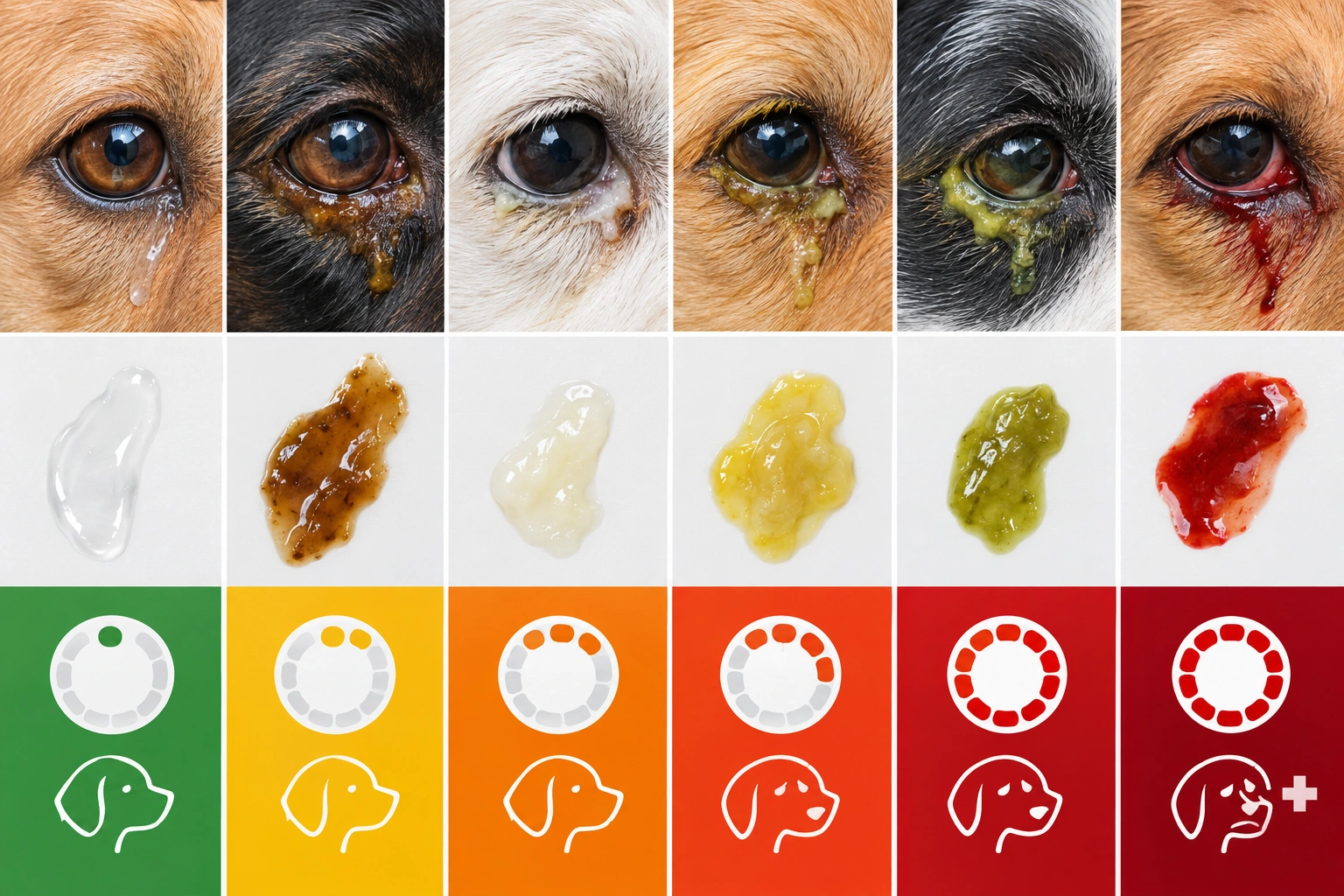
For Border Collies and other active dogs, the answer often sits somewhere between “probably harmless” and “worth a closer look.” Dust, wind, pollen, and facial hair can make eye discharge more noticeable. That does not mean it should be ignored. Repeated eye boogers are often a clue, not the problem itself.
What Eye Boogers in Dogs Usually Mean
A little eye discharge is the eye’s way of clearing away debris, tears, and tiny bits of dried mucus. If your dog wakes up with a small crust in the inner corner of each eye and then spends the day comfortable, that is usually less concerning than discharge that keeps returning, changes color, or comes with discomfort. Small amounts can be normal only when the eye itself looks comfortable and your dog is otherwise acting fine.
A useful rule: mild, clear, or lightly crusted discharge without redness or pain is often watch-and-clean territory. Thick, yellow, green, bloody, or foul-smelling discharge is not.
Think of eye boogers as a symptom, not a diagnosis. They can show up because of something as simple as dust, or because the eye is inflamed, dry, scratched, infected, or not draining tears normally.
What the Color, Texture, and Pattern Can Suggest
The details matter more than the fact that discharge exists. Color can help narrow the possibilities, but it should not be used to self-diagnose on its own. Clear discharge, for example, can happen with simple irritation or allergies, but it can also show up early with conjunctivitis or after an injury.
| Discharge pattern | What it can suggest | Urgency |
|---|---|---|
| Clear, watery, light crust | Mild irritation, wind, dust, early allergies, or sometimes early conjunctivitis or injury | Usually monitor if the dog is comfortable |
| Small brown or rust-colored crust | Dried tears, common tear staining, or normal overnight buildup | Monitor if there are no other symptoms |
| White or stringy mucus | Irritation, dry eye, or inflammation | Vet visit if it keeps coming back |
| Yellow or green discharge | Infection or significant inflammation | Prompt veterinary exam |
| Bloody discharge | Injury, trauma, or a more serious eye problem | Urgent veterinary care |
| One eye only | Foreign body, scratch, blocked tear duct, or local irritation | More concerning than both eyes |
| Both eyes | Allergies, dust, environmental irritation, or a broader issue | Depends on severity and other signs |
| Thick discharge that reappears quickly | Ongoing inflammation or infection | Needs evaluation |
Color alone does not tell the whole story, but it helps narrow the possibilities.
One eye versus both eyes
This is one of the most useful clues owners have.
- One eye only often points to a local problem: a scratch, a bit of debris, a blocked tear duct, or something trapped under the eyelid.
- Both eyes more often fit allergies, airborne irritants, or conditions affecting tear production or the surface of both eyes.
A dog with both eyes watering during pollen season may simply be reacting to the environment. A dog with one eye suddenly producing thick discharge after running through brush needs a different level of concern.
Common Reasons Dogs Develop Lots of Eye Boogers
Dust, wind, and other irritants
Dogs that hike, run in fields, stick their head out of the car, or spend a lot of time outdoors often collect more debris around the eyes. Border Collies fit that pattern well because they are active, alert, and usually out in the world more than a couch-potato dog.
If the discharge is mild, clear, and shows up after a windy walk, irritants are a reasonable first suspect. The fact that it happens after outdoor time matters. If it happens every day no matter what, the cause is probably deeper than dust.
Allergies
Allergies often cause watery eyes, mild redness, rubbing, and recurring discharge in both eyes. Seasonal patterns are a clue. If the problem flares when pollen is high or after grass-heavy outings, allergies move up the list.
Allergy-related discharge can look harmless at first because it may be clear. The giveaway is repetition. If you wipe the eyes clean and the crust returns again and again, especially with sneezing or itching, the issue may need treatment rather than just cleanup.
For general dog health guidance, the ASPCA’s pet care resources are a useful starting point, but eye symptoms that persist still deserve a veterinary exam.
Tear overflow and tear staining
Some dogs simply produce tears that spill over the eyelids instead of draining normally. That extra moisture can leave brownish staining and make the inner corners crusty.
This is not always a disease by itself. Sometimes it is anatomy, coat shape, or tear drainage that makes the area look messy. But chronic tear overflow can also be linked to blocked tear ducts, eyelid shape problems, or ongoing irritation.
The trade-off here is simple: if the dog seems comfortable and the discharge is mostly staining, you may monitor and clean gently; if the tearing is persistent or one-sided, get it checked.
Blocked tear ducts
Tears normally drain through small channels near the inner corner of the eye. If those channels are blocked, tears pool and spill over. That can create chronic wetness, crusting, and staining.
Blocked tear ducts are especially worth considering when the problem is mostly one-sided or keeps happening in the same eye. Cleaning may improve appearance, but it will not fix the drainage issue.
Dry eye
Dry eye is a little counterintuitive because many owners expect “dry” to mean less discharge. In reality, poor tear production can lead to irritation, thick mucus, and a sticky eye surface. The eye tries to compensate, and the result can be more visible gunk.
This is one reason owners should not assume all discharge means “too many tears.” Sometimes the eye is actually not making enough healthy tears.
Conjunctivitis and infection
Conjunctivitis is inflammation of the tissue around the eye. It can be caused by infection, irritation, allergies, or other problems. A dog with conjunctivitis may have redness, discharge, blinking, pawing, or swelling.
Thick yellow or green discharge raises concern because it often suggests infection or significant inflammation. If the eye looks angry, the dog is rubbing it, or the discharge keeps returning, a vet exam is the right move.
Foreign bodies and scratches
Grass seeds, dust, sand, and tiny plant pieces can irritate the eye fast. A scratch on the cornea can also make the dog squint, tear up, and produce discharge.
This is where one-sided symptoms matter most. A dog that suddenly starts blinking hard, pawing at one eye, or keeping it closed may have pain, not just “eye boogers.” That is not a cleaning problem. It is a veterinary problem.
Eyelid or eyelash problems
If the eyelids do not sit correctly, or if lashes rub the eye surface, the eye can stay irritated. That irritation may keep producing discharge even when the eye is otherwise clean.
These issues often show up as repeated discharge in the same eye, especially when the dog has been checked and cleaned but the problem keeps returning.
When Eye Boogers Are More Likely a Chronic Issue
When discharge keeps coming back, the question changes from “What is this crust?” to “Why does this eye keep getting irritated?”
Chronic eye boogers are more likely when you see:
- recurring discharge after cleaning
- tear staining that never really improves
- repeated watery eyes during certain seasons
- the same eye being affected over and over
- discharge plus ongoing redness or rubbing
In those cases, the cause is often not a one-time speck of dirt. It may be allergies, tear drainage trouble, dry eye, or an anatomical issue that needs a vet’s help.
Breed, Coat, and Lifestyle Factors That Make Discharge More Noticeable
Border Collies are not a breed you usually think of as having dramatic eye problems, but their lifestyle matters. They are active, often outdoors, and frequently exposed to dust, wind, grass seeds, and pollen. That makes mild discharge more likely to show up.
Facial hair can also make eye discharge look worse than it is. Hair around the eyes traps moisture and crust, so a small amount of tear residue becomes obvious quickly.
That said, “more visible” and “medically normal” are not the same thing. A dog with fluffy facial hair may look messier than a short-coated dog, but if the discharge is frequent, colored, or paired with discomfort, the coat is not the real issue.
For breed and care context, the American Kennel Club’s breed information can be helpful when you’re thinking about anatomy, coat, and activity level, but it does not replace a vet exam when symptoms suggest a problem.
Warning Signs That Mean You Should Worry
These signs should push you beyond simple home cleaning:
- redness of the white of the eye
- swelling around the eyelids
- squinting or blinking hard
- pawing at the eye
- keeping the eye closed
- thick yellow or green discharge
- blood in the discharge
- cloudy or bluish-looking eye surface
- bad smell
- obvious pain
- vision changes or clumsiness
If your dog is squinting or keeping one eye shut, treat that as a pain signal. That usually means the eye needs prompt veterinary attention.
A practical shortcut: clear discharge with no discomfort is usually less urgent; discharge plus pain is urgent. If clear discharge comes with squinting, redness, or pawing, it is no longer something to brush off.
What You Can Safely Do at Home
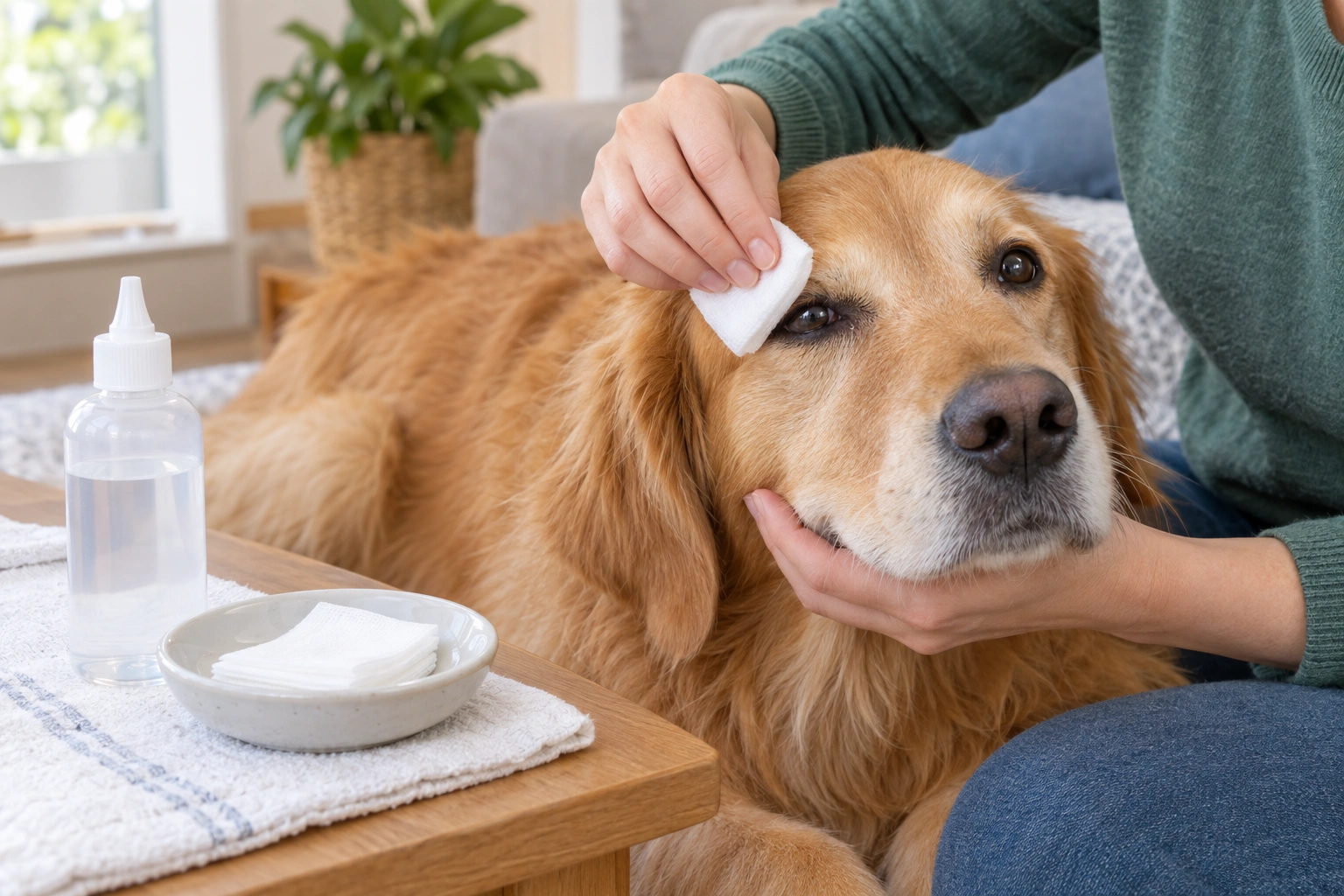
If the discharge is mild and your dog seems comfortable, gentle cleaning is reasonable.
Safe cleaning steps
- Wash your hands first.
- Use plain sterile saline or a vet-approved eye-cleaning product.
- Moisten a clean gauze pad or soft cotton pad.
- Wipe from the inner corner outward, using light pressure.
- Use a fresh pad for each eye.
- Stop if the dog resists, flinches, or seems painful.
The goal is to remove crust, not scrub the eye. If the discharge is stuck, soften it with saline rather than picking at it.
What not to use
- human eye drops unless your vet specifically says so
- rough cloths or paper towels that can scratch
- cotton swabs near the eye surface
- chamomile
- herbal rinses
- contact lens solutions
- random home remedies
- anything that forces the eyelid open against resistance
If you need a general veterinary reference for safe pet care habits, VCA Hospitals has accessible owner guidance across many common dog health topics.
When to Monitor, When to Book a Routine Vet Visit, and When to Seek Urgent Care
Here is the simplest decision framework.
Monitor at home if:
- the discharge is mild, clear, or lightly crusted
- both eyes are comfortable
- there is no redness, swelling, or pain
- it clears after gentle cleaning and does not keep returning
Book a routine vet visit if:
- the discharge is frequent or recurring
- tear staining is ongoing
- one eye keeps getting messy
- the problem seems seasonal or chronic
- you suspect allergies, tear overflow, or drainage issues
Seek urgent care if:
- the eye is painful
- your dog is squinting or keeping it closed
- the discharge is thick yellow, green, or bloody
- the eye looks cloudy
- the eyelid is swollen
- your dog may have been scratched or poked in the eye
- vision seems affected
A good way to think about it: mild, comfortable, and short-lived can wait; painful, colored, or one-sided should not.
What a Veterinarian May Check or Treat
A vet will usually look at the eye surface, eyelids, tear production, and drainage. They may check for a foreign body, scratch, infection, dry eye, or eyelid abnormality.
Depending on the cause, treatment might involve eye medication, flushing, allergy management, or addressing a structural issue. The exact treatment depends on the diagnosis, which is why persistent discharge is worth a proper exam instead of repeated wiping.
Common Mistakes That Make Eye Problems Worse
The most common mistakes are also the easiest to avoid:
- assuming every crust is harmless
- waiting too long when the dog is squinting
- wiping too hard and irritating the eye
- using human medications without veterinary guidance
- trying to remove something embedded in the eye
- treating repeated discharge as a grooming issue only
If the same eye keeps getting messy, that is your cue to stop treating it like dirt and start treating it like a symptom.
FAQs
Is it normal for dogs to have eye boogers?
A small amount of clear or lightly crusted discharge can be normal, especially after sleep. Frequent, thick, colored, or painful discharge is not something to ignore.
Why does my dog have eye boogers in one eye only?
One-sided discharge often points to a local issue such as a foreign body, scratch, blocked tear duct, or eyelid problem. It deserves more attention than discharge in both eyes.
What color eye discharge is most concerning?
Yellow, green, or bloody discharge is more concerning than clear or light brown crust. Thick discharge with redness or pain should be checked promptly.
Can allergies cause lots of eye discharge in dogs?
Yes. Allergies often cause watery eyes, mild redness, and recurring discharge in both eyes, especially during certain seasons or after outdoor exposure.
How often should I clean my dog’s eyes?
Clean them only as needed with gentle, safe materials. If you are cleaning every day and the discharge keeps returning, that usually means the cause needs to be investigated.
When should I take my dog to the vet for eye boogers?
Go sooner if the discharge is one-sided, thick, colored, smelly, or paired with squinting, redness, swelling, cloudiness, or pawing at the eye.
Final Takeaway
A lot of eye boogers in dogs can be something mild, but the pattern tells you whether you are dealing with simple tear buildup or a real eye problem. Clear, small, and comfortable is usually less urgent. Thick, colored, one-sided, painful, or recurring discharge needs a veterinary look. When in doubt, treat the eye gently and let the symptoms guide the next step.
