
Why Does My Dog’s Breath Smell So Bad? Causes, Red Flags, and What to Do Next

A little dog breath is normal. A mouth that smells rotten, sour, fishy, metallic, or unusually sweet is not something to shrug off. In Border Collies and other dogs, bad breath is usually a clue that something is happening in the mouth, in the diet, or somewhere deeper in the body.
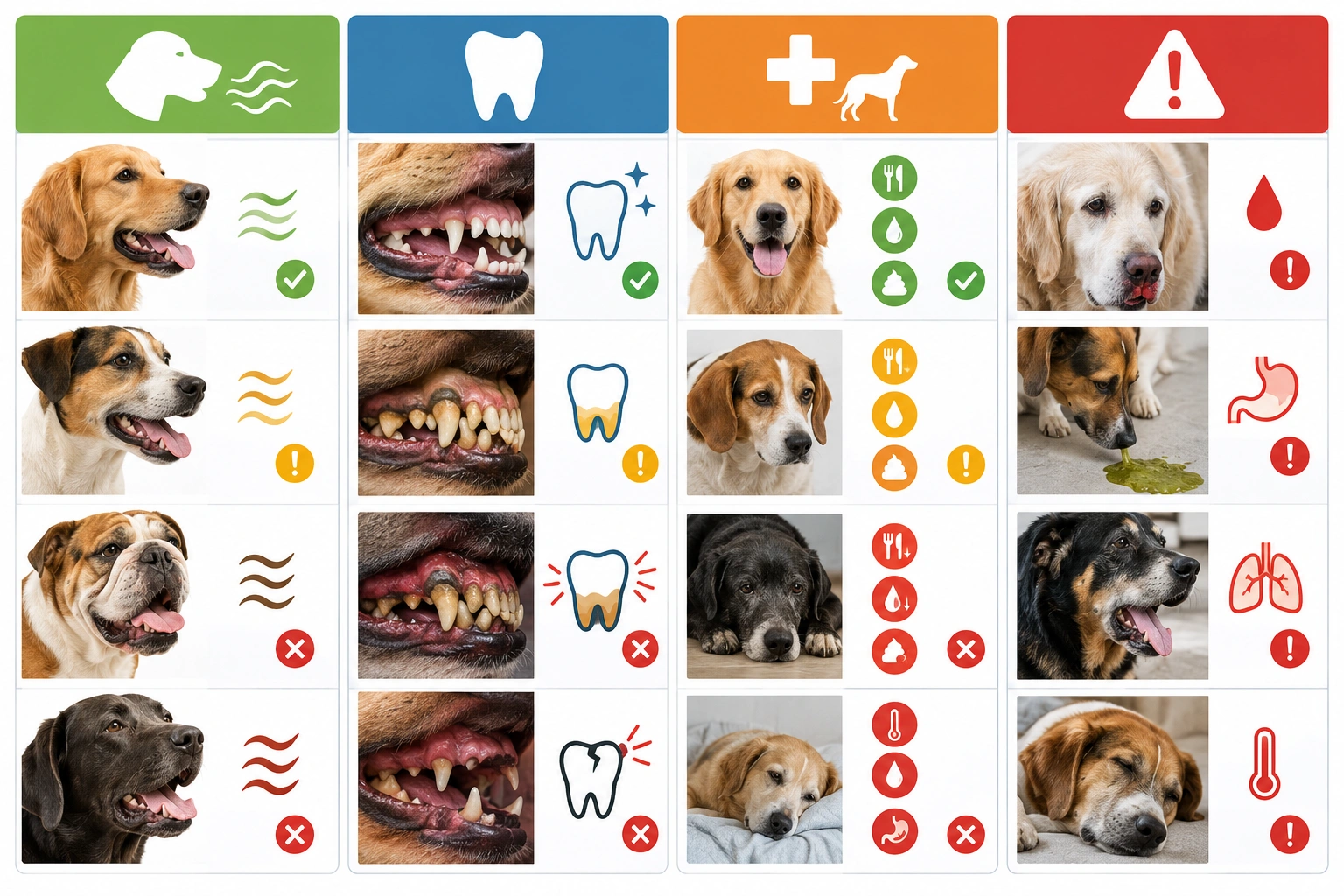
The practical question is not just “Why does my dog’s breath smell so bad?” It is “Is this a simple cleanup problem, or is my dog telling me they need a vet?”
What counts as normal breath, and what does not
A healthy dog may have breath that smells like food after eating, and it may be mildly unpleasant from time to time. That alone is not unusual. What should make you pay attention is a breath smell that is persistent, suddenly worse, or strong enough that you notice it across the room.
Here is a useful rule:
- Mild, food-related odor after a meal: often manageable with home care
- Persistent foul odor that does not improve with brushing: likely dental disease or another health issue
- Sudden severe odor: more concerning, especially if it comes with drooling, pain, vomiting, or appetite changes
If your dog’s breath has gone from “doggy” to “something is wrong,” treat that as a signal, not a nuisance.
| Breath pattern | Most likely direction | What usually comes with it | What to do |
|---|---|---|---|
| Mild smell after eating | Food residue | No other symptoms | Brush and monitor |
| Rotten, fishy, or very strong odor | Dental disease | Tartar, red gums, drooling | Vet exam soon |
| Fruity or sweet smell | Possible diabetes | Increased thirst, urination, weight loss | Vet exam promptly |
| Urine-like smell | Possible kidney disease | Lethargy, vomiting, appetite loss | Vet exam promptly |
| Bad breath plus oral pain | Mouth infection or periodontal disease | Pawing, chewing on one side, bleeding gums | Vet exam soon |
| Sudden bad breath with swelling or severe pain | Urgent oral problem | Facial swelling, refusal to eat | Same-day vet care |
For a general baseline on canine dental care, the AKC’s dental health guidance is a helpful starting point, especially if you are trying to build a routine before problems become obvious.
The most common cause: dental plaque, tartar, and periodontal disease
In most dogs, the source of truly foul breath is the mouth itself. Plaque forms on the teeth from bacteria, saliva, and food particles. If it is not removed, it hardens into tartar. Tartar creates a rough surface where more bacteria collect, and that bacterial buildup is what often creates the strong odor.
That is why bad breath is so often an early warning sign of periodontal disease. The smell is not the problem by itself; it is the byproduct of a mouth that has become inflamed and bacteria-heavy.
Why plaque turns into a bigger problem
Plaque is soft and can still be removed with regular brushing. Tartar is harder and sticks to the teeth, especially along the gumline. Once tartar is present, the gums often become irritated. That irritation is gingivitis. If the process keeps going, periodontal disease can develop, which affects the structures that support the teeth.
At that point, you are no longer just dealing with odor. You are dealing with pain, infection risk, and possible tooth loss.
A practical way to think about it:
- Plaque = early stage, still manageable
- Tartar = visible buildup, usually needs more than home care
- Gingivitis = inflamed gums, often painful
- Periodontal disease = deeper damage, usually needs veterinary treatment
A dog can have bad breath before you notice much else. By the time the gums bleed or teeth loosen, the problem has usually been there for a while.
Signs the problem is painful or infected
Bad breath becomes much more concerning when it is paired with signs that the mouth hurts.
Watch for:
- Drooling more than usual
- Pawing at the mouth
- Chewing on one side
- Avoiding hard food or toys
- Bleeding gums
- Yellow or brown buildup on the teeth
- Loose teeth
- Facial swelling
- A dog that pulls away when you touch the muzzle
These signs suggest the issue is not just odor. They point to inflammation, infection, or oral pain.
A realistic example
If your Border Collie normally tears through kibble and tug toys but suddenly starts dropping food, chewing slowly, or avoiding chew items, bad breath may be part of a dental problem that is already affecting comfort. That is the moment to stop assuming it is “just breath.”
One veterinary clinic summary notes that periodontal disease is often accompanied by red gums, yellow teeth, or excessive drooling, and that a rotten or fishy smell can be a clue to dental disease. That matches what owners usually see in real life: the smell is often the first thing people notice, but it is rarely the only sign.
When bad breath points to something internal
Not every foul smell starts in the mouth. Some breath changes can reflect a problem elsewhere in the body.
Kidney disease
When the kidneys are not filtering properly, waste products can build up in the bloodstream and affect breath odor. A urine-like smell is one clue that should not be ignored, especially if your dog is also drinking more, urinating more, vomiting, or acting tired.
Diabetes
Sweet or fruity breath can sometimes be a warning sign of diabetes. That smell is more concerning when paired with increased thirst, increased urination, weight loss, or a dog that seems hungry but still loses body condition.
Liver disease
Liver problems can also change breath odor, though the smell is less specific than the classic dental or fruity patterns. If bad breath appears alongside vomiting, reduced appetite, lethargy, or yellowing of the eyes or gums, the liver needs to be considered.
Gastrointestinal issues
Digestive problems can contribute to foul breath too. Acid reflux and gut imbalance are both plausible contributors, and some dogs seem to develop worse breath when their stomach is unsettled.
That said, digestive causes are usually considered after dental disease is ruled out. In most dogs, the mouth is still the first place to check.
For a broader veterinary perspective on oral disease and its effects, VCA Hospitals’ dental care resources are a solid reference.
Diet, coprophagia, and other non-dental causes
Sometimes the smell is tied to what the dog eats or what they should not be eating.
Fish-based diets and supplements
Some foods contain fish ingredients or omega-3s, and those can leave a lingering fishy smell in the mouth. That does not automatically mean the food is harmful. It does mean the odor may be dietary rather than disease-related if the dog otherwise seems well and the smell tracks closely with meals.
Eating feces or garbage
Coprophagia can make breath smell awful, especially if a dog has access to cat litter boxes, yard waste, or trash. In those cases, the smell may be obvious after the behavior and fade later.
This is one reason Border Collie owners should pay attention to routine and environment. A bright, busy dog that scavenges during unsupervised moments may have breath that seems “randomly bad” when the real cause is a hidden habit.
When diet is the clue, not the answer
If breath odor is mild and temporary after meals, diet may be the whole story. If the smell is severe, persistent, or comes with drooling, gum changes, vomiting, or appetite loss, diet is probably not the main problem.
What to do at home right now
If your dog is otherwise acting normal and there are no red flags, you can take a few safe steps today.
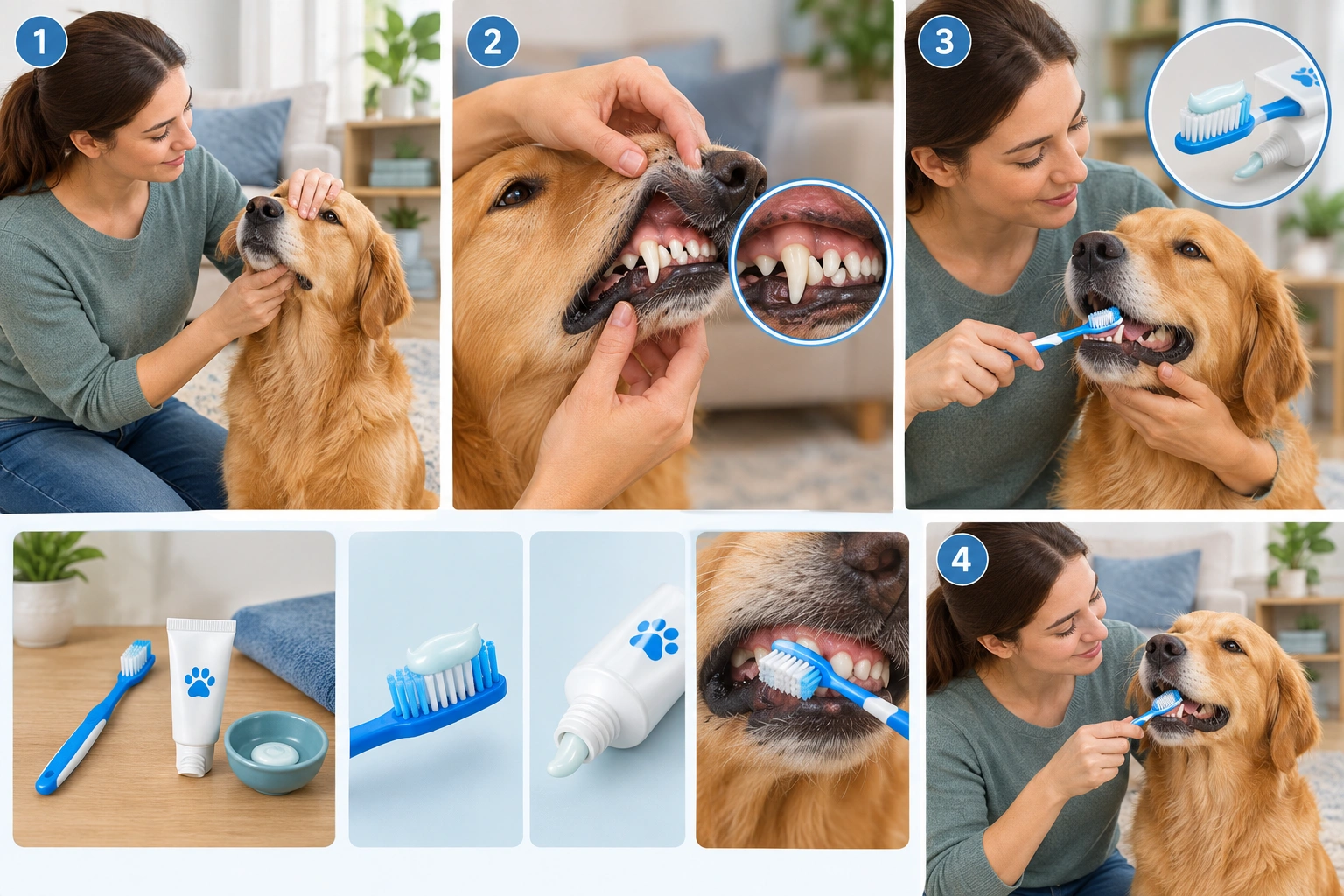
1. Look in the mouth only if your dog tolerates it
Lift the lip and check for:
- Red or swollen gums
- Brown or yellow buildup near the gumline
- Broken teeth
- Blood
- Something stuck between teeth
Do not force the mouth open if your dog is painful or defensive. A dog that suddenly guards the mouth may bite, even if they are normally gentle.
2. Brush with dog-safe toothpaste
Use a dog toothbrush or finger brush and a toothpaste made for dogs. Human toothpaste should not be used.
If your dog is new to brushing, keep the first sessions short:
- Days 1–3: let them lick the toothpaste and accept mouth handling
- Days 4–7: rub a little on the outside of the teeth
- Then: work up to brushing once a day if possible, or at least several times a week
If the gums are inflamed, your dog resists handling, or brushing seems painful, stop and do not keep pushing. That is a sign the mouth may need veterinary attention rather than more home pressure.
The goal is consistency, not perfection. Thirty seconds done every day beats a perfect five-minute session that happens once a month.
3. Add a dental chew if brushing is not realistic yet
Dental chews can help reduce buildup, especially when brushing is not yet manageable. They are useful because they are easier to maintain than brushing for many owners. The trade-off is that they are not as direct or thorough as brushing.
Use chews as support, not as a replacement for veterinary care if tartar or gum disease is already present.
4. Review food, trash access, and stool-eating habits
If your dog raids the garbage or eats feces, fix the access problem first. No breath product works well if the dog keeps recontaminating the mouth.
How long to try home care
If there are no red flags and the odor seems mild, give home care about 1 to 2 weeks of consistent brushing, chew support, and access control. If the breath improves, keep going with maintenance.
If the smell does not improve after that, or it returns quickly, book a vet visit. Do not keep trying home treatment for months while the odor stays the same.
Brushing, dental chews, and dental diets: which helps most?
Here is the practical comparison.
| Option | Best for | Strength | Limitation |
|---|---|---|---|
| Brushing | Ongoing plaque control | Most direct home method | Needs training and consistency |
| Dental chews | Busy owners, dogs that resist brushing | Easier to maintain | Less effective than brushing |
| Dental diets | Dogs who accept food change | Helpful for plaque management | Not a substitute for cleaning visible tartar |
My practical decision rule
- Choose brushing if your dog will accept handling and you can do it regularly.
- Choose dental chews if brushing is still a work in progress.
- Choose a dental diet if your vet recommends it or if it fits your dog’s feeding routine better than chews.
- Choose veterinary treatment if there is visible tartar, bleeding gums, or pain.
If you want a useful comparison point on how dental care fits into routine dog ownership, the ASPCA’s dog care resources are a good general reference.
When bad breath needs a vet visit
Home care is reasonable when the odor is mild, the dog is otherwise healthy, and there are no signs of pain. It is not enough when the smell is severe, sudden, or persistent.
Book a veterinary exam if you notice:
- Rotten, fishy, sweet, or urine-like breath that does not improve
- Visible tartar or red gums
- Drooling or pawing at the mouth
- Trouble chewing
- Swelling in the face or jaw
- Increased thirst or urination
- Vomiting, lethargy, or weight loss
Timing guide:
– Same-day vet care: facial swelling, refusal to eat, obvious oral pain, bleeding from the mouth, repeated vomiting, or a sudden dramatic odor change
– Within a few days: persistent bad breath with tartar, red gums, drooling, pawing, chewing changes, or a smell that does not improve with home care
– Routine appointment: mild odor in an otherwise normal dog that improves with brushing and does not have other symptoms
A young dog is not automatically “too young” for a real problem. Puppies and adolescents can still have retained baby teeth, teething-related odor, or another oral issue such as infection or a congenital problem. Persistent bad breath in a young dog deserves a closer look, not a wait-and-see approach that lasts for months.
What the veterinarian will check and treat
A veterinarian usually starts with a mouth exam and a history of the smell: when it started, what it smells like, and whether other symptoms are present.
For a proper dental workup, the vet may need to use sedation or anesthesia. That lets them examine the teeth and gums safely, clean below the gumline, and check areas that are hard to see when a dog is awake and tense. A surface look in the mouth is often not enough to tell what is happening deeper under the gums.
They may also recommend dental radiographs (dental X-rays). These images help the vet look at the tooth roots and bone, where hidden problems such as infection, root damage, or bone loss can live.
Depending on what they find, they may:
- Examine the teeth and gums closely
- Check for broken teeth, infection, or oral masses
- Recommend dental cleaning if tartar or periodontal disease is present
- Suggest bloodwork or other testing if kidney disease, diabetes, or liver disease is a concern
If the problem is dental, a professional cleaning matters because tartar below the gumline cannot be fixed with brushing alone. If the problem is systemic, then the breath odor is only one piece of the puzzle, and treating the underlying disease becomes the priority.
That is the real trade-off: home care can manage mild odor, but it cannot reverse advanced disease.
How to prevent bad breath from coming back
Prevention is mostly about routine, not special products.
Build a simple oral-care plan
- Brush daily if you can, or at least several times a week
- Use dog-safe toothpaste
- Keep dental chews as a backup, not the main strategy
- Watch for early gum redness or buildup
- Bring up breath changes during regular vet visits
A simple maintenance framework
- If your dog has a healthy mouth: keep brushing and recheck the gums weekly
- If you see early plaque: increase brushing consistency and keep an eye on whether the smell improves over 1 to 2 weeks
- If tartar, redness, or pain shows up: stop relying on home care alone and schedule a vet visit
- After a professional dental cleaning: follow the vet’s home-care plan so the problem does not build back up quickly
A few specific things to look for when choosing products:
– VOHC-accepted chews, treats, or diets when available
– Toothpaste labeled for dogs
– Products your vet has recommended for plaque control, not just breath masking
Catch problems early
A dog with a little plaque is much easier to help than a dog with painful periodontal disease. That is why checking the mouth regularly matters. You do not need a perfect dental routine to make progress. You need a routine you can actually keep.
For Border Collie owners, that usually means matching the plan to the dog’s energy and tolerance. A dog that loves training sessions may do well with mouth handling as part of a short daily routine. A dog that is suspicious of restraint may do better with gradual desensitization and shorter, calmer sessions.
When bad breath needs urgent veterinary care
Seek prompt veterinary help if bad breath comes with any of the following:
- Facial swelling
- Bleeding from the mouth
- Refusal to eat
- Repeated vomiting
- Severe lethargy
- Sudden weight loss
- Marked increase in thirst or urination
- Obvious oral pain
- A sudden, dramatic change in breath odor
If your dog seems painful, do not keep probing the mouth at home. Get the dog seen.
FAQ
Is bad breath ever normal in dogs?
Mild odor after eating can be normal. Strong, persistent, or suddenly worse breath usually is not.
Why does my dog’s breath smell like fish?
Fishy breath can sometimes be related to diet or dental disease, and less commonly to digestive issues. If there is tartar or gum redness, the mouth is the more likely source.
Can a young dog have bad breath?
Yes. Retained baby teeth, teething, oral infection, or poor oral hygiene can cause it. Young age does not rule out a problem.
Will brushing fix bad breath right away?
It can improve mild odor, but it will not fix advanced tartar or periodontal disease. If the smell is severe, a vet exam is the better next step.
When should I worry about bad breath with other symptoms?
Worry sooner if the breath change comes with drooling, vomiting, appetite loss, increased thirst, increased urination, swelling, or weight loss.
Bad breath is often the first clue, not the whole diagnosis. If you treat it like a warning light instead of an inconvenience, you give your dog a much better chance of avoiding pain, tooth loss, and bigger health problems later.
