
Why a Dog’s Eyes Water: Common Causes, Warning Signs, and What to Do Next

Watery eyes are one of those symptoms that can look minor and still mean very different things. In some dogs, a little clear tearing is just the eye doing its normal job. In others, the same wetness is the first clue to irritation, a blocked tear drain, an allergy flare, or an injury that needs treatment.
The key question is not simply “Why are my dog’s eyes watering?” It is “What else is happening with it?” A dog with mild, clear tearing and no discomfort is in a very different situation from a dog that is squinting, pawing at the face, or producing thick yellow discharge.
Dogs make tears to keep the eye surface healthy and wash away debris. Those tears normally drain through small ducts at the inner corner of the eye. When tear production increases or drainage is disrupted, the moisture can spill over the lids and down the face. That overflow is often called epiphora. Chronic moisture may also stain the fur reddish brown, especially on light coats, and can irritate the skin over time. PetMD explains epiphora in dogs and VIN Veterinary Partner notes the skin effects of chronic tearing.
What the discharge looks like matters
The appearance of the discharge can give you a useful clue about whether this is likely a mild issue or something more serious, but color alone does not make a diagnosis.
| What you see | What it often suggests | How urgent it feels |
|---|---|---|
| Clear, watery tears | Mild irritation, allergies, breed-related tearing, or normal tear production | Often monitor briefly if the dog seems comfortable |
| Slight crust or goop after sleep | Normal tear debris mixed with mucus, oil, or dust | Usually not urgent if it clears easily and does not return often |
| Thick white or cloudy mucus | Ongoing irritation or inflammation | Worth a vet visit if persistent |
| Yellow or green discharge | Infection is more likely | Vet visit soon |
| Blood-tinged fluid | Injury, ulcer, or more serious inflammation may be involved | Prompt veterinary assessment |
| One eye suddenly watering a lot | Foreign body, scratch, or blocked drainage | More concerning than both eyes watering mildly |
That table is not a diagnosis. It is a triage tool. The biggest mistake is assuming all watery eyes are the same. A dog with both eyes tearing during pollen season may be dealing with irritation or allergies. A dog that suddenly starts tearing from one eye after running through brush is more likely to have something stuck in the eye or a small scratch.
Color alone does not tell the full story, but it matters. Clear tears are less worrisome than thick, colored discharge. Yellow or green discharge raises concern for infection or significant inflammation. Blood-tinged fluid should be taken seriously because it can point to injury or a more significant eye problem.
Common causes of watery eyes in dogs
Several conditions can make a dog’s eyes water. The pattern usually matters more than any single symptom.
Irritants in the environment
Dust, smoke, perfumes, cleaning sprays, and similar irritants can trigger tearing as the eye tries to flush out the offending material. This is often temporary. If the dog is otherwise comfortable and the tearing fades after the exposure ends, that points more toward irritation than disease.
A practical example: if your dog’s eyes water after you clean the house with a strong spray, the timing matters. If the tearing stops after fresh air and a gentle rinse, the cause may be environmental rather than medical. If it keeps happening, the eye may be inflamed enough to need a vet exam.
Allergies
Allergies can cause watery eyes, and they often affect both eyes. You may also notice itching, rubbing, sneezing, or seasonal flare-ups. Allergy-related tearing tends to be more symmetrical than a foreign body or injury, which often affects one eye first.
The trade-off here is simple: mild allergy watering can look harmless, but repeated episodes can leave the skin damp and irritated. That moisture can create staining and discomfort even when the original trigger is not dangerous. If the pattern keeps returning, your veterinarian may help you sort out whether this is environmental allergy, food-related sensitivity, or another cause.
Conjunctivitis and other eye infections
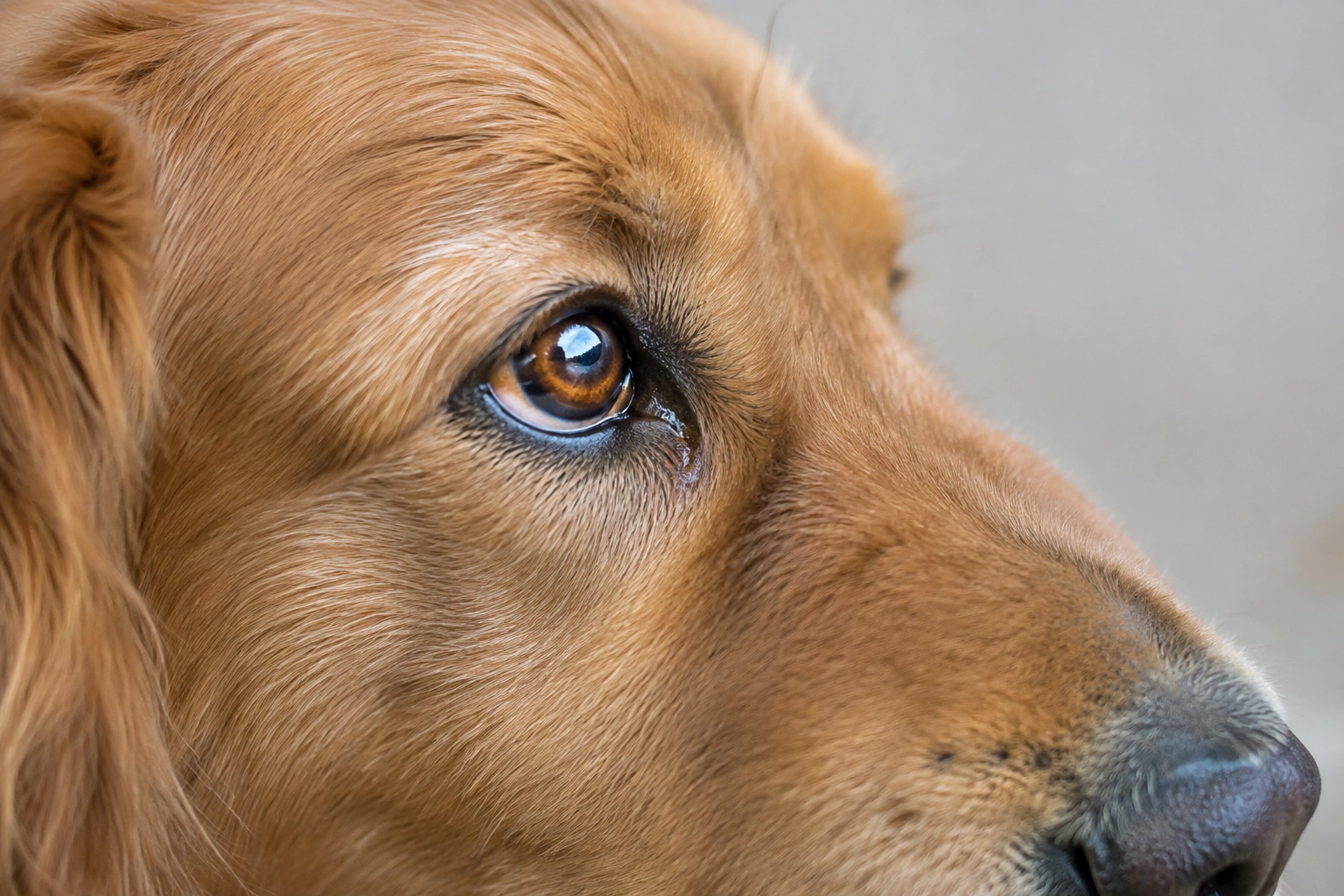
Infections can cause watery discharge, but they are more likely to produce thicker mucus, redness, and discomfort as the problem progresses. Eye infections may be bacterial, viral, or fungal, and many occur after the eye has already been damaged in some way. That means infection is sometimes a consequence, not the original cause.
If your dog’s eye is red, sticky, and clearly bothering them, do not wait for it to “clear up on its own.” Eye infections and corneal injuries can sometimes worsen without treatment.
Foreign bodies
A grass seed, dust particle, or tiny bit of debris can make one eye water suddenly. Dogs often blink more, squint, or paw at the face when something is stuck in the eye. This is one of the clearest examples of why one-sided tearing deserves attention.
Do not try to rub the eye or dig anything out yourself. A small object can scratch the cornea, and rubbing can turn a minor issue into a more serious one. If you can see loose debris sitting on the surface, a gentle flush with sterile saline may help, but if the dog is painful or the object seems embedded, it is a vet job.
Blocked tear drainage
Sometimes the problem is not too many tears, but tears that are not draining properly. Narrow or blocked tear ducts can cause overflow onto the face. This is one reason some dogs seem to “cry” even when the eye itself does not look very red.
Blocked drainage often needs a veterinary workup because the cause may be structural, inflammatory, or related to chronic irritation. If the tearing is recurring in the same eye, especially without much redness, drainage issues move higher on the list.
Injury or corneal ulcer
A scratch, blunt injury, or corneal ulcer can produce watering along with squinting, light sensitivity, redness, and obvious pain. This is one of the most important reasons not to dismiss watery eyes as cosmetic.
If your dog is holding an eye shut, rubbing it, or acting uncomfortable, think “pain” first, not “tears.” Corneal problems can be urgent.
When breed anatomy causes chronic tearing
Some dogs tear more because of how their faces are built. Short-nosed breeds and dogs with shallow eye sockets may have eyes that are more exposed or tear drainage that is less efficient. In those dogs, a certain amount of chronic tearing may be expected.
That does not mean it should be ignored. Breed-related tearing can be common, but it can also hide a medical issue. A dog that always has damp fur under the eyes may simply have anatomy that encourages overflow. A dog whose tearing suddenly worsens, becomes one-sided, or starts with redness or squinting needs an exam even if the breed is prone to watery eyes.
Tear staining can also develop from chronic moisture. The reddish-brown color is linked to pigments in tears, and the damp skin can become irritated or develop odor over time. In other words, “common” does not mean “nothing to do.”
Signs your dog’s watery eyes need a vet visit
Use these decision rules:
Book a routine vet visit soon if:
- The tearing keeps coming back.
- The discharge is thick, cloudy, or colored.
- The eye looks mildly red but your dog is still comfortable.
- Tear staining is getting worse over time.
- Only one eye is repeatedly affected.
Seek prompt care the same day if:
- Your dog is squinting.
- The eye is painful to touch.
- There is swelling around the eye.
- The cornea looks cloudy or bluish.
- Discharge is yellow, green, or blood-tinged.
- Your dog is pawing at the eye or rubbing the face constantly.
Treat it as urgent if:
- The eye is held shut.
- Something is visibly stuck in the eye.
- The problem started suddenly after outdoor play or rough activity.
- Your dog seems distressed, disoriented, or very light-sensitive.
A useful rule of thumb: clear tearing with no pain can often be watched briefly. Pain, color change, cloudiness, or one-sided sudden onset should not be watched for long.
What you can safely do at home
For mild, clear tearing and no other symptoms, gentle home care can be appropriate while you watch the pattern.
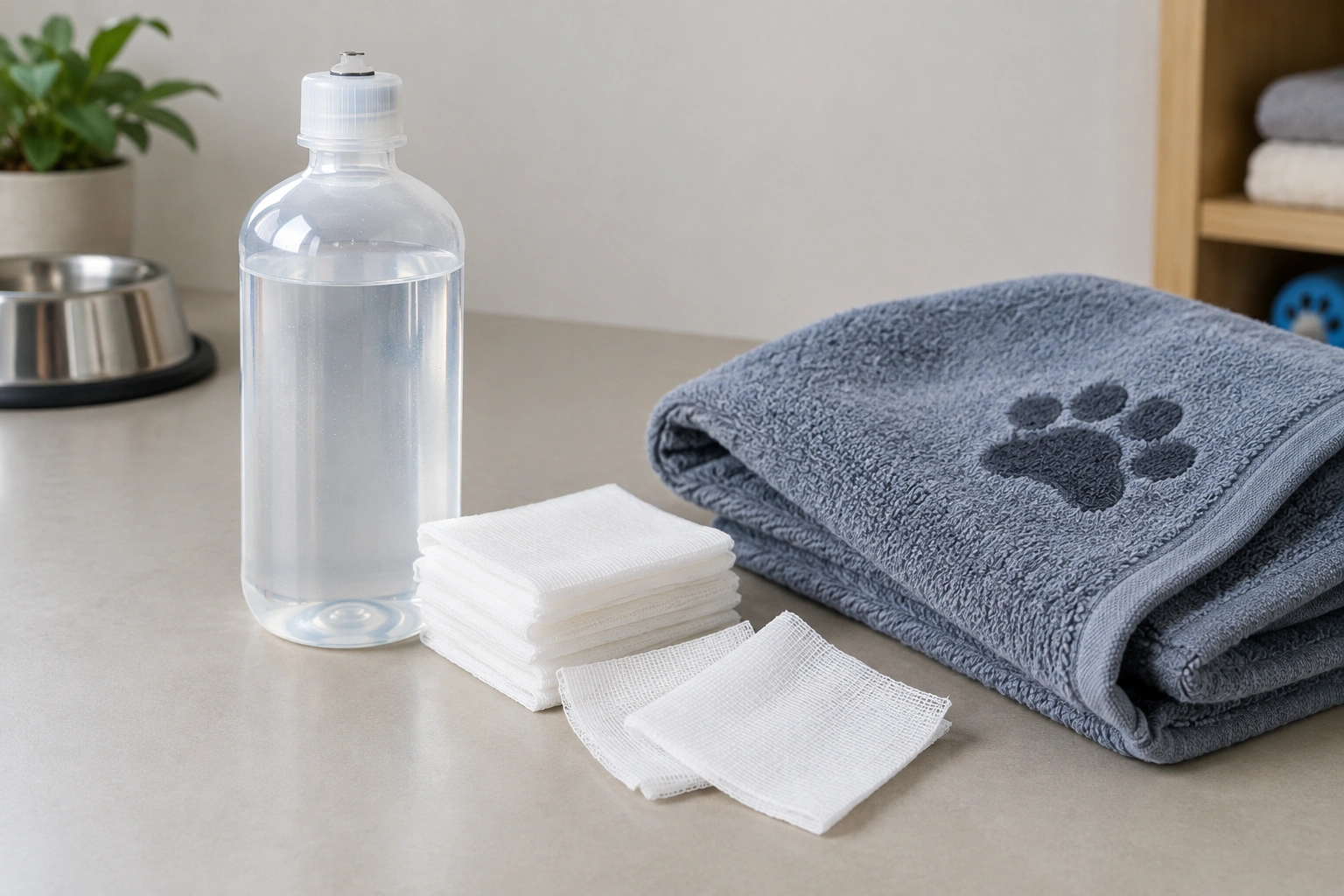
Use sterile saline or a vet-approved eye wipe to clean away moisture and soft crust. Wipe from the inner corner outward with a fresh piece of gauze or cotton pad each time. That helps reduce skin irritation without pushing debris back toward the eye.
A simple home check can help you decide whether the problem is minor: note whether both eyes are involved, whether the tearing improves after cleaning, and whether your dog acts normally. If the eye looks better for a short time but keeps watering again, the issue is probably not just surface debris.
Avoid these common mistakes:
– Do not use human eye drops unless your veterinarian specifically told you to.
– Do not use leftover prescription eye medication.
– Do not use steroid-containing drops without veterinary direction.
– Do not rub the eye.
– Do not try to remove an embedded object.
The goal at home is comfort and observation, not treatment of an unknown eye problem.
Tear staining: cosmetic or medical clue?
Tear staining is sometimes mostly cosmetic, especially in dogs that naturally tear more because of facial structure. If the eye is comfortable, the discharge is clear, and the staining has been stable for a long time, the issue may be more about appearance than active disease.
But staining can also be a clue that the eye is chronically wet. Chronic moisture can irritate the skin and create odor or secondary skin problems. So if staining is increasing, the fur stays damp, or the skin under the eyes looks sore, it is worth a veterinary look.
Think of staining as a signal, not a diagnosis. It tells you moisture has been present long enough to affect the fur. It does not tell you why.
How veterinarians diagnose the cause
A vet will usually start with a careful eye exam and a history of when the tearing began, whether it affects one or both eyes, and what the discharge looks like. From there, they may check for irritation, debris, eyelid or eyelash problems, drainage issues, or signs of injury.
Depending on the findings, the vet may use tests to look for corneal damage or assess tear drainage. Common examples include a fluorescein stain to check for scratches or ulcers and a Schirmer tear test to measure tear production. That step matters because treatment differs a lot between allergy-related tearing, infection, a blocked tear duct, and a corneal ulcer.
This is why persistent watery eyes deserve a workup instead of repeated guesswork. The same symptom can come from a simple irritant or a problem that needs prescription treatment.
How to prevent recurrent eye watering
Prevention is mostly about reducing triggers and catching changes early.
If your dog’s eyes water after dusty walks, windy days, or exposure to smoke or fragrance, reduce that exposure where possible. Keep the face clean after outdoor time, and watch whether one environment consistently makes the problem worse.
For dogs with chronic tearing, regular monitoring works better than waiting for a dramatic change. Look for:
– worsening redness
– new squinting
– thicker discharge
– one eye becoming more affected than the other
– skin irritation under the eyes
If the same pattern keeps returning, schedule a follow-up exam rather than repeatedly cleaning and hoping it settles. Recurrent tearing can mean the underlying issue was never fully identified.
When to call your veterinarian
Call your veterinarian if watery eyes are persistent, keep returning, or come with redness, swelling, pain, cloudiness, or colored discharge. If the problem is one-sided or started suddenly, it deserves a faster look.
If your dog is squinting, pawing at the eye, or holding it shut, treat that as urgent. Eye problems are much easier to manage when they are addressed early, before the surface of the eye becomes more damaged.
FAQ
Is clear eye watering normal in dogs?
Small amounts of clear tearing can be normal, especially if it happens briefly after sleep, wind, or dust exposure. It becomes more concerning when it is persistent, one-sided, or paired with redness or discomfort.
Why would only one of my dog’s eyes water?
One-sided tearing often points to a foreign body, scratch, blocked drainage, or another issue affecting that eye specifically. It is more concerning than both eyes watering mildly.
Can allergies make a dog’s eyes water?
Yes. Allergies commonly cause watery eyes, often in both eyes, and may come with itching, sneezing, or seasonal flare-ups.
What does yellow or green discharge mean?
Yellow or green discharge is more concerning than clear tears and can suggest infection or significant inflammation. A vet visit is the right next step.
Should I clean my dog’s watery eyes at home?
Yes, if the tearing is mild and your dog is comfortable. Use sterile saline or vet-approved wipes and avoid human eye products or anything harsh.
When is watery eye discharge an emergency?
Get urgent care if the eye is held shut, the dog is in pain, the cornea looks cloudy, swelling is present, or the problem started suddenly after outdoor activity or trauma.
Can tear staining mean something is wrong?
Sometimes it is mainly cosmetic, especially in dogs that naturally tear more. But worsening staining, damp skin, odor, or repeated tearing can signal an underlying eye problem that needs evaluation.
How long should I watch watery eyes before calling the vet?
If the tearing is mild and clear, you can monitor briefly. If it persists, returns often, or comes with any warning signs, call your veterinarian rather than waiting it out.