
Why Your Dog Is Itchy After a Bath: Causes, Fixes, and When to Worry

If your dog scratches, rubs, or nibbles at their skin after a bath, the bath is often the trigger—but not always the real cause. In practice, post-bath itching usually comes down to one of a few things: shampoo residue, a product that irritates sensitive skin, water that was too hot, overbathing, or an underlying skin problem that the bath simply made more obvious.
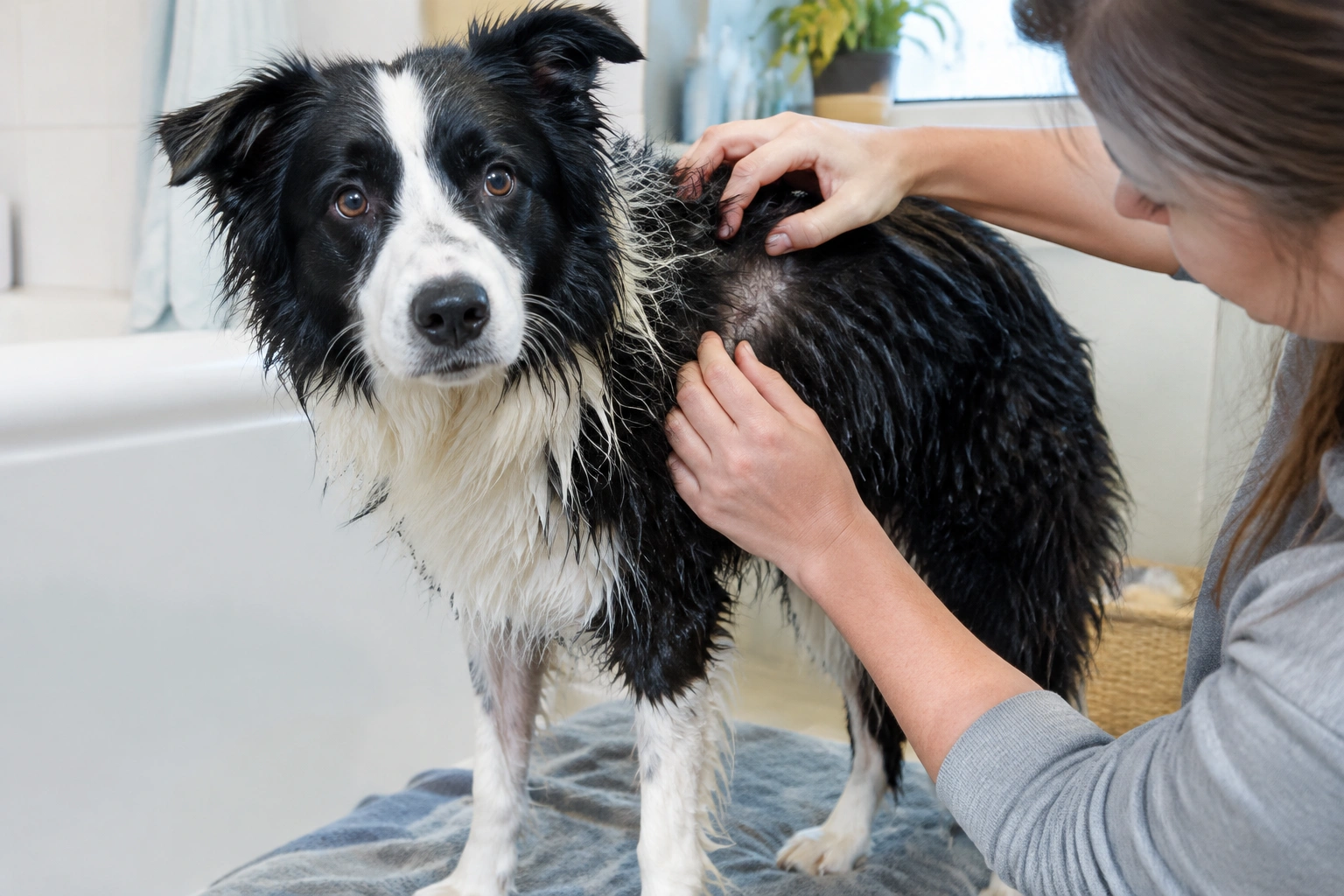
For Border Collie owners, this matters because the breed’s dense coat can trap residue and slow drying if the bath routine is rushed. A dog can look clean on the outside and still have irritated skin underneath.
Why dogs get itchy after a bath
The most common explanation is simple irritation. Bathing changes the skin’s surface, and if the skin barrier is already a little fragile, even a mild shampoo or a slightly rough rinse can set off scratching. Dogs may also itch after baths because of shampoo residue, over-cleansing, or a skin imbalance, rather than because bathing itself is inherently bad.
That distinction matters. If your dog scratches for a few minutes after a bath and then settles, you may be seeing temporary irritation. If the itching repeats after every bath, gets worse over time, or comes with redness or bumps, the bath may be exposing a bigger issue.
The main causes to consider
1) Shampoo irritation or sensitivity
Some dogs react to fragrance, preservatives, surfactants, or other ingredients in shampoos. This can show up as contact dermatitis: the skin gets inflamed where the product touched it. A “gentle” label does not guarantee that a formula will suit your dog.
Human shampoo is a common mistake here. It is made for human skin and hair, not canine skin, which has a different pH and different sensitivity patterns. Even one bath with the wrong product can leave a dog uncomfortable.
2) Shampoo residue left in the coat
If shampoo is not rinsed out fully, the leftover film can keep irritating the skin after the bath is over. This is especially easy to miss in thick coats, feathering, or dense undercoats. Border Collies can be a good example: the outer coat may seem clean while residue remains close to the skin.
3) Water that was too hot
Hot water can dry and irritate the skin, making itching more likely. Warm water is usually the safer choice for comfort and skin protection. Hot water may feel like it cleans better, but that trade-off often works against sensitive skin.
4) Overbathing
Frequent bathing can strip away natural oils. Those oils help support the skin barrier, so removing them too often can leave the skin dry, flaky, and itchy. If your dog gets itchy after every bath and the bath schedule is frequent, the timing itself may be part of the problem.
5) Dry skin that was already there
A bath can reveal dry skin that was already simmering under the coat. Once the coat is wet and the skin is exposed, flakes, tightness, and irritation become easier to notice.
6) An underlying skin issue
Bathing does not always cause the itch. Sometimes it uncovers fleas, yeast, bacterial infection, or allergies that were already present. Dogs with these problems may seem itchier after a bath because the coat is parted, the skin is more visible, or the skin is already inflamed and reactive. Allergies, parasites, and infections are among the most common causes of itchiness in dogs.
What’s normal and what’s a red flag
A brief scratch session after a bath can happen, especially in dogs with sensitive skin or in dry weather. The key question is whether the itching fades the same day or keeps going.
Here is a practical way to sort it out.
| Likely situation | Timing | Other signs | What to do |
|---|---|---|---|
| Temporary irritation | Starts soon after bath, improves within a few hours and is gone by the end of the day | No swelling, odor, sores, or major redness | Monitor, avoid another bath for now |
| Shampoo sensitivity | Starts after a new product, repeats with the same product, or lasts beyond the same day | Redness, scratching, licking, discomfort | Stop that product and discuss with your vet if it continues |
| Residue problem | Itching after most baths, especially in dense coats | Coat feels tacky, dog scratches body more than face | Rinse more thoroughly next bath |
| Dry skin / overbathing | Itching plus flakes or dull coat | Skin looks dry, no odor | Reduce bathing frequency and use a gentler formula |
| Infection or allergy | Persistent itch, recurring episodes, or worsening symptoms | Odor, bumps, hair loss, hot spots, ear issues | Book a veterinary exam |
Red flags that should not be ignored
Call a veterinarian if you see:
– redness that does not settle
– swelling or hives
– hair loss
– open sores or hot spots
– a bad smell from skin or coat
– greasy skin, discharge, or crusting
– repeated chewing, licking, or face rubbing
– pain when touched
Treat sudden facial swelling, vomiting, breathing difficulty, or collapse as an emergency.
First 24 hours: safe steps to soothe an itchy dog
If the itching starts right after the bath, resist the urge to keep washing the dog. Repeated bathing can make irritation worse, not better.
Use this sequence instead:
- Check the trigger in order. First ask whether this was a new product. If yes, stop it. Next check for a rinsing issue: if the coat feels slick, sticky, or smells like shampoo, residue may be the problem. Then consider water temperature: if the bath was hot or the dog seemed uncomfortable, heat may have irritated the skin. After that, think about dryness or overbathing if the dog has flakes, a dull coat, or a history of frequent baths. If none of those fit, or the itch keeps returning, move to underlying skin disease such as fleas, yeast, allergies, or infection.
- Check the skin under the coat. Look for redness, bumps, hives, flakes, wet patches, or a smell that suggests infection.
- Offer a calm, low-friction environment. Avoid rough play, long walks in heat, or anything that makes the dog overheat and scratch more.
- Do not apply human anti-itch creams or essential oils. These can be unsafe for dogs, especially if licked.
- If the skin is only mildly irritated and your vet has not told you otherwise, a gentle cool-water rinse may help remove leftover residue. Keep it brief and avoid scrubbing.
- Dry carefully. Pat the coat rather than rubbing hard. In dense-coated dogs, make sure moisture is not trapped against the skin.
- Watch the pattern. If the itch fades over a few hours and is gone the same day, that points more toward temporary irritation. If it lasts beyond the same day, recurs after every bath, or worsens with redness, odor, bumps, or hair loss, the cause is more likely to need veterinary attention.
This first-day check is about information as much as comfort. You are trying to learn whether the bath was the trigger, or whether the bath exposed a deeper skin problem.
Shampoo and product problems: what commonly irritates dogs
A lot of owners assume shampoo is either “good” or “bad.” In reality, the issue is usually compatibility.
Ingredients and product features that can cause trouble
- Heavy fragrance or perfume: these can be irritating for sensitive skin, especially if the dog reacts to scent-heavy products
- Harsh surfactants: strong cleansing agents can strip oils and leave the skin feeling tight or dry
- Dyes and unnecessary additives: extra colorants or “cosmetic” ingredients can add irritation risk without helping the skin
- Preservatives: necessary in many products, but some dogs react to them
- Active ingredients: helpful when a condition is present, but too strong for routine use
- Sprays, perfumes, and leave-on products: these can keep irritating the skin after the bath and may build up in the coat
For sensitive dogs, simpler is usually better. A short ingredient list is often easier to tolerate than a heavily scented formula with multiple add-ons.
Even oatmeal shampoos can bother some dogs. “Soothing” on the label does not mean “safe for every dog.” The same goes for hypoallergenic shampoo: it may be a better starting point for sensitive skin, but it is not a guarantee.
Dog shampoo versus human shampoo
Dog shampoo is usually the safer choice because it is designed for canine skin and coat needs. Human shampoo is more likely to be too harsh or to leave the skin feeling tight and dry. If a dog is already itchy, using human shampoo can turn a mild issue into a stubborn one.
Hypoallergenic shampoo versus regular shampoo
Hypoallergenic formulas often reduce common irritants, which makes them useful when a dog reacts to fragrance or stronger cleansers. The trade-off is that they may lather less and feel less “powerful” to owners who are used to a heavily scented bath. That is normal. Strong scent is not the same thing as good skin care.
If your dog’s itching started after a new product, the best move is usually to stop that product and switch only after you know whether the dog needs a simple gentle cleanser or something more specific from your vet.
Rinsing, water temperature, and bath technique
Technique matters more than many people realize.
Shampoo residue is one of the easiest causes to miss because the coat can look clean before it is actually free of product. Dense coats, feathering, and undercoats hold onto residue longer than short coats. Border Collies, with their layered coat structure, often need a more careful rinse than owners expect.
A better rinse is usually the simplest fix
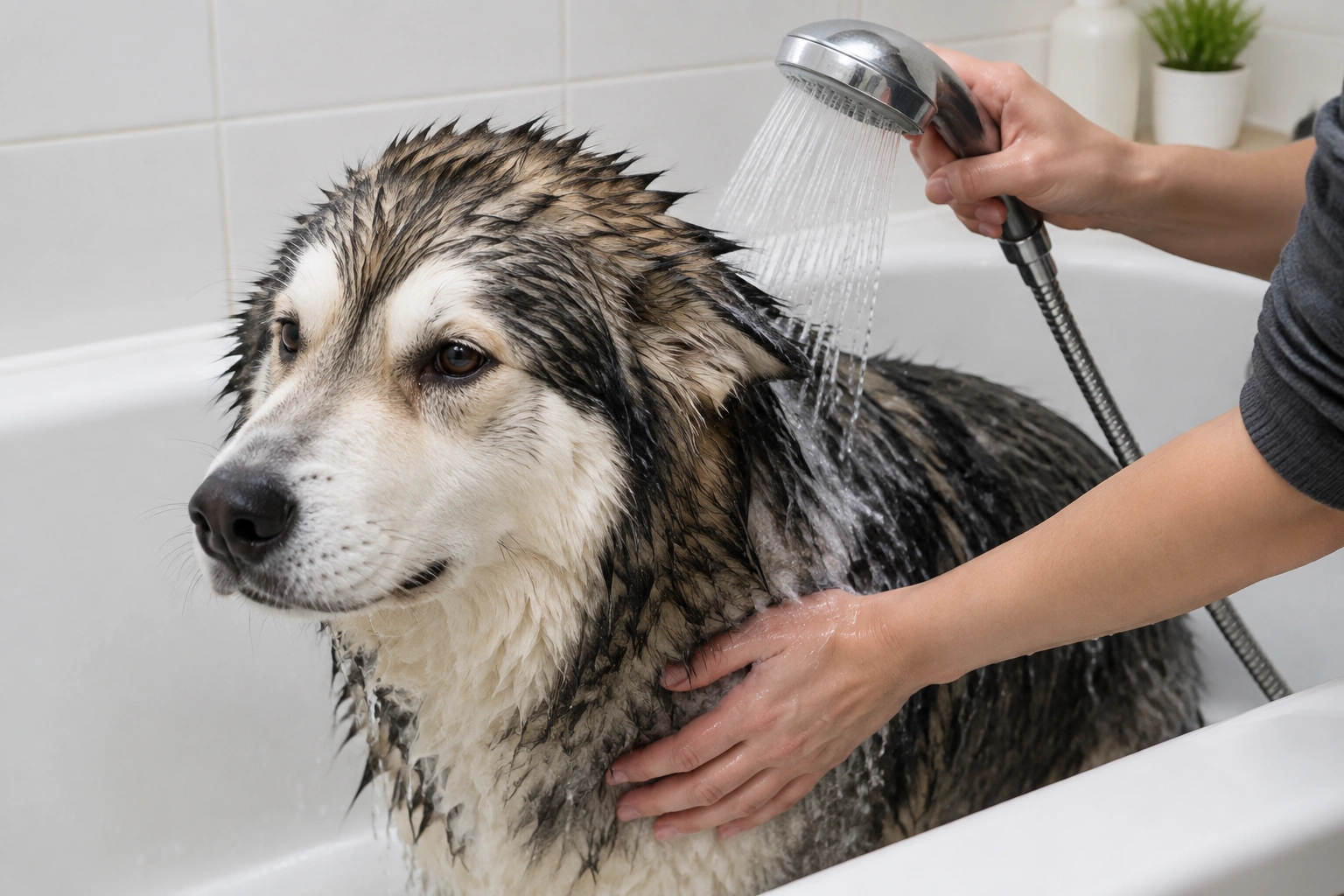
Rinse until the water runs clear and the coat no longer feels slick. If you still feel product on your hands when squeezing the coat, keep rinsing. The goal is not just to remove visible foam; it is to remove the film that keeps irritating the skin.
Warm water versus hot water
Warm water is the safer default. Hot water can strip oils and increase irritation, especially in dogs with dry or sensitive skin.
Scrubbing too hard can backfire
Aggressive scrubbing may lift dirt faster, but it also increases friction on the skin. That friction can worsen inflammation, especially if the skin barrier is already compromised. Use your fingers or a soft grooming tool rather than rubbing the skin raw.
Dry skin and overbathing: when clean becomes too clean
A bath schedule that works for one dog can be too much for another. Some dogs need routine bathing because of coat type or lifestyle. Others do better with fewer baths and more targeted cleaning.
If your dog gets flaky, itchy, or dull-coated after repeated baths, the routine may be stripping natural oils faster than the skin can replace them. Once that barrier weakens, the skin becomes more reactive to everything else: shampoo, water, friction, even dry indoor air.
A useful decision rule
- If the dog is only itchy after baths and otherwise comfortable, look first at product choice and rinsing.
- If the dog is itchy most of the time, the bath may not be the real problem. That points more toward allergies, fleas, infection, or chronic skin sensitivity.
For dogs with sensitive skin, bathing less often and using a gentler product is often a better strategy than trying to “wash away” the itch.
When bathing exposes an underlying skin issue
Sometimes the bath is just the moment the problem becomes visible.
Fleas
A wet coat can make fleas easier to spot, especially if the dog was scratching before the bath but you did not notice. Flea allergy can also make a dog react strongly to just a few bites, so a “no fleas seen” check is not always enough.
Yeast or bacterial infection
If the skin smells bad, looks greasy, or has red, irritated patches, infection becomes more likely. A bath may temporarily spread the moisture around and make the area feel worse. These cases usually need a veterinarian to confirm the cause and choose the right treatment.
Allergies
Dogs with environmental or food-related allergies often have skin that is already inflamed. A bath can make that inflammation more obvious. If your dog routinely gets itchy after bathing and also licks paws, rubs the face, or has recurring ear problems, the bath may be exposing an allergy pattern rather than causing the issue on its own.
For a broader look at common itch causes in dogs, PetMD’s guide to itchy dogs is a useful overview.
Border Collie skin and coat considerations
Border Collies are not automatically more skin-sensitive than every other breed, but their coat can make bath problems harder to spot and harder to fix.
Their dense coat can:
– hold shampoo residue near the skin
– trap moisture after bathing
– make it harder to see redness or flakes
– dry unevenly if the undercoat stays damp
That combination matters because a dog can seem dry on the outside while the skin underneath is still irritated. If your Border Collie is prone to post-bath scratching, focus less on making the bath feel “thorough” and more on making it gentle, well-rinsed, and fully dried.
Border Collie bathing frequency
Most Border Collies do best with bathing only as needed, not on a fixed weekly schedule. For many dogs, that means bathing when they are dirty, smelly, or have gotten into something that needs washing out. If your Border Collie has dry or reactive skin, stretching baths farther apart and brushing regularly between baths can help keep the coat clean without overdoing shampoo.
How to choose a better shampoo or bath routine
If the dog is only mildly itchy and there are no red flags, the next bath is your chance to troubleshoot.
Choose the product based on the likely cause
- If irritation started after a new product: switch away from that exact shampoo first.
- If the dog seems dry or flaky: use a gentler, moisturizing formula and reduce bath frequency.
- If there is odor, greasy skin, or recurrent redness: ask your vet whether a medicated shampoo is appropriate.
- If the dog just seems generally sensitive: a simple hypoallergenic or sensitive-skin shampoo is often a better starting point than a heavily fragranced regular shampoo.
There is a trade-off here. Medicated shampoos can help when infection or inflammation is present, but they can also be unnecessary or drying if the problem is only mild irritation. That is why it is worth matching the product to the problem instead of guessing.
A practical routine for the next bath
- Use lukewarm water
- Apply shampoo sparingly
- Rinse longer than you think you need to
- Avoid heavy fragrance
- Skip unnecessary leave-on sprays or perfumes
- Dry the coat completely, especially the undercoat
- Watch the skin for the next 24 hours
For general coat care and practical dog-owner guidance, the American Kennel Club and VCA Hospitals both have helpful veterinary-reviewed resources on grooming and skin health.
When to see a veterinarian or certified trainer
A veterinarian should evaluate the dog if:
– itching happens after every bath
– the itch lasts more than a day or two
– the dog has redness, odor, bumps, sores, or hair loss
– the dog seems painful, not just itchy
– you suspect fleas, yeast, or a bacterial infection
– the dog had hives, swelling, vomiting, or breathing changes after bathing
If the dog is scratching because of anxiety around the bath itself rather than skin irritation, a certified trainer can help with handling and desensitization. But if the skin is inflamed, start with the vet. Behavior support is useful only after medical causes are ruled out.
For a deeper read on canine skin care and bathing considerations, the ASPCA’s pet care guidance is also worth keeping bookmarked.
How to prevent itchy baths in the future
The simplest prevention plan is also the most effective:
- use a dog-specific shampoo
- avoid heavily fragranced products
- keep water warm, not hot
- rinse thoroughly
- do not bathe more often than the dog’s coat and skin need
- dry the coat fully
- watch for recurring patterns after each bath
If you notice the same reaction two baths in a row, treat that as a pattern, not a coincidence. Change one variable at a time so you can identify the real trigger. That is the fastest way to stop guessing and start solving the problem.
Final thought
A post-bath itch can be a small, temporary nuisance—or the first sign that your dog’s skin needs a different routine or a veterinary exam. The key is to separate brief irritation from persistent inflammation, then respond to the pattern you see rather than the bath itself.
FAQ
Why is my dog itchy after a bath but fine the rest of the time?
That pattern often points to shampoo residue, a product sensitivity, hot water, or overbathing. If the itch goes away the same day and does not come with redness, odor, bumps, or hair loss, it is more likely to be temporary irritation than a deeper skin problem.
What should I do if my dog is itchy after bathing?
Start by checking whether you used a new shampoo, whether the coat was rinsed well, and whether the water was too hot. If the itch lasts beyond the same day, happens after every bath, or comes with skin changes, call your veterinarian.
What shampoo ingredients should I avoid for a sensitive dog?
Look out for heavy fragrance, harsh surfactants, unnecessary dyes, and leave-on sprays or perfumes. These can irritate sensitive skin or keep causing trouble after the bath.
How often should I bathe a Border Collie?
Usually only as needed, not on a rigid schedule. Many Border Collies do better with regular brushing and less frequent bathing, especially if their skin is dry or reactive.
