
Why Dogs Scoot: What It Usually Means and What to Do Next

If your dog is scooting, the first thing to understand is simple: scooting is a symptom, not a diagnosis. A dog drags its rear end across the floor because something back there feels irritating, itchy, painful, or just plain wrong.

That “something” is often minor, but not always. In active dogs, it can be easy to miss the early signs because they may keep moving, keep playing, and keep working through discomfort. So the behavior may look funny at first, but it deserves a closer look.
Why Dogs Scoot: What the Behavior Actually Means
Scooting is the act of sitting down and dragging the hind end across the ground. In plain terms, the dog is trying to relieve discomfort around the anus or nearby skin.
The key point is this: scooting tells you where the problem is, not exactly what the problem is. That distinction matters because the fix for a full anal gland is very different from the fix for tapeworms, irritated skin, or a piece of debris stuck near the bottom.
A single scoot after a messy bowel movement may settle on its own. Repeated scooting, especially when paired with licking, odor, or pain, is a different situation and should not be brushed off.
The Most Common Causes of Scooting
Anal gland problems
One of the most common reasons dogs scoot is discomfort from the anal sacs. Dogs have two small anal sacs on either side of the anus that contain a strong-smelling fluid. Under normal circumstances, those sacs empty during bowel movements. AKC explains the basic anatomy and function clearly here.
When the sacs do not empty well, they can feel full or pressured. That can happen after soft stools, small stools, or when the sacs are already overfull. The dog then scoots to try to relieve that pressure.
What often points to anal glands:
– scooting soon after pooping
– licking under the tail
– a strong, fishy, foul odor
– swelling or tenderness near the anus
– repeated attempts to sit comfortably
If the area is painful, swollen, or draining, the problem may have moved beyond simple fullness into infection or an abscess.
Parasites, including tapeworms
Parasites can irritate the rear end and cause scooting. Tapeworms are the classic example many owners recognize, but other parasites can also create itching or irritation.
A useful clue is what you see in the stool or around the anus. Tapeworm segments may look like small rice-like pieces. If you notice those, scooting may be part of a parasite problem rather than an anal gland issue.
Parasite-related scooting often comes with:
– rear-end itchiness
– changes in stool
– visible worm segments or irritation
– a dog that seems otherwise bothered but not necessarily painful
This is where deworming or stool testing may be needed, but the right choice depends on what the dog actually shows. Treating blindly is less useful than confirming the cause, especially if the dog also has swelling, odor, or pain that points elsewhere.
Allergies and skin irritation
Some dogs scoot because the skin around the back end is itchy or inflamed. Allergies can affect the skin in many places, including the rear. Flea irritation can do the same thing, especially if the dog is sensitive to bites.
This type of scooting often comes with:
– licking or biting at the rear, belly, or thighs
– redness
– recurring itchiness in other areas too
– seasonal flare-ups
– signs of fleas or flea dirt
If the skin looks raw or the dog is scratching other body parts as well, think beyond anal glands. The rear end may be only one piece of a broader itch problem.
Stool-related irritation
Loose stool, diarrhea, or constipation can all irritate the area. Soft stool may not press on the anal sacs effectively, so they stay unemptied. Hard stool can also leave a dog straining and uncomfortable, with local irritation around the anus.
A practical clue: if scooting starts after a digestive upset and then fades once stool quality improves, the cause may be temporary irritation. If it keeps happening, the underlying issue may still need vet attention.
Something stuck around the bottom
Sometimes the answer is simpler: a bit of debris, matted fur, or another foreign material around the anus is causing irritation. That can happen after a messy bowel movement, outdoor play, or if the fur is long enough to trap material.
This is one reason a calm visual check matters. You may find a visible clue quickly without needing to guess.
How to Tell Anal Gland Problems Apart from Parasites, Allergies, and Irritation
The best way to narrow the cause is to compare the pattern, not just the scooting itself.
| Clue | More suggestive of anal glands | More suggestive of parasites | More suggestive of allergies/skin irritation | More suggestive of stool irritation |
|---|---|---|---|---|
| Odor | Strong fishy or foul smell | Usually not the main clue | May smell from inflamed skin, but not typically fishy | Not usually a strong odor |
| Licking | Common | Can happen | Common | Sometimes |
| Visible signs | Swelling near anus, tenderness | Rice-like segments, worms, or stool changes | Redness, rash, itchy skin elsewhere | Messy stool, straining, recent diarrhea/constipation |
| Timing | Often after bowel movements or when glands are full | Can be ongoing or intermittent | Often seasonal or linked to fleas | Often follows GI upset |
| Pain | Can be painful if infected or impacted | Usually itchier than painful | Usually itchy, sometimes sore | Often mild to moderate irritation |
A few practical rules help here:
- Scooting right after pooping often points toward incomplete anal gland emptying.
- Visible worm segments make parasites more likely.
- Red, itchy skin elsewhere pushes allergies or flea irritation higher on the list.
- Soft stool or constipation makes stool-related irritation and anal gland trouble more likely.
- Swelling, discharge, or pain means you should stop trying to sort it out on your own and call the vet.
What You Can Safely Check at Home
You can gather useful information at home without doing anything invasive.
1) Watch the timing
Note whether the dog scoots:
– once after a bowel movement
– multiple times in a day
– only after certain stools
– after exercise or outdoor time
That pattern often tells you more than the scoot itself.
2) Look at the stool
Check for:
– softness or diarrhea
– very small stools
– straining
– visible tapeworm-like segments
If stool quality has changed, that matters. Anal glands rely partly on stool pressure to empty naturally, so a bowel movement that is too soft may not do the job well.
3) Check the rear visually
If your dog allows it, gently lift the tail and look. You are looking for:
– redness
– swelling
– discharge
– matted fur
– debris stuck near the anus
– obvious irritation
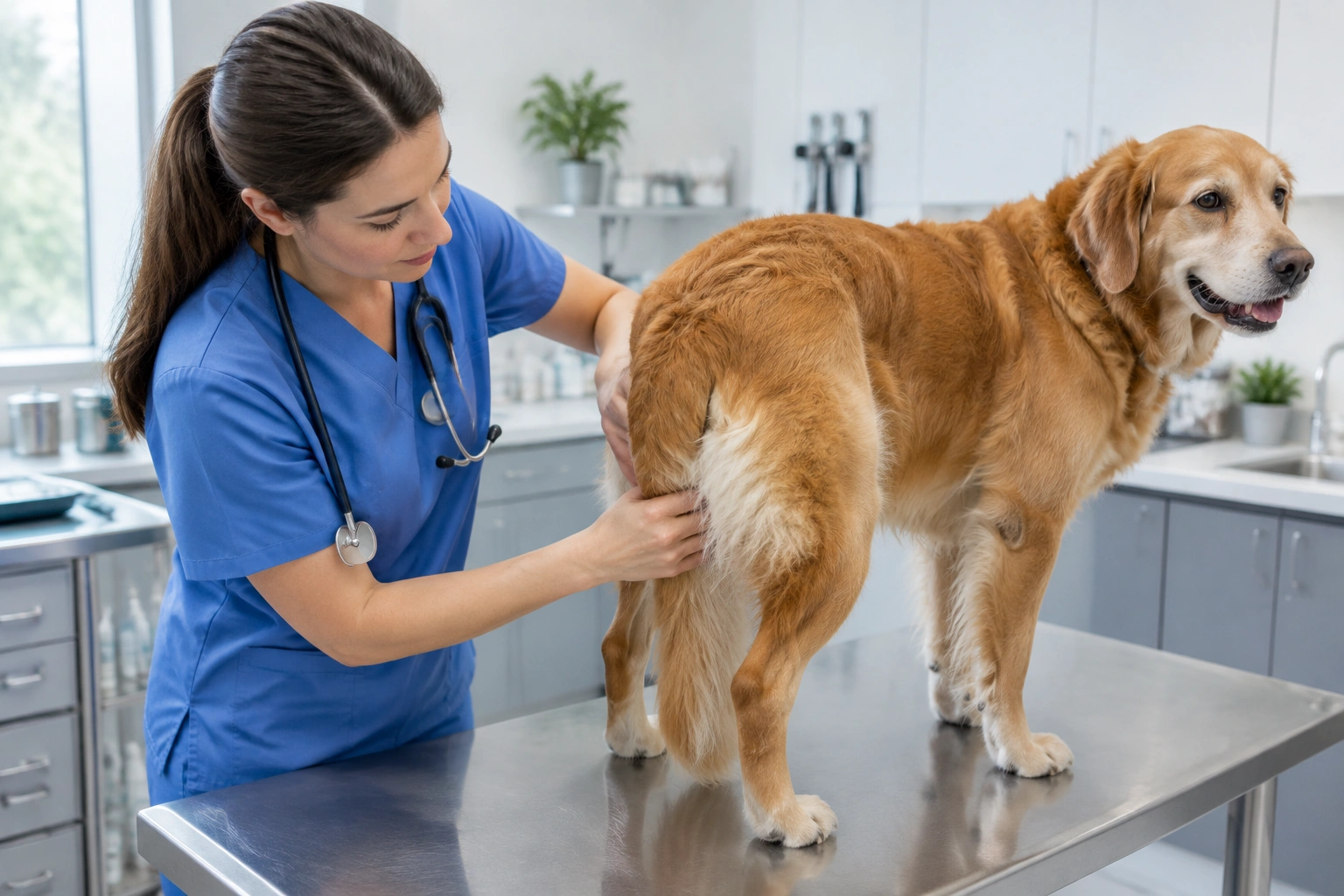
Do not insert anything into the anus, and do not try to squeeze the glands if the area seems painful, inflamed, or draining.
4) Note the dog’s behavior
Pay attention to:
– licking the rear
– trouble sitting
– reluctance to defecate
– crying out
– sudden lethargy
Border Collies often keep going even when something is bothering them, so a “still active” dog is not automatically a comfortable dog.
When Scooting Is Mild Versus When It Needs a Vet Visit
A single mild episode is not always an emergency. If the dog scoots once, has a normal bowel movement, and then stops, you can monitor closely for recurrence.
Book a veterinary appointment if:
– scooting happens repeatedly
– the behavior lasts more than a day or two
– there is licking, odor, redness, or swelling
– stool has changed and the problem keeps returning
– you suspect worms, but you are not sure
Seek prompt care if the dog has:
– obvious pain
– bleeding
– pus or discharge
– a foul smell with swelling
– refusal to sit or defecate
– lethargy or a sudden change in behavior
The practical decision rule is this: mild, one-off scooting can be watched; repeated scooting or any pain, swelling, or discharge should be evaluated.
PDSA’s guidance is straightforward: unless the cause is obvious and simple to fix at home, it is wise to book a vet appointment when you notice scooting. You can read that guidance on PDSA’s scooting overview.
Red Flags That May Signal Infection, Abscess, or Another Urgent Problem
This is the section not to guess at.
If the anal area is infected or abscessed, the dog may scoot and show:
– swelling beside the anus
– heat or tenderness
– a bad smell that is stronger than usual
– discharge or pus
– bleeding
– reluctance to sit
– obvious discomfort when defecating
These signs mean the issue is no longer just “annoying.” An abscess can be painful and may need veterinary treatment rather than home cleanup.
If your dog cries when sitting, avoids the back end being touched, or seems suddenly miserable, do not try to express the glands yourself. That can worsen pain and make the situation harder to assess.
Short-Term Relief and Supportive Care While You Wait for the Vet
If the dog is comfortable and the problem looks mild, a few supportive steps can help while you wait for the appointment.
- Keep the rear clean and dry. Use plain lukewarm water or a vet-approved gentle wipe if there is mild mess from stool.
- Prevent more irritation. Stop rough wiping, bathing with harsh products, or letting the dog drag repeatedly on abrasive surfaces.
- Check flea control. If the dog is itchy elsewhere too, make sure flea prevention is current.
- Track stool quality. Note whether the dog is having soft stool, diarrhea, or constipation so you can tell the vet exactly what changed.
Do not use home remedies that promise to “empty” the glands without guidance. Do not give human pain relievers, use harsh cleaners, or try over-the-counter dewormers unless your vet specifically advises it. The wrong approach can cause more inflammation, especially if the area is already sore.
How Vets Typically Diagnose the Cause of Scooting
A vet usually starts with a focused physical exam and a close look at the rear end. Depending on what they find, they may:
– assess the anal glands
– check for swelling, infection, or injury
– examine stool or recommend a fecal test
– look for parasites
– evaluate skin irritation or allergy patterns
That process matters because the treatment depends on the cause. A dog with impacted anal glands needs a different plan than a dog with tapeworms or itchy skin from fleas or allergies.
If you want a broader background on anal gland anatomy and why those sacs can cause trouble, the AKC’s overview of scooting is a good companion read.
Prevention: Reducing the Chances of Recurrent Scooting
Prevention is mostly about reducing the triggers that make the rear end irritated in the first place.
Keep stool quality steady
Regular, well-formed stools help the anal sacs empty more naturally. If your dog alternates between soft stool and normal stool, pay attention to diet changes, scavenging, and sudden food switches.
Stay on parasite control
Consistent flea prevention matters because fleas can trigger intense itching, and parasite exposure can lead to scooting that owners misread as a gland problem. If your dog has recurring scooting, ask your vet whether fecal testing or a deworming plan makes sense.
Don’t ignore recurring rear-end licking
A dog that keeps licking the rear end may be giving you an early clue before the scoot itself becomes obvious. Catching the problem there can prevent a bigger flare-up.
Keep the area clean after messy stools
If your dog has diarrhea or a very soft bowel movement, cleaning the area gently can reduce the irritation that leads to scooting. That is especially useful in dogs with longer fur around the rear.
Special Considerations for Active Dogs That Hide Discomfort
Dogs that are highly active are often so busy that mild discomfort doesn’t slow them down right away. A dog may still run, play, and focus on tasks while quietly dealing with anal gland pressure or itchy skin.
That makes pattern-spotting more important than mood alone. If an energetic dog suddenly starts scooting after bowel movements, licking the rear, or sitting awkwardly, treat that as useful information rather than a minor quirk.
The practical takeaway is this: repeated scooting is worth paying attention to, even when the dog otherwise seems fine.
Bottom Line
Dogs scoot because something around the rear end is uncomfortable. The most common explanations are anal gland trouble, but parasites, allergies, stool problems, and local irritation can all be responsible too.
If the scooting is one-off and mild, watch it closely. If it repeats, or if you see pain, swelling, discharge, bleeding, or a strong odor, make the vet visit happen sooner rather than later.
