
Why Is My Dog Acting Weird and Looking Around? Common Causes and What to Do Next

If your dog suddenly starts scanning the room, turning their head at nothing, or staring into space, it can be unsettling. Sometimes the explanation is simple: a new sound, a strange smell, or a brief moment of stress. Other times, the behavior is one piece of a bigger health problem.
The key is not to guess from the behavior alone. A dog that keeps looking around constantly may be dealing with anything from anxiety or cognitive dysfunction to a neurological issue, and the difference matters because the next step can range from quiet observation to urgent veterinary care. As a practical rule, behavior plus physical symptoms is far more concerning than behavior alone.
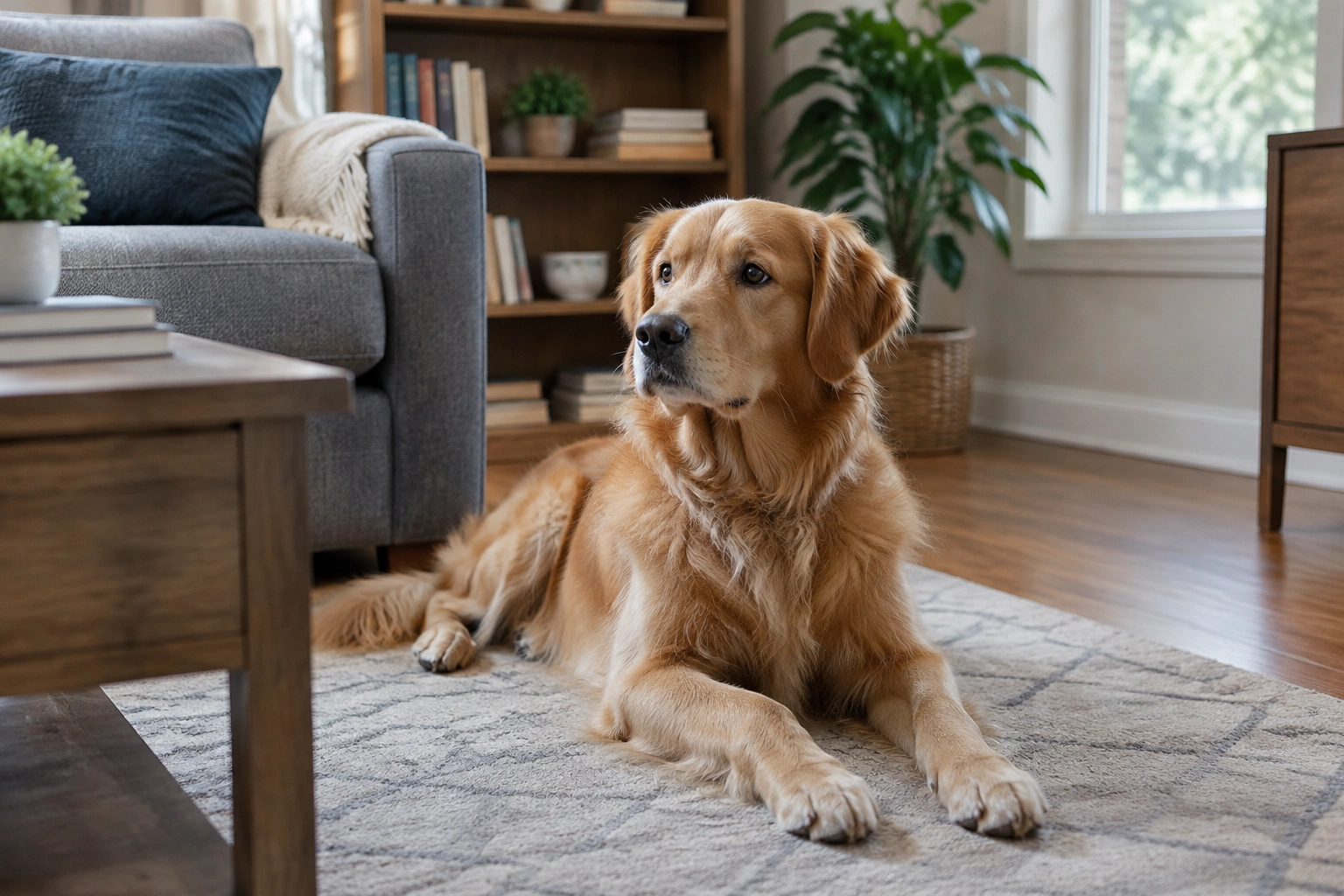
What “Looking Around” Can Mean in a Dog
“Looking around” is a broad symptom, so context matters. A dog may be:
- quickly scanning a room or yard
- turning their head toward sounds you cannot hear
- staring at a wall, ceiling, or corner
- seeming jumpy or unable to settle
- looking confused in familiar places
- repeatedly checking behind them or over their shoulder
Normal curiosity usually has a purpose. Your dog hears the delivery truck, sees a squirrel, catches a scent, or notices you moving in another room. The behavior is brief and tied to something real.
Abnormal scanning tends to look different. The dog may keep looking around without an obvious trigger, seem unable to relax, or act out of sync with the environment. If the behavior is new, repetitive, or paired with other changes, it deserves closer attention.
Normal Alertness vs. Concerning Scanning
A quick comparison can help you judge what you’re seeing.
| What you notice | More likely normal | More concerning |
|---|---|---|
| Looking toward a sound or movement | Brief, purposeful, then settles | Repeated turning with no clear trigger |
| Checking a new room | Curious, relaxed, responsive | Confused, tense, unable to settle |
| Staring for a second or two | Can happen during alertness | Staring spells that seem fixed or unresponsive |
| Reaction to visitors or noise | Temporary and situation-based | Persistent, escalating, or happening in familiar settings |
| Body language | Soft, responsive, normal walking | Pacing, trembling, wobbling, head pressing, or not responding normally |
A useful decision rule: if your dog looks around, then quickly returns to normal behavior, that is less worrying than a dog who keeps scanning, seems unsettled, or starts showing other symptoms.
Behavioral Causes: Anxiety, Stress, Fear, or Overstimulation
Stress can absolutely make a dog look around more. A nervous dog may scan the environment for threats, keep turning their head, or stay on edge because they cannot settle.
Common triggers include:
- thunderstorms or fireworks
- construction noise
- a new pet or visitor
- changes in routine
- moving homes
- a loud appliance, smoke detector chirp, or alarm
- a highly stimulating environment with lots of movement and sound
This kind of behavior is often situational. If your dog calms down when the trigger ends, that points more toward stress than illness.
Still, repeated stress reactions deserve attention. VCA notes that persistent stress-related behavior can be worth discussing with a veterinarian, especially after medical causes have been considered. That matters because pain, sensory loss, and illness can look a lot like anxiety at first.
If your dog is anxious only during a storm and then relaxes afterward, that is different from a dog who seems vaguely unsettled all day with no clear trigger.
Medical Causes That Can Make a Dog Look Around
When the behavior is sudden, persistent, or paired with other symptoms, medical causes move higher on the list.
Pain
Dogs in pain may look around, pace, or seem unable to get comfortable. Pain does not always show up as crying or limping. Some dogs simply become restless, guarded, or unusually vigilant. If the looking around happens with stiffness, reluctance to lie down, licking at one area, or a tense posture, pain becomes more likely.
Nausea
Nauseated dogs often act “off” before they vomit. They may stare, swallow repeatedly, pace, drool, or keep shifting position. A dog that repeatedly turns their head, seems restless, and then vomits may be showing nausea or abdominal discomfort rather than a behavior problem.
Vision loss or eye disease
A dog that cannot see well may look around because the world no longer feels predictable. You may also notice bumping into furniture, hesitating on stairs, or startle reactions when approached. Vision changes can be gradual, so owners sometimes miss them until the dog begins acting strangely in familiar spaces.
Hearing loss
Dogs with reduced hearing may scan visually more because they are relying less on sound and more on sight. They may also seem harder to startle by normal household noises, or they may become more jumpy because they cannot tell where sounds are coming from.
Confusion or canine cognitive dysfunction
In senior dogs, repeated looking around can be part of confusion. A dog may wander at night, seem lost in familiar rooms, stare at walls, or appear disoriented after waking. That does not mean every senior dog with odd behavior has cognitive decline, but age makes this possibility more important.
Neurological problems or seizures
Some neurological issues can cause staring, head turning, circling, or brief episodes of unresponsiveness. A dog that suddenly stares, seems “not there,” and then acts normal again may need veterinary review, especially if the episodes repeat. If the dog is also unsteady, circling, or pressing their head against objects, that is more concerning.
Toxin exposure or poisoning
Sudden scanning, staring, or unusual alertness can also happen with toxin exposure or poisoning. This is especially important if your dog may have gotten into human medications, recreational drugs, rodenticides, insecticides, toxic plants, or cleaning products. If the behavior starts suddenly and you also notice vomiting, drooling, tremors, weakness, wobbliness, or abnormal pupils, treat it as urgent.
For a broad veterinary overview of stress signs and why physical causes should be ruled out first, VCA Animal Hospitals’ guidance on stressed dogs is one helpful reference.
How Age Changes the Level of Concern
Age does not diagnose the problem, but it changes how seriously to take it.
Puppies
Puppies are naturally curious and easily distracted, so some looking around is normal. But sudden confusion, wobbliness, staring spells, or a puppy that seems “not quite right” should not be brushed off as baby behavior. Young dogs can also react strongly to nausea, toxins, or environmental stress.
Adult dogs
In an adult dog, a new pattern of scanning or staring is more meaningful because you know their baseline. If the behavior appears suddenly and repeats, look harder for a trigger or a medical reason. A healthy adult who suddenly seems disoriented in a familiar room is not just “being weird.”
Senior dogs
Senior dogs deserve extra caution. Age-related confusion can explain some behavior changes, but sudden or severe changes still need medical assessment. If a senior dog is wandering at night, staring at walls, or seeming disoriented in familiar spaces, cognitive dysfunction is possible, but so are pain, vision problems, and neurological disease.
A good rule: the older the dog, the less comfortable you should feel assuming the behavior is harmless.
Environmental Triggers to Check Right Away
Before you assume illness, scan the environment. Dogs notice things we often miss.
Check for:
- a chirping smoke detector battery
- new construction noise
- a pest in the wall or ceiling
- a strong odor or chemical cleaner
- visitors moving through the home
- a television, fan, or appliance making unusual sounds
- wildlife outside windows
- a recently changed routine
If you find a clear trigger and your dog settles once it is removed, that is reassuring. For example, a dog that starts looking toward the ceiling after a smoke detector begins chirping may simply be reacting to a sound you barely notice.
If you remove the trigger and the behavior continues, stops only briefly, or returns without the trigger, treat it as more than an environmental reaction.
When to Call Your Veterinarian
Some signs should move you from watching to calling.
Call your veterinarian the same day if your dog is looking around and also:
- vomiting or repeatedly swallowing
- not eating or drinking normally
- acting painful
- seeming confused in familiar places
- having trouble walking normally
- bumping into objects
- showing a sudden change in interaction or responsiveness
- having repeated episodes in one day
- seeming worse instead of better
Seek emergency care if your dog is:
- collapsing
- unresponsive or hard to wake
- having a seizure
- severely disoriented
- unable to walk normally
- having trouble breathing
- pressing their head against walls or furniture
- suddenly blind or nearly blind
- showing severe weakness or repeated vomiting
- possibly exposed to a toxin or poison
Those signs raise concern for neurological disease, toxin exposure, severe pain, or another urgent medical problem. Do not wait to “see if it passes” when the dog is unsafe, unresponsive, or rapidly worsening.
If you want a plain-language example of why repeated staring or looking around can matter, this veterinary explanation of dogs staring into space notes that persistent looking around can range from anxiety or cognitive dysfunction to neurological concerns and should be monitored closely, especially when appetite, interaction, or coordination also change.
What to Do at Home While You Observe Your Dog
If your dog is otherwise stable and the behavior is mild, you can monitor at home for a short period while you gather information. A reasonable approach is to watch closely for a few hours and, if the behavior does not repeat and your dog returns fully to normal, continue monitoring through the day. If it persists, recurs, or is still happening by the next day, call your veterinarian for advice.
Do this:
- keep the room quiet and low-stimulation
- remove obvious noise sources if you can
- give your dog space rather than forcing interaction
- note whether they are eating, drinking, walking, and responding normally
- watch for wobbliness, vomiting, tremors, or confusion
- prevent access to stairs if they seem unsteady
Avoid:
- scolding or repeatedly testing them
- trying to “snap them out of it”
- forcing food if they seem nauseated
- assuming it is just attention-seeking
- giving human medication
The goal is not to treat the problem at home. The goal is to keep your dog safe while you decide whether the pattern looks temporary or medically concerning.
How to Document the Behavior for Your Veterinarian
A short video can be more helpful than a long description, especially if the episode comes and goes.

Write down:
- when it started
- how long each episode lasts
- how often it happens
- what the dog was doing right before it started
- whether there was a sound, visitor, or other trigger
- whether the dog was eating, sleeping, or just waking up
- any other symptoms such as vomiting, wobbliness, or staring spells
This kind of note helps your vet sort out whether the pattern sounds more like stress, pain, sensory change, or a neurological issue. One episode that lasts a few seconds can be less concerning than repeated episodes over several days, especially if the pattern is changing or other symptoms are showing up.
When the Behavior Is More Likely Temporary vs. Progressive
A one-off reaction is usually less concerning than a pattern that is building.
More likely temporary:
– happens once after a clear trigger
– stops when the environment calms down
– does not affect eating, walking, or responsiveness
– your dog returns fully to normal afterward
More concerning:
– happens repeatedly without a clear trigger
– lasts longer or happens more often
– gets worse over time
– shows up with confusion, nausea, pain, or unsteadiness
– appears in a senior dog who is also changing in other ways
A practical way to think about it: isolated and explainable is less worrying; repeated, unexplained, or progressive deserves veterinary input.
Frequently Asked Questions
Why is my dog acting weird and looking around like they see something?
That can happen for harmless reasons, like reacting to a sound or smell, but it can also happen with anxiety, pain, nausea, vision changes, hearing loss, confusion, toxin exposure, or neurological problems. The difference is usually in the pattern and the other symptoms.
Should I worry if my dog keeps looking around at night?
Nighttime confusion can be more concerning in senior dogs because it can fit cognitive decline, vision loss, or another medical issue. If it is new, frequent, or paired with wandering or staring at walls, ask your veterinarian.
Can anxiety make a dog scan the room?
Yes. A stressed dog may keep checking the environment, pace, or stay alert to possible threats. If the behavior happens mainly during a known trigger and stops afterward, stress is more likely.
What if my dog looks around and then vomits?
That combination can point to nausea or abdominal discomfort. If vomiting repeats, your dog seems painful, or they stop eating or drinking, call your veterinarian.
Is this an emergency if my dog is looking around and wobbling?
It can be. Looking around plus stumbling, circling, head pressing, collapse, or unresponsiveness needs prompt veterinary attention because it may involve a neurological problem, toxin exposure, or another urgent issue.
Can a dog’s vision loss look like strange behavior?
Yes. Dogs with vision changes may bump into objects, hesitate in familiar spaces, or seem nervous because they are not sure where things are. That is one reason sudden “weird” behavior should not be written off too quickly.
Final Takeaway
A dog that is looking around more than usual is not automatically sick, but the pattern deserves attention. Brief, situation-based scanning is often normal. Repeated, unexplained, or progressive looking around is different, especially when it comes with vomiting, confusion, wobbliness, pain, toxin exposure, or changes in responsiveness.
If you can identify a clear trigger and your dog quickly returns to normal, short-term monitoring may be enough. If the behavior persists for more than a day or two, recurs, or is paired with other symptoms, call your veterinarian the same day. If your dog is collapsing, unresponsive, having a seizure, unable to walk, or may have been poisoned, go to emergency care right away.
