
Why Your Dog Is Acting Weird and Looking Around: What It Means and What to Do Next

If your dog is suddenly scanning the room, turning their head at nothing, or acting jumpy for no obvious reason, don’t jump straight to one explanation. Dogs look around for normal reasons, but persistent or sudden “weird” behavior can also point to anxiety, pain, sensory loss, neurological issues, or toxin exposure.
The job is not to guess. The job is to sort the pattern.
For Border Collies, that matters even more. They are naturally observant, quick to notice movement, and often more reactive to changes in the environment than calmer breeds. A Border Collie that is “on alert” may simply be doing what the breed is built to do. But a Border Collie that cannot settle, seems confused, or starts staring into space is a different situation.
Why a Dog Looks Around Suddenly: What’s Normal and What Isn’t
A dog looking around is normal when there is a clear reason: a sound, a person entering the room, a smell, a shadow, a squirrel outside, or a new object in the environment. In those cases, the behavior is brief and the dog returns to baseline quickly.
What raises concern is a change in pattern. A dog that keeps scanning the room, startles repeatedly, paces, or seems unable to relax may be showing more than ordinary alertness.
A useful rule: if the behavior is brief, linked to a trigger, and the dog settles afterward, it is more likely to be normal vigilance or mild overstimulation. If it is new, frequent, hard to interrupt, or paired with other symptoms, think beyond behavior.
Most Common Non-Emergency Reasons Dogs Scan Their Environment
The everyday causes are usually the first place to look.
Boredom and under-stimulation
A dog with too little mental or physical activity may become restless and hyperaware of every sound or movement. This is especially common in intelligent, busy dogs that need a job to do. The dog may pace, wander from room to room, or keep checking windows and doors.
Excitement and arousal
Some dogs look around because they are amped up, not scared. Visitors, food preparation, leash cues, or getting ready for a walk can all trigger scanning and quick head turns. The dog may have a loose body, wagging tail, and an easy time switching off once the exciting event ends.
Environmental triggers
Loud noises, unfamiliar smells, moving shadows, new furniture, a recent move, or changes in routine can all make a dog seem strange. Whole Dog Journal notes that routine changes, loud noises, unfamiliar smells, and lack of enrichment can all contribute to odd behavior. That fits what many owners see in real life: the dog is not “randomly weird,” but reacting to something in the environment that you may not have noticed.
Anxiety, fear, and hypervigilance
An anxious dog often looks around as if checking for danger. You may also see trembling, tucked posture, lip licking, yawning, whale eye, or an inability to settle. Loud noises, new environments, unfamiliar people, and separation-related stress can all trigger this kind of response. Rutherford Veterinary Hospital specifically points to those triggers as common causes of stress-related shaking and odd behavior.
The trade-off here is simple: if the trigger is obvious and the dog recovers quickly, you may be dealing with a manageable stress response. If the dog is escalating, shutting down, or becoming harder to calm over time, it deserves a closer look.
How to Tell Anxiety, Hypervigilance, and Overstimulation Apart From Simple Alertness
These patterns can look similar at a glance, but the details matter.
Simple alertness
- Trigger present: yes
- Duration: brief
- Body language: normal or loose
- Recovery: quick
- Function: dog can still eat, rest, and respond normally
Anxiety or hypervigilance
- Trigger may be subtle or not obvious
- Duration: longer
- Body language: tense, scanning, startle-prone
- Recovery: slow or incomplete
- Function: dog struggles to relax even when nothing is happening
Overstimulation
- Trigger often obvious: visitors, play, noise, activity
- Duration: can build over time
- Body language: busy, reactive, difficult to settle
- Recovery: improves once the environment becomes calmer
A practical test is whether the dog can downshift. A dog that looks around for a minute after a loud truck passes and then lies down is different from a dog that keeps pacing, checking doors, and reacting to every small sound for an hour.
For a quick comparison: a bored dog may pace or wander with a loose body and settle fairly easily once given attention or enrichment; an anxious dog often has a tense posture, tucked tail, or startle response and may take much longer to recover; a hypervigilant dog may keep scanning, freeze at small noises, and stay “on” for an extended period even after the trigger is gone.
Border Collies can sit closer to the overstimulation end of the spectrum because they notice more, sooner. That does not make the behavior harmless; it just means the breed’s baseline alertness can make the line between normal and concerning harder to read.
When Looking Around Points to Pain or Physical Discomfort
Pain does not always look like limping.
Many dogs with discomfort become restless, change positions repeatedly, or seem unable to settle. They may look around as if searching for relief, not danger. You might also see:
– panting without obvious heat
– guarding a body part
– reluctance to lie down
– shifting weight
– stiffness when getting up or after resting
– trouble jumping onto furniture, into the car, or onto stairs
– flinching, tensing, or moving away when touched or picked up
– reduced interest in normal activities
The key difference is that pain-related restlessness often looks uncomfortable and unresolved, while anxiety often looks watchful and reactive. A painful dog may pace because every position feels wrong. A worried dog may scan because they are on guard.
This is one reason not to dismiss a dog as “just nervous” when the behavior is new. Vetster notes that restlessness and agitation in dogs can be associated with injury, toxin ingestion, cognitive dysfunction, pain, or gastrointestinal disease, and may occur with signs like excessive panting, circling, unproductive retching, or an unsteady gait.
Vision and Hearing Changes That Can Make a Dog Seem Confused or On Edge
A dog that cannot see or hear as well may look around more because the world has become less predictable.
Vision changes
Dogs with declining vision may hesitate in familiar spaces, bump into furniture, miss stairs, or become more cautious in dim light. They may look around more because they are trying to orient themselves.
Hearing changes
A dog with hearing loss may startle when approached, fail to respond to cues, or seem uncertain about where sounds are coming from. Owners sometimes mistake this for stubbornness or anxiety.
The important clue is context. If the dog is otherwise normal but seems less sure-footed, more hesitant, or slower to react, sensory changes move higher on the list.
An older dog that looks around, hesitates on stairs, and bumps into objects needs a vet visit, even if the dog still eats and follows you around. Sensory decline can be gradual and easy to miss until the dog starts acting “off.”
Neurological Red Flags: Focal Seizures, Disorientation, and Abnormal Episodes
This is the section where you should be more cautious.
Some dogs that stare into space, look around strangely, or seem briefly unreachable may be having a neurological episode rather than a behavior problem. That does not mean every staring spell is a seizure, but it does mean you should not assume it is harmless.
Watch for:
– staring into space or at a wall for no clear reason
– odd eye movements
– sudden unresponsiveness
– confusion after the episode
– disorientation in familiar places
– circling
– unsteady walking
– collapse or loss of balance
Focal seizures can be subtle and do not always involve collapse or full-body convulsions. They may show up as brief staring, odd facial movements, lip smacking, twitching, or altered awareness with the dog appearing “not there” for a short time.
A dog that seems “not there” for a moment and then acts confused afterward needs veterinary attention. ToeGrips discusses wall-staring and staring into space as a behavior with multiple possible causes, including serious medical concerns, and gives an example of a dog that became confused and had seizures before emergency care.
If you can safely do so, record video of the episode. That single clip can help a veterinarian separate normal scanning from a focal seizure or other neurological problem.
Poisoning and Toxin Exposure: When Sudden Alertness Is an Emergency
If the behavior started suddenly and your dog may have accessed something unsafe, treat it as urgent.
Possible exposures include:
– medications
– cannabis products
– cleaning chemicals
– insecticides
– toxic plants
– human foods that are unsafe for dogs
A dog that becomes abruptly agitated, unusually alert, shaky, weak, or disoriented after possible exposure should not be watched casually at home. The behavior may be one piece of a larger toxic reaction.
The rule here is straightforward: possible toxin plus sudden behavior change equals call a veterinarian or emergency clinic now. Do not wait to see whether it passes.
Border Collie-Specific Context: High Sensitivity, Arousal, and Herding-Style Vigilance
Border Collies can be highly sensitive, quick to notice motion, and prone to becoming very aroused in busy settings. That can create a pattern of scanning, hovering, and reacting to small changes.
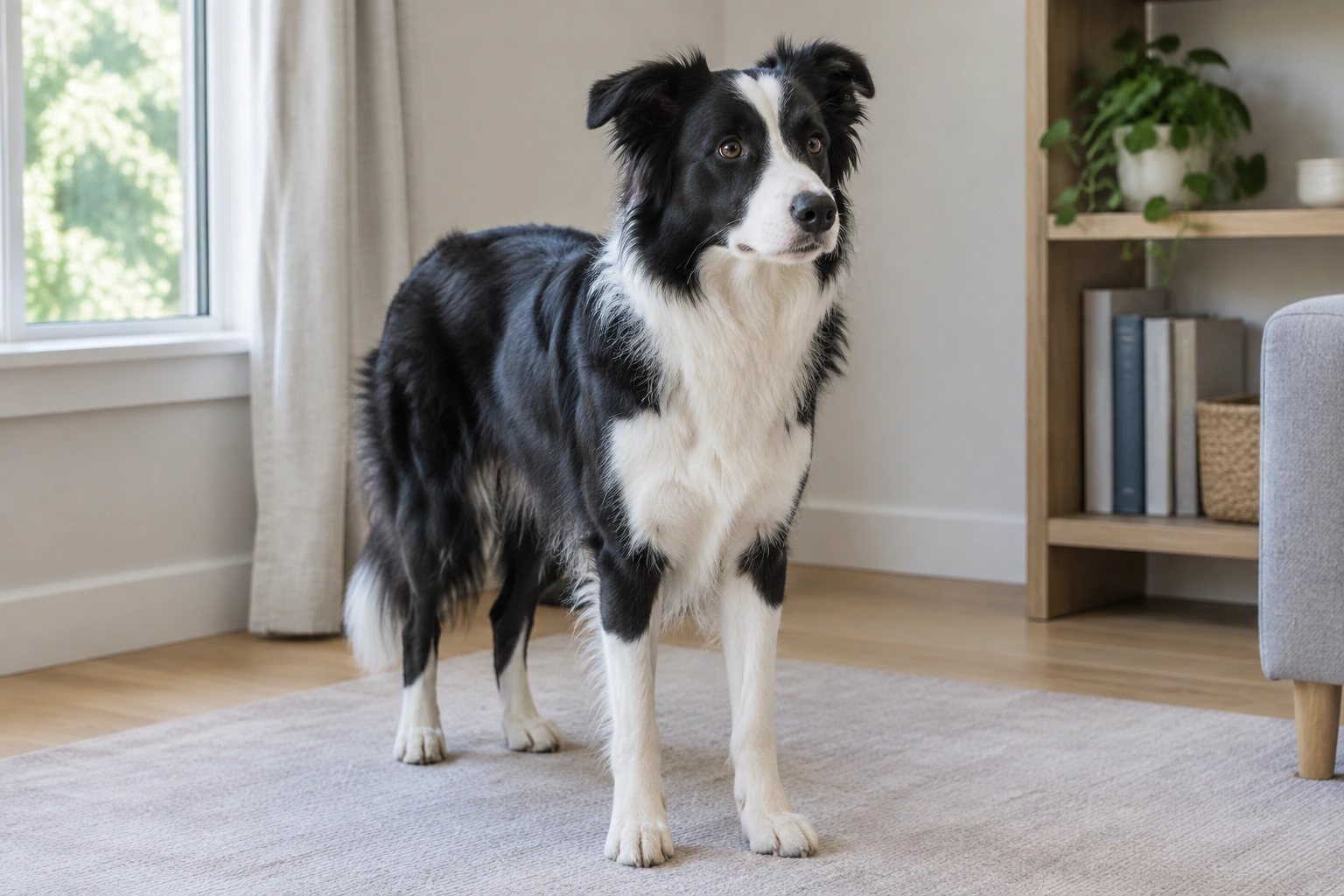
In practical terms, a Border Collie may:
– watch windows or doors more than other dogs
– react strongly to movement, noise, or household activity
– struggle to settle after excitement
– look “busy” even when nothing is wrong
That sensitivity can be useful in training, but it also makes it easier to miss the line between normal vigilance and stress. A Collie that is simply alert still has access to calm. A Collie that is overstimulated or anxious looks stuck on high alert and has trouble turning off.
If your Border Collie’s behavior is new, escalating, or paired with physical signs, don’t chalk it up to breed traits and move on.
What to Observe and Record Before You Call the Vet
A good note can save time and help the vet narrow the cause faster.
Write down:
– when the behavior started
– how long each episode lasts
– how often it happens
– whether it follows a trigger such as noise, visitors, or a walk
– whether the dog can be redirected
– whether the dog is eating, drinking, and eliminating normally
– any vomiting, diarrhea, panting, shaking, circling, or weakness
– any stumbling, odd eye movements, or staring spells
– possible access to medications, chemicals, or toxic plants
If the behavior happens in episodes, video is better than description. A 20-second clip often shows more than a 20-minute explanation.
This is also where the distinction between behavioral and medical causes becomes clearer. A dog that reacts only during thunderstorms is one thing. A dog that looks around in the middle of a quiet room with no trigger and then seems confused is another.
Decision Guide: Monitor at Home, Book a Vet Visit, or Seek Emergency Care
Use the pattern, not just the fact that the dog looks around.
Monitor at home
This is reasonable if:
– the dog is otherwise normal
– the behavior is brief
– there is an obvious trigger
– the dog settles quickly
– there are no other symptoms
Book a vet visit
This makes sense if:
– the behavior is new or recurring
– there is no clear trigger
– the dog seems restless or unable to settle
– you suspect pain, hearing loss, or vision changes
– the pattern is getting worse over time
Seek same-day or emergency care
Get prompt veterinary help if the dog has any of the following:
– collapse
– seizures or seizure-like episodes
– significant disorientation
– trouble walking or weakness
– abnormal eye movements
– repeated vomiting
– pale gums
– trouble breathing
– suspected toxin exposure
The ASPCA and VCA Hospitals both provide broad guidance on pet health concerns and emergency warning signs, and they are useful starting points when you are deciding how urgent a change in behavior may be.
What You Can Do Immediately at Home While You Monitor
If the dog is stable and there are no red flags, make the environment easier to read.
- Reduce noise and activity.
- Close blinds if outside movement is triggering the dog.
- Give the dog a quiet place away from traffic in the house.
- Keep the routine predictable for the next day or two.
- Remove access to medications, chemicals, and other hazards.
- Avoid forcing social interaction if the dog seems tense.
What you should not do is use calm-down tactics as a substitute for veterinary care when warning signs are present. Lowering stimulation can help a stressed dog, but it does not explain sudden confusion, weakness, or abnormal episodes.
When to See a Veterinarian or Certified Trainer
See a veterinarian first if the behavior is sudden, persistent, or paired with physical symptoms. A vet may need to use bloodwork, urinalysis, fecal testing, or imaging to find the cause, because behavior alone cannot tell you whether the issue is anxiety, pain, sensory loss, or something more serious.
A certified trainer or behavior professional becomes useful after medical causes are ruled out, especially if the pattern is trigger-based alertness, overstimulation, or anxiety in a Border Collie that is otherwise healthy.
That order matters. Medical problems can look behavioral, and behavior problems can get worse if the dog is uncomfortable or confused.
FAQs
Why is my dog acting weird and looking around all of a sudden?
Usually because they noticed something, feel stressed, or are reacting to a physical problem. The key question is whether the behavior is brief and situational or persistent and unusual.
Is my dog anxious or just alert?
Alert dogs settle once the trigger passes. Anxious dogs keep scanning, struggle to relax, and often show tension in the body.
Can pain make a dog look around?
Yes. Pain can cause restlessness, pacing, shifting positions, and an inability to settle, which can look like nervous scanning.
Could this be a seizure?
It can be, especially if the dog stares into space, seems unreachable, has odd eye movements, or acts confused afterward. Video the episode if you can do it safely.
When should I call the vet?
Call if the behavior is new, recurring, worsening, or paired with vomiting, weakness, stumbling, disorientation, or possible toxin exposure.
Are Border Collies more likely to do this?
They can be more sensitive, alert, and easily overstimulated, which can make scanning and startle responses more noticeable. That does not rule out pain or medical causes.
What should I tell the vet?
Give the start time, episode length, trigger if any, any video, and any other symptoms such as shaking, panting, circling, vomiting, or trouble walking.
Can I wait and watch?
Only if the dog is otherwise normal, the behavior is brief, and there are no warning signs. If anything feels off beyond simple alertness, get veterinary advice.
