
Why Is My Dog Acting Weird? A Practical Guide to Sorting Out Stress, Pain, Illness, and Emergencies

If your dog is suddenly “off,” the goal is not to guess perfectly. The goal is to sort the situation into one of four buckets: normal variation, stress or overstimulation, pain or illness, or urgent danger.
That matters because dogs often show the first signs of trouble through behavior before they show obvious physical symptoms. A dog that seems clingy, restless, withdrawn, snappy, unusually quiet, or hard to settle may be telling you something important. Sometimes the answer is simple: a loud day, a routine change, too much stimulation, or not enough rest. Other times, the behavior is the first clue that your dog is uncomfortable or sick.
If there are no obvious injuries, look for changes in appetite, movement, bathroom habits, or how your dog responds to being touched. Small signs like licking one joint, avoiding stairs, holding their tail differently, or only moving oddly at certain speeds can still point to pain.
For Border Collie owners, this can be especially tricky. A Border Collie that paces, spins, barks, shadows you, or cannot switch off may be bored, under-exercised, or overstimulated. But the same dog could also be in pain, nauseous, anxious, or developing another health issue. The behavior alone is not enough. You need context.
Start Here: Is This Normal, Stress, Pain, or an Emergency?
Use this quick triage rule: if the behavior is sudden, severe, or comes with physical symptoms, treat it as a health problem until a veterinarian says otherwise.
A useful way to think about it:
- Monitor at home for a short time if the change is mild, your dog is still eating, drinking, moving, and toileting normally, and the behavior has an obvious trigger such as a noisy day or a routine change.
- Call the vet today if the behavior is new or lasts more than a day, keeps coming back, or is paired with limping, hiding, restlessness, snapping when touched, reduced appetite, vomiting, diarrhea, or clear discomfort.
- Go to emergency care now for collapse, trouble breathing, seizures, a swollen or bloated abdomen, inability to stand, repeated vomiting, severe diarrhea, or obvious severe pain.
If you are unsure, err toward calling a veterinarian the same day. That is especially true when the change is new and your dog is not acting like their usual self.
| What you see | More likely explanation | What to do |
|---|---|---|
| Brief restlessness after a noisy day | Stress or overstimulation | Reduce stimulation, monitor closely |
| Pacing, hiding, or snapping when touched | Pain or illness | Call your vet for advice |
| Refusing food plus vomiting or diarrhea | Illness, pain, or gastrointestinal upset | Same-day veterinary guidance |
| Collapse, breathing trouble, seizure, severe bloating | Emergency | Go to an emergency vet now |
| Border Collie suddenly spinning or barking more after a routine change | Under-stimulation or stress | Stabilize routine, add calm enrichment, observe |
What Counts as “Weird” Behavior in Dogs
“Acting weird” is not one behavior. It is a change from your dog’s normal pattern.
What matters most is what changed, how fast it changed, and whether anything else changed with it. A dog that is usually social but suddenly hides is different from a naturally reserved dog. A high-energy dog that is quiet after a long hike is not the same as a dog that is quiet for no clear reason.
Practical examples of concerning change include:
- eating much less or refusing food
- drinking far more or far less than usual
- sleeping much more than normal, or not settling at all
- limping, stiffness, or reluctance to jump
- unusual clinginess, hiding, or withdrawal
- sudden growling, snapping, or sensitivity to touch
- pacing, whining, panting, or trembling without an obvious cause
- accidents in the house after being reliably trained
- changes in barking, vocalizing, or reactivity
- vomiting, diarrhea, straining, or changes in urination
A single odd moment may not mean much. A pattern that lasts, worsens, or comes with other symptoms deserves attention.
The Most Common Medical Reasons Dogs Suddenly Act Different
Behavior changes are often the first visible sign of a physical problem. That is why I do not recommend assuming a dog is “just being dramatic” or “acting out.”
Common medical causes include:
Pain or injury
Pain is one of the biggest reasons dogs act differently. It can come from a sprain, strain, sore back, joint pain, dental pain, a cut you cannot see, or something internal. Dogs hide pain well, so you may see behavior before you see obvious limping.
Gastrointestinal upset
A dog that feels nauseous, has abdominal pain, or is developing vomiting or diarrhea may seem restless, withdrawn, clingy, or unwilling to eat. Some dogs pace or cannot settle when their stomach feels off.
Infection or inflammation
Ear infections, urinary issues, skin infections, and other inflammatory problems can change behavior. A dog may become irritable, head-shy, tired, or unusually sensitive.
Neurologic or hormonal problems
If your dog seems confused, unsteady, unusually reactive, or suddenly “not themselves,” neurologic or hormonal issues are on the list. These are not diagnoses you should try to sort out at home.
If a behavior change comes with physical symptoms, treat the behavior as part of the medical picture, not a separate “training issue.” Sudden behavior changes in dogs can have medical causes and deserve attention.
Subtle Pain Signs Owners Often Miss
Dogs rarely announce pain in a neat, obvious way. More often, they adapt around it.
Watch for these quieter clues:
- stiffness when getting up after resting
- reluctance to jump into the car or onto the couch
- avoiding stairs or hesitating at the top or bottom of them
- slowing down on walks
- a changed gait that only shows up at a trot, run, or certain speed
- shifting weight or favoring one side
- holding the tail lower, stiller, or away from the body
- licking one joint or one area repeatedly
- facial tension, such as a tight mouth, squinting, or a “pinched” look
- guarding a body part by turning away, flinching, or not wanting to be touched there
- hiding more than usual
- snapping when touched in a certain area
- panting when the room is not hot
- restlessness, especially at night
- a change in posture, such as tucking the abdomen or standing “stiff”
One practical test is to compare willingness and comfort. A dog may still go for a walk because they want to please you, but they may lag behind, stop more often, or seem tense the whole time. That is different from normal enthusiasm.
If your dog’s behavior changes most when they are asked to move, lie down, jump, be handled, or go up stairs, pain moves higher on the list.
Stress, Anxiety, and Environmental Triggers
Not every strange behavior means illness. Dogs can react strongly to changes in their world, especially if the change is sudden or intense.
Common triggers include:
- visitors in the home
- travel or boarding
- fireworks, thunderstorms, or construction noise
- a new schedule
- reduced exercise or less mental work
- moving house
- a new pet, baby, or roommate
- separation from a person they rely on
- a conflict with another dog
Behavior changes linked to stress or anxiety often show up as pacing, panting, trembling, clinginess, hiding, barking more, or being harder to settle. The trigger matters: if the behavior starts during a predictable stressful event and fades when the event ends, stress becomes more likely.
The trade-off here is important. If you assume stress when your dog is actually painful, you may delay care. If you assume illness when the problem is environmental, you may overreact. The deciding factor is usually the presence of a trigger and whether the dog still eats, drinks, moves, and recovers normally once the trigger passes.
Border Collie-Specific Reasons a Dog May Act Weird
Border Collies bring a specific challenge: they are often intense, fast-processing, and highly sensitive to change. That does not mean every odd behavior is “just the breed.” It means you need to interpret the behavior carefully.
A Border Collie may seem weird when they are:
- under-stimulated and inventing their own job
- over-aroused after too much excitement
- frustrated by a lack of structure
- reacting strongly to household tension or routine changes
That can show up as spinning, barking, shadowing, pacing, nipping at movement, or difficulty settling. These patterns can improve with better structure, exercise, and mental work — but only if the dog is otherwise healthy.
Here is the key distinction:
- Breed-driven behavior tends to be repeatable, context-based, and tied to energy or frustration.
- Medical behavior change tends to be new, sudden, or paired with physical changes like appetite loss, lethargy, limping, vomiting, or sensitivity to touch.
Border Collies can also mask pain by staying active, so “still running around” does not rule out discomfort. A Border Collie that becomes more intense after two quiet days may need more outlets. A Border Collie that suddenly becomes restless, refuses food, and cannot settle after a normal walk may need a vet.
Age Matters: Puppies, Adults, and Senior Dogs
The same behavior can mean different things depending on age.
Puppies
Puppies can act wild when they are overtired or overstimulated. They also need a great deal of sleep, and when they do not get enough, they can become oddly zoomy, frantic, or hard to regulate.
But a puppy that becomes unusually quiet, lethargic, or uninterested in play is more concerning than a puppy that is briefly overexcited. With puppies, I pay close attention to appetite, energy, and bathroom habits because they can change quickly.
Adult dogs
In adults, a sudden change is the bigger concern. If your dog has a stable personality and then becomes withdrawn, reactive, clingy, or restless for no clear reason, look for pain, stress, or illness.
Senior dogs
In older dogs, slowing down is common, but a noticeable personality shift is not something to dismiss. If a senior dog struggles to jump, sleeps much more, seems confused, or becomes less social, pain or age-related health issues may be involved.
Behavioral Problem vs Medical Problem: How to Tell the Difference
When the cause is unclear, use this decision framework.
It leans behavioral when:
- the behavior has a clear trigger
- it appears in predictable situations
- your dog is otherwise eating, drinking, and moving normally
- the pattern has been building over time
- the behavior improves with routine, rest, or better enrichment
It leans medical when:
- the change is sudden
- the behavior is new and out of character
- your dog avoids being touched
- appetite, energy, or mobility also change
- you see vomiting, diarrhea, limping, shaking, panting, or hiding
- the behavior gets worse instead of settling
A useful example: a Border Collie that has always barked at the window and is now barking more because the household routine changed may be stressed or under-stimulated. A Border Collie that starts pacing, whining, and refusing food after a normal walk may be in pain or nauseous.
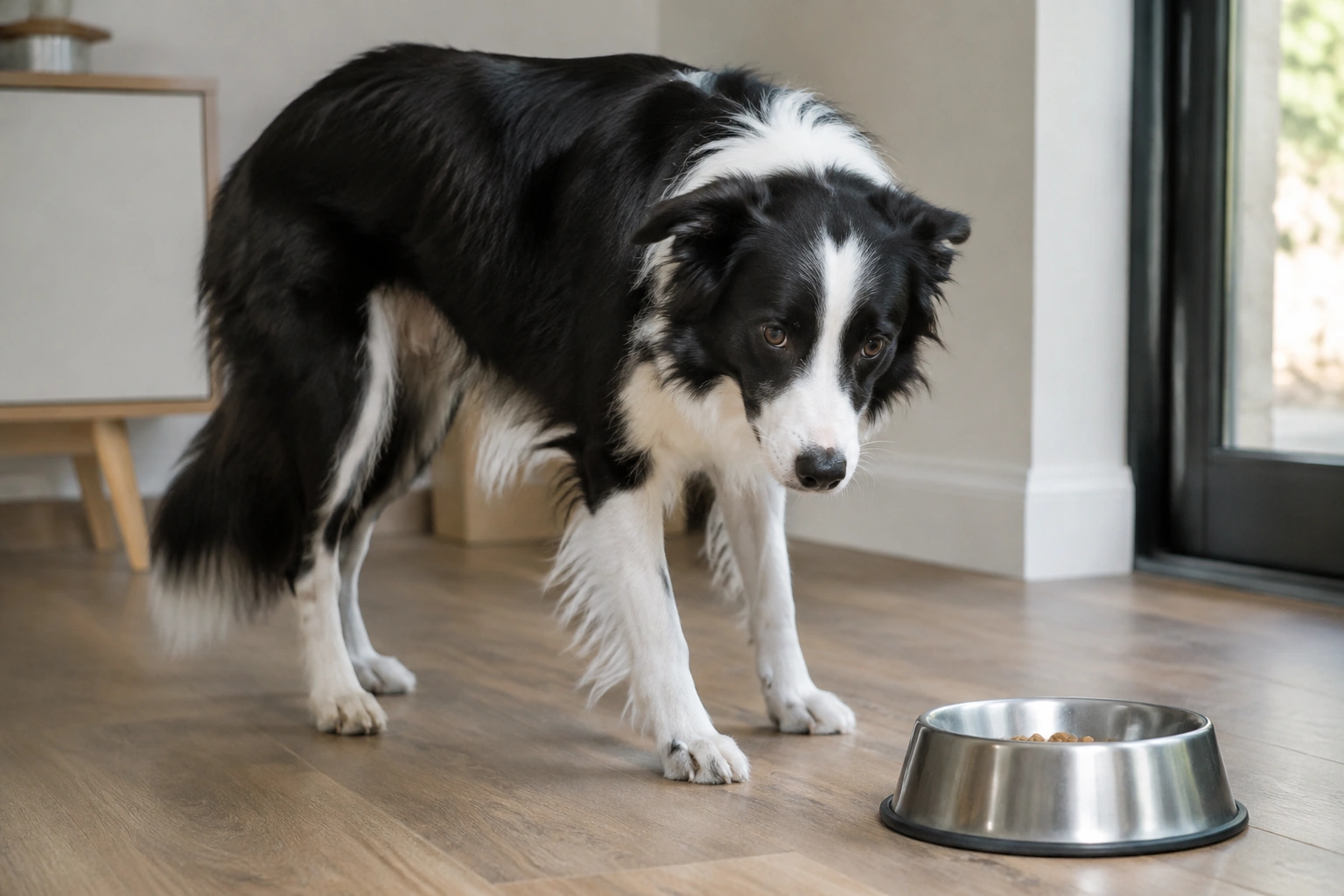
When the signs overlap, do not force a training explanation first. Rule out health issues before you assume the dog needs more discipline or more exercise.
What to Track Before You Call the Vet
If you call a veterinarian, the most helpful thing you can bring is a short, factual summary.
Track these points:
- when the behavior started
- whether it was sudden or gradual
- appetite changes
- water intake
- vomiting or diarrhea
- urination and bowel movements
- limping, stiffness, or trouble rising
- panting, shaking, pacing, or hiding
- any trigger you noticed
- whether the behavior is constant or comes and goes
- any recent change in food, routine, travel, visitors, or exercise
If possible, take a short video. A dog that looks “fine” in the exam room may show the issue clearly on video at home.
What You Can Safely Do at Home Right Now
Keep the response simple until you know more.
- Lower stimulation. Give your dog a quiet space away from noise, visitors, and constant handling.
- Keep the routine steady. Feed, walk, and rest on a normal schedule if your dog is willing.
- Watch for progression. Note whether the behavior improves, stays the same, or worsens over a few hours.
- Avoid over-exercising. Do not try to “tire out” a dog who may be painful, nauseous, or anxious.
- Do not give human pain medication. Some common medications are dangerous for dogs unless a veterinarian specifically directs you to use them.
If your dog seems stressed but otherwise healthy, calm predictability helps more than a big burst of activity. If your dog seems painful or ill, rest and veterinary guidance matter more than enrichment.
When to Call the Vet vs When It’s an Emergency
Call your veterinarian the same day if your dog has:
- sudden behavior change without a clear reason
- appetite loss
- limping or stiffness
- repeated restlessness or inability to settle
- hiding or withdrawal that persists
- unusual aggression or sensitivity to touch
- vomiting or diarrhea that does not quickly resolve
- shaking, panting, or whimpering along with behavior change
If the symptoms are mild and your dog otherwise seems normal, you can usually watch closely for a short period, but do not wait more than a day if the change persists or keeps coming back. Behavior changes without obvious physical signs still deserve a vet call if they are new, worsening, or not clearly tied to a short-lived trigger.
Go to an emergency vet now if your dog has:
- trouble breathing
- collapse
- seizures
- inability to stand
- a bloated or swollen abdomen
- repeated vomiting
- severe diarrhea
- obvious severe pain
- extreme weakness or unresponsiveness
If you are debating whether it is “bad enough,” that usually means it is worth calling. Veterinary teams would rather help you decide early than see a dog after a problem has escalated.
Common Mistakes That Delay the Right Response
These are the mistakes I see most often:
Assuming it is only training
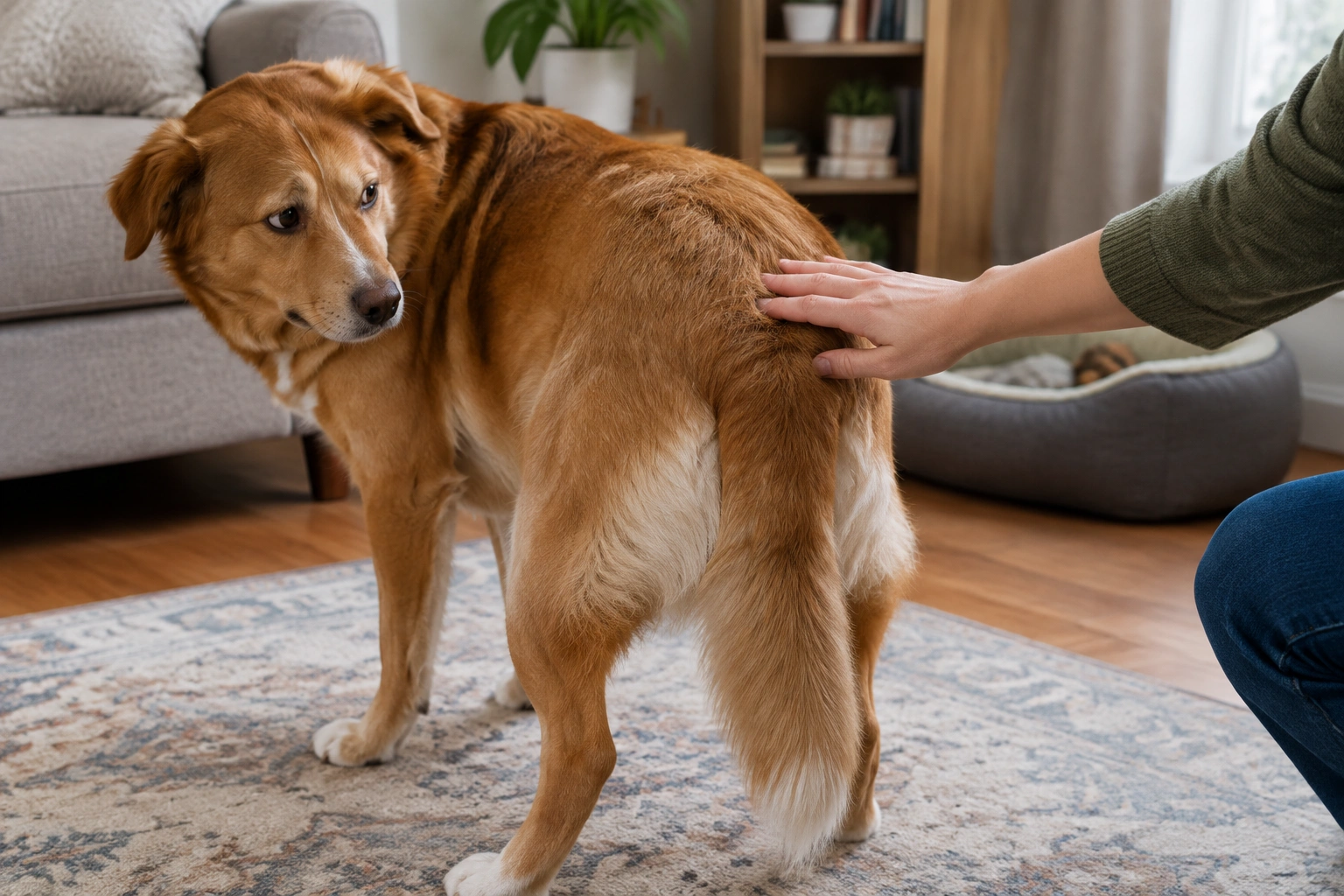
A dog that is suddenly different is not automatically being stubborn or disobedient. New behavior deserves a medical lens first.
Trying to exercise the problem away
This backfires when the dog is in pain, nauseous, or overstimulated. More activity can make the situation worse.
Changing too many things at once
If you alter food, routine, exercise, and environment all at once, you lose the clues that help identify the trigger.
Waiting for it to “just pass”
Some problems do resolve, but sudden behavior changes with physical signs should not be ignored.
Missing subtle pain
Dogs often keep going even when they are uncomfortable. Stiffness, hiding, licking one joint, or reluctance to jump may be the earliest clue.
When to See a Veterinarian or Certified Trainer
If the behavior change is new, unexplained, or paired with physical symptoms, see a veterinarian first. If the dog is medically cleared and the pattern looks tied to fear, frustration, reactivity, or under-stimulation, then a certified trainer or behavior professional can help you work on the cause.
That order matters. Training can improve a behavioral pattern, but it should not be used to explain away pain, illness, or injury.
FAQ
Why is my dog acting weird all of a sudden?
Sudden changes are often linked to stress, pain, illness, or a new environmental trigger. The more abrupt the change, the more I want you to think medical first.
How do I tell if my dog is in pain if there are no obvious injuries?
Look for subtle clues: licking one area, avoiding stairs, stiffness after resting, a changed gait, facial tension, tail carriage changes, guarding, or not wanting to be touched in one spot.
Can a Border Collie act weird just because they are bored?
Yes. Border Collies can become restless, vocal, or fixated when they do not have enough mental or physical outlet. But boredom should not be the default explanation if the behavior is sudden or comes with appetite, mobility, or bathroom changes.
My dog is hiding. Should I worry?
Persistent hiding can signal pain, illness, or stress. If it is new or paired with other changes, contact your vet.
My dog is shaking and acting strange. Is that an emergency?
It can be. Shaking with vomiting, diarrhea, lethargy, collapse, trouble breathing, or obvious pain needs prompt veterinary attention.
What if my dog is still eating?
Eating does not rule out a problem. Some dogs keep eating even when they are in pain or stressed. Look at the full picture: movement, energy, bathroom habits, and behavior changes.
How long can I watch and wait?
If the change is mild and your dog otherwise seems normal, a short period of observation may be reasonable. If symptoms are worsening, persistent, or combined with physical signs, call a veterinarian the same day.
