
Why a Dog’s Eye Looks Red and Swollen: Causes, Red Flags, and What to Do Next

A red, swollen eye in a dog can be something as simple as irritation from dust or pollen, but it can also signal a painful problem that needs prompt veterinary care. The tricky part is that many eye conditions look similar at first. A dog with allergies, conjunctivitis, a scratch, a foreign body, or even glaucoma may all show redness and swelling.
The safest rule is this: if the eye is painful, cloudy, closed, or the dog seems to be losing vision, treat it as urgent. If the redness is mild, your dog is otherwise comfortable, and both eyes are watery after a likely irritant exposure, it may be less urgent — but it still deserves a vet call if it does not improve quickly.
Some infectious eye problems can be contagious to other pets, so wash your hands and avoid sharing towels or medications until a vet confirms the cause.
When a Red, Swollen Eye Is an Emergency
Some eye problems can threaten vision quickly. Do not wait for a “see how it goes” approach if you notice any of these signs:
- squinting or holding the eye shut
- obvious pain, whining, or face rubbing
- cloudiness or a blue-gray look to the eye surface
- thick yellow or green discharge
- a bulging eye or sudden major swelling
- the third eyelid showing prominently
- the pupil looking very different from the other eye
- stumbling, bumping into things, or other vision changes
A dog that is pawing at the eye repeatedly may be making the problem worse. Repeated rubbing can sometimes turn a minor scratch into a corneal ulcer, which is one reason eye issues are never something to ignore for long.
If the eye looks suddenly very painful or the surface is cloudy, seek emergency veterinary care now rather than waiting for a regular appointment.
Common Causes of a Red, Swollen Eye in Dogs
There are several likely explanations, and the outward signs overlap more than most owners expect.
Conjunctivitis
Conjunctivitis means inflammation of the tissue around the eye. It can happen from infection, irritation, allergies, or another underlying eye problem. The eye often looks red and puffy, and you may see discharge.
Allergies
Allergies often affect both eyes and can cause watery discharge, redness, and mild swelling. The dog may also have itchy skin, sneezing, or seasonal flare-ups. Allergies are more likely when both eyes are involved and the dog otherwise seems fairly normal.
Foreign body or irritation
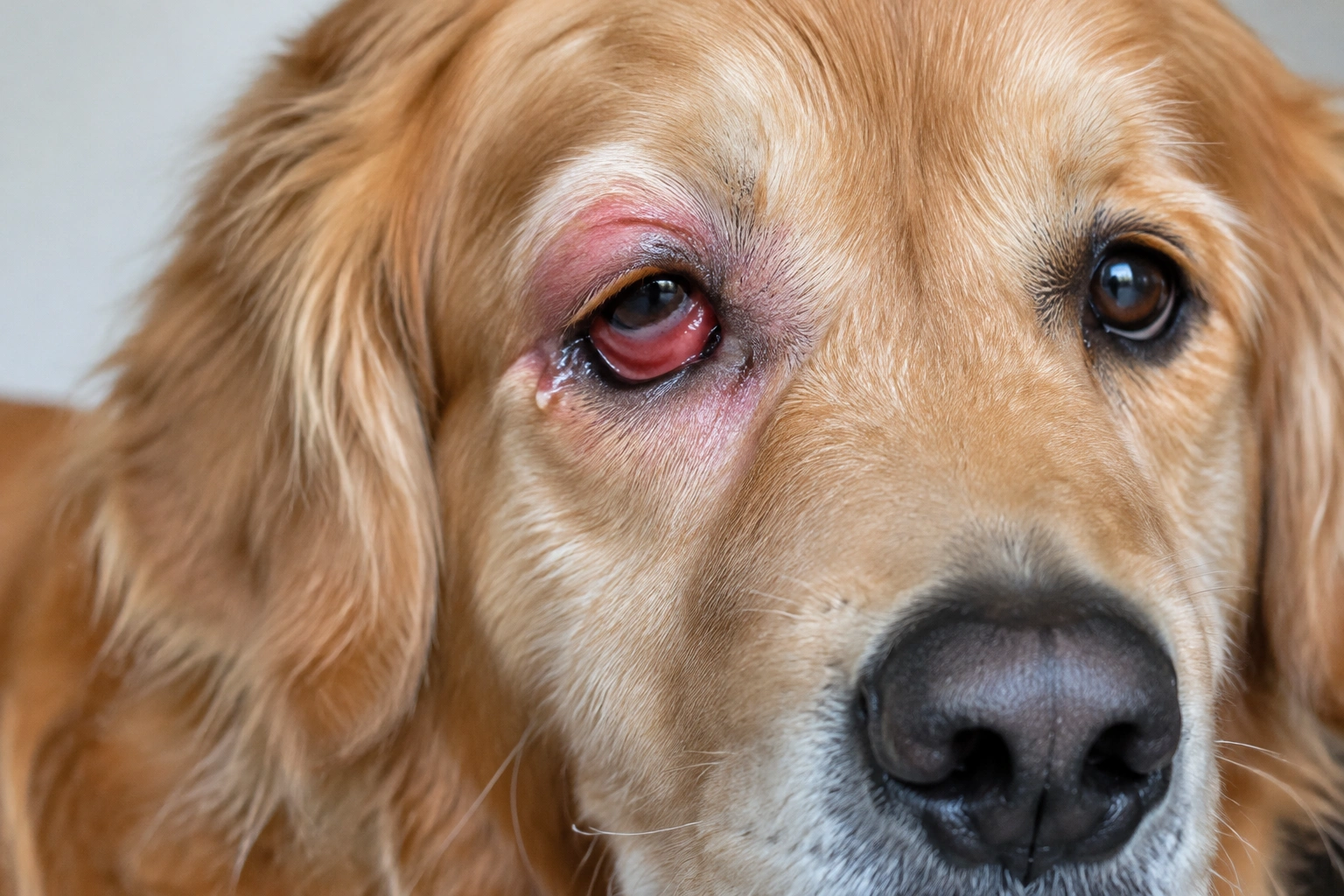
Grass seeds, dust, sand, or plant material can get trapped under the eyelids or on the eye surface. This often causes one eye to become red, swollen, and painful fairly suddenly. Dogs with a foreign body usually squint and rub the eye more than dogs with simple allergy.
Corneal ulcer or scratch
A scratch on the cornea can happen from trauma, rubbing, a foreign body, or an eyelid problem. Corneal ulcers are painful and can worsen quickly if the dog keeps pawing at the eye. Cloudiness, tearing, and squinting are common clues.
Dry eye
Dry eye happens when the eye does not make enough tears. The surface becomes irritated, red, and sometimes sticky with discharge. It may look like infection, but the real issue is poor lubrication.
Glaucoma
Glaucoma is increased pressure inside the eye. It can cause redness, swelling around the eye, cloudiness, and severe pain. This is one of the most important emergencies because it can damage vision quickly.
Entropion
Entropion is when the eyelid rolls inward and the lashes rub on the eye. That constant friction irritates the eye and can lead to redness, swelling, tearing, and ulcers.
Trauma, bite, or scratch injury
A scuffle with another dog, a branch to the face, or a direct hit can leave one eye suddenly swollen and red. If the swelling appeared after an accident, injury moves much higher on the list.
Allergy, Infection, or Injury: How to Tell the Difference
A quick comparison can help you judge urgency while you arrange care.
| Pattern | More suggestive of | Typical clues | Urgency |
|---|---|---|---|
| Both eyes red and watery | Allergy or irritation | Sneezing, itchiness, no major pain | Same-day if not improving |
| One eye suddenly red and swollen | Injury, foreign body, ulcer | Squinting, pawing, rubbing | Same-day or emergency |
| Thick yellow or green discharge | Infection or more serious inflammation | Sticky eyelids, crusting, discomfort | Same-day |
| Cloudy eye, severe pain, closed eye | Corneal ulcer, glaucoma, or deeper eye disease | Vision changes, extreme sensitivity | Emergency |
| Mild redness after dust or wind | Irritation | Dog otherwise comfortable | Monitor briefly, but call if it lingers |
A useful clue is whether one eye or both eyes are affected. Both eyes point more toward allergy or environmental irritation. One eye points more toward a scratch, foreign body, ulcer, or structural problem. That is not a rule, but it helps narrow the possibilities.
Clear watery discharge is generally less alarming than thick yellow or green discharge, but discharge type alone cannot tell you whether the eye is safe. A painful clear-tearing eye can still be a corneal ulcer.
What You Can Safely Do at Home Before the Vet Visit
Your job at home is to protect the eye, not to treat it definitively.
- Stop the dog from rubbing the eye. An e-collar is often the safest option if your dog keeps pawing at it.
- Keep the dog calm and indoors if possible.
- If there is obvious dust or loose debris and the eye is only mildly irritated, a gentle rinse with sterile saline may help.
- Do not use tap water, and do not flush forcefully if the eye seems painful or the dog resists.
- If the eye is very painful, cloudy, or the dog is tightly squinting, skip the flushing and go to the vet.
If you do rinse, use only sterile saline and a gentle stream. Home rinsing is optional, and it should not delay a vet visit when pain, cloudiness, or vision changes are present.
If you’re unsure, it is better to protect the eye and let the veterinarian examine it than to keep manipulating it at home.
What Not to Do at Home
This is where well-meant care can cause real harm.
Do not use human eye drops unless a veterinarian specifically told you to. Many over-the-counter products are not appropriate for dogs, and some can make the problem harder to diagnose.
Do not give leftover prescription eye medication from another pet or a previous illness. Eye problems that look similar may require completely different treatment.
Do not use steroid eye drops unless your veterinarian prescribed them for this exact problem. Steroids can be dangerous if the dog has a corneal ulcer or certain infections.
Do not try to pull something out of the eye with tweezers, cotton swabs, or your fingers. You can push the object deeper or scratch the cornea.
Do not keep aggressively rinsing a painful eye. If the eye is injured, repeated manipulation can worsen swelling and discomfort.
What the Veterinarian Will Check and Why
A vet visit for a red, swollen eye usually starts with a close look at the eye surface, eyelids, and surrounding tissues. The point is to sort out irritation from problems that threaten the cornea or the inside of the eye.
Common steps include:
- checking for a foreign body under the eyelids
- looking for scratches, ulcers, or obvious trauma
- using a fluorescein stain to reveal corneal damage
- measuring eye pressure if glaucoma is suspected
- checking tear production if dry eye is a concern
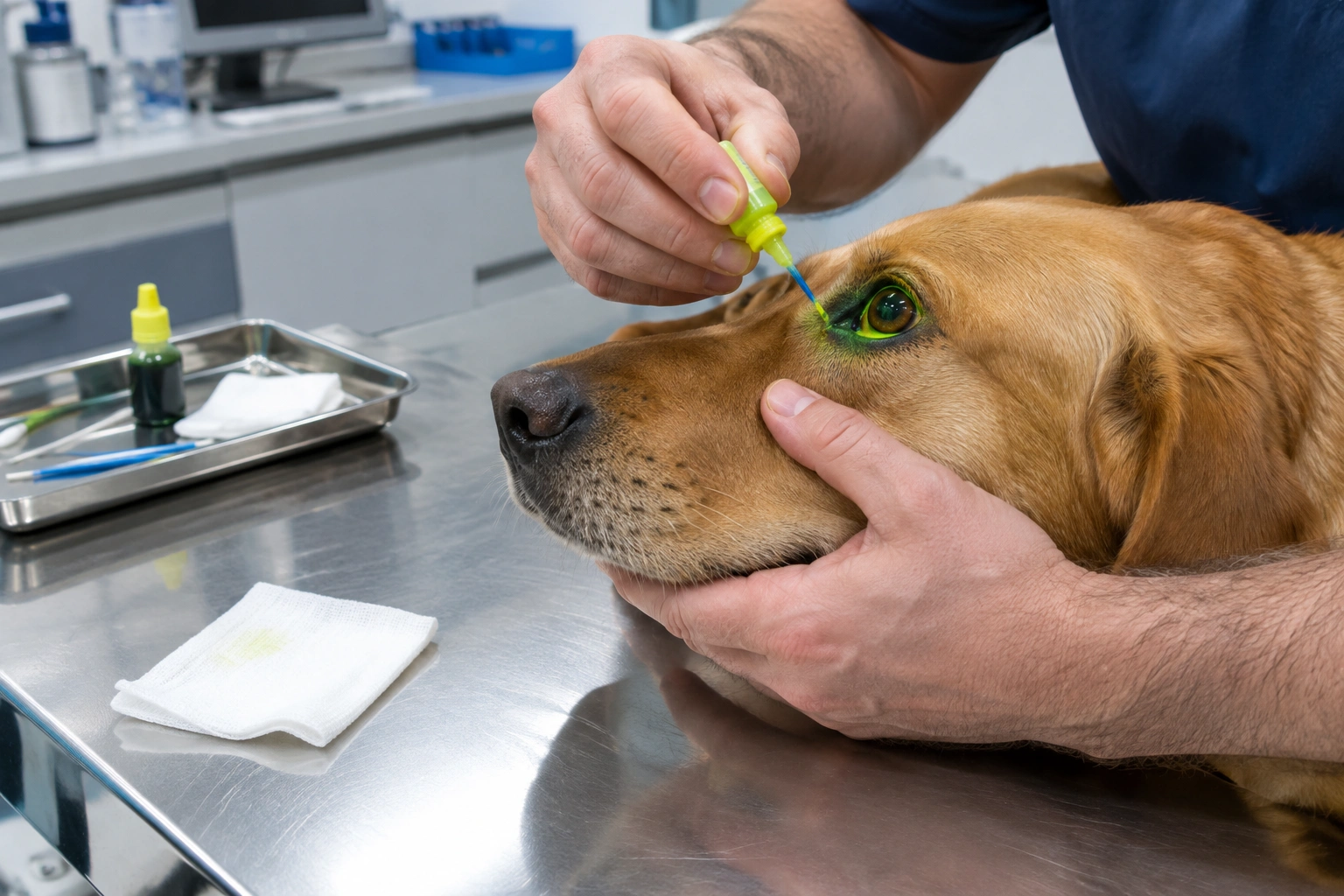
The fluorescein stain is especially important because it can show whether the cornea has a scratch or ulcer that is not obvious to the naked eye. Pressure testing matters because glaucoma can be painful and vision-threatening, and it is not something you can safely diagnose at home.
If your dog is very uncomfortable, the vet may also prescribe pain relief before or alongside other treatment. Pain control is not just about comfort; it also helps prevent rubbing and further injury.
For a broader overview of what red eye can mean, the AVMA’s pet health resources are a useful starting point, but an in-person exam is still the right next step when swelling is present.
Typical Treatment Options, Depending on the Cause
Treatment depends on what the vet finds, which is why guessing at home can backfire.
- Conjunctivitis or infection: may need antibiotic eye drops or ointment, and sometimes antiviral or anti-inflammatory treatment if the vet suspects a different cause.
- Allergies or irritation: may improve with allergy management, environmental changes, or soothing treatment if the eye surface is intact.
- Foreign body: the vet may remove it, flush the eye if appropriate, and then treat any resulting inflammation or scratch.
- Corneal ulcer: often needs antibiotic drops or ointment, pain relief, and close rechecks because the cornea must heal properly.
- Dry eye: usually requires tear-support treatment, such as prescription eye medication that helps the eye make or retain moisture, plus ongoing monitoring.
- Glaucoma: often needs urgent pressure-lowering treatment and sometimes surgery.
- Entropion or major trauma: may require surgery, protective medication, or more advanced care.
The important trade-off is that a “wait and see” approach may be reasonable for mild, clearly irritation-like symptoms that are improving, but it is not worth the risk when pain, cloudiness, or vision changes are present.
When to Call Your Veterinarian
Call your veterinarian the same day if:
- the eye is red and swollen and the dog is squinting
- the discharge is thick, yellow, or green
- the eye is only getting worse
- your dog keeps pawing or rubbing at it
- the swelling followed a scuffle, fall, or brush injury
- the third eyelid is showing and the eye looks uncomfortable
Go to an emergency vet immediately if:
- the eye is very painful
- the eye is cloudy or blue-gray
- the eye is bulging
- your dog may not be able to see well
- the eye is suddenly much larger or more swollen than before
If symptoms are mild, both eyes are watery, and your dog is acting normal, you may have a little more room to monitor briefly — but if there is no improvement within a short period, call the vet. Eye problems can change quickly, and waiting too long is the mistake most likely to cost vision.
How to Reduce the Chance It Happens Again
Prevention depends on the cause, but a few habits help across the board:
- keep long grass, seed heads, and brush from rubbing the eyes during walks
- use a harness rather than a collar if your dog is prone to face rubbing or eye irritation
- address recurring allergies with your vet instead of repeatedly treating flare-ups as “just irritation”
- get structural problems like entropion checked early
- watch for eye rubbing after rough play or dog-to-dog contact
- schedule follow-up care if your dog has had ulcers, dry eye, or other eye disease before
If your dog has had one red, swollen eye once, that history matters. Recurring episodes often point to an underlying issue that needs a proper diagnosis rather than repeated short-term fixes.
Bottom Line
A red, swollen eye in a dog can be minor, but it can also be the first sign of a painful or vision-threatening emergency. The most useful decision rule is simple: pain, cloudiness, a closed eye, or vision changes mean urgent veterinary care. Mild redness with watery discharge in both eyes is more consistent with irritation or allergies, but it still needs attention if it does not improve quickly.
When in doubt, protect the eye, stop the rubbing, and let a veterinarian examine it.
FAQ
Can allergies cause my dog’s eye to be red and swollen?
Yes. Allergies can cause redness, watery discharge, and mild swelling, especially in both eyes. If the eye is painful or cloudy, though, do not assume it is “just allergies.”
Should I flush my dog’s eye at home?
Only if the irritation seems mild and the eye is not very painful. If your dog is squinting, holding the eye shut, or the surface looks cloudy, skip flushing and see a vet.
Is clear discharge less serious than yellow or green discharge?
Usually, but not always. Clear tearing can still happen with a scratch or ulcer, which may be painful and urgent.
Does one swollen eye mean something different than both eyes?
Often, yes. One eye more often suggests injury, a foreign body, or a corneal problem. Both eyes more often fit allergies or environmental irritation.
Will my dog need an emergency vet?
Possibly, if the eye is very painful, cloudy, bulging, or if your dog seems unable to see. Those signs should not wait.