
Why Is My Senior Dog Not Eating? A Practical Guide to Causes, Urgency, and Next Steps

When a senior dog stops eating, the first job is not to guess the cause. The first job is to judge urgency.
In older dogs, appetite loss is a symptom, not a diagnosis. It can come from something relatively manageable, like a recent routine change or a food that has gone stale, but it can also point to dental pain, nausea, organ disease, infection, or another problem that needs veterinary care. That is why “my old dog is just being fussy” is a risky assumption to make too early.
If your older dog has suddenly lost interest in food, treat that change as useful information, not a behavior to wait out indefinitely.
Why a Senior Dog Stops Eating: What It Can Mean
A senior dog not eating usually means something is interfering with normal appetite, comfort, or the ability to chew and swallow. It may be a physical problem, a medication side effect, stress, or simply that the food is less appealing than before.
The key point: loss of appetite is the signal. The cause is what matters.
A dog may still approach the bowl and then walk away. Another may sniff food, lick its lips, and refuse it. Some dogs eat only soft food, or only if hand-fed. Those patterns matter because they can point toward different problems. A dog that wants to eat but seems unable to chew may be dealing with mouth pain. A dog that seems hungry but turns away after sniffing food may be nauseated. A dog that is quiet, weak, and not interested in meals at all needs more urgent attention.
How Urgent Is It? A Practical Triage Guide
Use three questions to decide what to do next:
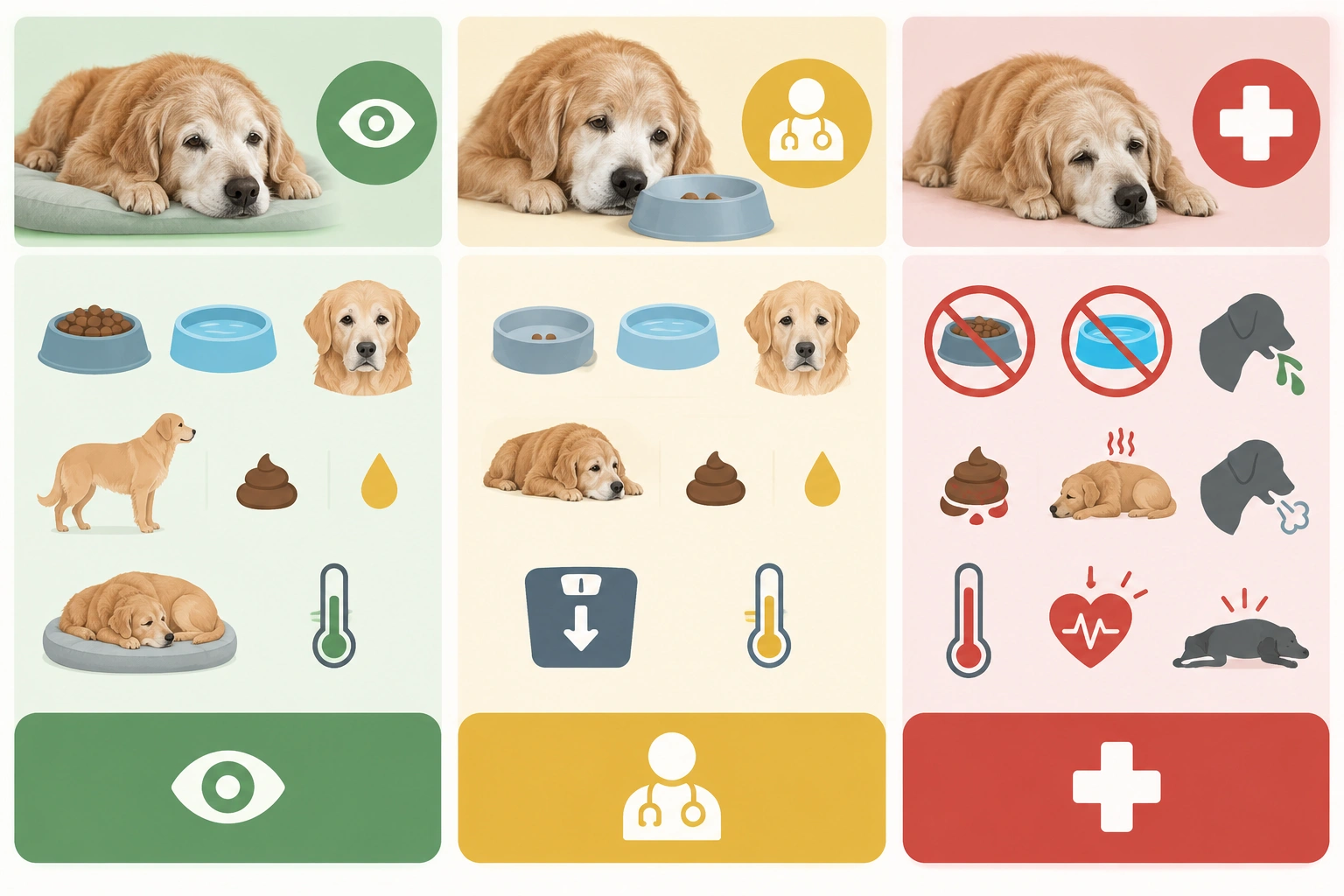
- How long has your dog not eaten?
- Is your dog still drinking water?
- Are there other symptoms such as vomiting, diarrhea, weakness, pain, or dehydration?
Here is a practical way to sort the situation.
| Situation | What it may mean | What to do |
|---|---|---|
| Skips one meal, otherwise bright, drinking, and acting normal | Mild temporary appetite change or food preference issue | Monitor closely, offer a small safe meal, and watch the next 12–24 hours |
| Not eating for about a day, or appetite is clearly reduced for more than a day | Could be illness, dental pain, nausea, medication effect, or another medical issue | Contact your veterinarian the same day for advice |
| Not eating 24–48 hours, especially with lethargy, vomiting, diarrhea, or weight loss | More concerning; medical evaluation is recommended | Arrange veterinary care promptly |
| Not eating and not drinking, or severe weakness, collapse, bloating, pale gums, trouble swallowing, or repeated vomiting | Potential emergency | Seek emergency veterinary care now |
Same-day vet advice is appropriate for a senior dog that has stopped eating but is still drinking and does not have red-flag symptoms; emergency care is needed if the dog is not drinking, is dehydrated, or has severe signs such as collapse, repeated vomiting, bloating, pale gums, or trouble swallowing.
The Royal Kennel Club advises contacting a vet if a dog has not eaten for a day, if the dog is losing weight, or if you are worried about eating habits. That is a sensible threshold for older dogs, because seniors have less reserve than healthy younger adults. You can read their guidance on reasons dogs won’t eat.
Normal Aging vs. a Medical Problem
Some appetite change can happen with age. Older dogs may be less active, so they may not need as much food as they did when they were younger. Their sense of smell or taste may also decline, which can make food less appealing. That said, reduced enthusiasm for food is not the same thing as refusing food.
A useful rule: slower eating or slightly smaller meals can be normal; a clear drop in appetite is not something to dismiss as “just old age.”
Look at the pattern:
- Likely age-related or mild: eating less than usual but still finishing some meals, acting normal, drinking normally, and no other symptoms
- More concerning: turning away from several meals, eating only with coaxing, losing weight, hiding, vomiting, drooling, or seeming painful
- Urgent: refusing food plus weakness, dehydration, repeated vomiting, diarrhea, or collapse
The mistake many owners make is waiting for appetite to “bounce back” without checking whether the dog is uncomfortable or ill. In a senior dog, that delay can cost time if the real issue is kidney disease, liver disease, cancer, diabetes, infection, or pain.
Common Medical Causes in Senior Dogs
Older dogs are more likely to lose appetite because they are more likely to develop chronic illness or pain. The most common categories to keep in mind are:
Kidney disease
Kidney disease can make dogs feel unwell, nauseated, or weak. Appetite loss may be one of the earliest signs owners notice. If your senior dog is drinking more, urinating more, and eating less, that combination deserves a vet visit.
Liver disease
Liver problems can reduce appetite and cause nausea, lethargy, or vomiting. Sometimes the dog seems “off” before the appetite drop becomes obvious.
Diabetes
Diabetes does not always show up as appetite loss first, but it can affect appetite when the dog is unwell or unstable. Changes in drinking, urination, weight, or energy alongside reduced eating should be checked.
Cancer
Cancer can suppress appetite directly or through pain, nausea, and general illness. A dog that has started losing weight and eating less should be evaluated rather than assumed to be picky.
Gastrointestinal illness
Stomach upset, inflammation, constipation, pancreatitis, obstruction, or other GI problems can all reduce appetite. A dog may still drink water but refuse meals because eating makes nausea worse.
Infection or systemic illness
Infections can make a senior dog feel tired and uninterested in food. Fever, lethargy, and reduced appetite often travel together.
Pain elsewhere in the body
Arthritis or other pain can reduce appetite. A dog that is uncomfortable may not settle to eat, may move stiffly, or may seem less willing to bend down to a bowl.
If you want a broader picture of when a dog is officially considered a senior, this guide on how old a dog is considered a senior is a useful companion read.
Dental Disease, Mouth Pain, and Trouble Chewing
Dental pain is one of the most overlooked reasons senior dogs stop eating. A dog with an aching tooth or sore gums may still act interested in food, but then hesitate, chew on one side, or drop kibble from the mouth.
Clues that point toward mouth pain include:
- bad breath
- drooling
- pawing at the mouth
- chewing on one side
- preferring soft food over dry kibble
- taking food to the bowl and then walking away
- yelping or pulling back when the mouth is touched
This is where owners sometimes misread the problem as fussiness. In reality, the dog may want to eat but cannot do it comfortably.
If your dog suddenly accepts soft food but refuses kibble, that is useful information for your vet. It does not prove dental disease, but it strongly suggests the mouth needs a closer look.
Nausea, Vomiting, and GI Upset: What Appetite Loss Looks Like
Nausea in dogs is often subtle. A nauseated senior dog may not vomit right away. Instead, you may see:
- lip licking
- drooling
- swallowing repeatedly
- eating grass
- turning away from food
- standing near the bowl but not eating
- vomiting once, then refusing the next meal
A dog can still drink water and still be significantly unwell. Drinking alone does not rule out illness. In fact, a senior dog that is drinking but not eating can still have nausea, pain, or organ disease.
If the dog vomits repeatedly, cannot keep water down, or seems weak, do not wait to see if it passes.
Pain, Medication Side Effects, Stress, and Routine Changes
Not every appetite change is caused by a major disease, but non-disease triggers still matter.
Pain
Pain from arthritis, a strained muscle, or another chronic issue can reduce appetite simply because the dog feels miserable. Older dogs often hide pain well, so a reduced appetite may be one of the first visible signs.
Medication side effects
Some medications can upset the stomach or reduce interest in food. If appetite loss started soon after a new drug or dose change, call your vet and report the timing. That link is clinically useful.
Stress and routine changes
Older dogs often do best with predictable feeding times. A move, boarding, a new pet, a houseguest, loud renovation work, or even a schedule shift can reduce appetite temporarily.
That said, stress should be a short explanation, not a permanent one. If the appetite loss lasts beyond a brief adjustment period or comes with any other symptoms, assume there may be more going on.
What You Can Safely Do at Home While You Wait for Veterinary Advice
If your senior dog is otherwise stable, there are a few low-risk things you can try while you arrange advice.
Try a small, easy-to-eat meal
Offer a small portion of the dog’s normal food, slightly warmed to increase aroma. Stronger smell can make food more appealing, especially in older dogs whose senses may be fading.
You can also try a softer texture if your dog normally eats kibble. A little warm water mixed into dry food, or a wet-food version of the same diet, may be easier to manage if chewing hurts.
Keep the meal simple
If your dog has a sensitive stomach, avoid rich, fatty, spicy, or heavily seasoned foods. Those can make nausea worse. Do not keep changing foods every few hours, because that can make it harder to tell whether the dog is improving.
Watch the water bowl
If your dog is drinking, note how much and whether urination seems normal. If your dog is not drinking, the situation becomes more urgent.
Do not give human medications
Do not give pain relievers, anti-nausea medication, or supplements unless your veterinarian has told you to. Human medicines can be dangerous for dogs.
Red Flags That Mean Do Not Wait
Seek urgent or emergency veterinary care if your senior dog has any of the following:
- repeated vomiting
- diarrhea, especially if severe or bloody
- bloated or painful abdomen
- pale gums
- trouble swallowing
- collapse or extreme weakness
- severe lethargy
- signs of dehydration such as sticky gums, sunken eyes, or marked weakness
- not eating and not drinking
- obvious pain or distress
These signs can indicate a serious underlying problem, and a senior dog can decline faster than a younger one.
How Long Can a Senior Dog Go Without Eating?
There is no safe “one-size-fits-all” clock, because the risk depends on the dog’s age, hydration, and overall health.
A senior dog that skips one meal but is bright, drinking, and otherwise normal is different from a senior dog that has not eaten for a full day and is also vomiting or weak.
A practical rule:
- One missed meal: monitor closely if everything else looks normal
- About a day without eating: contact your vet
- 24–48 hours without eating: veterinary evaluation is recommended, especially if there are any other symptoms
- Any time the dog is not eating and not drinking, or seems severely ill: emergency care
The reason this matters is not just energy. Prolonged appetite loss can contribute to muscle wasting, immune suppression, delayed healing, and worsening of existing disease. In a senior dog, those effects can snowball quickly.
When to See a Veterinarian or Certified Trainer
For appetite loss, the person you need first is the veterinarian.
A certified trainer can help only when the issue is clearly behavioral and the dog has already been medically cleared. That is rarely the first step with a senior dog who has suddenly stopped eating.
Call your vet the same day if:
- the appetite loss is new and lasting
- your dog is losing weight
- your dog is still drinking but refusing food
- you suspect dental pain
- the problem started after a new medication
- your dog seems painful, nauseated, or unusually quiet
What a Veterinarian Will Check and Test
A vet visit usually starts with history and a physical exam. Be ready to answer:
- when the appetite change started
- whether it was sudden or gradual
- what your dog is still drinking, eating, or refusing
- any vomiting, diarrhea, coughing, drooling, or weight loss
- recent medication, diet, or household changes
The veterinarian may then recommend:
Oral exam
This helps look for dental disease, broken teeth, gum inflammation, oral masses, or other mouth pain.
Bloodwork
Blood tests can screen for organ disease, infection, inflammation, anemia, and other internal problems that may suppress appetite. In plain terms, they help rule in or out issues like kidney, liver, or metabolic disease.
Urinalysis
Urine testing helps assess kidney function and can reveal clues that bloodwork alone may miss. It can also help check for dehydration, infection, or other urinary issues.
X-rays
Radiographs can help identify masses, obstruction, pain in the chest or abdomen, or other structural problems. They are often used to look for something physical that could be affecting appetite or causing discomfort.
Ultrasound
Ultrasound can show changes in organs and soft tissues that x-rays may not reveal clearly. It is often helpful for getting a closer look at the liver, kidneys, intestines, bladder, or other abdominal organs.
That workup is not overkill. In a senior dog, appetite loss is often the first sign of a deeper issue, and the tests help narrow down where to look.
What to Remember When Your Senior Dog Still Drinks Water
This is one of the most common false reassurances owners get: “He’s still drinking, so it can’t be that bad.”
Sometimes that is true. Often it is not.
A dog can still drink and still be nauseated, painful, dehydrated, or dealing with kidney, liver, or other disease. Drinking water is a good sign, but it is not a clean bill of health.
If your senior dog is drinking but not eating, pay attention to the full picture:
- energy level
- vomiting or diarrhea
- weight loss
- mouth pain
- changes in urination
- signs of dehydration
- how long the problem has lasted
That combination tells you more than water intake alone.
Bottom Line
A senior dog not eating is a symptom worth taking seriously. Sometimes the cause is temporary or relatively simple, but in older dogs it is often linked to pain, nausea, dental disease, medication effects, or a medical problem that needs diagnosis.
If the dog has missed one meal but otherwise seems normal, you can monitor briefly and offer a safe, simple meal. If the appetite loss lasts about a day, or if there are any other symptoms, call your veterinarian. If your dog is weak, vomiting repeatedly, dehydrated, bloated, or not drinking, treat it as an emergency.
The safest mindset is this: in a senior dog, appetite changes are information. Your job is to act on that information early.
For more context on age-related changes, you may also find our guide on how old a dog to be considered senior helpful.
FAQs
Is it normal for an old dog to stop eating?
No. A senior dog may eat less than a younger dog, but a clear refusal to eat is not something to brush off as normal aging.
My senior dog is drinking water but not eating. Should I worry?
Yes. Drinking is reassuring, but it does not rule out nausea, dental pain, kidney disease, or other illness. If the appetite loss lasts more than a day or comes with other symptoms, call your vet.
How long can a senior dog go without eating?
A single missed meal may be monitored if the dog is otherwise normal. If your senior dog has not eaten for about a day, contact your vet. If it reaches 24–48 hours, or there are other symptoms, veterinary care is recommended.
Could dental pain be the reason?
Absolutely. Bad breath, drooling, chewing on one side, dropping food, or preferring soft food can all point toward mouth pain.
What should I offer at home?
Offer a small amount of the dog’s normal food, slightly warmed, or a softer version of the same diet. Avoid rich, fatty, spicy, or heavily seasoned foods.
What tests might the vet run?
Common tests include an oral exam, bloodwork, urinalysis, x-rays, and sometimes ultrasound, depending on the findings.
Can stress or a routine change cause this?
Yes, a temporary appetite dip can happen after stress or a schedule change. If it lasts or your dog seems unwell, do not assume stress is the only cause.
Should I wait if my dog is still drinking?
Not if the refusal to eat continues. Drinking alone is not enough to rule out a medical problem.