
Why Your Dog Is Acting Weird All of a Sudden: What It Means and What to Do Next

If your dog suddenly seems “off,” treat that change as information, not drama. Dogs can act strangely for many reasons, and the first job is to decide whether this is a watch-and-collect situation or a get-help-now situation.
The key question is not just “what is my dog doing?” but “what changed, how fast, and what else changed with it?” A dog that is pacing after fireworks is a different case from a dog that is pacing, refusing food, and walking stiffly. A Border Collie that is restless after three quiet days and a new household routine may be under-stimulated and frustrated. A dog that suddenly hides, won’t jump, or resists touch may be in pain even if it still eats.
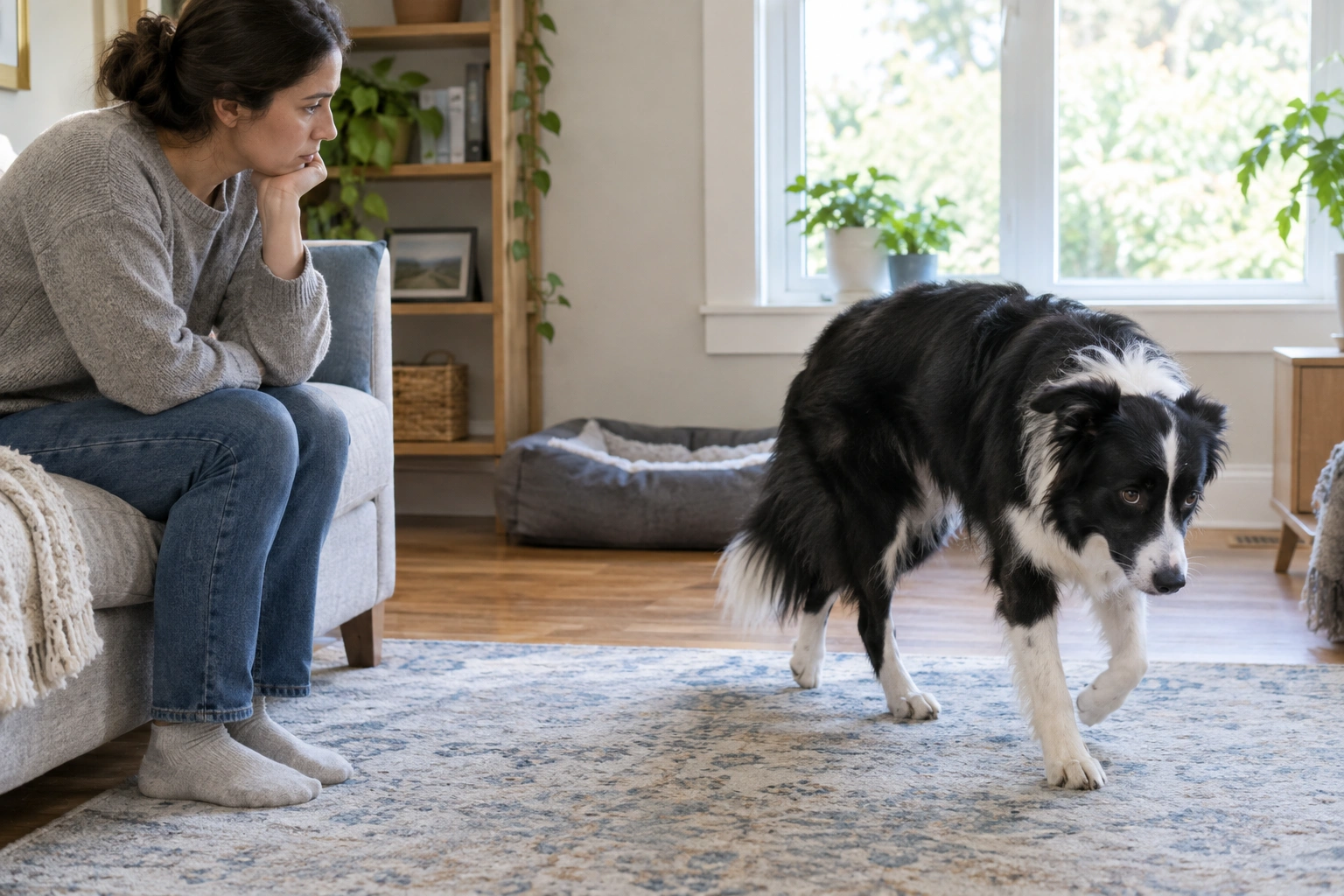
When sudden behavior changes are an emergency
Some signs should move you straight to an emergency vet, not a “let’s see how it goes” plan. Get urgent help if your dog collapses, has a seizure, cannot stand, develops sudden paralysis or marked weakness, struggles to breathe, has a swollen or bloated abdomen, has severe abdominal pain, has pale gums, seems severely disoriented, or may have been poisoned. Repeated vomiting, especially if your dog cannot keep water down, also deserves urgent attention. A rapid worsening over hours is another red flag.
If you suspect toxin exposure, do not wait for symptoms to “settle.” Chocolate, certain plants, and household chemicals can be dangerous if ingested. Poisoning can show up as vomiting, diarrhea, tremors, lethargy, or seizures. If you know or strongly suspect the dog ate something dangerous, contact your veterinarian or an emergency clinic right away.
A useful rule: if the dog’s behavior change is paired with loss of balance, confusion, collapse, a major physical symptom, or a fast decline, think medical emergency first.
Medical causes to rule out first
A dog can be sick, sore, or neurologically affected even while still eating or drinking. That’s why “but he ate breakfast” is not a reliable all-clear.
Pain is one of the most common hidden causes. Dogs often do not cry out when something hurts. Instead, they may become withdrawn, restless, irritable, stiff, or less willing to move. Injury, arthritis flare-ups, abdominal pain, ear pain, dental pain, and back pain can all look like personality changes before they look like obvious illness.
Digestive upset is another frequent culprit. Stomach discomfort may make a dog lethargic, anxious, or off its food. Infection, fever, kidney disease, and hormonal problems can also show up as a sudden shift in energy, attention, or tolerance for handling. If your dog is drinking more than usual, seems weak, or has diarrhea or vomiting, that pushes the situation toward a veterinary exam rather than simple monitoring.
Neurologic problems are especially concerning when the dog seems confused, stares into space, walks in circles, bumps into furniture, or seems “not quite there.” Those signs can point to a brain or balance problem that needs prompt assessment.
Subtle pain signs owners often miss
Pain does not always look dramatic. In fact, subtle pain is where many owners get caught out because the dog is still moving around and may even wag its tail.
Watch for these quieter clues:
- hiding or avoiding the family
- stiffness when standing up or lying down
- reluctance to jump into the car or onto furniture
- licking one spot repeatedly
- restlessness, especially inability to settle
- reduced tolerance for being touched
- a guarded posture or turning the body away when approached
- changes in how the dog climbs stairs or turns corners
One practical test is to compare your dog’s normal movement to today’s movement. If a Border Collie that usually springs into the car suddenly pauses, hesitates, or tries to avoid the jump, that is not a minor detail. It often means the dog is protecting something sore.
If you want a deeper reference point on pain-related behavior, the ASPCA’s guidance on signs of pain in dogs is a solid place to compare what you’re seeing.
Behavioral and environmental causes: stress, fear, and routine disruption
Not every sudden behavior change is medical. Dogs can also react to stress, fear, or a change in the environment. Fireworks, thunderstorms, visitors, travel, a move, a new pet, a new baby, or even a shift in your work schedule can throw a sensitive dog off balance.
Stress-related behavior often looks like panting, whining, trembling, pacing, clinginess, withdrawal, or acting “on edge.” Some dogs become destructive. Others go quiet and avoid contact. A dog that suddenly barks at noises it used to ignore, or acts defensive when approached, may be reacting to fear rather than disobedience.
The trade-off here is simple: you can monitor a likely stress response at home for a short period if the dog is otherwise normal, but you should not assume stress is the only explanation if physical signs are present. Anxiety and illness can look similar in the first hour or two, which is why the full picture matters.
Border Collie-specific reasons a dog may seem suddenly off
Border Collies can be especially tricky here because they are often intense, observant, and quick to react to changes in routine. A Border Collie that is under-exercised or under-stimulated may not look “bored” in a casual sense. It may look restless, fixated, vocal, or hard to settle.
That matters because boredom and frustration can mimic anxiety. A dog may pace, stare, bark, or keep searching for something to do. But Border Collies can also be highly sensitive to household tension, schedule changes, and sensory overload. A dog that seems suddenly weird may be telling you, “My brain is overloaded,” not “I need more correction.”
Here’s the useful distinction: if the behavior shows up after reduced exercise, fewer training games, or a big routine shift, under-stimulation becomes more likely. If the same behavior appears with limping, appetite change, or reluctance to move, medical causes move higher on the list.
For breed-relevant behavior context, the AKC’s Border Collie information can help you compare normal breed drive with a true behavior change.
How to tell medical signs from stress signs
This comparison is a guide, not a diagnostic rule. It can help you decide what to do next, but stress and medical problems overlap a lot.
| Clue | More likely stress or fear | More likely medical issue |
|---|---|---|
| Trigger | Clear event like fireworks, visitors, travel, routine change | No obvious trigger, or behavior starts out of nowhere |
| Appetite | Often normal, though some dogs are too stressed to eat | Reduced appetite, refusal to eat, or eating but seeming unwell |
| Thirst | Usually unchanged | Increased or decreased drinking can matter |
| Bathroom habits | Usually normal | Vomiting, diarrhea, straining, accidents, blood |
| Movement | Restless, pacing, clingy, alert | Stiff, limping, reluctant to jump, weak, unsteady |
| Mind state | Startled, worried, hyper-alert | Confused, disoriented, vacant, “not there” |
| Touch response | May avoid contact but not show clear pain | Flinching, guarding, stiffness, resentment of handling |
| Progression | May improve once the trigger passes | Often persists or worsens over hours |
A dog that is anxious may still track you, respond normally, and settle once the environment calms down. A dog with illness or pain often cannot fully relax, even when the room is quiet.
What to monitor in the first 24 hours
If the dog is stable enough to watch at home, track the behavior carefully. Write down:
- when the change started
- what the dog was doing first
- whether it was sudden or gradual
- any trigger you noticed
- appetite and thirst
- vomiting, diarrhea, or constipation
- urination and accidents
- ability to walk, jump, climb stairs, or lie down comfortably
- balance, head tilt, circling, staring, or confusion
- whether the dog gets better, worse, or stays the same
This record matters because a vague report like “he acted weird” is much less helpful than “he started pacing at 7 p.m. after dinner, refused his usual jump onto the couch, and licked his right hip repeatedly.” That kind of detail can speed up diagnosis.
If you want a useful habit to borrow, VCA Hospitals’ pet health resources are a good example of how veterinarians think about symptom patterns and triage.
What you can safely do at home while you watch
Keep things calm and simple. Reduce noise, limit visitors, and prevent access to stairs, rough play, or slippery floors if the dog seems off balance or sore. If the dog looks disoriented or painful, confine it to a safe space where it cannot injure itself.
Do not punish odd behavior. A dog that is scared, sick, or in pain is not choosing to be difficult. Avoid forcing handling if the dog may bite from fear or discomfort. And do not give human medications unless your veterinarian specifically instructs you to do so.
If a clear stress trigger is present and the dog is otherwise bright, eating, drinking, and moving normally, a quiet environment may be enough to see whether the behavior settles. If it does not improve, or if new symptoms appear, move to veterinary care.
When to see a veterinarian or certified trainer
See a veterinarian the same day if the behavior change is persistent and comes with limping, stiffness, fever, diarrhea, vomiting, marked thirst changes, blood in stool or vomit, or obvious pain. Also call promptly if your dog is unusually withdrawn, refuses to move normally, or seems “off” and does not bounce back.
A certified trainer can help later if the problem turns out to be fear, frustration, or a routine-related behavior issue. But training is not the first tool when illness or pain is still on the table. If the dog’s behavior changed suddenly, rule out medical causes first.
What to tell the veterinarian
When you call, be specific and concise. Share:
- the exact time the behavior started
- what changed first
- any possible toxin exposure
- whether the dog is eating, drinking, urinating, and defecating normally
- whether there is vomiting, diarrhea, limping, shaking, or disorientation
- any recent routine changes, visitors, travel, noise, or exercise changes
- whether the problem is getting better, worse, or staying the same
That summary helps the vet decide whether you need an urgent appointment, an emergency visit, or a scheduled exam.
Common mistakes that delay the right response
The biggest mistake is assuming “weird” means “behavioral.” Another is waiting because the dog still eats or drinks. Many dogs keep doing those things even when they are painful or sick.
A third mistake is confusing fear with illness, or illness with fear. A dog can be stressed and still need a medical workup. A dog can also be painful and look “anxious” because pain makes them unsettled.
The last mistake is using training corrections when the dog may be scared or unwell. If the behavior is sudden, treat it as a health question first, not a manners problem.
FAQ
Why is my dog acting weird all of a sudden but still eating?
Eating does not rule out pain, infection, GI upset, or neurologic trouble. If the dog is eating but also limping, hiding, vomiting, or acting confused, call your vet.
Can anxiety make a dog shake and act strange?
Yes. Anxiety may show up as trembling, panting, whining, hiding, clinginess, or restlessness. But those same signs can also appear with pain or illness, so context matters.
How long should I wait before calling the vet?
If the dog has any emergency signs, do not wait. If the dog seems stable but the behavior is new and unexplained, call the vet the same day if it persists, worsens, or comes with physical symptoms.
My Border Collie is pacing and barking more than usual. Could it be boredom?
It could be. Border Collies can become restless and vocal when under-stimulated or frustrated. But if pacing comes with stiffness, appetite change, or confusion, do not assume it is only boredom.
What if my dog is acting weird after fireworks or a move?
A clear trigger makes stress more likely, especially if the dog is otherwise normal. Keep things quiet, safe, and predictable, then watch for improvement. If the behavior does not settle or new symptoms appear, contact your vet.
Should I give my dog something at home?
Not unless your veterinarian tells you to. Human medications can be dangerous for dogs, and the wrong choice can mask symptoms or make things worse.
What if my dog seems disoriented or keeps bumping into things?
Treat that as urgent. Disorientation, circling, head tilt, stumbling, or bumping into furniture can signal a neurologic problem and should be assessed promptly.
A sudden behavior change is your dog’s way of saying something has shifted. The fastest way to help is not to guess hard, but to watch well, rule out danger first, and give your veterinarian a clear picture of what changed.
