
How Long a Dog Dental Cleaning Takes: A Practical Timeline for Owners

If you’re planning a veterinary dental cleaning, the first question is usually the same: how long does a dog dental cleaning take? The short answer is that the cleaning itself is only part of the visit. The full appointment usually includes check-in, a pre-anesthetic exam, anesthesia, dental charting, cleaning and polishing, possible dental X-rays, recovery, and pickup.
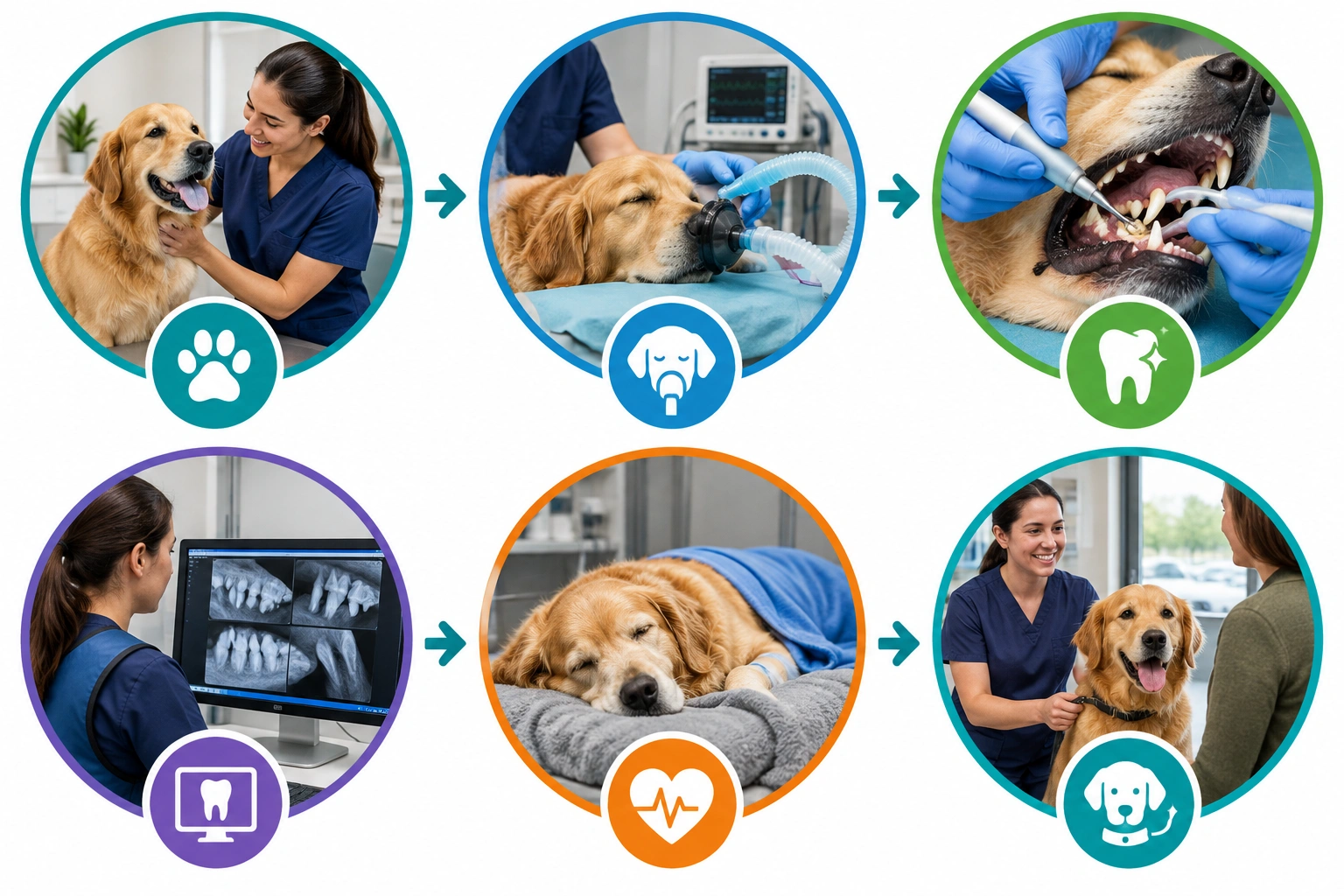
That means the time your dog spends at the clinic is often much longer than the actual cleaning time. For a routine dental, that can be perfectly normal. If your dog needs extractions or has significant periodontal disease, the visit can stretch further.
For Border Collie owners, this matters for one practical reason: these are active, alert dogs that often do better when their day is predictable. A dental appointment is not a quick errand. It is a planned medical procedure, and the schedule should reflect that.
How long a dog dental cleaning usually takes
The most useful way to think about a dental cleaning is in three time blocks:
- The procedure itself
- The total time at the clinic
- The recovery period before pickup
In practical terms, the cleaning procedure itself is often about 1 to 3 hours, while the full clinic visit is commonly most of the day. Exact timing varies based on the dog’s dental disease and whether extractions or X-rays are needed.
The cleaning portion is usually shorter than people expect. Once a dog is anesthetized and ready, the vet or veterinary team can move through charting, scaling, polishing, and any needed imaging fairly efficiently. But the appointment is not just “clean teeth and go home.” The safety steps before and after the procedure take real time.
Routine cleaning versus more complex dental work
A simple cleaning is closer to maintenance. A complex dental is treatment.
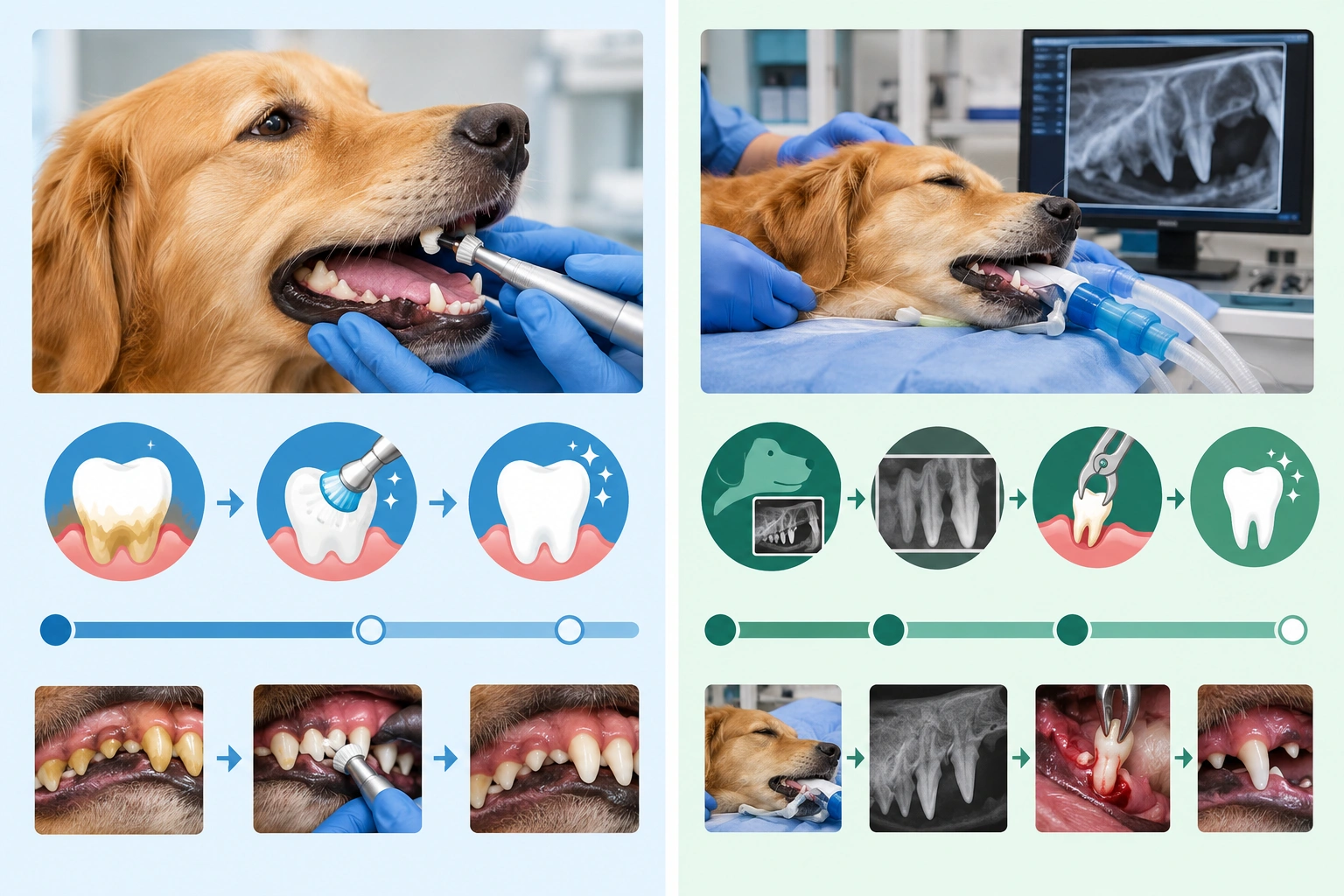
- Routine cleaning: mild tartar, limited gum inflammation, no extractions
- Complex cleaning: heavy tartar, periodontal disease, dental X-rays, one or more extractions
The second case is slower because every extra step takes time and changes the plan mid-appointment.
Cleaning time vs. total time at the veterinary clinic
This is where many owners get caught off guard. The actual cleaning time is not the same as the total clinic time.
A dog may be dropped off in the morning and picked up later in the day, even if the cleaning portion itself is much shorter. Why? Because the clinic has to move through a full medical workflow:
- pre-op exam and review of history
- anesthesia induction
- dental exam and charting
- scaling and polishing
- dental X-rays if needed
- extractions or treatment of diseased teeth
- recovery and monitoring
- discharge instructions and pickup
That is why a “short” dental cleaning can still take most of the day from the owner’s perspective.
A simple planning rule
Plan for a same-day drop-off and afternoon pickup if the vet expects a routine cleaning. If they mention X-rays, extractions, or a senior dog with other health concerns, assume the clinic may need more time.
A comparison of common dental visit timelines
| Type of dental visit | Actual procedure time | Total clinic time | What usually adds time |
|---|---|---|---|
| Routine cleaning | Shorter | Often most of the day | Anesthesia, charting, recovery |
| Cleaning with dental X-rays | Longer | Often most of the day, sometimes later pickup | Imaging and interpretation |
| Cleaning with extractions | Longest | Often a full day or longer if monitoring is needed | Extraction work, pain management, extended recovery |
The main point is not the exact clock time. It is the difference between a straightforward maintenance cleaning and a dental procedure that turns into treatment once the mouth is fully examined.
What happens during the appointment that adds time
A professional dental cleaning is a sequence of steps, and each one matters.
1) Pre-anesthetic exam and preparation
Before anesthesia, the vet checks whether your dog is healthy enough for the procedure. Depending on age and medical history, they may recommend bloodwork or other screening first. That step can add time before the actual dental work begins, but it is part of safe planning rather than delay.
This is especially relevant for older dogs or dogs with heart, kidney, or liver concerns. The goal is to reduce avoidable risk before anesthesia starts.
2) Anesthesia induction and monitoring
Most professional dog dental cleanings are done under anesthesia because the vet needs to thoroughly clean below the gumline, examine every tooth, and use X-rays when needed. Awake cleaning is not the same thing, and it does not allow the same level of care.
Anesthesia adds time in two ways:
- it takes time to induce and stabilize
- it requires monitoring throughout the procedure and recovery
That monitoring is not “extra.” It is part of why anesthetized dentistry is the standard in veterinary medicine.
For a general overview of why veterinary dental care is handled this way, the American Veterinary Medical Association has helpful guidance on pet health and veterinary procedures.
3) Dental charting, scaling, and polishing
Once your dog is fully anesthetized, the team can examine each tooth and record what they find. That charting step matters because it tells the vet where disease is present and whether a tooth is loose, fractured, or infected.
Then comes scaling and polishing. Scaling removes tartar above and below the gumline, and polishing smooths the tooth surface so plaque is less likely to cling as quickly afterward.
4) Dental X-rays
Dental X-rays are a major reason some appointments take longer. They let the vet see what is happening below the gumline, where a lot of dental disease hides.
That matters because a tooth can look acceptable on the surface but still have root damage, infection, or bone loss underneath. If the vet finds something concerning, they may need more time to decide whether the tooth should be treated or extracted.
The ASPCA also explains the importance of professional dental care and why veterinary oral exams go beyond what you can see at home.
5) Extractions or treatment of periodontal disease
This is the biggest wildcard. If the vet discovers loose teeth, severe gum disease, or infected roots, the appointment becomes longer right away.
A few extractions can add a noticeable amount of time. More extensive dental disease can extend the procedure much further because each tooth has to be evaluated, treated, and monitored carefully.
Why some dog dental cleanings take much longer
Not every mouth is the same, and not every dog arrives with the same level of dental disease.
Heavy tartar and gum inflammation
A dog with mild tartar is a faster case than a dog with thick buildup and bleeding gums. More tartar usually means more cleaning time, and gum inflammation often means the vet needs to look more closely for hidden disease.
Periodontal disease
Periodontal disease changes the appointment because it is not just about cleaning visible tartar. The vet may need to evaluate bone loss, unstable teeth, and infection. That can mean X-rays, extra charting, and possibly extractions.
Multiple extractions
This is the most obvious reason for a longer visit. Removing one tooth is very different from removing several. Each extraction has to be planned, performed, and checked for bleeding and closure.
Senior age or medical complexity
Older dogs often need a slower, more careful approach. That does not mean they cannot have a dental cleaning. It means the vet may want more pre-op screening and more recovery monitoring afterward.
For a healthy adult dog, same-day discharge is common. For a dog with medical concerns, the clinic may keep them longer for observation.
How anesthesia affects timing and safety
Many owners hear “anesthesia” and think only about added time. In reality, it is one of the reasons the procedure can be done safely and thoroughly.
A dog dental cleaning under anesthesia lets the vet:
- clean below the gumline
- inspect every tooth
- take X-rays if needed
- treat painful or diseased teeth properly
- monitor the dog throughout the procedure
That monitoring takes time, but it reduces risk. A longer appointment is not automatically a bad sign. In many cases, it means the clinic is being careful.
The trade-off is straightforward: a faster, awake “cleaning” may seem convenient, but it is not the same level of care. A properly anesthetized dental takes longer because it is actually doing the job.
How long it takes a dog to wake up after dental cleaning
A dog usually starts waking up during the recovery period the same day, but “awake enough to go home” is different from “back to normal.”
That distinction matters.
What owners usually notice first
Your dog may be groggy, quiet, or a little unsteady at pickup. That is normal after anesthesia. The clinic will only discharge your dog when the vet feels the recovery is stable enough for home care.
Why discharge timing varies
Recovery time depends on:
- the length of the procedure
- whether extractions were done
- the dog’s age and health
- how the dog responds to anesthesia
A simple cleaning usually allows faster discharge than a dental with extractions and heavier monitoring.
What “normal” looks like after pickup
A typical expectation is same-day discharge, often later in the afternoon or evening depending on the clinic’s schedule and what was done. After pickup, many dogs are sleepy, quiet, or a little wobbly on their feet for the rest of the day. Some may also have a lower appetite than usual.
That groggy window is usually most noticeable for the first several hours after discharge and may continue into the evening. Energy often returns gradually over the next day or so, depending on the procedure and any pain medication.
If your dog had extractions, expect a slower return to normal than after a basic cleaning.
What to ask your vet before the appointment
A few questions before the procedure can save a lot of guesswork later.
Ask your vet:
- Will my dog likely need dental X-rays?
- Are extractions possible based on what you see so far?
- Do you recommend pre-anesthetic bloodwork?
- Is this expected to be a routine cleaning or a full dental workup?
- What time should I plan for drop-off and pickup?
- Will my dog go home the same day?
If your vet already suspects periodontal disease, ask directly whether they expect the appointment to be longer than a routine cleaning. That gives you a better sense of whether the day will stay simple or turn into a more involved dental procedure.
For a broader look at canine dental anatomy and why different teeth can be affected differently, see our guide on how many teeth dogs have.
When a longer dental appointment is normal vs. concerning
A longer appointment is often normal when the vet finds more disease than expected. That is especially true if:
- X-rays were needed
- one or more teeth had to be removed
- the dog had heavy tartar or inflamed gums
- the dog is older or medically complex
A longer stay becomes more worth asking about if the clinic gives you little or no explanation for a major delay, or if pickup timing changes without clear communication.
A simple decision rule
- Expected longer time: the vet warned you about X-rays, extractions, or complex disease
- Worth a follow-up call: the appointment runs much longer than expected and no one has updated you
Most of the time, a longer dental cleaning means the vet found something that needed attention, not that something went wrong.
How to plan drop-off, pickup, and the rest of the day
The most practical way to prepare is to treat the appointment as a day-long medical visit, not a quick stop.
Before drop-off
Follow fasting instructions exactly. If the clinic tells you not to feed your dog after a certain time, stick to that schedule. Fasting is part of safe anesthesia preparation.
Bring any requested records, medications, or paperwork the clinic asked for in advance.
During the day
Expect little contact during the procedure unless the clinic needs to discuss a change in plan. If the vet finds extractions or other issues, they may call before proceeding, depending on the clinic’s policy.
At pickup
Plan for a short discharge conversation. The clinic should explain:
- what was done
- whether any teeth were removed
- what your dog can eat that night
- what medication to give and when
- what signs would justify a call back
The rest of the day at home
Keep the evening quiet. A dog that had anesthesia and dental work should not be expected to bounce back immediately. Calm, low-key recovery is the goal.
That is especially true for active Border Collies, who may feel ready to move long before their body has fully caught up. Resting them after the procedure is part of the plan.
When to see a veterinarian or certified trainer
For the dental procedure itself, see your veterinarian if:
- your dog has bad breath, bleeding gums, loose teeth, or obvious mouth pain
- your vet has recommended a dental cleaning and you need help planning the timing
- your dog has a medical condition that may affect anesthesia or recovery
A certified trainer is not the right professional for dental timing questions, but if your dog is anxious about handling, restraint, or clinic visits, a trainer can help with cooperative care and vet-visit preparation. That can make future dental appointments easier to manage.
FAQ
Does the cleaning time include anesthesia and recovery?
Usually, no. When people ask how long a dog dental cleaning takes, they often mean the actual procedure. The full clinic time also includes anesthesia, monitoring, and recovery.
Is it normal for a dog dental cleaning to take all day?
Yes. Same-day drop-off and pickup are common because the clinic has to prepare, anesthetize, clean, monitor, and discharge your dog safely.
Why did my dog’s dental take longer than expected?
The most common reasons are dental X-rays, extractions, heavy tartar, or periodontal disease discovered during the procedure.
How long does it take for a dog to wake up after dental cleaning?
Recovery varies. Many dogs are awake enough to go home the same day, but they may still be groggy or sleepy for the rest of the day.
Should I worry if the vet says my dog needs extractions?
Not automatically. Extractions often mean the vet found painful or diseased teeth that were better removed than left in place.
Can I ask for an estimate of how long the appointment will take?
Yes, and you should. Ask whether the vet expects a routine cleaning or a full dental workup so you can plan the day realistically.
The best way to think about a dog dental cleaning is this: the cleaning itself is only one part of the visit, while the full appointment includes safety checks, anesthesia, treatment, and recovery. If you plan for a half-day or full-day clinic stay, you will usually be much closer to reality than if you expect a quick appointment.