
How Many Teeth Does a Dog Have? A Practical Guide for Puppy and Adult Dog Owners

If you are checking your dog’s mouth and wondering whether the number of teeth looks normal, the short answer is this: most puppies have 28 baby teeth, and most adult dogs have 42 permanent teeth.
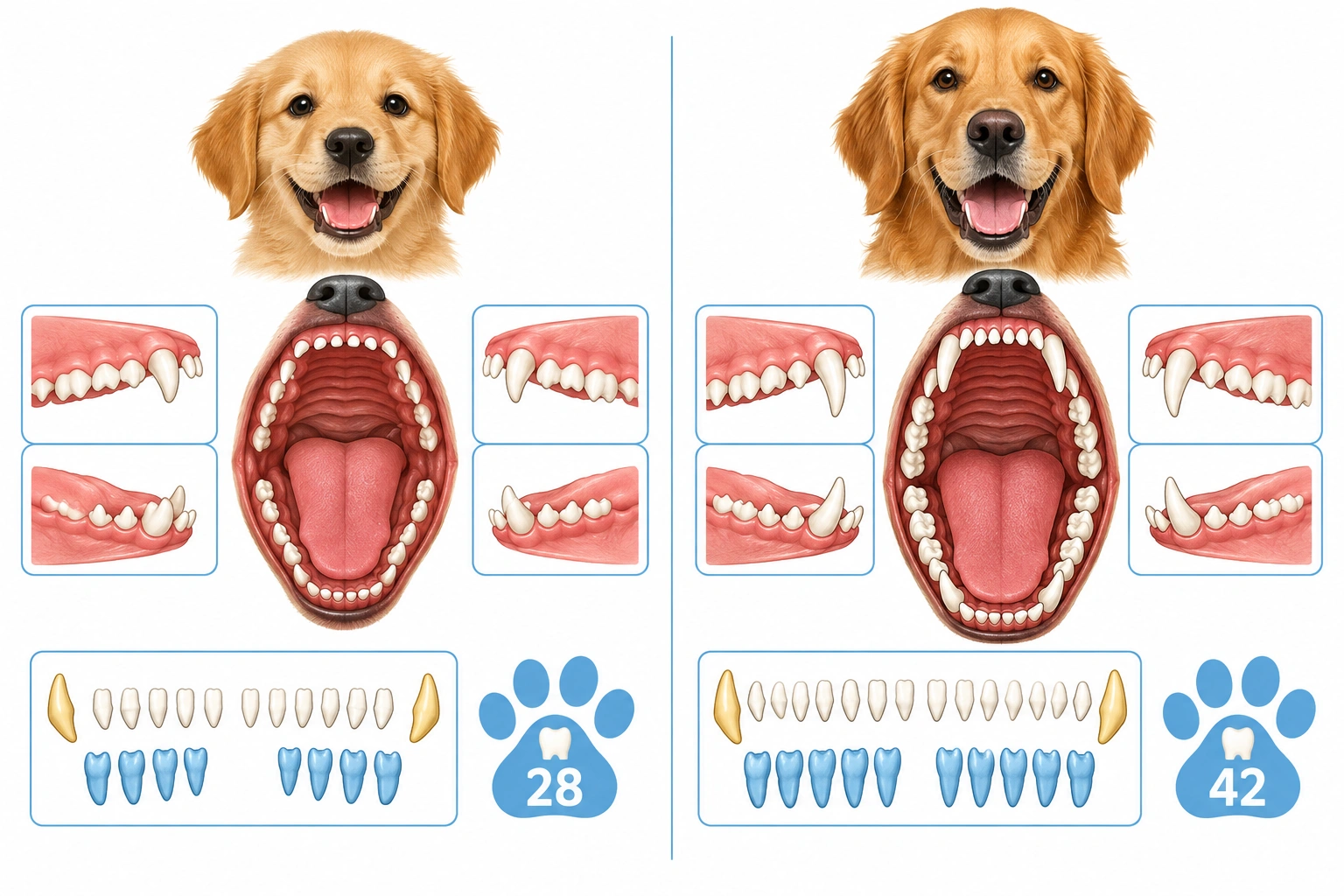
That simple number matters because it gives you a baseline. A young puppy should not look like a full-grown dog yet, and an adult dog missing teeth is not always normal. The difference between the two is part of normal development — but it can also be the first clue that something needs a vet’s attention.
For Border Collie owners, this comes up a lot during the first year. These dogs are busy, mouthy, and quick to chew on anything within reach, so teething behavior can look dramatic even when it is normal. The trick is knowing what you should expect at each stage and what counts as a red flag.
| Life stage | Normal tooth count | Typical age range | What you may notice | When to worry |
|---|---|---|---|---|
| Puppy | 28 baby teeth | Birth to about 4 months | Chewing, mild drooling, loose teeth | Swelling, bleeding, pain, bad breath, not eating |
| Transition stage | Mixed baby and adult teeth | About 4 to 6 months | Baby teeth falling out, adult teeth erupting | Baby teeth still present after adult teeth come in |
| Adult dog | 42 permanent teeth | About 6 to 7 months and older | Full set of adult teeth | Missing, broken, loose, or painful teeth |
How Many Teeth Does a Dog Have?
Most adult dogs have 42 teeth. That total is the standard adult canine set, and it is the number you should expect once your dog is past the teething phase.
Puppies have 28 deciduous teeth, also called baby teeth or milk teeth. Those smaller teeth are temporary. They help the puppy chew during the early months, then fall out as the permanent teeth erupt.
A useful way to think about it is this: puppy teeth are a placeholder set, while adult teeth are the long-term set. If your dog is still young, the count changes because the mouth is actively replacing one set with another.
Tooth count can vary slightly if a dog was born without a tooth or has already lost one for a known reason, so a number that is a little off is not automatically abnormal.
If you want a visual reference for the full adult layout, Purina’s canine dental anatomy guide shows the standard adult count and how the teeth are arranged: Purina’s adult dog dental chart.
Puppy Teeth vs. Adult Teeth: What Changes and Why
Puppies and adult dogs do not just differ in number. They also differ in function.
A puppy’s 28 teeth are enough for early chewing, but they are not built to last. As the jaw grows, the permanent teeth begin replacing them. By adulthood, the dog has 42 teeth, which gives it a stronger, more complete set for tearing, gripping, and grinding.
The adult set is divided into four types:
- 12 incisors at the front
- 4 canines for gripping and tearing
- 16 premolars for shearing and chewing
- 10 molars for grinding
That breakdown is useful when you are checking a young dog’s mouth. If a tooth seems to be missing, it helps to know whether it is one that should already have erupted, or one that may still be on the way.
One practical detail many owners miss: adult dogs do not have the same number of teeth on the top and bottom. Purina notes that the upper jaw has 20 teeth and the lower jaw has 22. That difference is normal, not a defect.
For a Border Collie puppy, this stage often overlaps with a lot of chewing on toys, furniture, hands, and anything else available. That is not because the dog is being stubborn. The mouth is changing, and the gums can feel uncomfortable as teeth loosen and new ones push through.
Dog Teething Timeline: When Baby Teeth Fall Out and Adult Teeth Erupt
The teething timeline is one of the most useful tools for judging whether your dog’s teeth count looks normal.
Puppies are born without visible teeth. Baby teeth begin coming in during the first weeks of life, and the full set of 28 deciduous teeth is usually in place by around the time the puppy is a couple of months old.
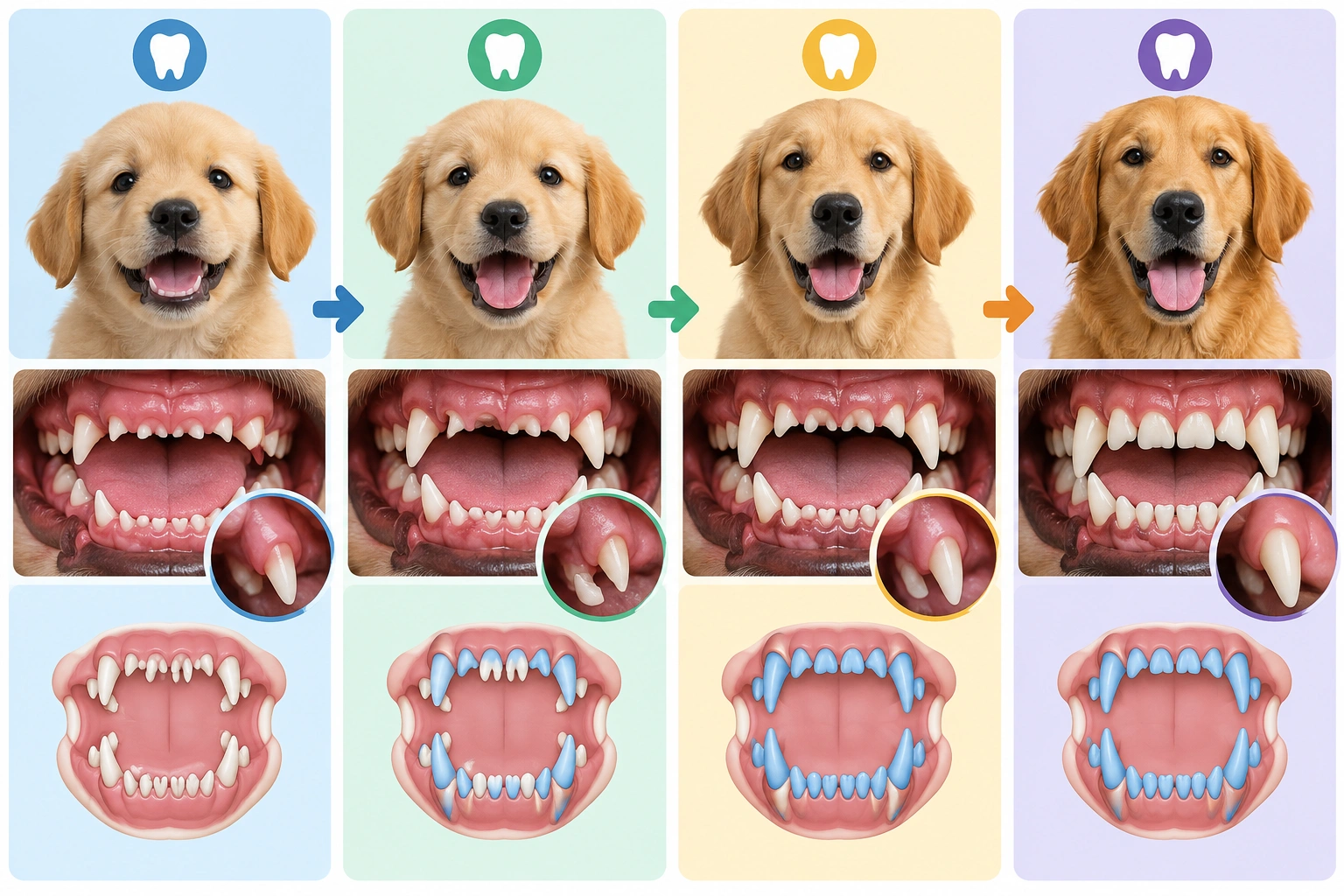
The next stage is the one most owners notice: the swap from baby teeth to adult teeth. That transition typically starts around 3 to 4 months of age and continues until about 6 to 7 months.
A helpful rule of thumb:
- Around 3–4 months: baby teeth start falling out
- Around 4–6 months: adult teeth erupt steadily
- By about 6–7 months: most dogs should have the full adult set of 42 teeth
Nylabone states that puppies have 28 baby teeth and that all permanent teeth come in by about six months of age. That lines up with the broader veterinary timeline and gives you a practical checkpoint if you are watching a young dog’s mouth.
If your puppy is 5 months old and still looks like a puppy mouth, that can still be normal. If your dog is 7 months old and still seems to have a baby tooth hanging on next to an adult tooth, that is a different situation.
What’s Normal During Teething — and What Isn’t
Some teething behavior is expected. Some is not.
Common signs that fit normal teething
These are the signs I would expect to see in many puppies:
- Chewing more than usual
- Mild drooling
- Gums that look a little irritated
- Loose baby teeth
- Small amounts of blood on toys
- A temporary change in appetite because chewing feels awkward
A 4-month-old Border Collie puppy that wants to chew every toy in the house is not surprising. In fact, it often means the mouth is doing exactly what it should.
Signs that need a closer look
These are not the teething signs I would brush off:
- Swollen gums
- Persistent bleeding
- Bad breath that is strong or worsening
- Refusing food
- Crying when the mouth is touched
- One side of the face looking sore or puffy
- A tooth that looks broken, loose in a strange way, or stuck
Teething should be mildly uncomfortable, not obviously painful. If the dog seems miserable, stops eating, or has foul breath, I would not assume it is “just teething.”
That distinction matters because owners sometimes wait too long, expecting every mouth change to be normal. Mild chewing is one thing. Pain, swelling, or a strong odor is another.
Retained Baby Teeth, Missing Teeth, and Other Tooth-Count Red Flags
A dog’s tooth count can look “off” for several reasons, and not all of them are harmless.
Retained baby teeth
A retained baby tooth is a tooth that stays in place after the adult tooth starts erupting. This is one of the most common reasons a young dog’s mouth looks crowded.
Why it matters: when the baby tooth does not fall out, it can leave the adult tooth crowded or misaligned. That can trap food and make cleaning harder later.
This is especially worth watching in small or flat-faced dogs, but any dog can have it. If you see an adult tooth coming in while the baby tooth is still sitting right beside it, that is a good reason to book a veterinary exam rather than waiting it out.
Missing teeth in an adult dog
If an adult dog has fewer than 42 teeth, the reason could be:
- A tooth never erupted
- A tooth was lost earlier
- A tooth broke
- A tooth was removed by a veterinarian
Purina notes that fewer than 42 teeth can mean a tooth has been lost or broken, sometimes from chewing hard objects like stones or thick sticks. That is useful because it reminds you not to assume a missing tooth is “just how the dog is built.”
If a tooth is missing and you do not know why, that deserves attention.
Breed variation and crowding
Most adult dogs have the same total tooth count, but not the same amount of space in the jaw. Small breeds and flat-faced dogs often fit the same 42 teeth into a smaller mouth, which can lead to crowding.
That crowding does not change the standard tooth count, but it does make dental care more important. Tight spaces can trap food and plaque more easily, which is one reason these dogs often need closer oral monitoring.
For a general breed overview of how tooth crowding affects dental health, this AKC dental care resource is a useful starting point.
When to Call the Vet About Your Dog’s Teeth
Here is the simplest decision rule I use:
- Monitor at home if your puppy is in the normal teething age range and only showing mild chewing, drooling, or loose baby teeth.
- Book a vet visit if the tooth count seems wrong for the dog’s age, adult teeth are delayed, baby teeth are still hanging on after adult teeth erupt, or a tooth is broken, painful, or suddenly missing.
A few specific situations should move you from “watch and wait” to “make the appointment”:
- A retained baby tooth is still present while the adult tooth is already in place.
- A puppy is nearing 7 months and does not seem to have a full adult set.
- An adult dog loses a tooth suddenly without a clear explanation.
- The mouth smells bad, bleeds easily, or seems painful.
- Eating changes because the dog is avoiding chewing on one side or dropping food.
Some problems need prompt veterinary attention rather than a routine appointment. Severe swelling, active bleeding, obvious pain, or not eating should be treated as urgent.
If you are unsure whether the issue is teething or disease, a veterinary exam is the right call. Delaying care can turn a small issue into a larger one over time.
For more veterinary guidance on oral health signs and when dental issues need attention, the VCA Hospitals dental care resources are worth a look.
Basic Dog Dental Care That Helps Protect Tooth Health
Good dental care does not need to be complicated, but it does need to be consistent.
Make brushing part of the routine
Daily brushing is ideal, but even a few times a week is better than nothing. Use a dog-safe toothpaste and a brush that fits the dog’s mouth. The goal is not perfection; it is reducing plaque before it hardens.
Choose chews with care
Chewing helps some dogs cope with teething, but hard objects can crack teeth. A practical rule is to avoid very hard chews that do not give when pressed, especially if they could be painful or risky to hit against your knee.
That is especially relevant in a Border Collie, because many of them chew with enthusiasm and speed. Supervision matters more than the brand name on the package.
Check the mouth during grooming
You do not need a detailed dental inspection every day. A quick look every week or two is enough to notice:
- A baby tooth that has not fallen out
- A tooth that looks fractured
- Red gums
- Bad breath
- Uneven wear
That habit pays off because dental problems often start quietly. By the time a dog is clearly uncomfortable, the issue may already have been developing for a while.
If you want a broader look at breed-specific day-to-day care, our guide on Border Collie health and behavior basics can help you connect oral care with the rest of your dog’s routine.
FAQ: Dog Teeth Count and Teething
How many teeth does a puppy have?
Most puppies have 28 baby teeth.
How many teeth does an adult dog have?
Most adult dogs have 42 permanent teeth.
At what age do dogs lose their baby teeth?
Most dogs start losing baby teeth at about 3 to 4 months of age.
When should all adult teeth be in?
Most dogs should have their full adult set by about 6 to 7 months of age.
Is it normal for a dog to have missing teeth?
It can be normal if a tooth was removed or lost for a known reason, but an unexplained missing tooth should be checked by a veterinarian.
Do small breeds have fewer teeth?
Usually, no. Most adult dogs still have the same 42 teeth. The difference is often jaw size, not tooth count.
Should I pull a retained baby tooth at home?
No. Retained baby teeth should be assessed by a veterinarian, not removed at home.
If you are checking a young Border Collie and trying to decide whether the mouth looks normal, the key is to match the tooth count to the dog’s age. Puppy mouths are temporary. Adult mouths are complete. The gap between the two is where most of the confusion happens — and where the most useful decisions are made.