
How to Tell If Your Dog Has a Cold: Signs, Look-Alikes, and What to Do Next

If your dog has started sneezing, coughing lightly, or acting a bit flat, the first question is usually the same: is this just a cold, or something more serious?
Dogs can get cold-like upper respiratory illnesses, but “dog cold” is a general term rather than a precise diagnosis. It usually refers to mild symptoms like sneezing, a runny nose, or a light cough.
For Border Collie owners, that question can be tricky. These dogs often keep moving even when they feel off, so a mild illness can hide behind normal-looking energy. The clue is often not dramatic sickness, but a small drop in enthusiasm, appetite, or stamina.
A “dog cold” is usually a loose way of describing mild upper respiratory symptoms. That matters, because the label itself is not a diagnosis. The same signs can also show up with kennel cough, allergies, canine flu, or a more significant respiratory infection.
How to tell if your dog has a cold at a glance
The most common cold-like pattern is simple: sneezing, a mild cough, a runny nose, watery eyes, and slightly lower energy.
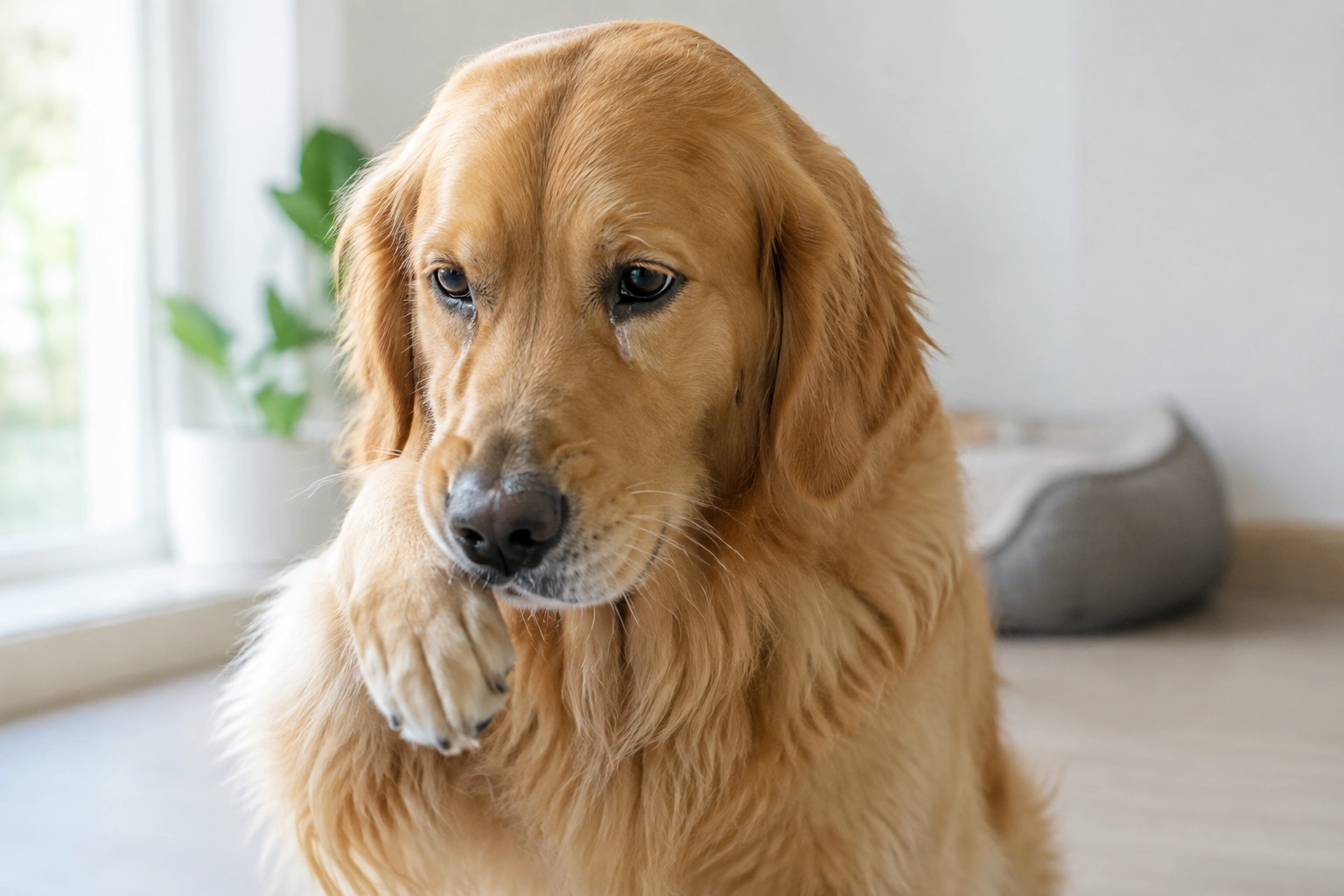
That combination points toward a mild upper respiratory issue more than a random one-off sneeze. A single sneeze here and there can be normal, especially if your dog is otherwise bright, eating normally, and breathing comfortably. If the sneezing is repeated, the cough is new, or your dog seems a little quieter than usual, a cold-like illness becomes more plausible.
A useful rule: a dog with a possible cold should look a little “off,” not seriously ill. The difference matters.
What a “dog cold” actually means
People often say “my dog has a cold,” but in practice that phrase is more of a description than a diagnosis. It usually means your dog has mild respiratory symptoms that resemble a human cold.
Veterinary guidance commonly describes dog-cold signs as sneezing, coughing, nasal congestion, watery eyes, runny nose, sore throat, and reduced energy. Some dogs may also seem less interested in food. Sources from veterinary clinics and pet health organizations note that these signs can look very similar to the human version, which is why owners often notice the problem before they know the cause.
That overlap is exactly why the term can be misleading. Two dogs can both have “cold-like” symptoms, but one may have a mild viral irritation while the other has kennel cough or something more serious.
Common signs that fit a mild cold
If you are trying to compare what you see at home against a realistic baseline, these are the symptoms that most often fit a mild cold-like illness:
- Sneezing
- Mild, occasional coughing
- Runny nose
- Watery eyes
- Nasal congestion
- Slightly lower energy
- A little less interest in food
The key word is mild. A dog with a simple cold usually does not look severely distressed. The symptoms may be annoying, but they should not be rapidly worsening or making it hard to breathe.
A Border Collie might still chase a ball, follow you around the house, or try to train even while feeling mildly unwell. That can fool owners into thinking nothing is wrong. Watch for the smaller signs instead: shorter play bursts, slower recovery after activity, less enthusiasm for training, or choosing to lie down sooner than usual.
When it is probably not just a cold
Some symptoms should move you away from “watch and wait” and toward veterinary advice.
Call a veterinarian promptly if your dog has:
- Trouble breathing
- Faster or noisier breathing than normal
- Thick nasal discharge
- A cough that keeps getting worse
- Refusal to eat or drink
- Marked lethargy
- Signs of pain
- Fever or obvious weakness
Veterinary sources consistently warn that cold-like symptoms can resemble more serious disease. That is the problem with relying on the label “cold” too early: it can delay care when the real issue is not minor.
If your dog is still interactive but clearly not themselves, that is worth monitoring closely. If they are dull, weak, or breathing differently, don’t manage it as a routine cold at home.
Dog cold vs kennel cough, allergies, and canine flu
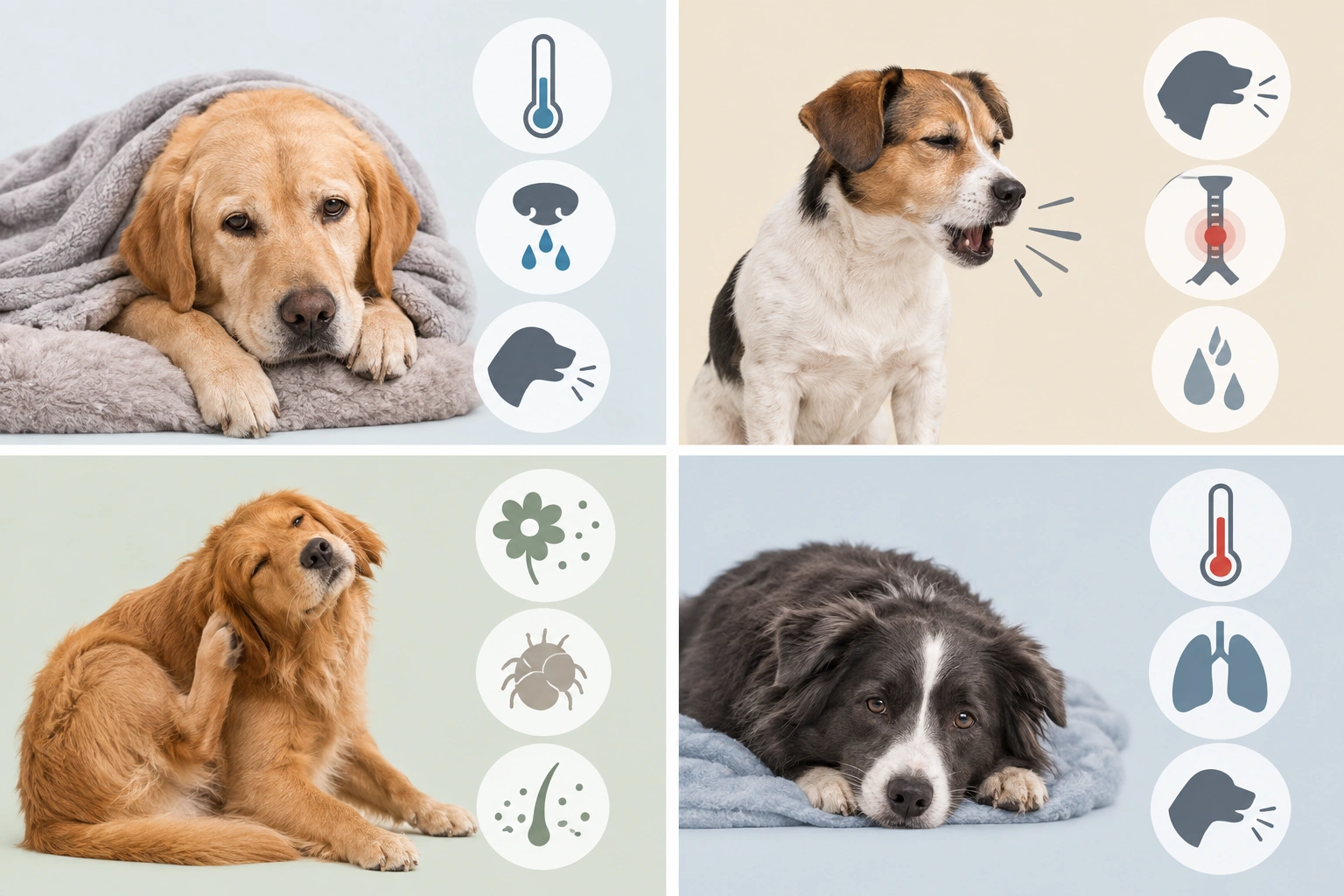
This is the part most owners need help with. The symptoms overlap, but the pattern often gives you clues.
| Condition | Common pattern | What points toward it | What makes it less likely |
|---|---|---|---|
| Mild cold-like illness | Sneezing, mild cough, runny nose, watery eyes, low energy | Mild symptoms, dog still fairly normal, gradual improvement | Breathing trouble, severe lethargy, worsening cough |
| Kennel cough | Dry, frequent cough; may gag or retch afterward | Recent daycare, boarding, grooming, or dog-park exposure; cough is more prominent than sneezing | Mostly watery eyes and sneezing without much cough |
| Allergies | Sneezing, watery eyes, clear discharge, symptoms that come and go | Symptoms tied to outdoor exposure, pollen, dust, or seasonal patterns | Fever, thick discharge, worsening tiredness |
| Canine flu or more serious respiratory infection | More obvious illness, cough, fever, reduced appetite, low energy | Known exposure to sick dogs, symptoms are stronger or spreading | Very mild signs that improve quickly |
A practical way to think about it:
– More sneezing and watery eyes can lean toward allergies or a mild cold.
– More cough raises kennel cough higher on the list.
– More tiredness, appetite loss, or fever makes a simple cold less convincing.
If your dog’s cough is dry and persistent, or if it ends in gagging, kennel cough deserves more suspicion than a basic cold. If the symptoms are mostly seasonal and show up after time outdoors, allergies become more plausible. If the dog seems genuinely ill rather than just a little congested, think beyond a cold.
For a broader health check framework, you may also find our guide on how to tell if your dog has tooth pain useful, because pain can sometimes make a dog seem quiet or off in ways owners first mistake for illness.
How contagious a dog cold might be
Contagiousness depends on the underlying cause. That is the honest answer.
For other dogs, a cold-like illness may be contagious, especially if it is actually kennel cough, canine flu, or another respiratory infection. Until you know what you’re dealing with, it is smart to keep your dog away from other dogs.
For people, the practical bottom line is more reassuring: a typical dog cold is not considered a meaningful risk to humans. Most common dog respiratory illnesses are species-specific. Still, if your dog is sick, basic hygiene is sensible—wash your hands after handling discharge, and avoid letting your dog lick your face while they are symptomatic.
A good decision rule is this: if the symptoms began after daycare, boarding, grooming, or dog-park exposure, keep your dog separate from other dogs until they are clearly improving and you have a better sense of the cause.
What to do at home while you monitor symptoms
Give your dog extra rest and reduce activity for a day or two. That does not mean complete confinement unless your dog is the type to overdo it; it means skipping intense fetch sessions, hard training, long runs, and anything that drives breathing harder than usual.
The next priority is hydration. Make fresh water easy to access and watch whether your dog is drinking normally. A dog that is still eating and drinking is generally easier to monitor than one that is going off both.
Keep a simple eye on the pattern:
– Is the cough more frequent or less frequent?
– Is the discharge clear or becoming thicker?
– Is energy stable, improving, or dropping?
– Is appetite normal, reduced, or absent?
A 24- to 48-hour window is useful because mild viral irritation often shows some improvement with rest. If the dog is not trending better, the problem may not be a simple cold.
Do not give human cold medicines, pain relievers, or decongestants unless your veterinarian specifically tells you to. One of the most common mistakes owners make is trying to treat a dog like a small human. That can be dangerous.
How long a dog cold usually lasts and what recovery should look like
A mild cold-like illness often improves over several days, though the exact duration can vary depending on the cause. If symptoms are still present after a few days without improvement, or if they are getting worse, that is a reason to check in with your veterinarian.
What you want to see is a downward trend in symptoms. A dog that is slowly improving, drinking well, and breathing normally is a very different case from one that is getting quieter, coughing more, or losing interest in food.
If symptoms are lingering without improvement, or if they are changing shape instead of fading, it is time to stop assuming it’s a simple cold.
When to see a veterinarian or certified trainer
This is a veterinary issue first, not a training issue. A trainer cannot diagnose respiratory illness.
Monitor at home if your dog:
– Has a few sneezes or a mild cough
– Is eating and drinking normally
– Is breathing comfortably
– Still has decent energy
– Seems mildly off but not sick
Call the vet now if your dog:
– Has trouble breathing
– Has faster or noisier breathing than normal
– Has thick nasal discharge
– Has a cough that keeps getting worse
– Refuses to eat or drink
– Is markedly lethargic
– Shows signs of pain
– Has fever or obvious weakness
– Seems worse instead of better after 24 to 48 hours
For a non-urgent but still concerning case, book a vet visit if:
– symptoms last without improvement
– the cough becomes more frequent
– your dog had recent exposure to sick dogs
– energy drops more than you expected
– appetite is reduced even if only mildly
If you are ever unsure whether to wait, err on the side of a vet call. Cold-like symptoms are one of those areas where early clarification can save time and worry.
How to reduce the chance of another respiratory illness
Prevention here is mostly about exposure management.
Limit contact with obviously sick dogs. Be cautious with daycare, boarding, and crowded dog settings when respiratory illness is moving around. If your dog comes home with a cough or sneezing after a social setting, treat that as a reason to observe closely and separate them from other dogs.
Good general health also helps your dog handle illness better, even if it does not guarantee prevention. A dog that is well-rested, not overworked, and kept away from avoidable exposure is in a better position than one that is constantly bouncing between high-contact environments.
If your dog spends a lot of time around other dogs, ask your veterinarian whether their vaccination plan and lifestyle risks are aligned. That is especially relevant for kennel cough and canine influenza risk management.
Border Collie note: why high-energy dogs can be easy to misread
Border Collies are good at acting “fine” when they are not. Many will still want to work, chase, or follow routines even when they feel under the weather.
That means you should not judge illness only by whether your dog still seems eager. Look at the quality of the effort. Is the dog slower to start? Less sharp in training? Taking longer to settle after exercise? Choosing rest sooner than usual?
Those subtle changes often show up before obvious sickness does. With a Border Collie, that early read can be the difference between simple monitoring and missing a worsening respiratory problem.
Bottom line
If your dog has sneezing, a mild cough, watery eyes, a runny nose, and a little less energy, a mild cold-like illness is possible. But those same signs can overlap with kennel cough, allergies, canine flu, and other respiratory problems.
Use the pattern, not just the label. Mild and improving can often be watched at home. Worsening, breathing changes, appetite loss, or marked lethargy should move you to a veterinarian quickly.
FAQ
Can dogs get colds like people do?
Dogs can get cold-like upper respiratory illnesses, but the term “dog cold” is just a general description. It does not point to one specific diagnosis.
Is a dog cold contagious to other dogs?
It can be. Some causes of cold-like symptoms spread easily between dogs, especially kennel cough and canine flu. Keep a symptomatic dog away from other dogs until you know more.
Can people catch a dog cold?
Usually no, not in any meaningful way. Most common dog respiratory illnesses are not considered a major risk to people, but basic hygiene is still a good idea.
How long does a dog cold last?
A mild case often starts to improve over several days, but the exact length depends on the cause. If symptoms are not improving after a few days, call your vet.
When should I call the vet?
Call right away for breathing trouble, worsening cough, thick discharge, refusal to eat or drink, marked lethargy, or any sign your dog is getting worse instead of better.