
How to Tell If Your Dog Has Tooth Pain: Signs, Checks, and Next Steps

A dog with tooth pain does not always cry, whine, or stop eating completely. More often, the clues are quieter: a Border Collie example that suddenly chews on one side, drops kibble, avoids a favorite tug toy, or pulls away when you touch the face. That is why dental pain is easy to miss until it becomes serious.
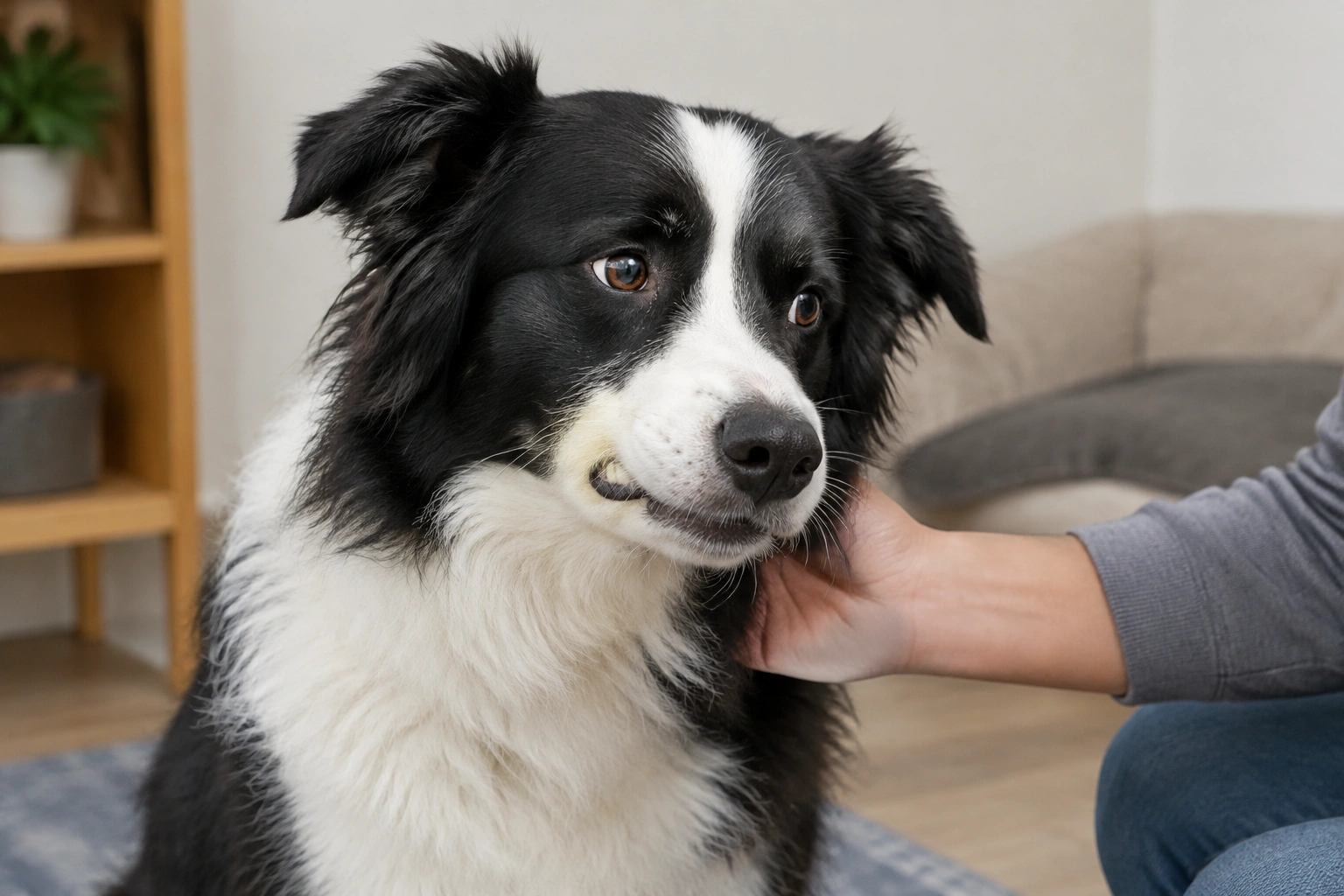
The practical goal is not to diagnose the exact tooth at home. It is to spot the pattern early enough to get the right help before the problem turns into a fractured tooth, an abscess, or a dog that refuses food altogether.
How Dog Tooth Pain Usually Shows Up
The most reliable sign is often a change in how the dog uses the mouth, not a dramatic reaction. A dog may still act fairly normal between meals, but become cautious when eating, chewing, or being touched around the muzzle.
Watch for these patterns:
- chewing on one side only
- dropping food from the mouth
- taking food, then backing away or chewing slowly
- avoiding hard kibble, bones, antlers, or tough chew toys
- pawing at the mouth after chewing
- head shyness, especially if you reach toward the face
- sudden reluctance to play tug or fetch if the toy requires hard gripping
Some dogs also become less social or more irritable. That matters because mouth pain can make a dog react before you see anything obvious inside the mouth. A dog that usually tolerates handling may suddenly flinch, turn away, or snap when the jawline is touched.
A useful rule: if the behavior change appears around eating, chewing, or face handling, treat oral pain as a serious possibility even if the dog still seems bright otherwise.
Behavior, Eating, and Chewing Changes That Point to Dental Pain
This is where owners often mistake pain for pickiness.
A dog refusing dry food but accepting soft food may not be “being fussy.” It may be avoiding pressure on a painful tooth or inflamed gum. That difference matters because a dog with dental pain can still eat something easy, which delays the diagnosis.
Compare these common patterns:
| What you notice | What it may suggest |
|---|---|
| Eats softer food but avoids kibble | Pain with biting or crunching |
| Drops food while chewing | Pain, loose tooth, or oral injury |
| Chews only on one side | Localized tooth or gum problem |
| Stops enjoying chew toys | Chewing pressure may hurt |
| Eats slowly or pauses often | Mouth discomfort, not just appetite loss |
Tooth pain can also look like a general appetite problem. A dog with a dental issue may walk to the bowl, sniff, and walk away. That can resemble nausea, stress, or another illness. The clue that pushes the suspicion toward the mouth is the chewing pattern: one-sided chewing, careful bites, or reluctance to crunch.
A Border Collie example that is usually intense about food but suddenly handles meals cautiously deserves attention. In dogs like this, discomfort may show up as a change in how they chew rather than a complete refusal to eat.
Visible Mouth and Face Clues to Check For
Some signs are visible if the dog allows a calm, brief look.
The most common ones include:
- bad breath that is noticeably worse than usual
- red or swollen gums
- bleeding at the gumline
- a broken, chipped, or discolored tooth
- one area of the face looking puffy or tender
- wetness or saliva around the lips
- a foreign object stuck between teeth or along the gums
Bad breath alone is not enough to prove pain. But bad breath plus red gums, chewing changes, or mouth sensitivity is much more concerning. That combination can point to periodontal disease or gingivitis, both of which can be painful even before the problem looks severe from the outside.
Facial swelling is especially important. Swelling under the eye, along the jaw, or near one side of the muzzle can suggest an abscess or another problem that needs prompt veterinary care. If the face looks uneven, do not wait to “see if it passes.”
For a general reference on oral health and dental disease signs, the ASPCA’s dental care guidance is a useful starting point, and your veterinarian should make the final call on what the signs mean.
What You Can Safely Check at Home
A home check should be gentle, brief, and low-risk. The goal is to gather clues, not force a full dental exam.
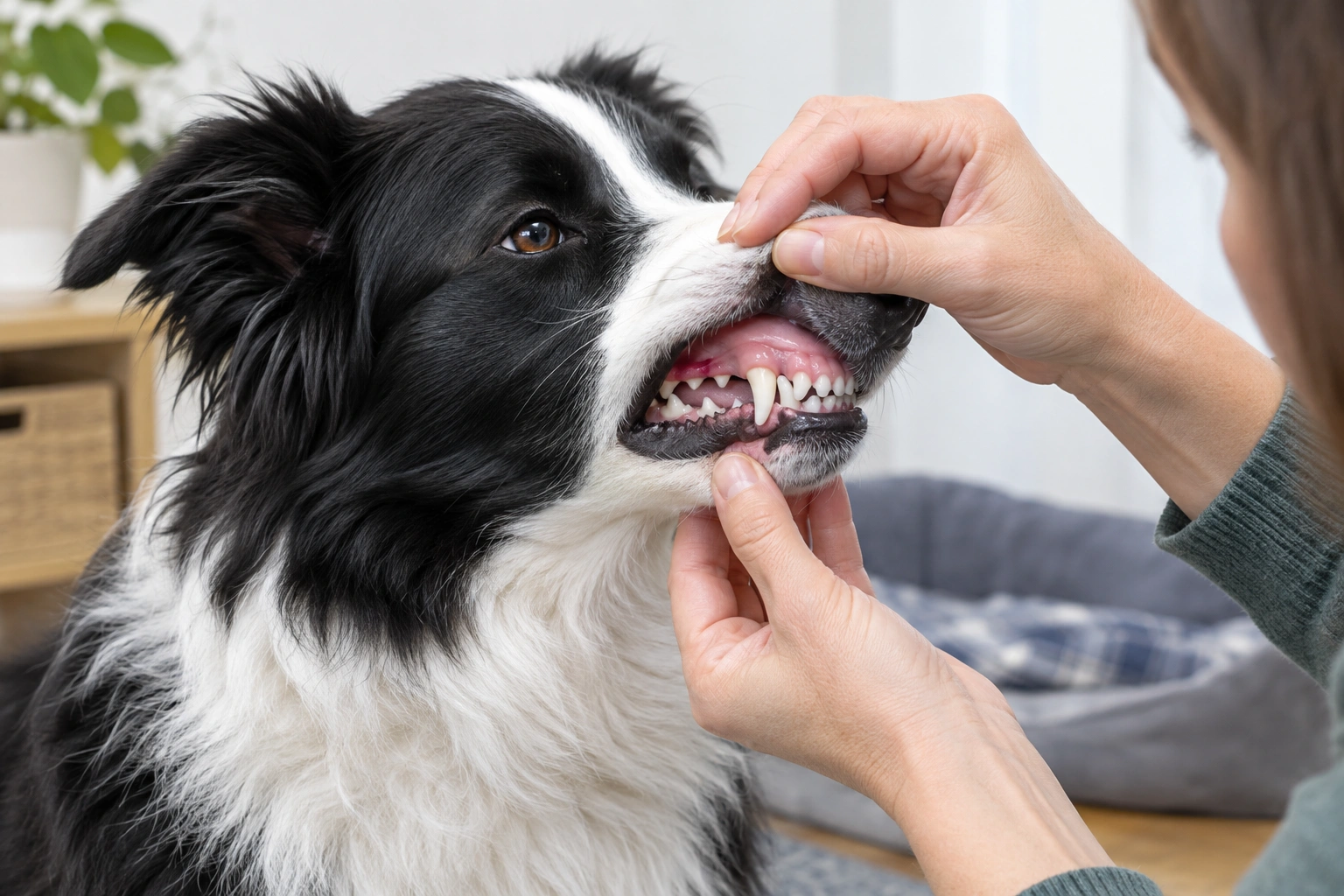
Use this approach:
- Wait for a calm moment. Do not try this when the dog is excited, guarding food, or already irritated.
- Lift the lips only. You are looking, not prying the mouth open.
- Check both sides of the face. Look for swelling, asymmetry, or signs the dog avoids touch on one side.
- Look at the gums and visible teeth. Note redness, bleeding, broken teeth, or dark discoloration.
- Stop if the dog pulls away, stiffens, or shows stress. Painful dogs may bite defensively.
Do not reach deep into the mouth, and do not try to pull the jaw open if the dog resists. A dog in pain can react fast, even if it has never shown aggression before.
If you can safely and calmly see a foreign object such as a stick fragment or string-like material, do not yank it out unless it is clearly loose and superficial. Pulling can worsen injury. When in doubt, stop and call the vet.
A good home check tells you whether the issue looks mild and local or painful enough to need prompt care. It does not replace a veterinary exam.
What Can Cause Tooth Pain in Dogs
Several problems can produce similar signs, which is why guessing at home usually leads to delays.
Periodontal disease and gingivitis
This is one of the most common reasons dogs develop mouth pain. Plaque and tartar irritate the gums first, then the tissues supporting the teeth. Early on, the mouth may just smell bad and the gums may look red. Later, chewing can become uncomfortable, and teeth may loosen.
Fractured teeth
A tooth can crack after chewing hard objects, hitting something solid, or biting down awkwardly. A fracture may expose sensitive tissue inside the tooth, which can be very painful even if the break looks small from the outside.
Dental abscesses
An abscess is an infected pocket that can form around a tooth root or damaged tooth. These often cause swelling, pain, and sometimes a dog that seems otherwise unwell. Facial swelling is a major clue.
Oral foreign bodies
Sticks, bone fragments, grass awns, string, or other debris can lodge between teeth or under the gums. The dog may paw at the mouth, chew awkwardly, or refuse to eat.
Malocclusion
This means the teeth do not fit together normally. The problem can create chronic rubbing, gum trauma, or uneven wear that becomes painful over time.
A veterinary dental exam is the only way to sort these out properly. The VCA Hospitals dental care overview is a helpful general resource if you want to understand what veterinarians usually look for.
When It’s Urgent vs When It Can Wait Briefly
Some cases can be watched for a short time. Others should be seen promptly.
Emergency-level signs: seek immediate veterinary attention
- severe facial swelling
- inability to eat or drink
- bleeding that does not stop
- inability to close the mouth
- collapse
- marked lethargy
- fever or other signs of systemic illness
Can wait briefly for a regular appointment
- mild bad breath with no other signs
- occasional chewing change that is not worsening
- slight gum redness without swelling or bleeding
- a dog still eating normally and acting comfortable otherwise
Needs prompt veterinary care
- refusal to eat or drink
- facial swelling
- bleeding from the mouth
- obvious broken or loose tooth
- strong pain when the face is touched
- repeated pawing at the mouth
- a suspected foreign object that cannot be safely removed
- sudden worsening over hours to a day
If your dog is not eating because the mouth hurts, do not assume it is only temporary. Oral pain can escalate quickly, and dogs often hide discomfort until they cannot compensate anymore.
If the dog seems very painful, has swelling, or is bleeding, treat it as urgent rather than waiting for a routine cleaning appointment.
What a Veterinarian Will Do to Diagnose the Problem
A vet visit for suspected tooth pain usually begins with a physical exam and a careful look at the mouth if the dog will allow it. The vet may check for gum inflammation, loose teeth, broken teeth, swelling, and signs of pain when the jaw or face is handled.
For a complete oral exam and dental radiographs, many dogs need sedation or anesthesia. That is common and helps the vet safely examine the mouth, evaluate below the gumline, and get accurate X-rays of the teeth and roots.
In many cases, the most important next step is dental radiographs. These are X-rays of the teeth and roots. They matter because a tooth can look only mildly damaged above the gumline while the root, bone, or surrounding tissue is much worse underneath.
That is one reason home inspection is limited. You can see the surface. The vet can evaluate the hidden part that often explains the pain.
Depending on the findings, the vet may recommend:
– professional cleaning
– extraction of a damaged or infected tooth
– removal of a foreign object
– pain relief prescribed for dogs
– antibiotics in select cases, if infection is present and the vet thinks they are appropriate
How Dog Tooth Pain Is Typically Treated
Treatment depends on the cause, but the key point is this: pain relief should come from a veterinarian, not from the medicine cabinet.
A broken tooth may need extraction or another dental procedure. Periodontal disease may need cleaning and removal of diseased tissue or unstable teeth. An abscess often needs prompt treatment because the infection is not just uncomfortable; it can keep spreading.
Do not give human pain medications. Some are dangerous for dogs, and dosing errors can cause severe harm. Even when people mean well, this is one of the most common ways dental problems become medical emergencies.
If your vet suspects a serious dental issue, the goal is to remove the source of pain, not just cover it up for a day or two.
What to Do While You’re Waiting for the Vet
Short-term management should make chewing easier without risking more damage.
Helpful steps:
– offer soft food if the dog is willing to eat it
– soak kibble in warm water if needed
– remove hard chews, bones, antlers, and rope toys
– avoid tug games if the mouth seems sore
– keep handling around the face gentle and brief
If the dog will not eat, has swelling, or seems worse, do not keep “trying home care” for long. That delay can be costly.
Do not use leftover antibiotics, human painkillers, or any product that has not been prescribed for your dog’s current issue. If you are unsure whether the dog can safely wait, call your veterinarian and describe the eating changes, swelling, and behavior changes clearly.
How to Help Prevent Future Dental Pain
The best prevention is boring, consistent maintenance.
That usually means:
– regular tooth brushing if your dog tolerates it
– routine veterinary dental checks
– paying attention to bad breath before it becomes severe
– not giving very hard chews that can fracture teeth
– addressing chewing changes early instead of waiting
Early action matters because dental disease often builds quietly. A dog can seem fine until the pain becomes hard to ignore. If you notice a small change in chewing or breath, that is the time to pay attention, not after the dog starts refusing meals.
For owners who want broader dog-care guidance, you may also find our related article on how to tell if your dog has tooth pain helpful for comparing subtle signs with urgent red flags.
When to See a Veterinarian or Certified Trainer
See a veterinarian promptly if your dog has facial swelling, bleeding, a broken tooth, refuses food, or reacts painfully when touched around the mouth. If the issue is not clearly dental and your dog is also showing fear, guarding, or handling sensitivity, a certified trainer can help you manage safe handling while the medical problem is being addressed.
FAQs
Can a dog have tooth pain without drooling or pawing at the mouth?
Yes. Some dogs show pain mainly through eating changes, one-sided chewing, or avoiding hard food. Drooling and pawing can happen, but they are not required for a dental problem to be real.
Is bad breath always a sign of tooth pain?
No. Bad breath can have different causes. But if it comes with red gums, chewing changes, or mouth sensitivity, dental disease becomes much more likely.
Why is my dog chewing on one side only?
That often suggests one side of the mouth is uncomfortable. A painful tooth, inflamed gum, fracture, or foreign object may be involved.
Can I look inside my dog’s mouth at home?
Yes, if you keep it gentle and brief. Lift the lips, look for swelling, bleeding, broken teeth, or redness, and stop if the dog resists or seems painful.
What if my dog still eats soft food?
That does not rule out tooth pain. Many dogs can manage soft food while avoiding anything that hurts to bite or crunch.
Should I wait and see if it improves?
Only briefly if the signs are mild and your dog is still eating normally. If the problem is worsening, painful, or paired with swelling or bleeding, call the vet promptly.
Do dental problems in dogs usually need treatment?
Often, yes. Cleaning, extraction, removal of a foreign object, or prescribed pain relief may be needed depending on the cause. Home care alone usually is not enough.
Can I give human pain medicine?
No. Human pain medications can be unsafe for dogs and should not be used unless a veterinarian specifically directs you to do so.
How can I lower the risk of future dental pain?
Regular brushing, routine vet checks, and avoiding very hard chew items are practical ways to reduce risk and catch problems earlier.