
Why Does My Dog Cough After Drinking Water? A Practical Guide for Dog Owners

If your dog coughs after drinking water, the first question is whether it was a one-off reaction or a pattern. A brief cough after a big gulp can happen when a dog drinks too fast, especially after exercise or excitement. But coughing after drinking can also point to a throat, airway, or swallowing problem that deserves a vet check.
The most useful distinction is timing. A cough or gag during the actual drinking moment can suggest the dog is struggling to coordinate swallowing, while coughing that starts seconds to minutes later may point more toward airway irritation, aspiration, or another medical issue. If your dog is bright, breathing normally, eating, and the cough stops quickly, you may be dealing with a pace problem. If the coughing happens every time, comes with gagging, lethargy, fever, or breathing changes, treat it as a medical issue until proven otherwise.
Quick answer: when it is normal and when it is not
A dog that coughs once or twice after drinking may simply have gulped too quickly. That is especially plausible if the dog was excited, thirsty after a walk, or rushed to the bowl after play. In those cases, the cough is usually brief and the dog goes right back to normal.
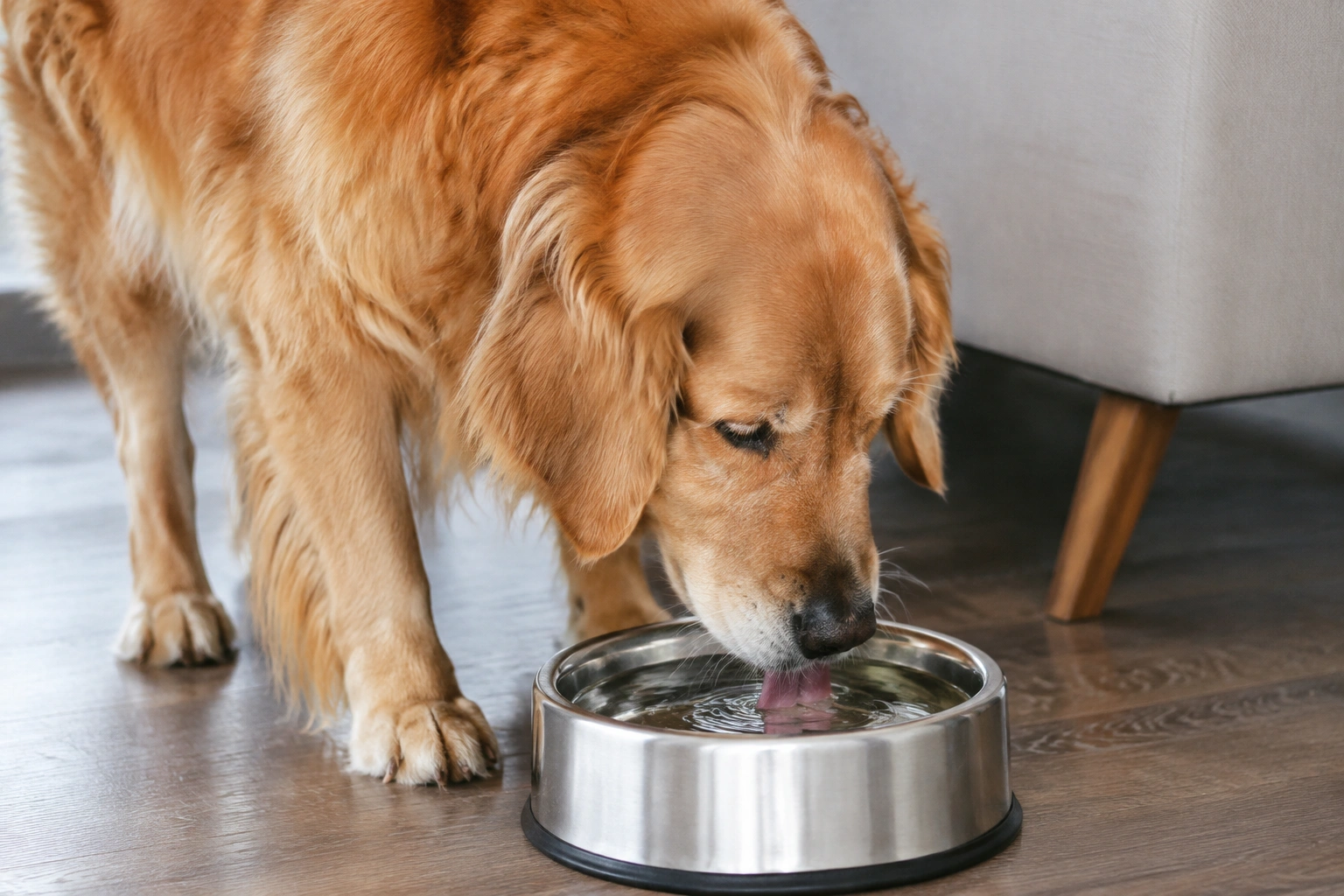
What makes me more suspicious is a pattern. Coughing after nearly every drink, coughing that is getting worse, or coughing that appears even when the dog is calm can suggest something beyond fast drinking. The main concerns are aspiration, kennel cough or another respiratory infection, throat irritation, tracheal problems, or a swallowing disorder affecting the esophagus or larynx.
A practical rule: one mild episode with a normal dog can often be watched; repeated episodes or any illness signs should be evaluated.
Emergency: when coughing after drinking needs immediate help
If coughing is followed by obvious breathing distress, treat it as an emergency.
Get urgent veterinary help right away if your dog:
- is struggling to breathe or breathing with obvious effort
- has blue, gray, or pale gums
- collapses, becomes extremely weak, or cannot stay standing
- keeps choking or cannot seem to clear the airway
- has sudden severe distress after drinking, which can suggest aspiration or a blocked airway
If you suspect aspiration and your dog is having trouble breathing, do not force water, food, or medication. Keep the dog calm, limit movement, and contact an emergency veterinarian immediately. If the dog is choking and cannot breathe normally, that is an emergency, not a wait-and-see situation.
Coughing, gagging, or choking: how to tell the difference
People often use these words interchangeably, but they point to different problems.
| Symptom | What it tends to look like | Why it matters |
|---|---|---|
| Coughing | A forceful expulsion of air, often dry or hacking | Suggests airway irritation, infection, or sometimes aspiration |
| Gagging | Retching or throat-clearing sounds, sometimes with saliva or foam | Can point to throat irritation, swallowing trouble, or something stuck |
| Choking | Trouble moving air, panic, pawing at the mouth, inability to breathe normally | Emergency if the airway is blocked |
If your dog is coughing but still breathing comfortably, that is very different from a dog who cannot get air in, is collapsing, or has blue or pale gums. Choking is not a “wait and see” problem.
Gagging after drinking can be especially useful as a clue. It may suggest the issue is happening in the throat rather than deep in the chest. That does not mean it is harmless; it just changes the likely cause.
Common harmless reasons dogs cough after drinking water
The most common non-serious explanation is simple: the dog drank too fast. When a dog gulps water, a little can go the wrong way or trigger a brief cough as the throat clears. This is more likely if the dog is very thirsty, just finished running, or is excited by the water bowl.
A few everyday factors can make this more likely:
- Post-exercise drinking: a dog that goes straight from sprinting to a full bowl may gulp hard.
- Excitement: some dogs drink in a rush when they are overstimulated.
- A deep or awkward bowl setup: if the dog has to lower the head a lot or jam the muzzle into a narrow bowl, drinking mechanics can be less smooth.
- Temporary throat irritation: dry air, dust, or mild irritation can make a cough more likely right after swallowing.
The key test is whether the dog quickly settles and acts normal afterward. If the cough is brief and isolated, the explanation may be pace rather than disease. If the dog keeps coughing, seems uncomfortable, or starts avoiding water, the “just drank too fast” explanation starts to lose weight.
When post-drinking coughing points to a medical problem
Coughing after water is not a diagnosis; it is a symptom. Several medical issues can show up this way.
Aspiration and aspiration pneumonia
Aspiration means water or material may have gone into the airway instead of the esophagus. A single small aspiration event may cause a cough right away. The bigger concern is aspiration pneumonia, which can develop if fluid or material reaches the lungs and causes inflammation or infection.
Warning signs that raise concern include:
- coughing that continues after the drink
- lethargy
- fever
- reduced appetite
- faster or harder breathing
- nasal discharge
- worsening cough over hours to days
If your dog coughs after drinking and then seems off later that day or the next day, aspiration moves higher on the list.
Kennel cough and other respiratory infections
Infections can make the airway sensitive, so drinking may trigger coughing even if the water itself is not the true cause. Kennel cough is one example. Dogs with respiratory infections may also show sneezing, nasal discharge, or coughing at other times, not just at the bowl.
The detail that matters is this: if the cough happens only after drinking, infection is not the only explanation, but it remains on the table, especially if the dog is otherwise ill.
Tracheal or laryngeal irritation
The trachea and larynx are part of the upper airway. If they are inflamed or irritated, swallowing can trigger a cough. Some dogs make a dry, harsh cough that stands out from a simple throat-clear.
That does not prove a diagnosis on its own, but it is not something I would ignore if it repeats.
Esophageal or swallowing problems
If the esophagus is not moving water smoothly, the dog may cough, gag, or seem to struggle right after swallowing. This is a different problem from a dog that simply drinks too fast. Repeated coughing with swallowing difficulty suggests the issue may be mechanical or neurologic rather than behavioral.
If the dog seems to pause mid-drink, repeatedly gags after water, or coughs during swallowing rather than afterward, that deserves veterinary attention. Repeated coughing after drinking can also point to a swallowing dysfunction or esophageal disorder that may need diagnostics such as a swallow study or fluoroscopy, not just a general exam.
Heart disease and other internal causes
Some dogs cough for reasons that are not directly about the water at all. Heart disease can cause coughing, and the timing may make it look linked to drinking. Allergies or throat irritation can also play a role. The important point is that coughing after water does not rule these out.
For general cough background, VCA Hospitals’ dog cough guidance is a useful reference on the range of causes veterinarians consider.
Red-flag symptoms that mean your dog needs prompt or urgent veterinary care
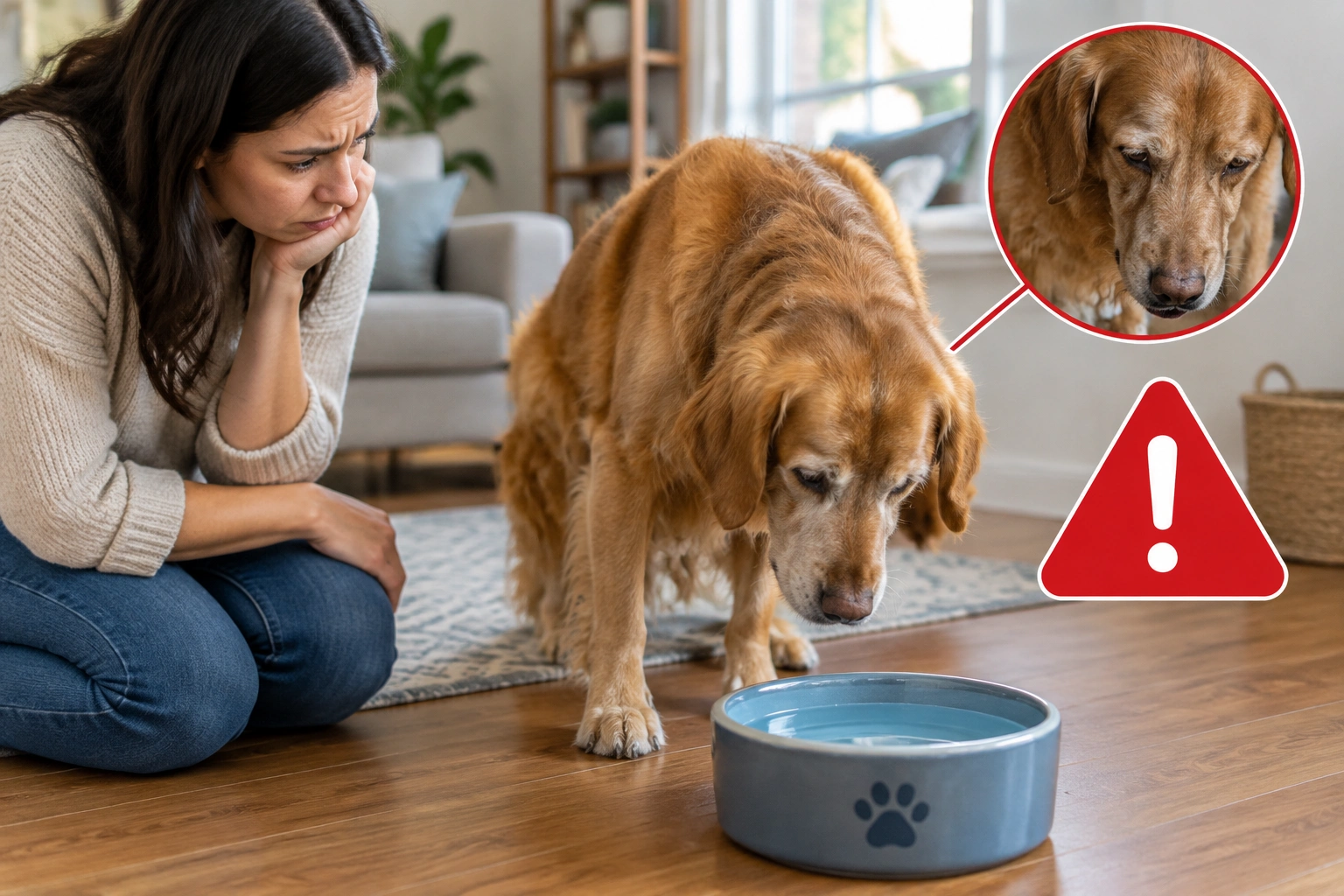
Some signs change this from a home-monitoring issue to a same-day or emergency problem.
Seek urgent veterinary care if your dog has any of these:
- trouble breathing
- blue or pale gums
- collapse or extreme weakness
- nonstop choking or repeated unsuccessful swallowing
- fever
- marked lethargy
- reduced appetite
- nasal discharge along with coughing
- coughing that is getting worse
- repeated coughing after every drink
- obvious pain or panic while swallowing
If the dog cannot settle after the episode, is breathing with effort, or seems unable to clear the airway, do not wait. And do not force water into a dog that is coughing or choking.
A short cough followed by normal energy is one thing. A cough followed by a sick dog is another.
What repeated episodes can tell you about the cause
Frequency matters more than people often realize.
Occasional and isolated
If it happens once after a big gulp and never again, fast drinking is a reasonable explanation. I would still watch the dog for a few days, but the odds lean toward a minor pacing issue.
Happens after most drinks
When the cough appears after nearly every drink, I become more concerned about swallowing mechanics, throat irritation, or airway sensitivity. At that point, a bowl change may help, but it should not be the only plan.
Gets worse over time
A worsening pattern is a red flag. Dogs do not usually “train out” a medical cough. If the problem progresses, the cause may be structural or inflammatory rather than behavioral.
Only happens after exercise or excitement
That pattern often suggests the dog is gulping. Some energetic dogs go from hard exercise to hard drinking in seconds. In that case, the fix may be slowing the pace and giving a few calm minutes before the bowl is available.
What you can safely do at home to reduce coughing after drinking
If your dog otherwise seems well, these changes are low risk and often useful.
Give smaller amounts at a time
Instead of leaving a full bowl available right after exercise, offer a smaller portion and refill as needed. The goal is to reduce the “slam the whole bowl” behavior.
Use a wider, shallower bowl
Some dogs do better with a bowl that lets them drink without crowding their muzzle. A shallow setup can help a dog take steadier sips.
Pause after hard exercise
Let your dog settle for a few minutes before offering a large drink. A dog that is panting hard is much more likely to gulp.
Consider smaller, measured drinks only if your dog is otherwise normal
For a dog that is simply drinking too fast, you can offer a few measured sips at a time rather than a full bowl. Ice cubes may be fine for some dogs, but they are not right for every dog and should not be used if they seem to trigger coughing, gagging, or dental discomfort.
Do not force water
Do not syringe water, tip a bowl into the mouth, or pressure a dog to drink if it is coughing, gagging, or struggling to swallow. That can make aspiration more likely.
Watch the first few drinks
You do not need to hover forever. But watching the first one or two drinks after a change tells you a lot. If the coughing disappears when the dog slows down, that supports a pacing issue.
Keep the water clean and fresh
This will not fix aspiration or airway disease, but it can reduce irritation from dirty bowls or stale water.
These changes are management tools, not a substitute for care if the dog is clearly unwell.
When a slow-feeder bowl helps — and when it won’t
A slow-feeder bowl can help if the problem is mostly speed. That is the best fit when the dog gulps, coughs once, and then acts completely normal.
It is less helpful if the dog seems to cough because swallowing is awkward, because the cough sounds harsh or dry, or because the dog shows other signs of illness. In those cases, the bowl may change the pace but not the cause.
A simple decision rule:
- Likely helpful: one-off coughing, fast drinking, excited dog, otherwise normal
- Less likely to help: coughing every time, gagging, repeated illness signs, worsening pattern
If a slow-feeder bowl reduces the problem noticeably, that is useful information. If it does nothing, do not keep assuming the answer is just “drink slower.”
For a broader look at water intake patterns, you may also find our guide on Border Collie drinking lots of water helpful when you are trying to separate thirst from swallowing issues.
What a veterinarian may examine or test
If the coughing is repeated, worsening, or paired with other symptoms, a vet visit is the right next step. Expect the vet to start with history: when it happens, whether it is after every drink, whether there is gagging, and whether the dog seems normal between episodes.
A vet may then do:
- an oral and throat exam
- listening to the chest and airway
- chest X-rays to look for aspiration, pneumonia, airway changes, or heart-related signs
- a laryngeal exam if larynx problems are suspected
- a tracheal evaluation if a collapsed trachea or other airway issue is a concern
- a swallow evaluation when swallowing dysfunction is suspected
- fluoroscopy or contrast imaging if an esophageal disorder or abnormal swallowing pattern needs to be seen in motion
- additional tests based on the dog’s age, breed, and overall exam findings
That workup matters because the symptom alone does not tell the whole story. The same “cough after water” can come from a fast drinker, an irritated throat, or a dog with a genuine medical problem.
If you want a second reference point on urgent symptoms and emergency decision-making, GSVS’s guide to coughing and gagging in dogs is a solid overview from a veterinary hospital.
Special considerations if your dog seems otherwise normal
Some dogs look perfectly fine between episodes. That can be reassuring, but it does not automatically make the cough harmless. A dog with mild aspiration, airway irritation, or a swallowing problem may still eat, play, and act normal for a while.
That is why context matters more than the dog’s mood alone. A bright dog that coughs once after a fast drink may simply be fine. A bright dog that coughs after nearly every drink may still need an exam.
If your dog is a fast, enthusiastic drinker, especially after exercise, your first move can be to slow the pace and observe. If the pattern does not improve, or if anything else changes, stop treating it like a habit and start treating it like a symptom.
For dogs with repeated coughs that seem tied to drinking and eating, the AKC’s dog health resources are a helpful general place to cross-check what your vet is considering.
FAQ
Why does my dog cough after drinking water but not at other times?
That pattern often points to the act of swallowing rather than a constant cough problem. Fast drinking, throat irritation, aspiration, or a swallowing disorder can all show up mainly at the bowl.
Is coughing after drinking water an emergency?
It can be. If the cough is followed by breathing trouble, blue or pale gums, collapse, or repeated choking, seek emergency veterinary care right away.
Should I elevate my dog’s bowl?
Only if your veterinarian recommends it for your dog. Bowl height can help some dogs, but it can make things worse for others, especially if swallowing or airway problems are involved.
Can I give ice cubes to help?
Sometimes, but not always. Ice cubes may slow drinking for some dogs, but they are not a good idea if they trigger coughing, gagging, or dental discomfort.
When should I call my vet?
Call your vet if the coughing happens after most drinks, gets worse, or comes with gagging, lethargy, fever, appetite changes, or breathing changes.
Bottom line
A dog that coughs after drinking water is often reacting to drinking too fast. But repeated coughing, gagging, worsening symptoms, or any breathing change can signal aspiration, infection, airway irritation, or a swallowing problem.
Use the pattern to guide you:
- One brief cough, then normal: slow drinking and monitor
- Coughing after most drinks: schedule a vet visit
- Coughing plus lethargy, fever, breathing trouble, or blue/pale gums: urgent care
When in doubt, treat the pattern seriously. Dogs are good at hiding illness, and coughing after water is one of those symptoms where the difference between “annoying” and “important” often comes down to how often it happens and what else is going on.