
How Long Is a Dog Urine Sample Good For? A Practical Guide for Dog Owners

If you need a quick answer: a dog urine sample is best used as fresh as possible, ideally the same day it is collected. If there will be a delay, refrigerate it promptly. For many routine vet checks, a refrigerated sample can still be useful for a short period, but the longer it sits, the less trustworthy it becomes—especially for bacteria, crystals, and cell counts.
That is the practical rule. The details matter because not every urine test has the same tolerance for delay. A sample that is still acceptable for a basic urinalysis may be less reliable for culture, and a sample that sat warm on the counter is much more likely to mislead your vet than one that was chilled quickly.
If you are already trying to collect a sample, the cleanest method matters too. I cover that in more detail in how to collect a dog urine sample without stress or guesswork and how to get a urine sample from a dog without stress or mess.
Quick Answer: The Usable Time Window
The safest way to think about a dog urine sample is this:
- Best case: deliver it to the vet right away.
- If there is a delay: refrigerate it as soon as possible.
- If it sat out warm for hours: expect reduced reliability.
- If it is from the night before: it may still be accepted in some cases, but it is not ideal and the vet may ask for a fresh sample.
A practical rule of thumb is: if the sample has been unrefrigerated for more than about an hour, it is better to discard it and collect a new one; if it has been refrigerated promptly, it may still be usable for short delays, but check with your clinic because the test matters. Some veterinary sources are even stricter for certain checks, which is why the safest advice is to keep the sample cold and get it to the clinic as soon as possible.
The practical takeaway is simple: fresh is best, chilled is second-best, warm and delayed is the weakest option.
What Changes in Urine After Collection
Urine is not a fixed sample. Once it leaves the body, it starts changing.
Bacteria can multiply
If bacteria are present, warm storage gives them a better environment to grow. That matters because a sample can look more infected than it really was, or bacteria can be introduced by contamination and then multiply after collection.
Cells and crystals can shift
Over time, cells break down and crystals may form or change. That can affect microscopy and the interpretation of sediment. A sample that looked clear at collection may not look the same later, and the reverse can happen too.
Chemistry can drift
Urine chemistry is sensitive to time, temperature, and exposure to air. Specific gravity and other measurements can become less representative if the sample sits too long or is not handled consistently.
Evaporation and leakage distort the sample
If the container is not sealed well, the urine can concentrate as water evaporates. That can make the sample look more concentrated than it really was. Leakage also raises contamination risk.
This is why “the sample is still in the cup” is not the same as “the sample is still reliable.”
Room Temperature vs. Refrigerated Storage
This is the comparison most owners need in real life.
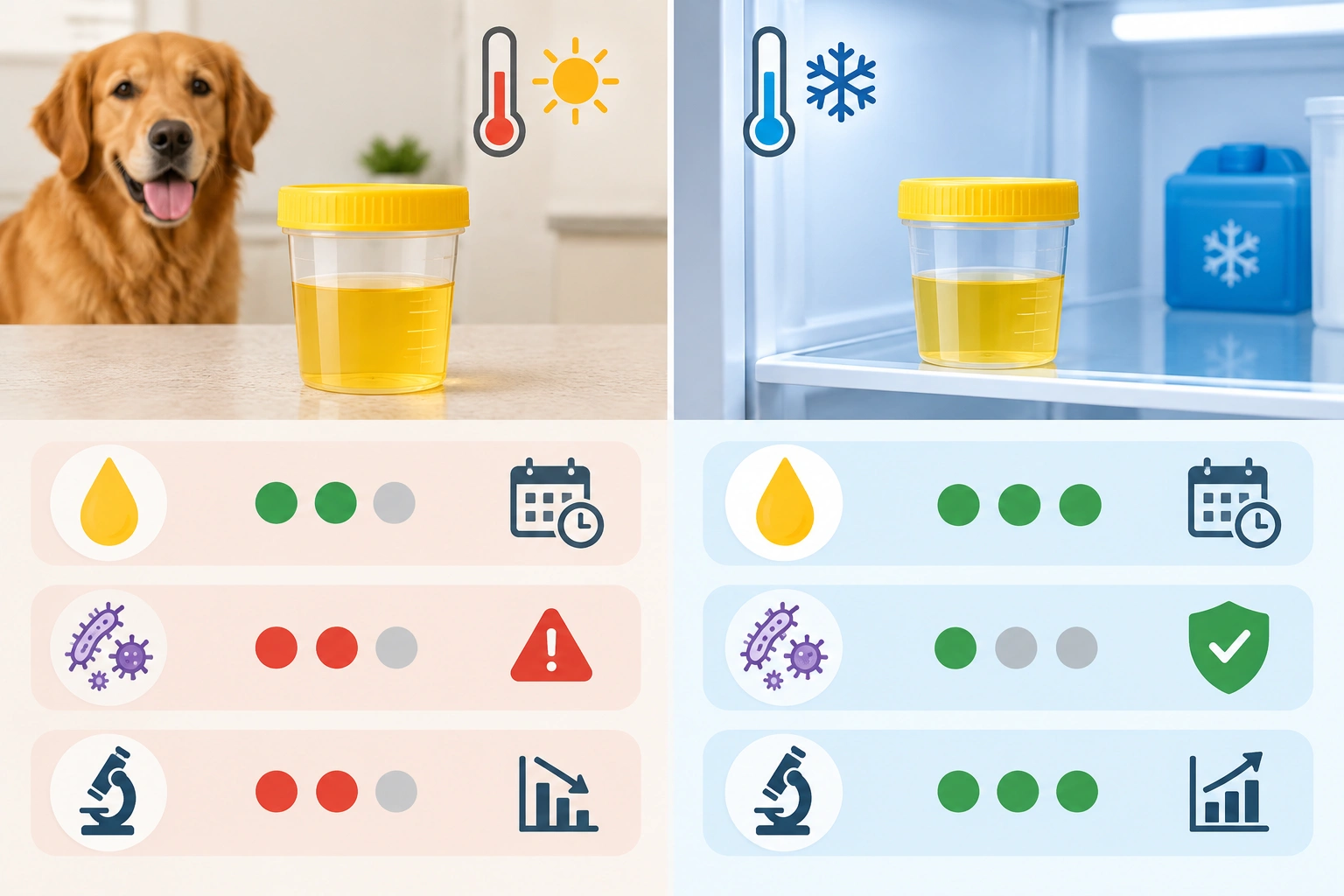
| Storage method | What it does well | Main risk | Practical use |
|---|---|---|---|
| Room temperature | Convenient for immediate drop-off | Faster bacterial growth and more chemical change | Only for very short delays |
| Refrigerated | Slows bacterial growth and sample breakdown | Does not preserve the sample perfectly | Better choice if there will be any meaningful delay |
Room temperature storage is only reasonable when the sample is going straight to the vet very soon. Once the delay stretches out, the sample becomes harder to trust.
Refrigeration does not make urine “fresh again.” It just slows the changes. That is an important distinction. A chilled sample is usually better than a warm one, but it is still a delayed sample.
A practical vet-guidance pattern shows up across multiple sources: if you cannot deliver it immediately, refrigerate it. One hospital page says to refrigerate a home-collected sample if it will be more than an hour before drop-off. Another says the sooner the sample is delivered, the better. A PDSA guide also says to take it straight to the vet if possible, or store it in the fridge until you can drop it off.
How Long a Sample Is Good For by Test Type
This is where people get tripped up. The answer depends on what the vet wants to do with the urine.
Urinalysis
A urinalysis checks things like concentration, protein, glucose, pH, sediment, crystals, and evidence of inflammation or infection. For this kind of test, freshness matters because the sample can change quickly after collection.
A veterinary hospital source says urine samples should be read within 30 minutes because crystals, bacteria, and cells can alter the composition. That is a strong reminder that if your vet is doing microscopy or sediment review, sooner is better.
Urine culture
A culture is used to look for bacterial growth. For this test, time and temperature still matter, but the handling rules can be a bit different from a general urinalysis. The study cited above found that refrigerated urine held at 4°C for up to 24 hours was acceptable when immediate culture was not possible, though immediate inoculation still gave the best yield.
That tells you something important: a culture sample can sometimes survive a delay better than many owners assume, but immediate processing is still the gold standard.
Other tests
If your vet is checking how well your dog concentrates urine, or screening for conditions such as Cushing’s disease, timing may matter more than it does for a basic screening sample.
So the decision rule is not “How old is the sample?” alone. It is also “What test is the vet trying to run?”
How to Store a Dog Urine Sample Correctly Before the Vet Visit
A decent sample can be ruined by sloppy handling. The goal is not perfection; it is to avoid preventable problems.
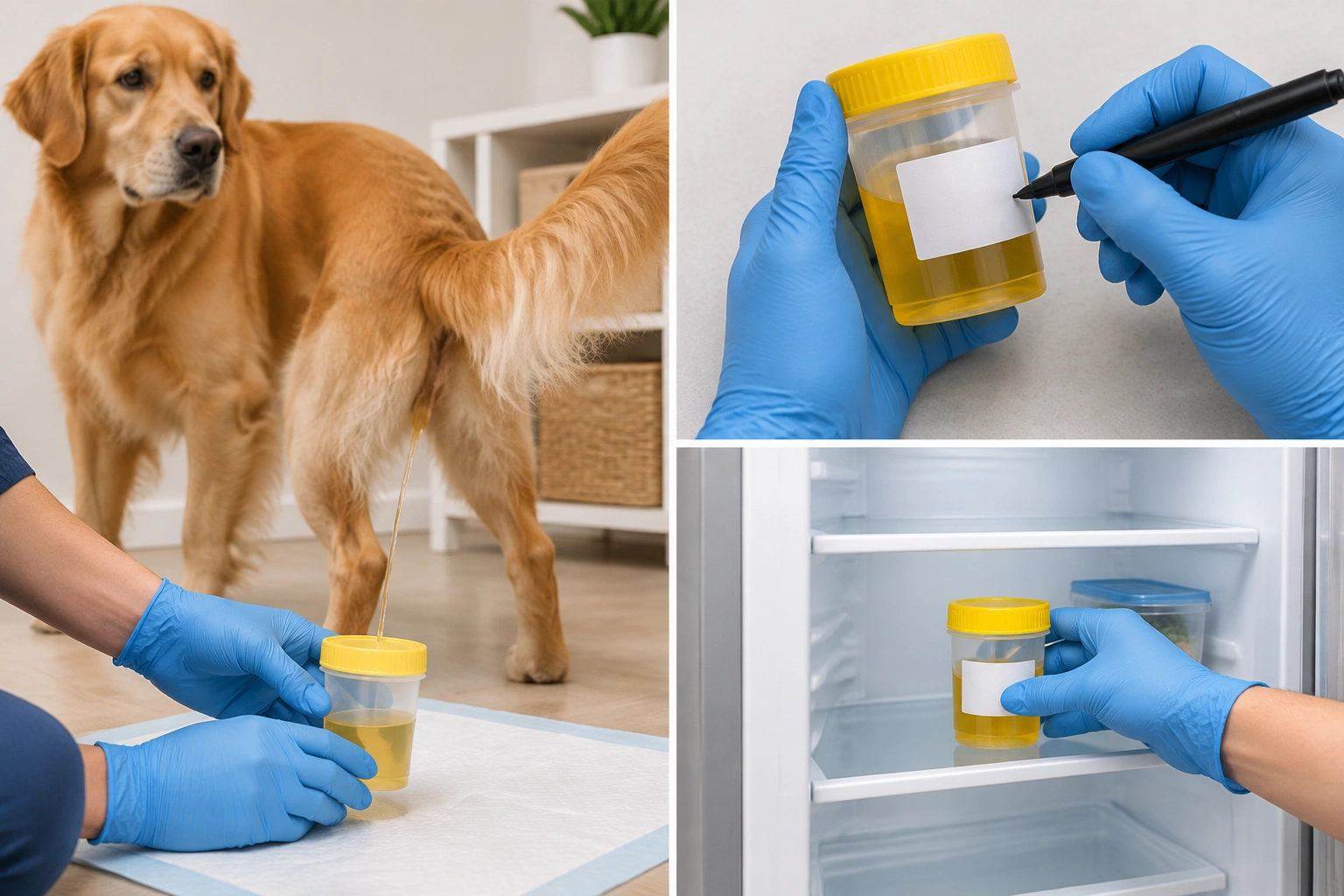
Use a clean container
A clean, dry container is the minimum. A sterile urine cup from your vet is ideal. If your clinic says a clean household container is acceptable, follow that instruction exactly. Do not use a container that has held food residue, cleaning products, or litter dust.
Seal it tightly
A loose lid allows leaks, odor transfer, and evaporation. Tight sealing also reduces the chance of contamination during transport.
Label the time and date
Write down when the sample was collected. That gives the vet context for interpreting the results. A sample without a collection time is much harder to judge.
Refrigerate promptly if there is any delay
If you are not heading straight to the clinic, put the sample in the refrigerator. That is the most consistent guidance from veterinary sources. Keep it away from food and away from children or pets.
Bring it in as soon as you can
Even refrigerated urine is not meant to sit around for days. If the appointment is later in the day, collect closer to the appointment if possible. If the sample was collected the previous night, call the clinic and ask whether they still want it or prefer a fresh one.
Signs the Sample Is Too Old, Contaminated, or Unreliable
If you are unsure whether to submit the sample, look for these warning signs.
- It sat unrefrigerated for a long time
- The container is leaking
- There is visible debris, stool, litter, or dirt in the sample
- The sample smells unusually strong or off
- The urine looks cloudy when it did not at collection
- The lid was left loose or the container was opened repeatedly
- You do not know exactly when it was collected
- It was collected in a way that likely introduced contamination
A sample does not have to be perfect to be useful, but once contamination or delay is obvious, the risk of misleading results rises quickly. A sample can also be unreliable even if it looks normal, especially if it sat warm, was left unsealed, or was handled loosely. That matters most when the vet is trying to confirm infection, crystals, or inflammation.
When to Bring the Sample Anyway and When to Collect a Fresh One
This is the judgment call many owners need to make on the way to the clinic.
Bring it anyway if:
- it was collected recently,
- it was refrigerated promptly,
- it is in a clean, sealed container,
- and your vet asked you to bring a home sample.
Even if it is not ideal, a chilled same-day sample may still help the vet decide what to do next.
Collect a fresh one if:
- it sat out warm for hours,
- it leaked,
- it was contaminated,
- or the vet specifically asked for a very fresh sample for a culture or sediment exam.
If the sample is from the night before and you are not sure whether it is still acceptable, call the clinic before driving in. That short phone call can save you a repeat trip.
Borderline case: refrigerated overnight
This is where many owners ask, “Can I bring in a urine sample from the night before?”
Sometimes yes, sometimes no. A refrigerated overnight sample may still be usable for some purposes, but it is not the best option for every test. If the clinic is checking for infection, crystals, or sediment changes, they may prefer a fresher sample. If the vet specifically needs a culture, ask whether they want the sample chilled or whether they want a new one collected that day.
How to Collect a Better Sample Next Time
A cleaner collection gives the vet a better chance of getting useful results.
Aim for a midstream sample
Let your dog start urinating first, then catch the middle portion if you can. The first part may contain more debris from the skin or environment. Midstream collection often reduces contamination.
Avoid grass, litter, and dirty surfaces
If the urine touches grass, litter, or a dirty floor, it is more likely to pick up debris and bacteria. That does not automatically make it useless, but it does reduce confidence in the result.
Keep the process calm
A stressed dog may stop and start, which makes collection harder. A calm setup is usually cleaner and faster. That is especially helpful with Border Collies, who often notice every movement and can be easily distracted.
Ask the clinic what they prefer
Some vets are happy with a home-collected sample for screening. Others want a sterile sample if they are worried about infection. That difference matters. A home sample is convenient; a sterile vet-collected sample is often cleaner for culture and more definitive testing.
When to See a Veterinarian or Certified Trainer
If your dog is straining to urinate, producing only tiny amounts, crying out, has visible blood in the urine, seems painful, or cannot urinate at all, do not wait around deciding whether the sample is fresh enough. Contact your veterinarian promptly.
Sample freshness matters, but a dog that is unable to pass urine can be dealing with an urgent medical problem. In that situation, the priority is care, not perfect sample timing.
If your vet needs a urine sample but your dog makes collection difficult, a certified trainer can help with the handling and cooperative-care side of the process. That will not replace veterinary testing, but it can make future collections less stressful and less messy.
FAQ: Common Questions About Dog Urine Sample Freshness
Can I bring a urine sample from the night before?
Sometimes, but it depends on how it was stored and what the vet needs to test. Refrigerated overnight samples are more acceptable than samples left out at room temperature, but they are still delayed samples.
Does dog urine need to be fresh for urinalysis?
Yes, as fresh as possible. One veterinary source says urine should be read within 30 minutes because cells, bacteria, and crystals can change after collection.
How long can dog urine sit in the fridge?
A study on canine urine stability recommends refrigeration at 4°C for up to 24 hours if immediate culture is not possible. That is helpful guidance, but your vet may want a fresher sample depending on the test.
Is room temperature storage ever okay?
Only for very short delays. If the sample cannot be dropped off right away, refrigeration is the safer choice.
What if the sample looks cloudy after sitting?
Cloudiness can happen as urine changes over time. If the sample was delayed, contaminated, or not sealed well, it may be less reliable. When in doubt, ask the clinic whether they want a new one.
Should I use first-morning urine?
A first-morning sample is often preferred because it is usually more concentrated. That can help with some tests, but your vet may give different instructions depending on what they are checking.
The Practical Bottom Line
If you want the most reliable result, collect the urine as close to the appointment as possible, keep it clean, seal it well, and refrigerate it promptly if there is any delay. A sample that has been chilled and delivered quickly is usually far more useful than one that sat warm on the counter.
For a routine check, a delayed sample may still help. For culture, sediment review, or anything involving crystals and cells, freshness matters more. When the sample is borderline, let the vet make the call—and if your dog is straining or in pain, skip the waiting and call the clinic right away.