
Why Does My Dog Pee So Much? A Practical Guide to Normal vs Concerning Urination

If your dog suddenly seems to live at the back door, the first question is simple: is this just a busy bladder, or a warning sign?
The answer depends on how often your dog is peeing, how much comes out each time, and whether anything else has changed. A dog that asks to go out more often after a hot day or a lot of play may simply be drinking more and emptying more often. A dog that is peeing small amounts, straining, leaking indoors, or also drinking much more than usual needs a closer look.
With Border Collies, this question comes up a lot because they are active, alert, and sensitive to routine changes. Stress, excitement, and sudden schedule disruption can all affect bathroom habits. But a behavior explanation should never be the first assumption if the pattern is new.
Quick Answer: When Frequent Peeing Is Normal vs Concerning
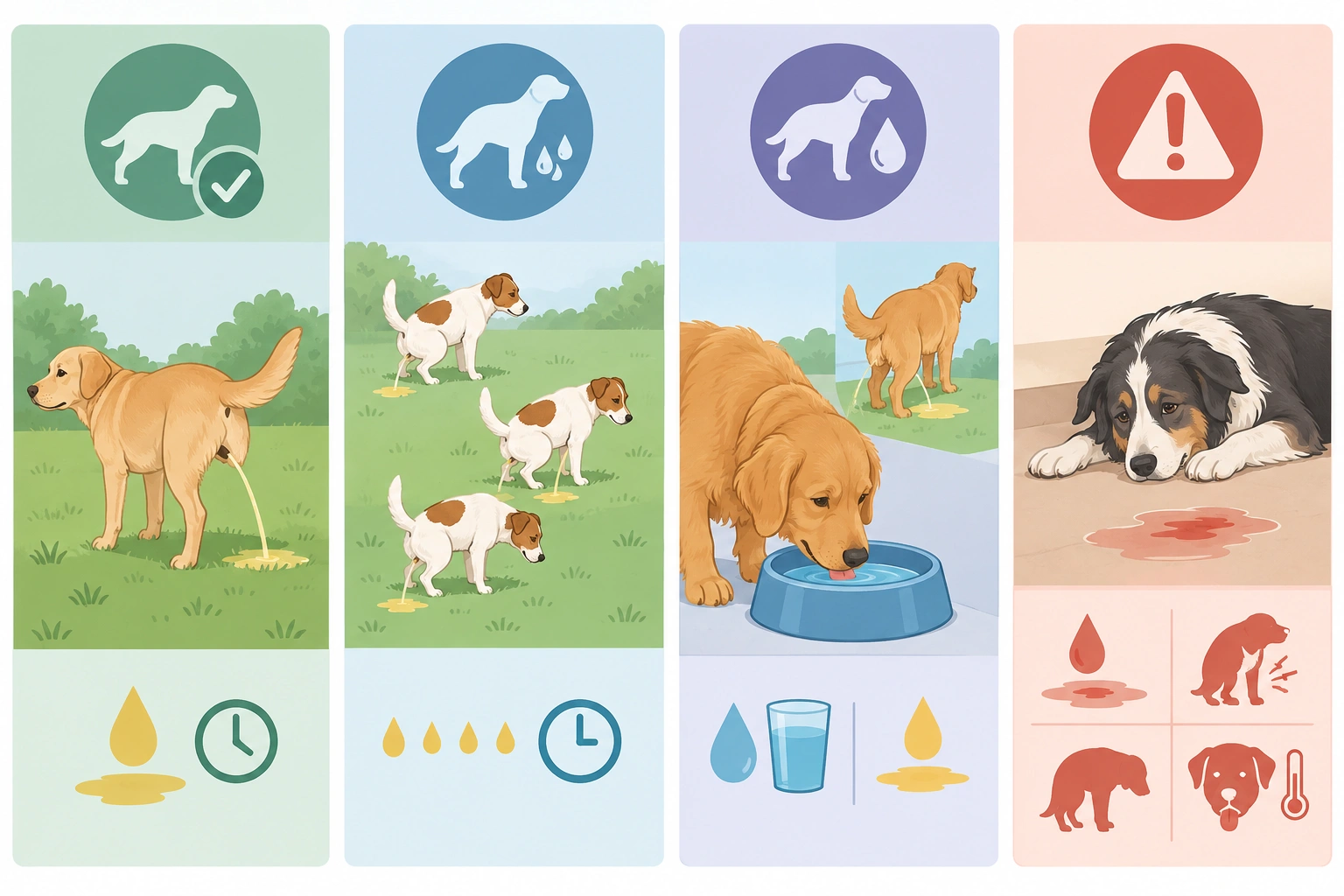
A useful first filter is this:
- Probably normal: your dog pees more often after extra exercise, hot weather, a big drink, or a temporary routine change, and otherwise seems normal.
- Needs a vet visit soon: your dog is suddenly peeing more than usual, having accidents in a house-trained dog, or drinking noticeably more.
- Urgent: your dog is straining, passing only drops, has blood in the urine, seems painful, vomits, becomes lethargic, or cannot urinate at all.
The reason this matters is that frequent urination can come from very different causes. Some are behavioral and manageable. Others, like urinary tract infection, diabetes, kidney disease, bladder stones, or hormone-related illness, need testing rather than guesswork.
What Counts as “Too Much” Urination in Dogs?
There is no single number that fits every dog. A rough adult range is often around three to five trips a day, but normal can vary a lot with diet, activity, weather, and the individual dog. Smaller dogs may need to go more often than larger dogs, and puppies usually need much more frequent bathroom breaks than adults because their bladders are small and they are still learning control.
What matters more than a perfect count is the pattern and whether it is a change from your dog’s usual baseline.
Signs the frequency is probably outside your dog’s normal
- The schedule changed suddenly
- Your dog is asking out much more often than usual
- Accidents started in a dog that was previously reliable
- Each trip produces only a small amount
- Your dog is waking at night to urinate when that was not typical before
- Urination is paired with increased drinking, weight loss, lethargy, or discomfort
A dog that pees often because it is drinking a lot is different from a dog that keeps trying to pee but only passes small amounts. That distinction helps narrow the cause.
Small frequent pees vs large-volume pees
This is one of the most useful observations you can make:
- Small frequent amounts can fit marking, irritation, or bladder pain.
- Larger volumes more often point more toward increased urine production, which is where diabetes, kidney disease, and similar problems enter the picture.
That is not a diagnosis by itself, but it is a strong clue.
Frequent Urination vs Increased Thirst: Why the Difference Matters
People often notice the pee before they notice the water bowl. That can be misleading.
Two related terms help here:
- Polyuria means producing more urine than usual.
- Polydipsia means drinking more than usual.
These often happen together, but not always. If your dog is peeing more without drinking more, the problem may be more local to the bladder or urinary tract, though some systemic problems can still show up before owners notice a clear increase in drinking. If your dog is both drinking and peeing more, the concern shifts toward a systemic problem affecting the whole body.
That is why a dog that empties the water bowl faster, asks to go out repeatedly, and seems hungrier or thinner deserves a veterinary exam rather than a wait-and-see approach.
A practical rule: if the bathroom change comes with a clear increase in drinking, treat it as more than a training issue until a vet rules out medical causes.
Medical Causes of Frequent Urination
Several health problems can make a dog pee more often. The list is longer than most owners expect, and that is exactly why symptoms alone are not enough to sort it out.
Problems that mainly increase urine production
These conditions tend to make dogs produce more total urine and often drink more too:
- Diabetes mellitus
- Kidney disease
- Cushing’s disease
- Diabetes insipidus
- Liver disease
- Certain cancers
- Medication effects such as steroids or diuretics
If a dog suddenly starts peeing more after starting a new medication, call your vet if the change seems dramatic, the dog seems unwell, or the increased thirst and urination are more than you were told to expect.
Problems that mainly irritate the bladder or urinary tract
These conditions often cause frequent attempts, small volumes, or discomfort:
- Urinary tract infection (UTI)
- Bladder stones
- Urinary incontinence
- Other bladder or urinary tract inflammation
That distinction matters because a dog that keeps squatting and passing only a little urine is not having the same problem as a dog producing large amounts of urine more often.
Urinary tract infection (UTI)
UTIs can make dogs feel like they need to urinate often, even when the bladder is not full. Common clues include:
- Straining
- Bloody or cloudy urine
- Accidents indoors
- Frequent trips with little output
This is especially important in puppies, but adult dogs can get them too.
Bladder stones
Bladder stones can irritate the bladder lining and cause frequent attempts to urinate, discomfort, and sometimes blood. Some dogs look restless or keep squatting repeatedly. If a dog is trying to pee often but only producing tiny amounts, stones are one reason vets take that pattern seriously.
Diabetes mellitus
Diabetes can make a dog drink more and urinate more because the body is trying to get rid of excess sugar. Owners often notice:
- Increased thirst
- More frequent urination
- Weight loss
- Increased appetite or, sometimes, a dog that seems tired
A dog that is drinking more, peeing more, and losing weight should be seen promptly.
Kidney disease
Kidney problems often show up as increased thirst and urine volume. Some dogs also become lethargic, lose appetite, or vomit. Because kidney disease can be gradual at first, owners sometimes assume the change is just aging until the pattern becomes obvious.
Cushing’s disease
Cushing’s disease can cause increased drinking and urination, along with other changes that may include a bigger appetite, panting, or a pot-bellied appearance. It is a classic example of why “just peeing a lot” is not a complete explanation.
Diabetes insipidus
This is less common, but it can cause very large amounts of dilute urine and increased thirst. It is another reason a vet may want to run tests rather than rely on observation alone.
Liver disease and certain cancers
These can also contribute to drinking and urination changes. Owners usually do not need to sort out which specific internal disease is involved at home; the point is to recognize that frequent urination can be a body-wide signal, not just a bladder issue.
Urinary incontinence
Incontinence is different from choosing to urinate. A dog may leak urine while resting or leave wet patches on bedding without seeming aware of it. That pattern is often more suggestive of an involuntary problem than a house-training one.
For a broader veterinary perspective on the causes of drinking and peeing more than normal, PDSA’s guide to increased thirst and urination is a useful overview.
Behavioral and Situational Causes
Not every dog that pees often is sick. Some are reacting to stress, habit, or context.
Marking
Marking usually involves small amounts on vertical surfaces, especially in new places or when something has changed socially. A dog may mark even if it is otherwise house-trained. This is more about communication than bladder fullness.
Anxiety or excitement
Anxious dogs may urinate more often, especially during greetings, visitors, thunderstorms, car rides, or changes in household routine. Border Collies can be more sensitive to environmental shifts, which means a move, new schedule, or reduced exercise may show up as urinary changes.
Routine disruption
A dog that suddenly loses its normal walk times, play sessions, or access to the yard may have accidents simply because the rhythm changed. That can happen even in a well-trained dog.
Incomplete house training
Puppies and young dogs still need time to build bladder control. If a puppy is peeing frequently but also seems thirsty, tired, or unwell, do not assume it is only a training issue. Medical causes still need to be ruled out.
Behavioral urination usually does not come with obvious physical signs like blood, pain, or major changes in thirst. When those signs appear, the odds shift toward a medical cause.
Age- and Life-Stage Factors: Puppies, Seniors, and Spayed/Neutered Dogs
Age changes the meaning of frequent peeing.
Puppies
Puppies pee more often because their bladders are small and they have not built control yet. They can also get UTIs, and the signs may be subtle at first. If a puppy is peeing often and also has cloudy urine, straining, or accidents that seem out of proportion, that is worth a vet visit.
The Kennel Club’s puppy urination guidance is a helpful reminder that frequent peeing in puppies can be normal, but infection and diabetes are also on the list.
Senior dogs
Older dogs are more likely to develop kidney disease, diabetes, Cushing’s disease, and incontinence. A senior dog that starts having nighttime accidents after years of being dry should be checked rather than blamed.
Spayed females and neutered dogs
Hormone-related changes can contribute to incontinence in some dogs, especially spayed females. If a dog is leaking while sleeping or leaving wet bedding, that pattern is different from simply asking to go out more often.
If your dog has had a recent neuter or spay and you are trying to understand recovery timing and what is normal afterward, our guide on how long neutering a dog takes may help with the broader post-op picture.
Red Flags That Mean the Problem Is More Than Behavioral
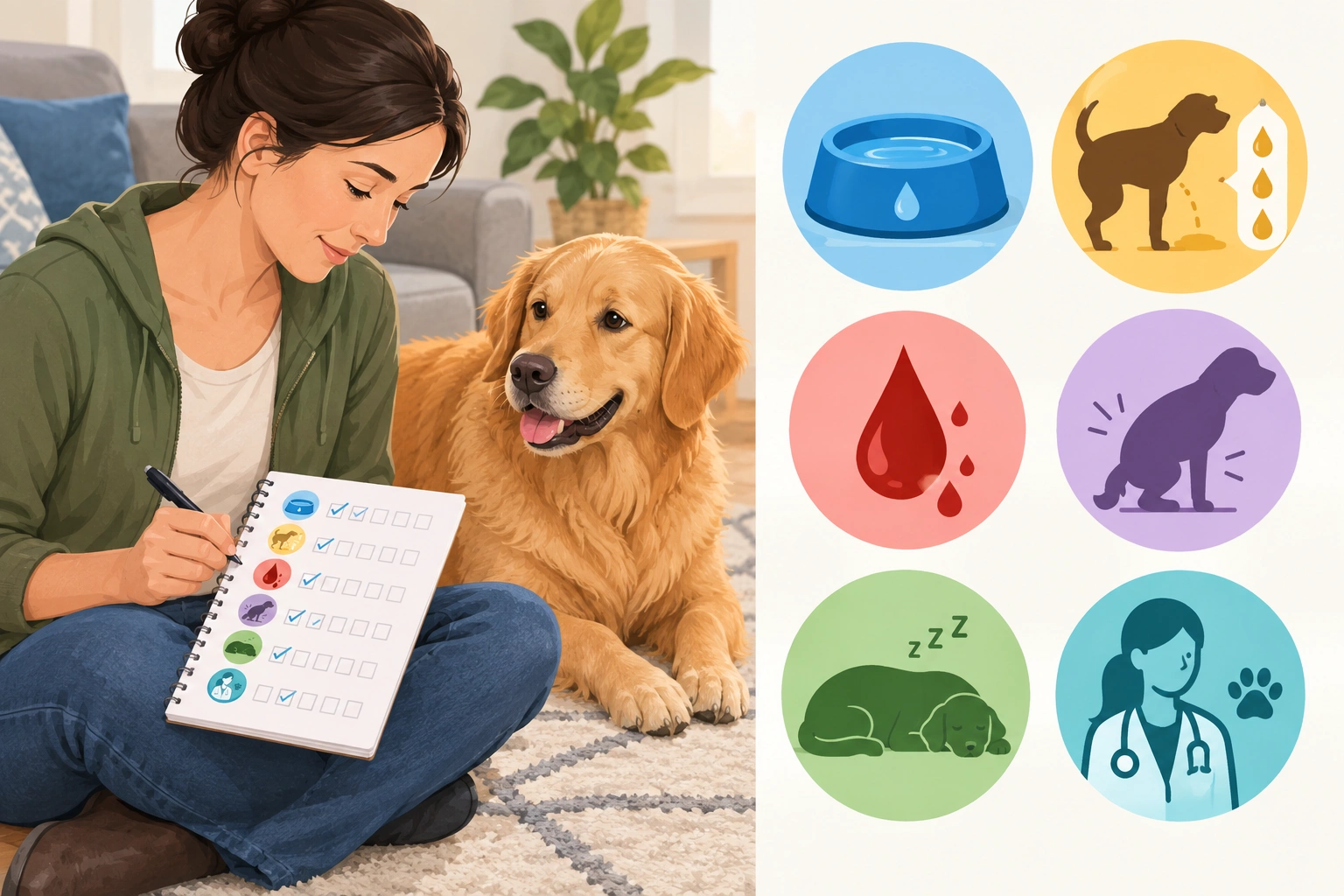
These signs should push you toward veterinary care rather than more training or more observation:
- Straining to urinate
- Passing only tiny amounts or no urine
- Blood in the urine
- Pain, whining, or repeated squatting
- Vomiting
- Lethargy
- A swollen or tense abdomen
- Sudden accidents in a dog that was previously house-trained
- Increased thirst along with frequent urination
- Collapse or severe weakness
A dog that is trying to urinate but cannot produce urine is an emergency. So is a dog that seems very unwell, especially if vomiting or lethargic.
When to Call the Vet: Emergency vs Routine Appointment
Use this simple decision framework.
Go to urgent or emergency care now if:
- Your dog cannot urinate
- Your dog strains repeatedly with little or no urine
- There is blood plus obvious pain
- Your dog is vomiting, weak, or very lethargic
- The abdomen looks swollen or painful
- You suspect toxin exposure
Book a same-day or next-day vet visit if:
- A house-trained dog suddenly starts peeing much more
- Your dog is drinking more than usual
- Urine looks cloudy, bloody, or unusual
- Accidents are happening indoors without a clear reason
- A senior dog develops a new urinary pattern
- Frequent urination starts after a new medication such as a steroid or diuretic, especially if the change is strong or comes with other symptoms
Short-term monitoring may be reasonable if:
- The change followed heat, heavy exercise, or a one-off routine disruption
- Your dog otherwise seems normal
- There is no pain, blood, vomiting, lethargy, or obvious thirst increase
Even then, if the pattern lasts more than a short period or keeps recurring, schedule a visit. Frequent urination that does not settle is worth investigating.
What a Vet May Check
Most vets start with a few core tests because they answer the big questions quickly.
Urinalysis
This checks the urine itself and can help identify infection, blood, crystals, and how concentrated or dilute the urine is. It is one of the most useful first steps because it points toward bladder problems versus whole-body problems.
Bloodwork
Blood tests help screen for diabetes, kidney disease, liver disease, and other systemic issues. If your dog is drinking more and losing weight, bloodwork becomes especially important.
Imaging
X-rays or ultrasound may be used to look for bladder stones, masses, or other structural problems.
You do not need to know the whole diagnostic tree before the appointment. You only need to bring enough information that the vet can choose the right branch quickly.
What You Can Track at Home Before the Appointment
A short log can save time and reduce guesswork. Write down:
- How often your dog pees
- Whether each pee is a small amount or a larger stream
- Any accidents indoors
- Whether your dog seems to be drinking more
- Any blood, cloudiness, odor change, or straining
- Energy level, appetite, vomiting, or weight change
- When the problem started and whether it was sudden
A simple example: note each water bowl refill in a notebook or phone note, then measure how much you put back in. For example, if you refill a 2-cup bowl with 2 cups at 8 a.m., 2 cups at noon, and 1 cup at 6 p.m., you have a rough daily intake record. You can do the same with urine by jotting down timestamps like “7:10 a.m. small squat,” “10:30 a.m. normal stream,” and “2:00 p.m. small accident indoors.”
If possible, note the times of the first morning pee, after meals, after exercise, and overnight. That pattern often tells the vet more than a vague description like “a lot.”
What to Do at Home While You’re Waiting
Keep this simple and safe:
- Leave water available unless your vet specifically tells you otherwise
- Keep a normal potty schedule
- Avoid punishing accidents
- Reduce confusion by taking your dog out more predictably
- Limit intense exercise if your dog seems unwell
- Save a fresh urine sample only if your vet asks for one
The trade-off here is important: you want enough structure to collect useful information, but not so much restriction that you mask the problem or make your dog uncomfortable. Do not restrict water unless your vet specifically instructs you to do so.
Border Collie and Active Dog Considerations
Border Collies are quick to notice changes in routine, tension, and household energy. That can matter here. A dog that is under-stimulated, anxious, or suddenly thrown off schedule may start asking out more often or having indoor accidents.
But the breed’s sensitivity is exactly why owners can misread a medical issue as a behavior issue. If a normally reliable Border Collie suddenly starts peeing indoors, waking at night to go out, or drinking more, do not assume it is just stress. Rule out the medical causes first, then look at the routine and emotional triggers.
A practical example: a Border Collie that begins peeing small amounts in a new environment may be marking or reacting to stress. A Border Collie that starts drinking heavily, peeing large volumes, and losing weight needs a vet exam.
The Bottom Line
When a dog pees a lot, the key question is not just “how often?” but “what pattern is this, and what else changed?”
Small frequent pees, increased thirst, blood, pain, straining, lethargy, or a sudden change in a house-trained dog all move the problem away from simple behavior and toward medical evaluation. If the dog seems otherwise normal and the change is tied to heat, exercise, or a short-lived routine disruption, brief monitoring may be reasonable. If the pattern is new, persistent, or paired with other symptoms, a vet visit is the right next step.
Frequently Asked Questions
Is it normal for a dog to pee a lot after drinking more?
Yes, it can be. More water intake often means more urination. The concern rises when the drinking increase is unexplained or comes with weight loss, lethargy, or accidents.
Why does my dog keep peeing small amounts?
Small frequent urination can fit bladder irritation, a UTI, stones, marking, or pain. It is less typical of simple “drank too much water” situations.
Can stress make a dog pee more?
Yes. Anxiety, excitement, and routine changes can affect urination, especially in sensitive dogs. But stress should not be assumed until medical causes are ruled out.
When is frequent peeing an emergency?
If your dog cannot urinate, is straining with little output, has blood in the urine, vomits, collapses, or seems very painful or lethargic, seek urgent veterinary care.
What tests will the vet likely run?
A vet will often start with urinalysis and bloodwork, and may add imaging if bladder stones or other structural problems are suspected.