
How Long Does Neutering a Dog Take? A Practical Timeline for Owners

If you’re booking a neuter, the real question is usually not just “How long is the surgery?” It’s “How much of my day does this actually take, and how long until my dog is back to normal?”
For most dogs, the operation itself is short. The bigger time commitment is the full clinic visit: check-in, anesthesia, monitoring, wake-up, and discharge instructions. Recovery is also longer than the procedure. A Border Collie may look bright-eyed again quickly, but that does not mean the incision is ready for running, jumping, or training.
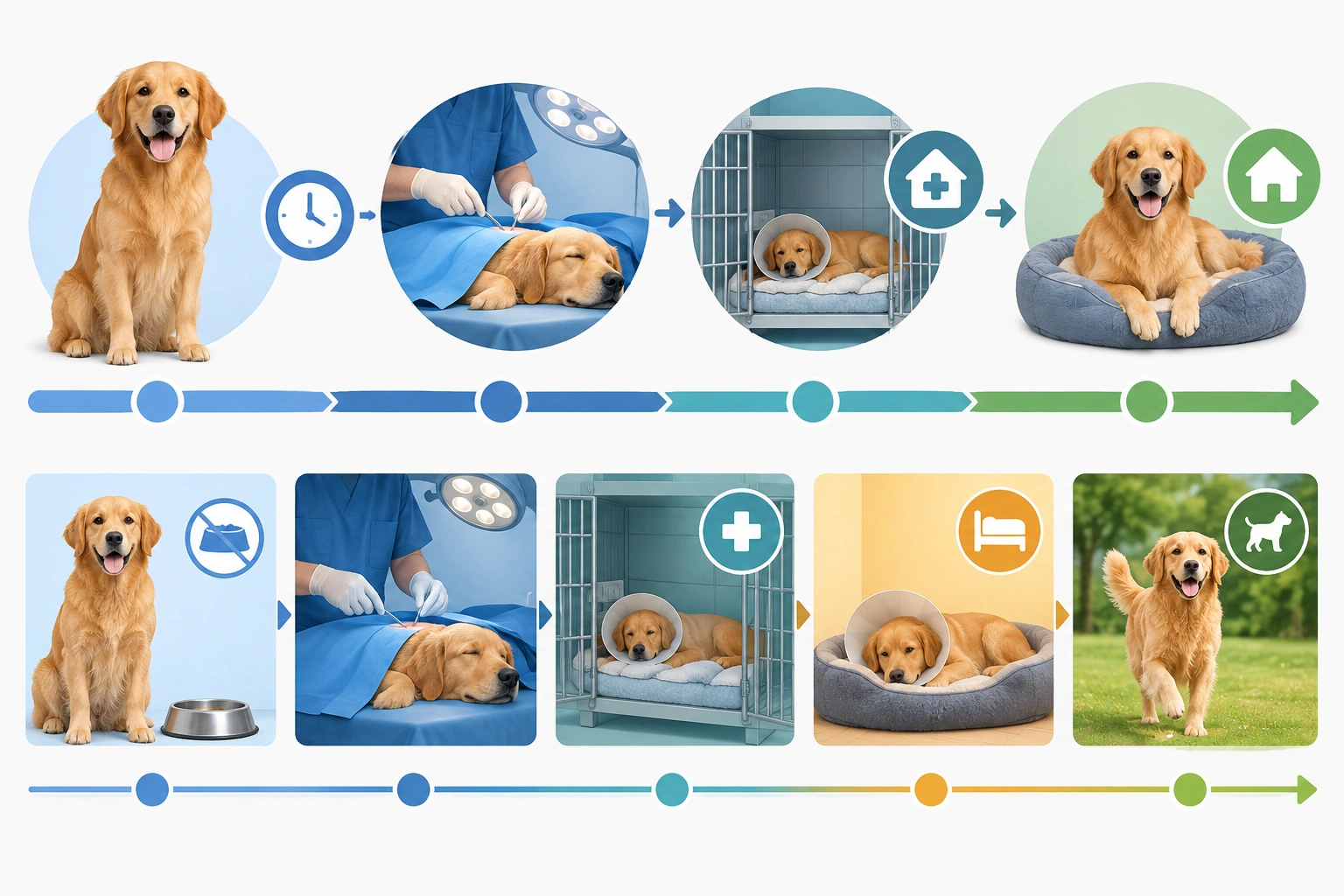
Here’s the clearest way to think about it: the surgery may take minutes, but the appointment takes hours, and the healing window takes days to weeks.
Quick Timeline Summary
- Surgery time: often under 20 minutes, though some cases may take longer
- Total vet-clinic time: usually most of the day, including check-in, anesthesia, monitoring, and discharge
- Recovery time: typically days to about 10 to 14 days for incision healing, with activity restrictions set by your vet
How Long Dog Neutering Usually Takes
For the actual neuter surgery, Virginia Tech’s Veterinary Teaching Hospital says neutering is typically very quick, often taking under 20 minutes. Other veterinary sources place the overall surgical/anesthesia window in the 30 minutes to an hour range once you factor in individual differences such as size, age, and routine clinic workflow.
That range makes sense in practice. A healthy young dog with a straightforward neuter may be in and out of the surgical part very quickly. A larger dog, an older dog, or a dog with anything unusual about the anatomy or health history may take longer overall.
The key distinction is this:
- Surgery time = the time the veterinarian is actively performing the neuter
- Total appointment time = everything from drop-off to pickup, including anesthesia and recovery monitoring
Virginia Tech also notes that during neutering, the incision is made in the scrotal or pre-scrotal area and the testes are removed, then the incision is closed with stitches. That surgical part is fast; the safe anesthesia process around it is what stretches the day out.
For a practical planning mindset, think of the procedure as “short surgery, longer visit, longer recovery.”
How Long Your Dog Will Be at the Vet Overall
Most dogs go home the same day, but not usually right after the procedure. A realistic clinic timeline is often most of the day, even if the surgery itself is brief.
A common pattern looks like this:
- Morning drop-off
- Pre-op check and anesthesia prep
- Surgery
- Recovery monitoring
- Discharge later that day once the dog is awake enough and stable
That means your dog might be at the clinic for several hours. Some clinics are efficient enough that pickup happens in the afternoon; others keep dogs longer if they want more time for anesthesia recovery or if the schedule is busy.
If you’re arranging your day around the appointment, don’t plan to drop off your dog and pick them up an hour later. Plan as though the dog will be away for the day, with some flexibility on pickup time.
This matters even more for active dogs like Border Collies. A dog that wakes up quickly may still need extra observation because energy level and safe coordination are two different things.
What Happens Before Surgery: Fasting, Check-In, and Pre-Op Screening
The timeline starts before your dog ever reaches the operating table.
Most clinics require food to be withheld for a specific number of hours before anesthesia. The exact fasting instructions vary by clinic, and water rules may be different from food rules, so follow the hospital’s directions exactly rather than guessing.
Before surgery, the clinic may also:
- confirm your dog’s health history
- check weight and vital signs
- review whether pre-op bloodwork is needed
- go over medication instructions
This is where age and health can change the schedule. A healthy young dog may need very little extra workup. An older dog, or one with a heart murmur, kidney concerns, or another medical issue, may need additional screening before the vet is comfortable proceeding.
That extra screening does not always mean the surgery takes longer once it begins. It usually means the appointment process is longer because the vet is being more cautious before anesthesia.
For owners, the decision rule is simple: if your dog has any health issue, ask the clinic whether pre-op testing will change the drop-off time or extend the visit.
Anesthesia, Monitoring, and Wake-Up Time
Anesthesia is the main reason the total timeline is longer than the surgery itself.
During the procedure, the veterinary team monitors your dog closely. That monitoring is not optional overhead; it is what helps keep the dog safe while unconscious. Once the surgery is finished, the dog still needs time to wake up enough to be stable for discharge.
Virginia Tech notes that pets may begin waking from anesthesia relatively soon after surgery, but that does not mean they are fully normal. In real life, many dogs are still sleepy, unsteady, or a little disoriented later in the day, and recovery from anesthesia can vary a lot from dog to dog. Some dogs seem groggy for only a short time, while others may be drowsy or off balance longer.
That’s the part many owners underestimate.
A dog may be awake enough to go home, yet still not be fully coordinated. That is why discharge timing is based on safety, not just whether the surgery is over.
If your dog is slow to wake up, the clinic may keep them longer. That is not automatically a problem; it is often just the right call when anesthesia recovery is taking more time than expected.
What to Expect When You Pick Your Dog Up
When you collect your dog, expect a pet that is quieter than usual.
Common same-day signs include:
- sleepiness
- mild wobbliness
- reduced appetite
- a calmer-than-normal attitude
- some discomfort around the incision
That first evening is not the time to test whether your dog “seems fine.” Many dogs look better than they are. A Border Collie may stand at the door wanting to move, but the body still needs rest even when the mind says go.
Your main jobs after pickup are simple:
- keep the dog calm
- follow pain-medication instructions exactly
- prevent licking or chewing at the incision
- offer a quiet place to rest
- monitor for vomiting, bleeding, or worsening discomfort
If your vet sends home a cone or similar collar, use it. A few minutes of licking can undo a lot of careful surgery work.
Recovery Timeline After Neutering
The visible recovery and the actual internal healing are not the same thing.

First 24 hours
The first day is mostly about rest and observation. Your dog may be sleepy, slightly off balance, or less interested in food. Short leash breaks for toileting are usually fine if your vet allows them, but avoid anything that looks like exercise.
The goal is not activity. The goal is a calm, uneventful first night.
First 3 to 7 days
This is the stage where many owners get overconfident because the dog starts acting more normal. That is exactly when jumping, wrestling, and sudden bursts of energy become risky.
The incision may still be vulnerable even if it looks neat from the outside. Keep activity tightly controlled and avoid rough play, stairs if they are not necessary, and any off-leash excitement.
Around 10 to 14 days
A number of veterinary sources place neuter recovery in the 10 to 14 day range, with the exact rest period and recheck timing set by your vet. That lines up with the common real-world pattern: the incision is healing before the dog feels fully constrained by it.
For many dogs, this is the point when the vet may recheck the incision or clear the dog for more normal activity if healing is progressing normally.
When a Dog Can Walk, Run, Play, and Return to Training
This is where owners of active breeds need to be disciplined.
Leash walks
Short leash walks for toileting are usually the first activity to return. These should be calm, controlled, and brief. Think “business only,” not “let’s get the energy out.”
Light activity
Light activity may be allowed before full return to normal exercise in some cases, but only if your vet says it is okay. “Light” means low-arousal movement that does not involve jumping, sharp turns, wrestling, or sudden bursts of speed.
Full training and rough play
Full training intensity, fetch, rough play, off-leash running, and zoomies usually need to wait until the vet says the incision is healed enough. For a Border Collie, this is the tricky part: mental drive can be high even when physical restrictions are still in place.
A useful rule is this: if the training session would make your dog spin, launch, or bark with intensity, it is too much for the early recovery stage.
Full return to normal activity
Most dogs are not ready for unrestricted activity until the healing window is complete, often around 10 to 14 days if recovery is uncomplicated, but vet clearance should be the deciding factor. If your dog is still licking the incision, swelling is present, or the vet wants a recheck, wait.
That patience is cheaper than dealing with a reopened incision.
Does Breed, Age, Size, or Health Change the Timeline?
Yes, but not always in the way people expect.
Border Collies and other active dogs
The surgery itself is not usually longer just because a dog is a Border Collie. The challenge is recovery management. Active dogs are more likely to test the boundaries of rest, which can make the healing period feel longer and more demanding.
Young adult dogs
Younger healthy dogs often recover smoothly from anesthesia and may bounce back quickly in behavior. That does not shorten the incision-healing timeline, but it can make supervision easier if you can keep them calm.
Older dogs
Older dogs may need more pre-op screening and can take longer to fully wake up from anesthesia. Recovery may also be slower if they have joint stiffness or other age-related issues that make confinement harder.
Larger dogs
Size can affect both the procedure and the aftercare. Larger dogs may take more time under anesthesia and may be more physically awkward to manage on leash during recovery. Even a mild burst of energy from a large dog can put more strain on the incision than the same movement from a smaller dog.
Dogs with health issues
If your dog has heart, liver, kidney, or endocrine concerns, the vet may recommend extra testing or a modified plan. That can affect timing before surgery and sometimes the recovery pace afterward.
The AKC Canine Health Foundation notes that risks vary by breed, sex, and age at neutering, and that timing decisions can differ across dogs. That is one reason it’s worth discussing your dog’s individual situation with your vet rather than relying on a one-size-fits-all rule.
When Neutering Takes Longer Than Expected
Sometimes the timeline stretches because of something routine, and sometimes because of a complication.
Common reasons for delay include:
- slower-than-usual wake-up from anesthesia
- nausea or vomiting after surgery
- concern about bleeding
- incision swelling
- pain that needs better control
- pre-op findings that require extra caution
If the vet keeps your dog longer, that is usually because they want the dog more stable before discharge. In other words, the delay is often a safety decision, not a failure.
At home, call the clinic if you see:
- persistent vomiting
- bleeding from the incision
- significant swelling
- discharge or bad odor
- worsening pain
- extreme lethargy beyond what the vet said to expect
- trouble breathing
Those signs can mean the recovery timeline is no longer normal.
Aftercare That Protects the Timeline
The fastest recovery is the one that stays uncomplicated.
The most useful aftercare steps are the boring ones:
- keep the cone on if instructed
- give pain medication exactly as prescribed
- prevent jumping on furniture
- use leash walks only
- separate your dog from rough playmates
- check the incision daily
- keep the area clean and dry
If your Border Collie is used to a lot of movement, confinement may take planning. Use gates, crates, or a small quiet room if needed. The point is not punishment; it is preventing a short surgery from becoming a long healing setback.
For a practical comparison, this is why neuter recovery feels longer than the procedure itself. The surgery may be over in minutes, but the protection window is measured in days because tissue needs time to seal properly.
If you want a related planning reference for another common anesthetic procedure, our guide on how long a dog dental cleaning takes shows the same basic pattern: the procedure is only part of the day, and recovery monitoring matters just as much.
When to See a Veterinarian or Certified Trainer
Contact your veterinarian promptly if your dog is not waking normally, has bleeding, swelling, discharge, repeated vomiting, or seems in pain despite medication.
If your main challenge is behavior rather than healing—especially if your Border Collie cannot settle, keeps trying to jump, or becomes frantic with confinement—ask a certified trainer for help with short-term recovery management. That support can make the rest period safer without turning the house into a wrestling match.
FAQs
How long does the actual neuter surgery take?
Often under 20 minutes, though some clinics and individual cases may take closer to 30 minutes or longer when you include variations in size, age, and workflow.
How long will my dog be at the vet?
Usually most of the day. Even a short surgery still includes anesthesia, monitoring, and wake-up time before pickup.
How long does anesthesia take to wear off?
Many dogs are awake enough to go home within hours, but mild drowsiness, wobbliness, or quiet behavior can last into the rest of the day and sometimes longer.
When can my dog run again?
Usually after the incision has healed and your vet has cleared normal activity, commonly around 10 to 14 days if recovery is uncomplicated.
Is neutering quicker than spaying?
Yes. In general, neutering is usually much quicker than spaying because the surgery is less invasive.
Does a Border Collie recover differently?
The surgical timeline is usually similar, but Border Collies can be harder to keep calm, which makes the recovery period more demanding.
Should I delay neutering if my dog is older?
Possibly. Older dogs may need extra pre-op screening, and the timing decision should be made with your veterinarian based on health, breed, and anesthesia risk.
What if my dog seems normal the next day?
That can happen. A dog may look energetic before the incision is ready for real activity, so follow the full rest period even if they seem fine.
Can my dog go for walks after neutering?
Short leash walks for toileting are usually the first activity to return, but running, jumping, and rough play should wait until your vet says healing is complete.
How long should the cone stay on?
Follow your vet’s instructions. A practical guideline often used is about 14 days, or until the incision is fully healed.
