
Can Dogs Be Allergic to Grass? Signs, Causes, and What to Do

Yes — a dog can be allergic to grass, but the reaction is usually to grass pollen and other environmental triggers associated with grass, not always to the blades themselves. In practice, that means a dog may flare up after time in the lawn, a park visit, or contact with pollen carried home on its coat.
For owners, the useful question is not just “Is it grass?” but “Is grass the most likely trigger, or is something else causing the itching?” That distinction matters because the next step changes depending on whether you are dealing with an environmental allergy, flea allergy, food allergy, or simple skin irritation from contact with plants, fertilizer, or pesticides.
Border Collies can be a good example of why this gets tricky. They are active, outdoorsy dogs that spend a lot of time in fields, parks, and long grass. More exposure does not prove an allergy, but it does make flare-ups easier to notice and harder to ignore.
Learn more about related skin-allergy patterns in dogs
What a Grass Allergy Looks Like in Dogs
The most common sign is itching. That itching may show up as:
- paw licking or chewing
- belly rubbing
- scratching at the sides or neck
- face rubbing on carpet or grass
- red, inflamed skin
- recurrent ear irritation
Some dogs also develop hot spots, hair loss from licking, or repeated skin infections when the itching keeps going.
The pattern matters as much as the symptom. If your dog is fine indoors, then starts chewing feet after a grassy walk, grass moves higher on the list. If the itching is constant all year, grass may still be involved, but it is less likely to be the only issue.
Where Symptoms Usually Show Up and Why
Grass-related irritation tends to appear where the dog’s body contacts the ground or where pollen collects easily.
Common hot spots
- Paws: toes and between the pads trap pollen and debris
- Belly: especially in dogs that lie down in grass
- Armpits and groin: thin skin and constant friction make these areas sensitive
- Muzzle and face: from sniffing, rubbing, or rolling
- Ears: not from grass touching the ear directly, but because allergic dogs often develop broader skin inflammation
This is one reason active dogs can look “mildly itchy” at first and then suddenly become a bigger skin case later. A dog that repeatedly licks the same areas can damage the skin barrier, which makes the area more reactive and more likely to get infected. Once that happens, you are no longer dealing with simple itch; you are dealing with itch plus inflammation, and sometimes infection too.
Grass Allergy vs. Fleas, Food, Pollen, and Contact Irritants
This is where many owners waste time. The symptom may be real, but the trigger can be different.
| Possible cause | Typical pattern | Common body areas | Clues that help separate it | Next step |
|---|---|---|---|---|
| Grass allergy / environmental allergy | Often seasonal or worse after outdoor exposure | Paws, belly, armpits, muzzle, ears | Flare-ups after walks, parks, or rolling in grass | Vet exam if it keeps recurring |
| Flea allergy dermatitis | Can flare even with only a few fleas present | Base of tail, back, thighs, belly | Scratching persists despite seeing few fleas; flea control may be incomplete | Confirm flea prevention and check skin |
| Food allergy | Usually not tied to one walk or one season | Often generalized, but can still affect ears and paws | Itching tends to be more year-round, not just outdoors | Vet-guided elimination diet |
| Pollen/environmental allergy | Seasonal, often spring and summer | Paws, face, belly, ears | Similar to grass allergy; grass may be one of several triggers | Allergy workup if persistent |
| Contact irritation | After a specific lawn treatment or plant exposure | Areas that touched the surface | Starts soon after fertilizer, pesticide, or a new plant exposure | Remove exposure, rinse skin, monitor closely |
The key point: symptoms alone do not prove grass is the only trigger. Many dogs react to more than one thing at once, including weed and tree pollens, mold spores, dust mites, and fleas. A dog can look “grass allergic” and still have a broader environmental allergy picture.
If the reaction happens only after a recently treated lawn, contact irritation from chemicals becomes more likely than a true pollen allergy. That distinction changes what you avoid next time.
When It’s Probably Grass — and When It Isn’t
A grass allergy becomes more believable when the pattern is repetitive and predictable.
Grass is more likely when:
- itching starts after time outdoors on grass
- symptoms are worse in spring and summer
- paws, belly, or groin are the main problem areas
- the dog improves when grass exposure drops
- flea control is current but symptoms continue
Grass is less likely when:
- itching happens indoors with no outdoor pattern
- the dog is itchy all year, not just seasonally
- the main problem is at the base of the tail, which points more toward fleas
- the dog has vomiting, diarrhea, or repeated ear infections along with skin issues, which can suggest a broader allergy workup
- the reaction starts after a specific sprayed or fertilized area, which suggests contact irritation
A practical way to think about it: if your dog is fine for weeks, then becomes itchy after repeated grassy outings, grass moves up the suspect list. If the outdoor link is weak and the itching is constant, grass may be part of the story, but probably not the whole story.
How Veterinarians Diagnose Grass Allergies
Veterinarians usually do not diagnose this from one itchy walk. They start by ruling out the common look-alikes first.
That often means checking for fleas, skin infection, and food allergy before they decide whether a grass-related environmental allergy is the most likely explanation.
The workup may include:
– checking for fleas or flea dirt
– looking for skin infection or yeast overgrowth
– examining the ears and paws
– reviewing when symptoms started and whether they are seasonal
– asking about diet, parasite prevention, and outdoor exposure
Allergy testing can help in some cases, especially when the dog has recurring environmental symptoms and the owner wants a longer-term management plan. But testing is not always the first step. A dog with untreated fleas, infected skin, or an obvious contact reaction does not need a fancy allergy panel before those issues are addressed.
The goal is not to prove “grass” in isolation. The goal is to identify the most likely trigger pattern and build a plan that actually reduces the dog’s discomfort.
Treatment Options and What Actually Helps
Treatment depends on how severe the itch is and whether the skin is already damaged.
Immediate itch relief
- Antihistamines: sometimes helpful, especially for milder cases, though they do not work equally well in every dog
- Prescription allergy medications: often needed when itch is persistent or significant
- Topical therapies: sprays, wipes, or creams for localized areas
Treatment of infection or skin damage
- Medicated shampoos: useful when the skin is irritated, dirty, or secondarily infected
- Treatment for infection: if the skin barrier has broken down and bacteria or yeast have moved in
Longer-term allergy control
- Exposure management: wiping paws, limiting flare triggers, and reducing pollen load after outdoor time
- Allergy testing and vet-guided plans: helpful when symptoms keep returning
- Omega-3 and omega-6 fatty acids: sometimes used as supportive supplements, but they should be discussed with your veterinarian first
Omega-3 and omega-6 fatty acids are sometimes used as supportive supplements, but they should be discussed with your veterinarian first. They are not a quick fix, and they should not replace proper diagnosis if your dog is already chewing feet raw or developing ear infections.
The trade-off is straightforward: mild cases may respond to lower-intensity support, but repeated flare-ups often need a more structured plan. Waiting too long can turn a manageable itch into a chronic skin cycle.
For general guidance on allergic skin disease in dogs, the American Kennel Club’s allergy overview is a useful starting point, but your vet should still guide treatment decisions for your individual dog.
What to Do Right After Your Dog Has Been on Grass
If your dog tends to flare after outdoor time, your best move is to reduce what stays on the coat and paws.
A simple post-walk routine
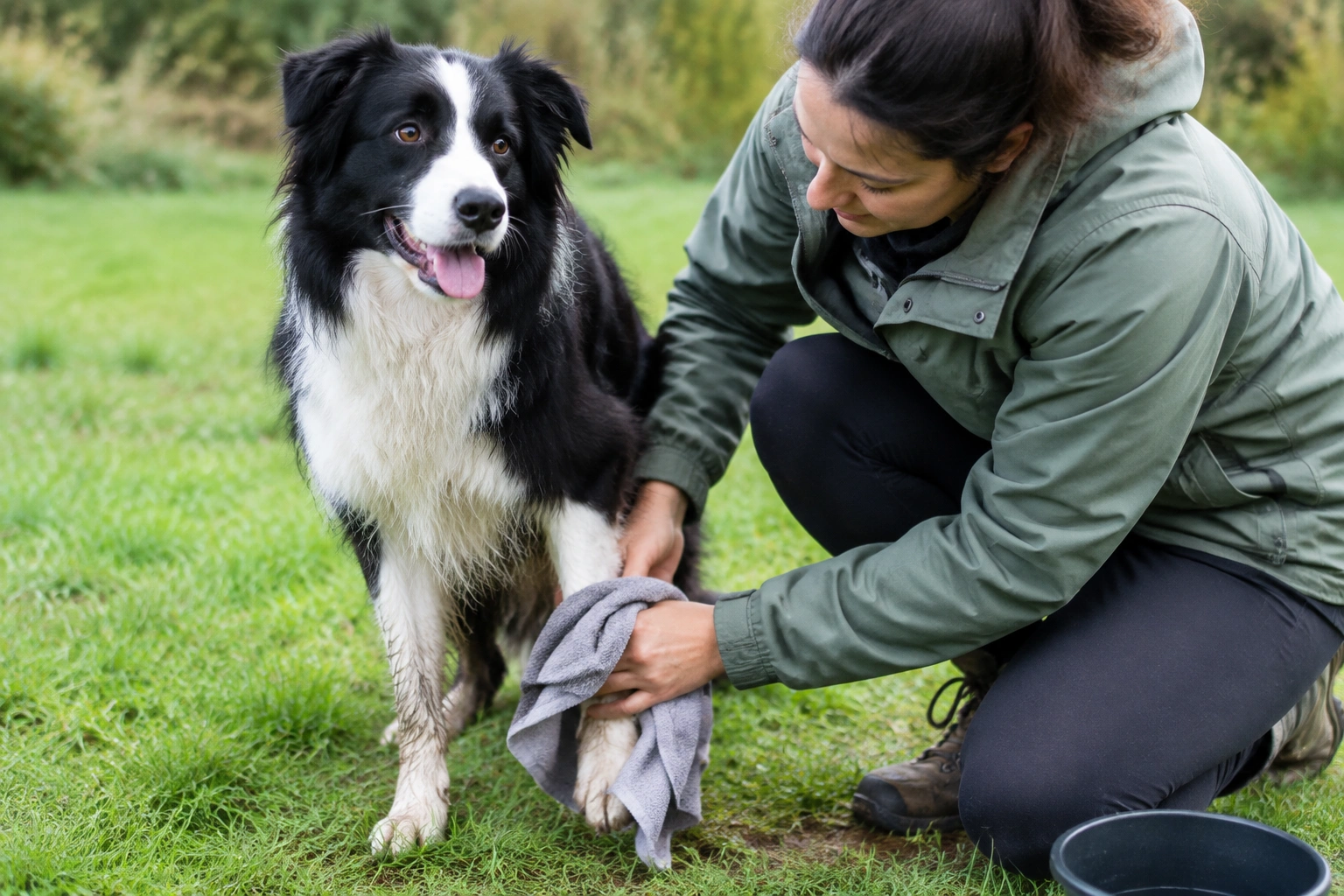
- Wipe the paws, belly, and legs with a damp cloth or pet-safe wipe.
- Check between the toes for redness, debris, or chewing.
- Brush the coat if your dog has longer fur and tends to collect pollen.
- Rinse or bathe if the exposure was heavy and your vet has said bathing is appropriate.
- Watch the next few hours for licking, rubbing, or scratching.
This routine works because it removes pollen before the dog has time to groom it into the skin or spread it around the house. It also helps if pollen is being carried indoors on the coat after walks. Dogs do not need to be physically rolling in the grass to pick up allergens; exposure can happen through air, fur, shoes, and clothing.
Do not overdo bathing. Too much bathing can dry the skin and make an already itchy dog worse. The useful question is whether the bath is removing an allergen load or simply stripping the coat.
How to Reduce Flares During Walks and Outdoor Play
You usually do not need to ban grass entirely. You do need to be strategic.
Practical exposure-reduction steps
- choose shorter grass over long, seedy grass when possible
- avoid peak pollen times if your dog is clearly seasonal
- steer away from recently treated lawns
- keep a predictable route so you can identify which areas trigger flare-ups
- wipe down after every grass-heavy outing
- consider more non-grass exercise options on high-pollen days
The trade-off is obvious for Border Collies and other high-energy dogs: they need exercise, but more outdoor time can mean more exposure. If you cut grass time too aggressively without replacing the activity, you may create a frustrated dog. A better approach is to shift where and when exercise happens rather than simply removing it.
If your dog tends to roll in grass, that habit matters. Rolling increases direct contact and can load the coat with pollen fast. A dog that only walks across grass may tolerate it better than one that throws itself down in it every day.
For a practical comparison of environmental triggers and skin symptoms, VCA Hospitals’ skin allergy resources are a reliable reference point.
Border Collies and Other High-Activity Dogs
Border Collies are not known for being fragile, but they are often exposed more often than the average pet dog. They run farther, work harder, and spend more time in fields, parks, and long grass. That means two things:
- You may notice symptoms sooner because the dog is outdoors so often.
- Management has to fit an active lifestyle or it will fail in practice.
A Border Collie that gets itchy after every training session in the field may need a different routine than a lapdog that only sees grass on weekends. In a working or sport dog, the best plan is usually the one you can repeat without wrecking the dog’s exercise needs.
That is why simple habits matter: wiping paws, monitoring after field work, and learning your dog’s trigger pattern. Small routines are easier to maintain than big lifestyle restrictions.
When to See a Veterinarian or Certified Trainer
This is a veterinarian issue when the skin is getting damaged or the pattern keeps returning.
Make an appointment if:
– itching is persistent or worsening
– the dog is chewing until the skin is raw
– there is odor, discharge, swelling, or crusting
– the ears are repeatedly inflamed
– symptoms return every season and you want a clearer diagnosis
– home measures are not making a meaningful difference
Seek prompt help if the reaction is sudden and severe, especially if there is facial swelling, hives, trouble breathing, or a dramatic whole-body reaction. Severe allergic reactions are uncommon, but they can happen, and they should not be handled as a routine itch problem.
The ASPCA’s pet health guidance is also a solid general reference for knowing when skin problems need professional attention.
Can Grass Allergies Be Cured?
Usually, no permanent cure is promised. Most dogs with grass-related or broader environmental allergies need management, not a one-time fix.
That sounds disappointing, but it is actually useful information. It means your goal is to:
– identify the likely trigger pattern
– reduce exposure where possible
– keep the skin barrier healthy
– treat flare-ups early
– avoid waiting until the dog is miserable
Some dogs improve a lot once the trigger load drops and the skin is treated properly. Others need ongoing medication or seasonal adjustments. The difference is rarely about willpower; it is about how sensitive the dog is and how much unavoidable exposure they have.
FAQ
Can a dog be allergic to grass itself?
Usually the issue is grass pollen or environmental allergens associated with grass, rather than the blade of grass alone. Dogs can also react to contact irritants on the lawn.
What are the first signs of a grass allergy in dogs?
Paw licking, belly itching, face rubbing, and red skin after outdoor time are common early signs.
Is grass allergy the same as seasonal allergies?
Grass allergy can be part of a broader seasonal environmental allergy picture. Spring and summer flare-ups are common, but grass may not be the only trigger.
How do I know if it’s grass or fleas?
Flea allergy often centers on the base of the tail, back, and thighs. Grass-related itching more often shows up on the paws, belly, and armpits after outdoor exposure.
Should I stop my dog from going on grass?
Not necessarily. Many dogs do better with exposure management rather than total avoidance. Wiping paws and watching for patterns is usually more realistic than eliminating grass completely.
Can grass allergies be life-threatening?
Severe allergic reactions are uncommon, but they can happen. If your dog has facial swelling, breathing trouble, or a sudden major reaction, seek urgent veterinary help.
Do dogs outgrow grass allergies?
Some dogs change over time, but many need ongoing management rather than a permanent cure.
Are Border Collies more likely to get grass allergies?
There is no simple breed rule that says Border Collies are more likely than every other breed. The practical issue is that their high activity level often means more exposure, so symptoms may be easier to notice and harder to avoid.
Can grass allergies be diagnosed at home?
You can suspect grass based on timing and symptom pattern, but you cannot confirm it reliably at home. Persistent cases need a veterinary exam to rule out fleas, infection, food allergy, and other environmental triggers.
What helps most right after a grassy walk?
Wiping the paws, belly, and legs is the fastest useful step. It reduces the amount of pollen the dog carries indoors and can lower the chance of a flare.