
Do Dogs Get Depressed After Being Neutered? What Normal Recovery Looks Like

If your dog came home from neutering and now seems quiet, clingy, sleepy, or “not quite himself,” you are not imagining the change. The real question is whether you are seeing normal recovery, pain, anesthesia after-effects, or something that needs a vet’s attention.
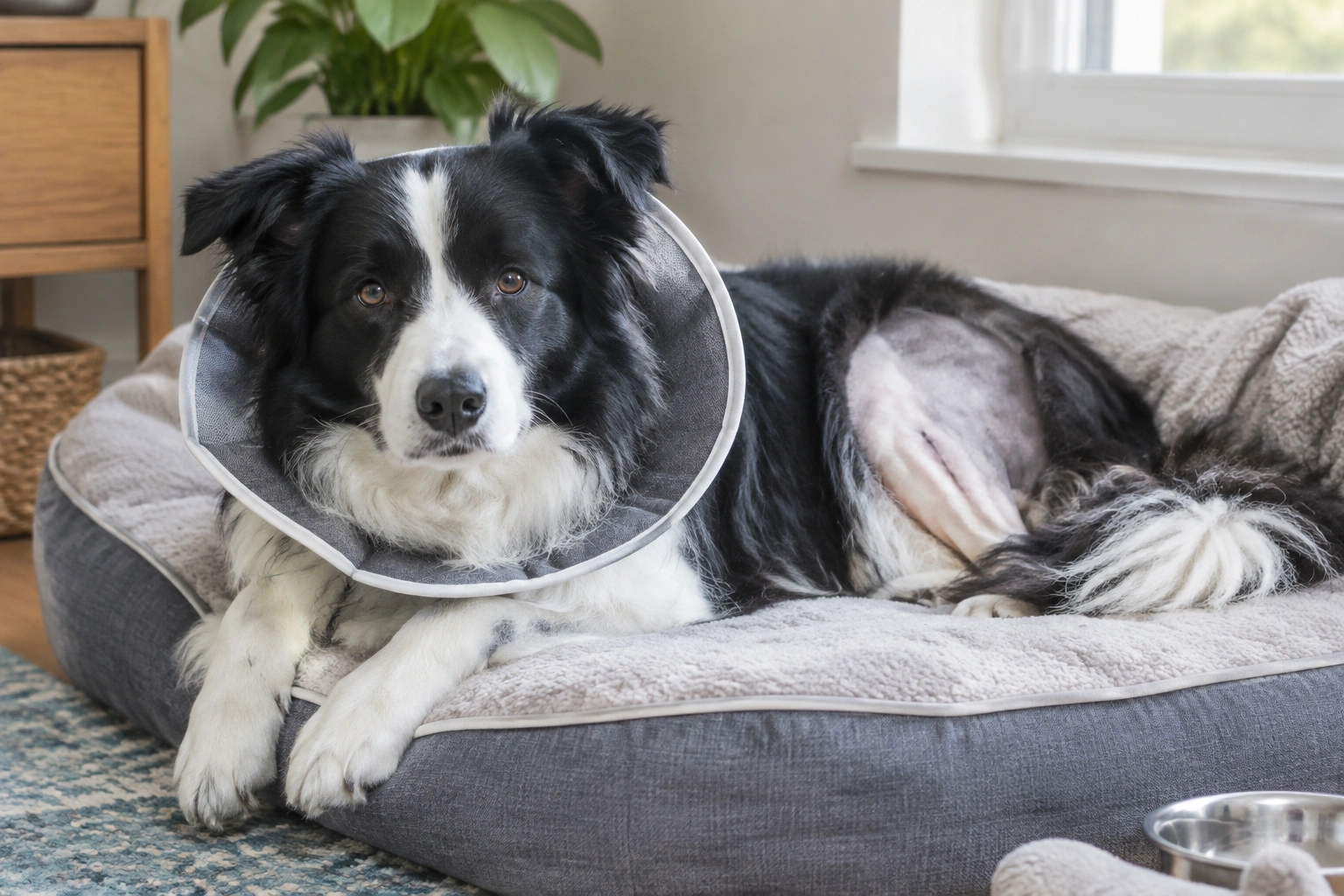
Dogs may look depressed after neutering, but this is usually temporary and most often reflects anesthesia, pain, or confinement stress rather than true depression.
In most cases, dogs do not become clinically depressed in the human sense after neutering. What owners usually notice is a short period of grogginess, low energy, mild appetite changes, or a temporary shift in behavior because the dog is healing, restricted, and possibly uncomfortable. That can look like sadness from the outside, especially in a sensitive dog.
For Border Collies, this can be especially noticeable. A dog that normally runs on routine, movement, and mental engagement may seem unusually subdued when suddenly confined. Reduced activity can also create stress or frustration in a high-drive dog, so controlled mental enrichment can help, as long as it does not involve overexertion. That does not automatically mean depression. It often means the dog is adjusting to surgery, reduced activity, and the effects of medication or anesthesia.
Can Dogs Seem Depressed After Being Neutered?
Yes, dogs can seem depressed after neutering. But “seem depressed” is not the same as being emotionally depressed in a medical sense, and true clinical depression after neutering is uncommon.
What owners often describe as depression is usually one of these:
- anesthesia hangover
- surgical pain
- frustration from activity restriction
- temporary appetite loss
- stress from an unfamiliar recovery routine
A dog may sleep more, move less, avoid interaction, or look withdrawn for a short period. That behavior can be perfectly normal in the first day or two after surgery.
The key is whether the dog is gradually improving. A dog that is quiet but eating a little, drinking, urinating, and becoming more alert over time is usually recovering normally. A dog that becomes more withdrawn, stops eating, or seems uncomfortable is a different situation.
If you want a helpful comparison point, the AKC’s general guidance on neutering is a useful place to start when you are trying to separate temporary recovery behavior from long-term expectations.
What Normal Recovery Looks Like in the First 24 to 72 Hours
The first 24 to 72 hours are the window when owners most often misread normal recovery as sadness.
First 24 hours
Your dog may:
– sleep heavily
– be wobbly or slow to stand
– have a lower appetite
– seem quieter than usual
– want to stay close to you
This is often anesthesia-related. Many dogs are simply tired, mildly nauseated, or uncomfortable from the procedure and the incision.
24 to 48 hours
You should usually see some improvement:
– more alert periods
– better interest in food
– steadier walking
– less grogginess
– calmer but not worsening behavior
A Border Collie may still look “off” here because the dog wants to move and cannot. That frustration can read as sadness or moodiness.
48 to 72 hours
Most dogs should be on a gradual upward trend:
– more normal interactions
– better appetite
– less neediness or restlessness
– no worsening swelling or incision issues
A dog that is still very quiet at this stage may still be within normal recovery, depending on the dog, pain control, and your veterinarian’s instructions, but the direction matters. Improvement is reassuring. Stagnation or decline is not.
When to call the vet if behavior is not improving
If your dog is still clearly withdrawn, lethargic, or not acting more like itself by 48 to 72 hours, call your veterinarian. If the withdrawal worsens at any point, call sooner.
Anesthesia, Pain, or Depression: How to Tell the Difference
This is the part that matters most in real life. The same dog can look “sad” for very different reasons.
| What you see | Most likely cause | What it usually looks like |
|---|---|---|
| Sleepy, wobbly, slow to respond | Anesthesia effects | Improves within the first day or two |
| Quiet, guarded, reluctant to move | Pain or discomfort | May pant, tremble, lick incision, or resist being handled |
| Clingy, restless, unsettled, pacing | Stress or pain | Often worse when the dog cannot get comfortable |
| Withdrawn but eating and gradually brighter | Normal recovery | Trend improves over 24 to 72 hours |
| Increasing lethargy, refusal to eat, vomiting, swelling | Possible complication | Needs veterinary advice |
Signs that point more toward anesthesia
Anesthesia usually causes:
– sleepiness
– mild disorientation
– slower reactions
– unsteady movement
This should fade fairly quickly. If the dog is still deeply groggy beyond the expected recovery period, call your vet.
Signs that point more toward pain
Pain often looks like:
– panting when the room is not hot
– trembling
– restlessness
– hiding
– guarding the incision
– reluctance to lie down or get up
– licking or chewing at the surgery site
Pain can make a dog seem depressed, but the emotional look is misleading. The dog may not be sad; the dog may be uncomfortable.
Signs that point more toward true depression-like behavior
True depression-like behavior is harder to judge at home, but concern rises if you see:
– persistent withdrawal that does not improve
– loss of interest in food and normal routines
– little response to comfort
– behavior that worsens rather than improves
Even then, surgery-related pain or illness is usually the first thing to rule out before assuming emotional depression.
How Long Do Post-Neuter Mood or Behavior Changes Usually Last?
Temporary behavior changes often last a few days, but some dogs stay a little off for longer depending on pain control, energy level, and recovery management.
A practical rule is this: the dog should be trending better, not just “not worse.”
Usually short-lived
These often improve quickly:
– anesthesia grogginess
– quietness
– clinginess
– mild appetite changes
– mild frustration from confinement
May last longer if the dog is uncomfortable or highly reactive
A dog may stay subdued longer if:
– pain is not well controlled
– the incision is irritated
– the dog is highly active and frustrated by rest
– there is an underlying medical issue
What is less typical after the first few days
Lingering lethargy, ongoing withdrawal, or a dog that still seems “depressed” beyond the early recovery window is less typical and should be discussed with your veterinarian, especially if the behavior is not steadily improving.
If your dog is still noticeably withdrawn after the first few days, or if behavior changes are getting worse instead of better, check in with your veterinarian.
Which Signs Are Normal and Which Signs Suggest a Complication?
Normal recovery and a problem can look similar at first. The difference is usually in the details.
Usually normal
- sleepy the first day
- slightly reduced appetite
- mild clinginess
- quiet behavior
- less playfulness
- cautious movement
- brief low energy
Red flags that need a vet call
- refusing food or water for more than a short period
- vomiting repeatedly
- swelling that is significant or getting worse
- discharge from the incision
- bleeding
- fever
- strong pain signs such as crying, trembling, or heavy panting
- guarding the incision
- worsening lethargy
- the dog becomes more withdrawn instead of more alert
A clean-looking incision is not enough on its own. A dog can still be in pain or developing a complication even if the skin edges look closed.
If you are unsure whether the behavior is normal, compare it with the dog’s trend over time. Improving is reassuring. Worsening deserves a call.
For more general recovery and post-op monitoring guidance, VCA Hospitals’ pet recovery resources are a solid reference point.
What You Can Do at Home to Comfort and Monitor Your Dog
The goal at home is not to “cheer the dog up” with excitement. The goal is to create a recovery setup that makes healing easier and makes changes easy to spot.
Keep the routine calm and predictable
Dogs recover better when the day is simple:
– short leash potty breaks
– quiet rest
– limited visitors
– no rough play
– no stairs unless necessary
A Border Collie often does better with structure than with constant soothing. Calm predictability is more useful than fuss.
Track the basics
Check these at least daily:
– appetite
– water intake
– urination
– bowel movements
– energy level
– incision appearance
– incision warmth, redness, or swelling
– gum color if your vet has shown you what is normal for your dog
– willingness to stand, walk, and respond to you
You do not need a complicated chart. A few notes on your phone are enough. What matters is noticing change.
Protect the incision
Prevent:
– licking
– chewing
– running
– jumping
– wrestling with other pets
If your dog keeps targeting the incision, that is not just annoying behavior. It can open the wound or introduce infection.
Offer comfort without overhandling
A dog that seems quiet may want proximity, but too much handling can increase stress or pain. Let the dog rest near you if that helps, but avoid repeated lifting, hugging, or encouraging movement “just to see.”
Watch the appetite realistically
A slightly reduced appetite can happen after surgery. What you do not want is a dog that refuses food entirely, vomits, or seems less interested each day.
Quick owner checklist: sleepy or lethargic?
Use this simple check if you are unsure whether your dog is just sleepy or concerningly lethargic:
- Eating/drinking: Is your dog eating at least a little and drinking normally or close to normally?
- Standing/walking: Can your dog stand and walk without marked weakness or collapse?
- Incision: Does the incision look closed, without increasing redness, swelling, heat, discharge, or bleeding?
- Responsiveness: Does your dog respond to you, get up when needed, and seem aware of what is happening?
- Improving: Is your dog a little better today than yesterday?
If several of these are getting worse, call your vet.
If you need a broader comparison of post-neuter behavior changes, this related guide on whether neutered dogs still mate may also help separate hormonal behavior from post-op recovery.
When to Call the Veterinarian or Seek Recheck
Call your vet sooner rather than later if the recovery pattern is not heading in the right direction.
Call now if your dog:
- will not eat or drink for an extended period
- vomits more than once
- seems increasingly weak or lethargic
- cries, trembles, pants heavily, or cannot settle
- has swelling, discharge, bleeding, or a bad smell at the incision
- keeps licking or chewing the incision despite prevention
- seems more withdrawn each day
- is not improving by 48 to 72 hours, even if the incision looks normal
It may be reasonable to monitor at home if:
- the dog is sleepy but improving
- appetite is a little lower but returning
- the incision looks normal
- energy is low but trending upward
- the dog is comfortable at rest
A useful decision rule: if the dog is quieter but better, keep watching. If the dog is quieter and worse, call.
If your dog’s behavior change is severe or you are worried about pain control, a recheck is worth it. Dogs do not need to “tough it out” after surgery.
Will Neutering Change My Dog’s Personality Long Term?
Usually, neutering does not erase a dog’s personality. A Border Collie will still be a Border Collie: intelligent, observant, active, and often intense.
What can change is behavior that is influenced by sex hormones, maturity, or frustration:
– roaming
– mounting
– some forms of sexual behavior
– some hormone-driven conflict behaviors
But the core temperament, learning style, and sensitivity of the dog usually remain. A dog that is naturally cautious, biddable, or high-drive does not become a different animal overnight.
That said, some owners do notice a calmer or less driven dog after neutering. Others notice very little change. Both outcomes can be normal.
The best way to think about it is this: neutering may alter certain behaviors, but it should not rewrite the dog’s entire personality.
Border Collie and Other High-Energy Dog Considerations
Border Collies can be the hardest dogs to recover with because they notice everything and hate being bored.
What often happens
A Border Collie may:
– pace because confinement is frustrating
– stare at doors or windows
– seem “sad” when really under-stimulated
– become clingier because movement is limited
– look unusually flat because the dog cannot do the things that normally regulate stress
What helps most
- short, controlled leash walks only as your vet allows
- food puzzles that do not require jumping or twisting
- calm scent games if the dog is comfortable
- quiet training that does not involve physical effort
- predictable rest periods
What to avoid
Do not use exercise to “fix” the mood. Too much activity risks the incision. For a Border Collie, the trade-off is simple: a little boredom now is safer than a wound problem later.
If your dog becomes restless and distressed, that does not automatically mean depression. It may mean the dog needs better recovery structure, pain relief, or both.
Common Mistakes Owners Make During Recovery
These are the errors that most often turn a normal recovery into a harder one:
Mistaking pain for sadness
A dog that is panting, trembling, or guarding the incision is not just “down.” Pain should be taken seriously.
Assuming a closed incision means all is well
The skin can look fine while the dog still has discomfort or a developing problem.
Letting the dog do too much too soon
Jumping, running, and rough play can reopen the wound or increase swelling.
Waiting too long because the dog is still drinking a little
Small improvements are good, but they do not rule out a complication if the overall trend is worse.
Expecting the dog to act normal immediately
Some dogs bounce back fast. Others need a few days to look and act like themselves again.
Final Takeaway
Dogs can look depressed after being neutered, but in many cases what you are seeing is normal recovery, anesthesia after-effects, pain, or frustration from restriction. The most useful question is not “Does my dog look sad?” but “Is my dog improving?”
If the dog is gradually brighter, eating a bit more, and the incision looks normal, that is usually reassuring. If the dog is getting quieter, more painful, refusing food, vomiting, or showing incision changes, call your veterinarian.
FAQ
How long does temporary depression after neutering last?
Most dogs that seem quiet or “down” improve over the first 24 to 72 hours. If your dog is not improving by that point, or seems worse, call your vet.
Is it normal for my dog to sleep a lot after neutering?
Yes. Sleepiness is common after anesthesia and surgery. It should gradually improve, though some dogs stay low-key for a few days.
Can pain make my dog act depressed after neutering?
Yes. Pain can look like withdrawal, restlessness, hiding, panting, trembling, or reluctance to move.
When should I call the vet for behavior changes alone?
Call if your dog is not improving by 48 to 72 hours, or if withdrawal worsens at any point, even if the incision looks normal.
Do Border Collies seem more affected after neutering?
They may seem more unsettled because they are often sensitive to routine changes and confinement. Controlled mental enrichment can help, but avoid overexertion.