
Should You Refrigerate a Dog Urine Sample Before Taking It to the Vet?

If your vet asked for a urine sample and you can’t get there right away, yes — refrigerate it. That is the safest default in most home-collection situations, because cooling slows the changes that make urine less reliable for testing.
The simple decision rule is this:
- Bring it to the vet as fresh as possible if you can get there quickly.
- Refrigerate it right away if there will be any meaningful delay.
- Follow the clinic’s instructions first if they gave you a specific time window or container type.
- Do not freeze it unless your veterinarian or lab specifically tells you to.
That advice matters because urine changes after it leaves the dog’s body. Bacteria can multiply, cells can break down, and some test values become less dependable as time passes. Cornell University’s diagnostic lab says that if there is a delay between collection and submission, the urine should always be refrigerated, and one clinic guidance source recommends keeping it cool rather than freezing it. Cornell’s urinalysis submission guidance and this clinic guidance on home collection both point in the same direction: cool it promptly if you cannot hand it over immediately.
Why Timing Matters for Dog Urine Testing
A urine sample is not static. Once it sits out, it begins to change in ways that can affect the lab’s interpretation.
Here’s what delay can do:
- Bacteria can grow, especially if the sample is warm.
- Cells and sediment can deteriorate, making microscopic review less accurate.
- Chemical values can drift, which matters for urinalysis.
- Odor and appearance can change, which may make a sample look worse than it was at collection.
That is why refrigeration is usually the safer choice when you cannot deliver the sample quickly. A study on canine urine stability examined samples stored at 4°C and 20°C and looked at specific gravity, pH, protein, bilirubin, glucose, ketones, sediment, and bacterial growth over time. The point is not that every test fails after a short delay; it is that time and temperature both affect reliability, and cooling slows that process. You can see the study here: stability of canine urine samples under different storage conditions.
Fresh sample vs. refrigerated sample
A fresh sample is ideal when you can get it to the clinic quickly. But a fresh sample that sits warm for too long is worse than a refrigerated sample in most practical situations.
Think of it this way:
- Fresh and delivered quickly: best case.
- Refrigerated promptly and delivered later: usually acceptable.
- Left on the counter for hours: more likely to be rejected or repeated.
That trade-off matters more for tests that are sensitive to contamination or bacterial growth.
How Long a Dog Urine Sample Can Sit Out or Stay Refrigerated
Most clinics prefer a sample to arrive quickly after collection. The practical rule of thumb below is the easiest way to think about it.
Rule of thumb: room temperature vs. refrigerated storage
| Storage condition | Usual handling rule | What to do |
|---|---|---|
| Room temperature | Use only briefly; ideally submit within about 1 hour | If there will be any delay, refrigerate promptly |
| Refrigerated | Usually acceptable for short-term holding | Keep sealed and chilled until drop-off |
| Too old, warm, or uncertain | Less reliable, especially for culture | Discard and recollect a fresh sample unless the vet says otherwise |
| Not sure what the clinic wants | Clinic instructions override general advice | Call the clinic before submitting |
Some veterinary guidance says within 1 hour is ideal, and if that is not possible, refrigerate it. Cornell says any delay means the sample should be refrigerated. Vetwest’s collection guidance and Cornell’s submission guidance are useful practical anchors.
A practical decision guide
Use this rule of thumb:
- Less than an hour before drop-off: keep it sealed and get it in quickly.
- More than an hour: refrigerate it.
- If you are unsure how old it is: call the clinic before driving in.
- If it has been warm for several hours: discard it and recollect a fresh sample unless the vet advises otherwise.
That said, the exact acceptable window can vary by test and by clinic. If your vet gave you a different instruction, follow that instead.
Which Test Was Ordered: Urinalysis, Culture, or Sediment Exam?
Not all urine tests are equally forgiving.
Quick test-specific summary
- Routine urinalysis: usually the most forgiving of the common urine tests, as long as the sample is handled cleanly and refrigerated if delayed.
- Urine culture: the least forgiving, because bacterial contamination or overgrowth can change the result.
- Sediment exam: also sensitive to time because cells, crystals, and debris can change after collection.
Urinalysis
Urinalysis looks at things like concentration, pH, glucose, protein, bilirubin, ketones, and general appearance. It can tolerate a short delay better than a culture, but it still benefits from prompt refrigeration if you cannot deliver it immediately.
Urine culture
Culture is stricter. It is designed to see whether bacteria are truly present, so contamination and bacterial overgrowth are a bigger problem. If your vet ordered a culture, collection cleanliness matters even more than usual, and the clinic may want a sterile collection method such as cystocentesis or a clinic-directed sample rather than a free-catch sample.
Sediment exam
Sediment testing looks at cells, crystals, and debris under the microscope. These elements can break down over time, so a fresh or properly refrigerated sample is important.
The practical takeaway: the more the test depends on cells or bacteria, the more careful you need to be with storage and collection.
If you want the bigger picture on collection methods, this guide pairs well with the handling advice here: how to obtain a urine sample from a dog without stress or guesswork.
Best Way to Collect a Dog Urine Sample Without Contamination
A clean collection is just as important as cooling the sample.
The least stressful low-contamination method
For many owners, a free-catch sample is the easiest option. That means catching urine midstream in a clean container as the dog urinates. It is not sterile, but it is often acceptable for routine urinalysis if your vet is expecting that type of sample.
A few practical points make a big difference:
- Use a clean, dry container.
- Catch the urine midstream if possible.
- Avoid touching the inside of the container.
- Do not let the sample pick up dirt, grass, litter, soap residue, or water.
A Border Collie who bolts the second you move can make this awkward. In that case, plan the setup before the dog goes out, so you are not fumbling while the sample is flowing.
When sterility matters more
If the vet ordered a culture, a sterile collection method is more valuable. That may mean cystocentesis or another clinic-directed method instead of a free-catch sample. For routine urinalysis, a free-catch sample may be acceptable if your clinic says so, but for culture, do not assume that a home free-catch sample will be enough.
Cornell’s lab says urine samples should be collected into red top containers or urine cups for all urine tests, including cytology, and that plastic tubes should not be used. Their guidance also says the sample should be labeled properly and sent with the request form. Cornell’s sample submission page is one of the clearest veterinary references on this point.
What Container to Use and How to Label It
The best container is the one your clinic recommends. If they supply a urine cup or ask you to use a specific type of container, that instruction overrides general advice. If they sell or supply urine cups, use those. If they asked for a red-top container, use that.
Good container habits
- Use the clinic-provided container if you were given one.
- Use a clean, sealable container only if the clinic says that is acceptable.
- Keep the lid on as soon as the sample is collected.
- Write the dog’s name, date, and time collected on the container.
- If the clinic gave you paperwork, send that too.
PDSA also recommends labeling the sample with your name, your dog’s name, and the time and date it was collected, then taking it to the vet promptly or refrigerating it until drop-off. You can read their advice here: PDSA’s dog urine collection guide.
Human urine cup or clean jar?
A human urine cup may be acceptable if your clinic says so. A clean, sealable jar can also be a fallback option only when the vet approves it. If the vet requested a culture or a specific container, do not improvise without checking first.
How to Store and Transport the Sample Before the Vet Visit
Once the sample is collected, the goal is simple: keep it sealed, cool, and out of sunlight.
The practical storage routine
- Close the lid tightly.
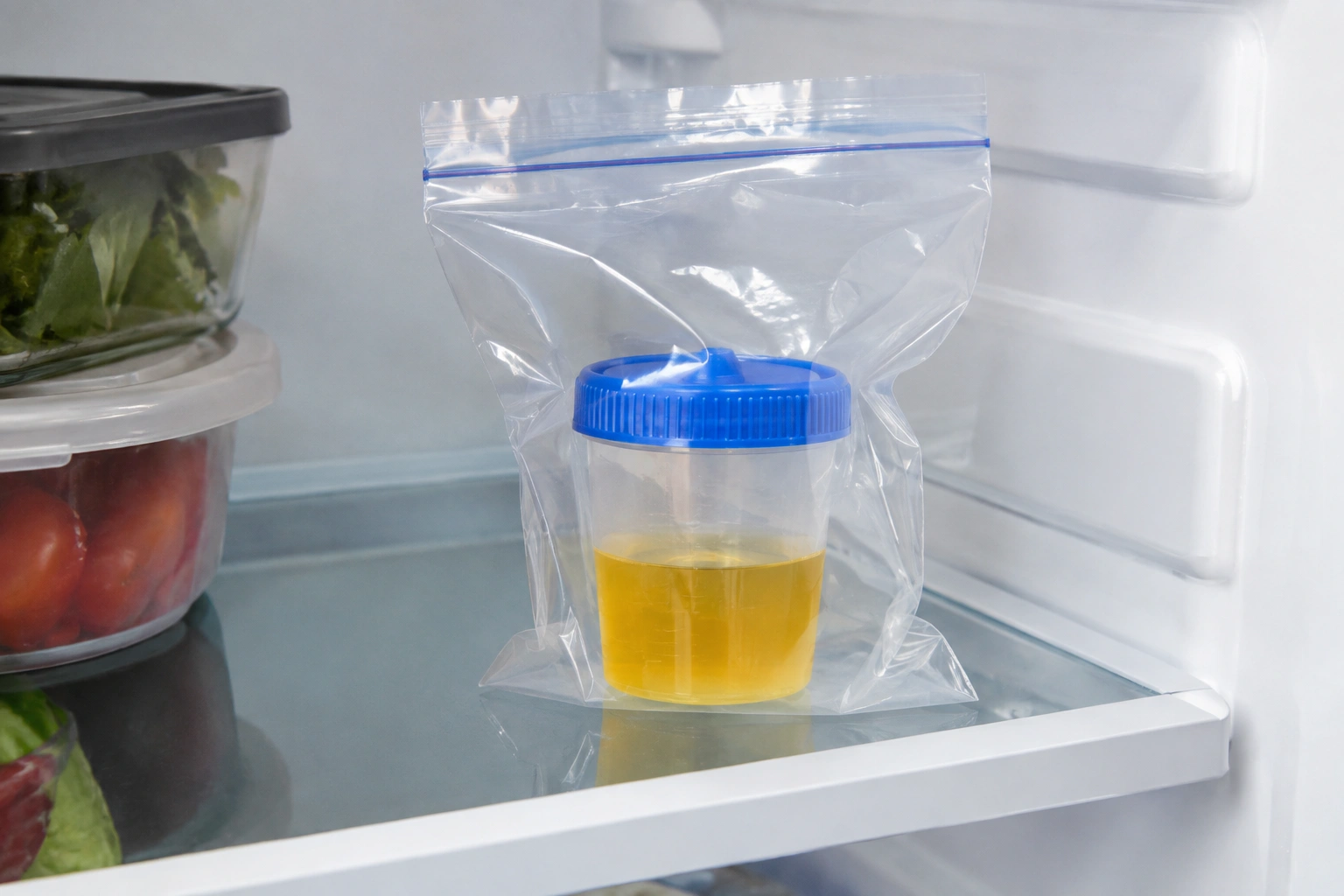
- Place the container in a sealed plastic bag.
- Keep it in the refrigerator, not the freezer, if there will be a delay.
- Keep it away from food items if possible.
- Bring it to the clinic as soon as you can.
That sealed-bag step is a small but useful precaution. It reduces the chance of leaks and keeps the sample separated from food in the fridge. The clinic guidance cited earlier specifically recommends a sealed plastic bag and avoiding heat or direct sunlight because those conditions speed degradation and can affect results.
Transport tip for longer drives
If you have to travel a while, keep the sample cool on the way. A small insulated bag or cooler pack is useful, especially in warm weather. Just do not let the sample freeze against an ice pack.
Fresh Sample vs. Refrigerated Sample: Which Is Better?
Here is the trade-off in plain terms:
| Situation | Best choice | Why |
|---|---|---|
| You can reach the clinic quickly | Fresh sample | Minimizes storage-related change |
| There will be a delay | Refrigerated sample | Slows bacterial growth and sample degradation |
| The vet ordered a culture | Fresh and cleanest possible sample | Lower contamination risk matters more |
| The sample is for routine urinalysis | Fresh is ideal, refrigeration is usually acceptable | Short delays are often manageable if cooled promptly |
| The sample sat warm for several hours | Usually not ideal | Higher chance the clinic will want a new sample |
So if you are choosing between warm and delayed versus cooled and delayed, refrigeration is usually the better move.
What to Do If the Sample Is Old, Warm, Bloody, or Contaminated
Sometimes the sample is not worth sending.
Recollect or call first if:
- It sat at room temperature longer than the clinic advised.
- It was left in a hot car or in direct sun.
- It leaked or was not tightly sealed.
- It contains litter, dirt, soap, or obvious debris from the container.
- It was mixed with cleaning products or water.
- The clinic specifically asked for a sterile sample and this one is clearly not sterile.
What about blood or cloudiness?
A sample that looks bloody, cloudy, or unusual may still be medically useful, but if it was also mishandled, call the clinic before you drive over. That avoids wasting time on a sample they may reject.
If your dog is actively straining to urinate, producing only drops, vomiting, lethargic, or in obvious pain, skip the sample logistics and contact a veterinarian urgently. Those signs can point to a medical emergency.
When You Should Contact the Veterinarian Before Sending the Sample
Call the clinic first if any of these apply:
- The vet asked for a culture or another specific test.
- You are not sure whether the sample needs to be sterile.
- The sample has been refrigerated longer than the clinic’s preferred window.
- You only managed a tiny amount.
- The sample was collected in a container you are not sure they will accept.
- The urine looks contaminated or has visible debris.
A quick phone call can save a repeat appointment. Clinics would much rather answer a handling question than process a sample that has to be discarded.
For general dog health guidance and practical owner resources, these organizations are also useful references: AKC health and care resources, VCA’s pet health library, and The Kennel Club’s dog health advice.
Quick Answer: The Safest Rule to Follow
If you remember only one thing, make it this:
If you cannot deliver a dog urine sample right away, refrigerate it promptly, keep it sealed, and get it to the vet as soon as possible.
That is the safest default for most home-collected samples. Fresh is best, but a promptly refrigerated sample is usually far better than one left warm on the counter.
FAQ
Can I refrigerate a dog urine sample overnight?
Often yes, if the clinic says the sample is still within its acceptable window. Refrigerate it promptly and call ahead if you are unsure.
Should I freeze a dog urine sample?
No, not unless your vet specifically tells you to. Freezing can damage cellular components and is not the usual recommendation for routine submission.
Can I bring the sample warm?
If you are going straight to the clinic and there is no delay, that is usually fine. If there is any wait, cool it right away.
Will refrigeration ruin the test?
No. In most cases, refrigeration is the preferred way to preserve a sample when immediate delivery is not possible.
Do I need a sterile container?
For many routine home samples, a clean urine cup may be acceptable if your clinic approves it. For culture or specific lab work, sterile handling matters more, so follow the clinic’s instructions exactly.