
What Are Some Fun Facts About Dogs? A Practical Guide for Dog Lovers and Border Collie Owners

Dogs are easy to love, but they’re even more interesting once you understand how they actually work. A lot of the best dog facts are not just cute trivia; they explain why dogs sniff, tilt their heads, follow our body language, and bond so tightly with people. That matters if you live with a Border Collie, because their behavior often looks “extra” only until you know what’s driving it.
Below, I’ve pulled together accurate, shareable dog facts with a practical angle. If you want quick trivia, you’ll find it. If you want the “why,” you’ll get that too.
Quick List of Fun Dog Facts
Here are some facts that are easy to remember and safe to share:
- A dog’s nose print is unique, much like a human fingerprint. The American Kennel Club notes this as one of the most recognizable dog facts.
- Dogs dream, and sleep patterns can vary by age and individual dog.
- Some dogs sleep in their owner’s bed, while others prefer a crate, a floor bed, or a quiet corner. Sleep position and pattern often reflect comfort, temperature, age, and habit.
- Some people even sign their dog’s name on holiday cards.
- Dogs can smell far better than humans. Exact comparisons vary, but dog noses are far more sensitive than ours.
- Dogs have excellent hearing and can pick up sounds humans miss.
- Some working dogs help people every day as guide dogs, assistance dogs, and search-and-rescue dogs.
- Basenjis are famous for not barking in the usual way; they often make yodel-like sounds instead.
- A Greyhound is built for speed, but endurance and acceleration are different things; “fastest” is not the same as “best at long distance.”
- Border Collies are widely known for their intense focus and quick learning, which is why they’re so often mentioned in conversations about trainability.
If you only remember three, make them these: dogs use scent as a major sense, dogs read human cues closely, and breed differences matter a lot more than casual dog trivia usually admits.
How Dogs Experience the World: Scent, Sound, and Body Language
A dog’s world is not mostly visual. It’s chemical, auditory, and social.
Why dogs sniff everything
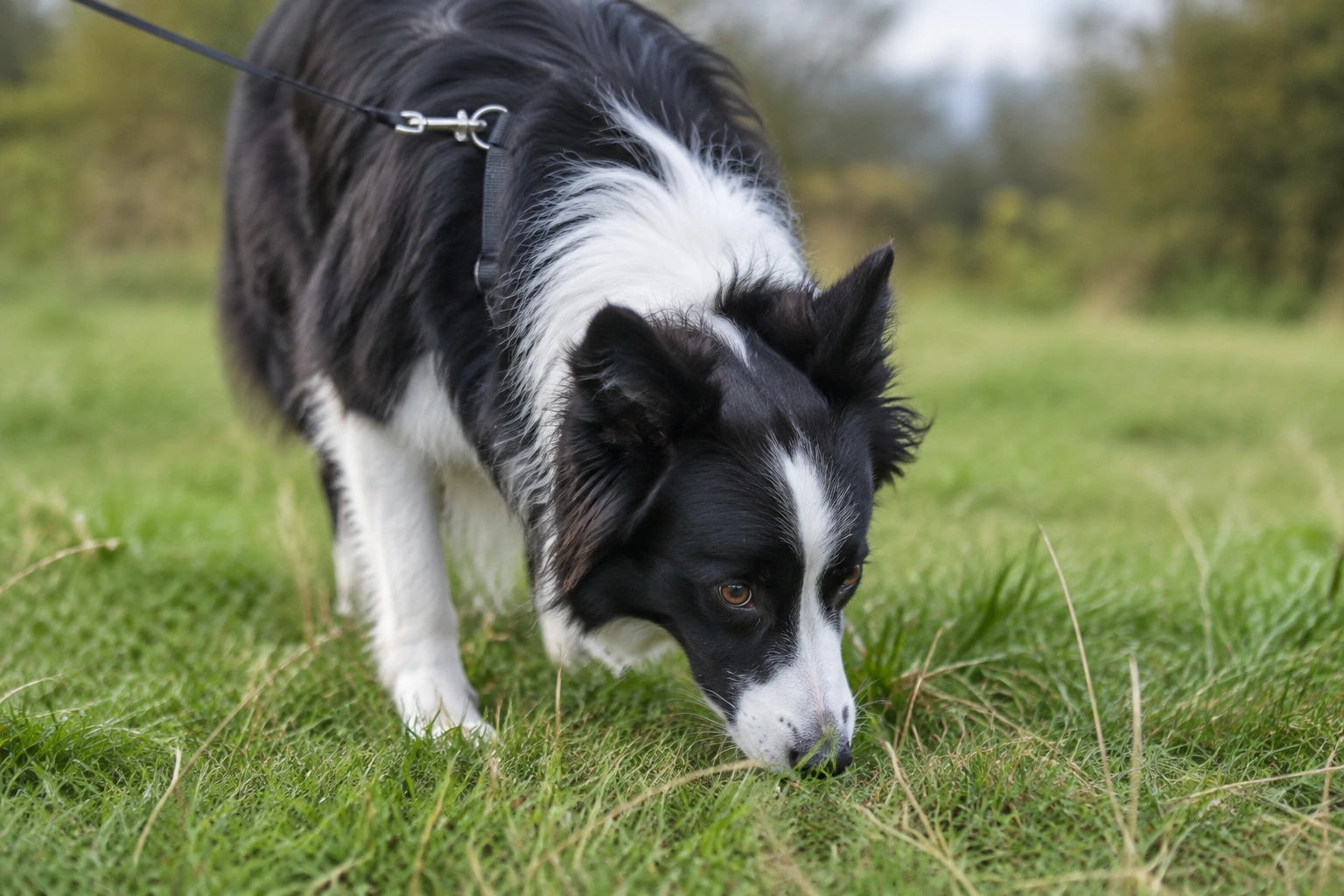
Dogs sniff because scent is one of their main ways of gathering information. A sniff can tell a dog who has been there, whether another dog was stressed or relaxed, and whether a place feels familiar. That’s why a short walk can take forever if your dog is allowed to investigate properly.
This also explains why rushing a dog past every smell can make them look restless or distracted. They are not being stubborn; they are being dogs.
One small but useful detail: dogs’ noses are wet, which helps them absorb scent molecules more effectively. That’s one reason the nose is such a powerful tool.
Why dogs tilt their heads
The head tilt is one of the most charming dog behaviors, but it is not always “cuteness.” Often, a dog is adjusting to a sound, trying to locate where it came from, or changing the angle of their view so they can read your face better.
If your dog tilts their head when you say “walk” or “treat,” they may be doing a mix of listening and visual focus. In practice, it often means, “I’m processing that.” Border Collies can do this especially often because they are so tuned into human movement and voice.
Why dogs read people so well
Dogs are excellent at reading posture, tone, and routine. They notice whether you move quickly, whether your shoulders are tense, and whether your voice sounds playful or serious. That’s part of why a dog can seem to “know” you’re leaving before you even touch the leash.
This doesn’t mean dogs understand every human emotion in a human way. It means they are very good at picking up patterns that predict what happens next.
If you want a practical takeaway, it’s this: your body language matters as much as your words. Calm movement helps many dogs settle faster than repeated verbal corrections.
For a deeper look at this side of dog-human communication, see our guide on what dogs understand about human affection.
Do Dogs Understand Human Emotions and Body Language?
Yes, in a practical sense. Dogs often notice when a person is happy, tense, upset, or excited because they read facial expression, posture, voice, and movement together.
That does not mean they understand emotions the way humans do. But it does mean they can respond to them. A dog may come closer when you are sad, get alert when your voice sharpens, or become calmer when your body relaxes.
For everyday life, the simplest rule is this: dogs understand our feelings best through the signals our bodies give off.
What Dog Intelligence Actually Looks Like
Dog intelligence is not one thing. People often talk about dogs as if “smart” means the same thing in every context, but that oversimplifies it.
Three kinds of dog intelligence
-
Trainability
How quickly a dog learns a cue and repeats it reliably. -
Problem-solving
How a dog figures out a puzzle, obstacle, or new situation. -
Social intelligence
How well a dog reads people, other dogs, and routines.
A dog can be very strong in one area and average in another. That’s why some dogs look brilliant in obedience but less interested in puzzle toys, while others are clever escape artists but slower to respond to formal training.
Why Border Collies stand out
Border Collies are often singled out because they usually combine fast learning with intense focus and strong herding instinct. That does not mean every Border Collie is identical, but it does mean the breed has a reputation for taking in new patterns quickly.
Two concrete examples make the difference clear:
- A Border Collie may learn a new cue after only a few repetitions, then start offering the behavior on its own because it has already spotted the pattern.
- The same dog may also lock onto motion so strongly that it tries to herd children, bikes, or moving pets instead of relaxing in a busy environment.
For owners, the trade-off is simple: that same sharp mind can become frustration if the dog is under-stimulated. A Border Collie that is mentally underworked may invent its own job. That “job” might be shadowing people, staring at moving objects, or trying to herd children, bikes, or other pets.
A useful rule of thumb
If your dog learns a cue quickly but struggles to stay calm, that is not a lack of intelligence. It may mean the dog needs better outlets for arousal and focus, not just more repetition.
Border Collies: The Standout Fact File
Border Collies deserve their own section because they are not just “another smart breed.” Their working style is unusually distinctive.
What makes them different
- They were developed as herding dogs, so movement matters to them.
- They often show intense eye contact, sometimes called “the eye,” when focused on livestock or moving objects.
- They tend to notice tiny changes in body position and direction.
- Many learn patterns quickly, especially when the reward is clear and the task makes sense.
That focus can be a gift in training, agility, structured play, and other jobs with clear rules. It can also become a problem if the household expects a Border Collie to be entertained by casual backyard time alone.
What this means in real life
A Border Collie may look “too intense” to someone used to a more laid-back family dog. But intensity is not the same as disobedience. Often, it’s a sign the dog is tracking movement, anticipating the next cue, or trying to control the environment.
If you own a Border Collie, the best question is not “How do I make this dog calmer?” It is “What kind of work helps this dog feel organized?” That shift in thinking makes training more effective and daily life easier.
Social Dogs: Bonding, Emotion, and Human Connection
Dogs are social animals. That sounds obvious, but it explains a lot of their behavior.
Why dogs bond so strongly with people
Dogs have lived alongside humans for a very long time, and many have become especially good at forming close working and emotional partnerships with us. They watch our routines, seek reassurance, and often prefer predictable social contact.
That is one reason many dogs greet their people with such obvious excitement. It is not just “happy noise.” It is a social reunion.
Do dogs understand our emotions?
Sometimes, but not in a human language sense. Dogs can often detect when we are upset, calm, or excited because our posture, voice, and movement change. They may respond by moving closer, becoming more alert, or settling beside us.
What they do not do is sit there and mentally label your feelings the way another person might. The practical version is enough: dogs are responsive to emotional cues, and your mood can affect theirs.
Dogs and other dogs
Dogs also use social signals with each other: sniffing, posture, play bows, and movement patterns all help them communicate. A polite dog does not rush into every interaction at full speed. They often gather information first.
For owners, this means socialization is not just about “meeting lots of dogs.” It is about helping your dog learn how to stay relaxed around different sights, sounds, people, and dog styles.
If you want a broader explanation of bonding and affection, our article on how dogs understand affection from humans is a helpful companion read.
Myths vs. Facts About Dogs
Dog trivia gets messy when myths are repeated as if they were universal truths. Here are a few worth correcting.
| Common claim | Better way to think about it |
|---|---|
| All dogs are equally smart | Dogs have different strengths: trainability, problem-solving, and social intelligence |
| A wagging tail always means friendliness | Tail wagging can also mean arousal, uncertainty, or tension |
| Dogs understand every word we say | Dogs usually respond to tone, routine, and learned cues more than full language |
| A wet nose means a dog is healthy | Nose moisture alone is not a reliable health test |
| Border Collies are “easy dogs” because they’re smart | They may learn quickly, but they often need more mental structure than average |
The most useful myth-busting rule is this: if a dog behavior sounds universal, it probably isn’t. Breed, age, history, and environment all shape what you see.
When a Fun Fact Becomes a Useful Care Clue
Some dog facts are entertaining, but the best ones help you make a better decision.
Example 1: Sniffing is not bad manners
If your dog sniffs every inch of the sidewalk, that may be their version of reading the neighborhood news. Letting them sniff in controlled moments can make walks more satisfying and often reduces frustration.
Example 2: Head tilts can signal attention
If your dog tilts their head when you speak, they may be trying to hear or interpret you more accurately. That is a useful cue to keep your language simple and consistent during training.
Example 3: Border Collie focus is a feature, not a flaw
If your Border Collie locks onto motion, that’s the breed doing what it was shaped to do. The practical response is to give that focus a job, not to assume the dog is being difficult.
Example 4: Sleep positions can tell you something
Dogs often sleep curled up, stretched out, or pressed against a person or object for reasons that are pretty practical. Curling up can help them feel secure or conserve warmth, while stretching out may mean they are comfortable and cool enough to relax fully. Changes in sleep pattern can be a clue to comfort, stress, or routine.
Memorable Dog Facts You Can Share
Here’s the short version you can keep, repeat, or tell a kid at the dinner table:
- Every dog has a unique nose print.
- Dogs use scent as a major source of information.
- Head tilts often mean a dog is processing sound or visual cues.
- Dogs read human posture and tone very closely.
- Border Collies are especially known for focus and quick learning.
- Not all smart dogs are smart in the same way.
- A wagging tail does not automatically mean a dog is relaxed.
- Some dogs work as guide dogs, assistance dogs, or search-and-rescue dogs.
- Breed traits matter, especially when you’re trying to understand behavior quickly.
If you want the most practical takeaway from all of this, it’s simple: the more you understand how dogs perceive the world, the easier they are to live with. That is especially true for Border Collies, whose sharp minds and strong instincts can be a joy when you give them the right kind of outlet.
FAQ
Do dogs really understand human emotions?
They understand them in a practical way, not a human one. Dogs notice changes in our voice, posture, and facial expression, and they often respond to those signals.
Why do dogs sniff so much?
Sniffing is how dogs gather information. It helps them identify people, animals, places, and even changes in mood or activity.
Are Border Collies smarter than other dogs?
They are often considered exceptionally trainable and focused, but intelligence in dogs has different forms. Another breed may be better at problem-solving or social cues.
Why do dogs tilt their heads?
Dogs may tilt their heads to hear better, locate a sound, or better read your face and body language.
Why do some dogs sleep curled up?
Curling up can help dogs feel secure, stay warm, or rest more comfortably. Stretching out often suggests the dog feels relaxed and cool enough to do so.
Is a wagging tail always a good sign?
No. Tail wagging can mean excitement, tension, or uncertainty depending on the rest of the dog’s body language.
Do Border Collies need more mental work than average dogs?
Often, yes. Many Border Collies do best when they have structured training, jobs, or activities that give their focus somewhere to go.
Can dogs understand affection from humans?
Yes, in a practical sense. They recognize patterns in touch, tone, routine, and attention, and many learn what affection looks and feels like in their household.
What is one dog fact people get wrong most often?
That a single behavior always means the same thing. In reality, context matters a lot.
What is the most useful fun fact for dog owners?
That dog behavior is usually easier to understand when you think in terms of body language, scent, and routine instead of human assumptions.