
Why Is My Dog’s Eye Watery? A Practical Guide to Causes, Warning Signs, and What to Do Next

A watery eye in a dog is common, but it is not something to ignore by default. Sometimes it is a brief reaction to wind, dust, or pollen. Sometimes it is the first sign of a scratch, blocked tear drainage, infection, or a problem that needs prompt treatment.
A quick way to tell the difference: normal tears keep the eye moist, while abnormal watery discharge is extra tearing or tears that keep spilling out because the eye is irritated or not draining well. If the eye is just briefly wet after wind or dust, that is different from ongoing watering, squinting, redness, or discharge from one eye only.
For Border Collies in particular, this can happen after outdoor exercise. These dogs spend time in grass, brush, wind, and moving debris, so a “just came back from a hike and now one eye is watering” scenario is very believable. The key is not to guess blindly. Look at the pattern.
Quick triage: mild, watchful, or urgent?
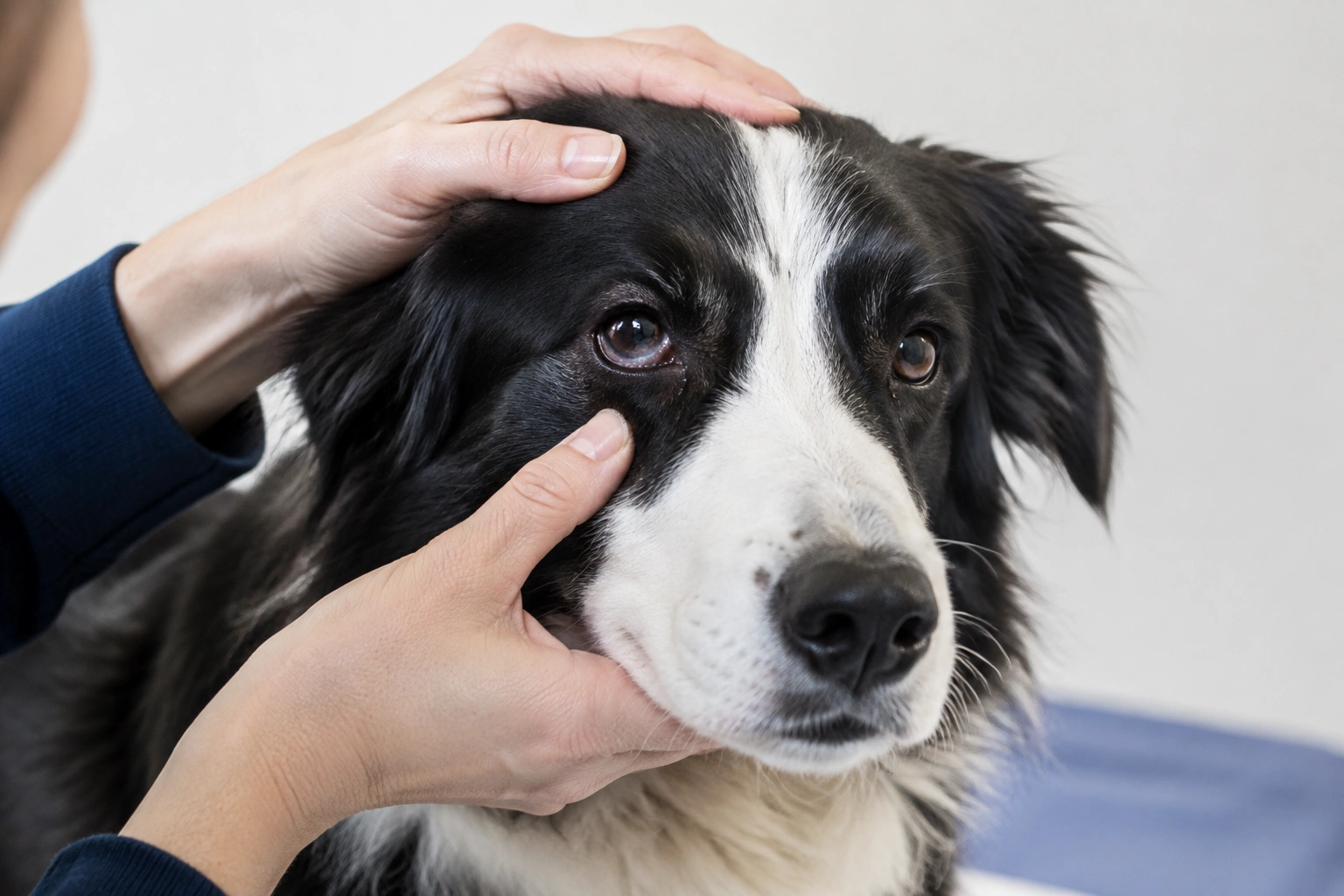
Use these three questions to sort the situation fast:
- Is it one eye or both?
- Both eyes often points to allergies or something in the environment, like dust, smoke, or wind.
-
One eye only raises more concern for a local problem such as a foreign body, scratch, blocked tear duct, or eyelid issue.
-
Is the fluid clear and watery, or thick and colored?
- Clear tears can happen with irritation or mild allergies.
-
Yellow, green, cloudy, or bloody discharge is more concerning and should not be treated like simple watering.
-
Does the dog seem painful?
- Squinting, keeping the eye closed, pawing at it, rubbing the face, or avoiding light are pain clues.
- Pain changes the urgency. A painful eye deserves veterinary attention sooner rather than later.
If the eye is watery but the dog is comfortable, the eye is white, and the discharge is clear, it may be reasonable to monitor briefly while you remove obvious irritants. If there is pain, cloudiness, swelling, a visible injury, or vision changes, skip the wait-and-see approach.
What watery eyes can mean in dogs
The veterinary term often used for watery eyes is epiphora. It means tears are either being produced in excess or are not draining properly. That distinction matters because the eye can look “too wet” for two very different reasons.
A dog may make extra tears because something is irritating the surface of the eye. That is called reflex tearing. The eye is trying to protect itself.
Or the eye may be making a normal amount of tears, but they are not draining through the small tear ducts near the inner corner of the eye. In that case, the tears spill onto the face instead of draining normally. Tears normally drain through tiny ducts near the inner corner of the eye, so a blockage there can create obvious wetness even when the eye itself is not producing too many tears.
That is why “watery” is a symptom, not a diagnosis. The cause might be minor. It might also be a clue that the eye is trying to tell you something more serious.
The most common causes of watery eyes in dogs
Allergies and environmental irritation
Seasonal allergies can cause watery eyes, especially in spring and fall. Environmental irritants can do the same thing. Dust, wind, smoke, cleaning sprays, candles, and even home projects can make a dog’s eyes water.
This pattern is more likely when:
– both eyes are affected,
– the discharge is clear,
– the dog is otherwise acting normal,
– and the problem started after outdoor exposure or a change in the environment.
A practical example: a Border Collie comes in from a windy field run with both eyes a little watery, but there is no squinting and the dog still wants to play. That leans toward irritation rather than injury. Still, if the watering persists or the eyes become red, the story changes.
Foreign body or debris
Grass seeds, dust, tiny plant pieces, or loose hair can land in the eye and cause tearing. This is common after walks in tall grass, brush, or windy conditions.
A foreign body often causes:
– one watery eye,
– blinking or squinting,
– pawing at the face,
– redness,
– and sometimes a sudden onset right after being outdoors.
This is one reason Border Collies can run into this problem in real life. They move through grass and brush with enthusiasm, and they do not always notice a tiny bit of debris until the eye starts to sting.
Corneal scratch or ulcer
A scratch on the cornea can create a lot of tearing. A deeper injury, called a corneal ulcer, is more serious. A corneal ulcer can be a cause of watery eyes in dogs, and if it is suspected, the dog should be seen by a veterinarian right away.
Clues that make a scratch or ulcer more likely:
– one eye only,
– squinting or keeping the eye partly closed,
– obvious discomfort,
– redness,
– cloudiness,
– and worsening tearing after rubbing or outdoor trauma.
This is not a “wait a few days and see” situation. Eye pain can worsen quickly, and rubbing can turn a minor problem into a major one.
Conjunctivitis and other infections
Conjunctivitis means inflammation of the tissue around the eye. It can happen with infection, irritation, allergies, or other causes. Watery discharge may be the first sign, but it often becomes red, sticky, or more noticeable over time.
If discharge turns thick, yellow, or green, infection moves higher on the list. That does not prove the cause, but it does make a simple irritation less likely.
Blocked tear duct
The tear drainage system can become blocked. When that happens, tears cannot drain normally and spill onto the face. This may happen in one eye or both, depending on the cause.
A blocked duct is especially worth considering when:
– the eye looks otherwise fairly normal,
– the tearing is chronic or recurring,
– and the wetness is mostly around the inner corner and down the face.
This is one of those problems where the eye can look “just watery,” yet the actual issue is drainage rather than tear production.
Eyelid or eyelash problems
Some dogs have eyelids or eyelashes that rub on the eye surface. Certain breed-related eye shapes can make this more likely. Purina’s general guidance on eye discharge notes that structural issues such as hairs irritating the cornea or rolled-in eyelids can keep the eye irritated enough to water repeatedly.
This is a useful clue when the problem keeps coming back in the same eye.
Dry eye with reflex tearing
Dry eye sounds like it should cause less moisture, not more. But dogs with dry eye can produce watery-looking tears as a reflex response to irritation. Those tears are often not enough to lubricate the eye properly, so the eye still ends up uncomfortable.
That is why a watery eye does not always mean the eye has “too many tears.” Sometimes it means the eye is dry, irritated, and trying to compensate.
One watery eye vs. both eyes: what that clue usually means
This is one of the most useful decision rules.
One eye
When only one eye is watery, think local:
– debris,
– scratch,
– ulcer,
– blocked tear duct,
– eyelid or eyelash problem,
– or something the dog rubbed into that eye.
One-sided watering can be more serious than it first looks.
Both eyes
When both eyes are watery, think broader:
– allergies,
– wind,
– smoke,
– dust,
– or another environmental trigger.
Both eyes do not automatically mean “safe,” though. Some infections and systemic problems can affect both eyes too. The pattern helps, but it does not replace the rest of the exam.
Red flags that mean the eye may be painful or at risk
These signs should move you out of home-monitoring mode:
- squinting or repeated blinking
- keeping the eye closed
- pawing or rubbing the face
- redness
- swelling
- cloudiness
- thick yellow or green discharge
- blood
- obvious trauma
- the eye looking different from normal
- sudden vision changes or bumping into things
A practical rule: pain plus watery eye = vet visit soon.
Cloudiness, trauma, or vision changes = urgent vet visit.
If the dog is clearly uncomfortable, do not assume it is “just allergies.” Allergies can make eyes watery, but they usually do not cause a painful, cloudy, or tightly closed eye.
When watery eyes are more likely allergies or simple irritation
This is the lower-risk pattern:
– both eyes are affected,
– discharge is clear,
– the dog is not squinting,
– the eyes are not cloudy,
– and symptoms started after pollen, wind, dust, or exposure to an irritant.
A good example is a dog that comes in after mowing, a dusty trail walk, or a windy day and has watery eyes but otherwise acts normal. In that case, the eye may just need a gentle rinse and observation.
The trade-off is that “looks mild” can be misleading. A corneal scratch can also start with tearing and blinking. If symptoms do not settle quickly, or if the dog starts rubbing, the problem is no longer mild.
When to suspect infection, a scratch, or a foreign body
Think local injury or infection when you see:
– one watery eye,
– redness,
– blinking,
– squinting,
– pawing,
– thick discharge,
– or a sudden onset after outdoor activity.
If your dog ran through brush, tall grass, or dusty ground and then started tearing from one eye, a foreign body or scratch moves near the top of the list. If the eye becomes cloudy or the dog is keeping it closed, treat it as more urgent.
This is also where owners sometimes lose time by waiting for the eye to “calm down.” If there is a scratch or ulcer, waiting can mean more pain and more damage.
Safe at-home first aid for a mild watery eye
If the eye is only mildly watery, the discharge is clear, and the dog is not showing pain, these steps are reasonable:
-
Rinse gently with sterile saline.
Use plain sterile saline made for eyes. A gentle flush can help remove dust or loose debris. -
Wipe the fur around the eye.
Use a clean, damp cotton pad or soft cloth to keep the area dry and clean. -
Stop the dog from rubbing.
Pawing can turn irritation into a scratch. -
Watch for change over the next several hours.
Improvement should be fairly obvious if the problem is minor.
What not to use:
– human eye drops unless your veterinarian told you to,
– peroxide,
– soap,
– herbal rinses,
– or random leftover medications.
Do not rinse at home if the eye is closed, very painful, cloudy, bleeding, or possibly injured, and do not try to flush if you suspect a penetrating injury or chemical exposure. In those cases, get veterinary help right away.
If the eye does not clearly improve, stop home care and get it checked.
For a deeper look at safe next steps when discharge becomes more suspicious, see our guide on how to treat a dog eye infection safely.
When to use an Elizabethan collar and why it matters
If your dog is rubbing the eye, a cone can be the difference between a minor problem and a worse one. That is especially true if a scratch or ulcer is possible.
The trade-off is obvious: dogs dislike cones, but eyes are easily damaged by repeated pawing. If the dog cannot leave the eye alone, an Elizabethan collar is often the safer choice until a vet can examine it.
Use the collar when:
– the dog keeps pawing,
– the eye is red and irritated,
– or you suspect a scratch, foreign body, or ulcer.
When to call the vet, schedule same-day care, or go to emergency
Call a veterinarian soon if:
- the watery eye lasts more than a day,
- it keeps coming back,
- the discharge changes color,
- or the dog seems mildly uncomfortable.
Schedule same-day care if:
- one eye is watery and the dog is squinting,
- there is redness with one-sided tearing,
- or symptoms started after outdoor trauma.
Go to an emergency clinic if:
- the eye is cloudy,
- there is sudden vision loss or obvious vision trouble,
- the eye is severely swollen,
- there is bleeding,
- the dog cannot open the eye,
- or you suspect a corneal ulcer or serious injury.
A good rule is simple: pain, cloudiness, trauma, or vision change = urgent.
What a veterinarian may do to find the cause and treat it
A vet will usually try to answer two questions: Is the eye damaged? And is the tear problem caused by production or drainage?
Common steps may include:
– looking closely at the eye and eyelids,
– checking for debris or foreign material,
– using a stain test to look for corneal injury,
– checking tear production,
– flushing the eye or tear ducts,
– and evaluating the eyelids, lashes, and tear drainage.
Treatment depends on the cause:
– irritation or mild tear-film issues: lubricants or other soothing prescription drops may be used,
– allergies: a vet may recommend antihistamine eye drops in some cases, depending on the diagnosis,
– infection: prescription treatment may be needed,
– foreign body: removal and follow-up care,
– blocked tear duct or structural issue: further evaluation and targeted treatment.
The important point is that the treatment matches the cause. That is why guessing with home remedies can backfire.
How contagious is a watery eye in dogs?
Not every watery eye is contagious.
- Allergies, dust, wind, blocked tear ducts, and many structural issues are not contagious.
- Some infections and conjunctivitis cases can spread to other pets, depending on the cause.
Until you know what you are dealing with, keep the face clean, avoid sharing towels, and wash your hands after touching the eye area. If the dog has thick discharge or other signs of infection, be more cautious around other pets.
A simple way to decide what to do next
Use this short decision rule:
- Clear tears, both eyes, no pain, normal behavior: monitor briefly and rinse gently with sterile saline if needed.
- One eye, redness, blinking, or pawing: schedule a vet visit soon.
- Cloudiness, thick discharge, severe redness, trauma, or vision changes: seek urgent veterinary care.
That approach keeps you from overreacting to harmless irritation, but it also protects you from missing a scratch, ulcer, or blocked drainage problem that needs treatment.
FAQ
Why is my dog’s eye watery all of a sudden?
Sudden watering often points to irritation, debris, a scratch, or a foreign body. If it is one eye only, be more suspicious of a local problem.
Can allergies cause watery eyes in dogs?
Yes. Allergies can cause clear, watery discharge, often in both eyes, especially during seasonal flare-ups.
Should I clean my dog’s watery eye?
If the problem seems mild, a gentle rinse with sterile saline is reasonable. Do not use human eye drops or household cleaners.
Is a watery eye an emergency?
It can be. Cloudiness, pain, swelling, bleeding, trauma, or vision changes are urgent warning signs.
Can I wait a day to see if it improves?
Only if the eye is mildly watery, clear, and comfortable. If the dog is squinting, rubbing, or the eye looks abnormal, don’t wait.
Could this spread to my other dog?
If the cause is allergy or irritation, usually not. If it is infectious conjunctivitis or another infection, it may be contagious.
A watery eye is one of those symptoms that looks simple until it isn’t. Watch the pattern, protect the eye from rubbing, and act quickly when pain or cloudiness appears.