
Why Is My Female Dog Peeing So Much? A Practical Guide to Causes, Warning Signs, and Next Steps

If your female dog is peeing far more often than usual, the key question is not just “how much,” but “what kind of peeing is this?”
That distinction matters because frequent urination can mean very different things:
- tiny, urgent pees caused by bladder irritation
- large amounts of urine caused by increased thirst and a medical problem
- leaking or dribbling that looks like peeing
- marking or stress-related indoor accidents
- normal age-related accidents in a puppy or older dog
A Border Collie, in particular, can muddy the picture because these dogs are often alert, routine-sensitive, and quick to react to changes at home. But frequent urination should never be written off as “just behavior” until you rule out a medical cause.
Why your female dog may be peeing more often
The first job is to separate four patterns that people often lump together.
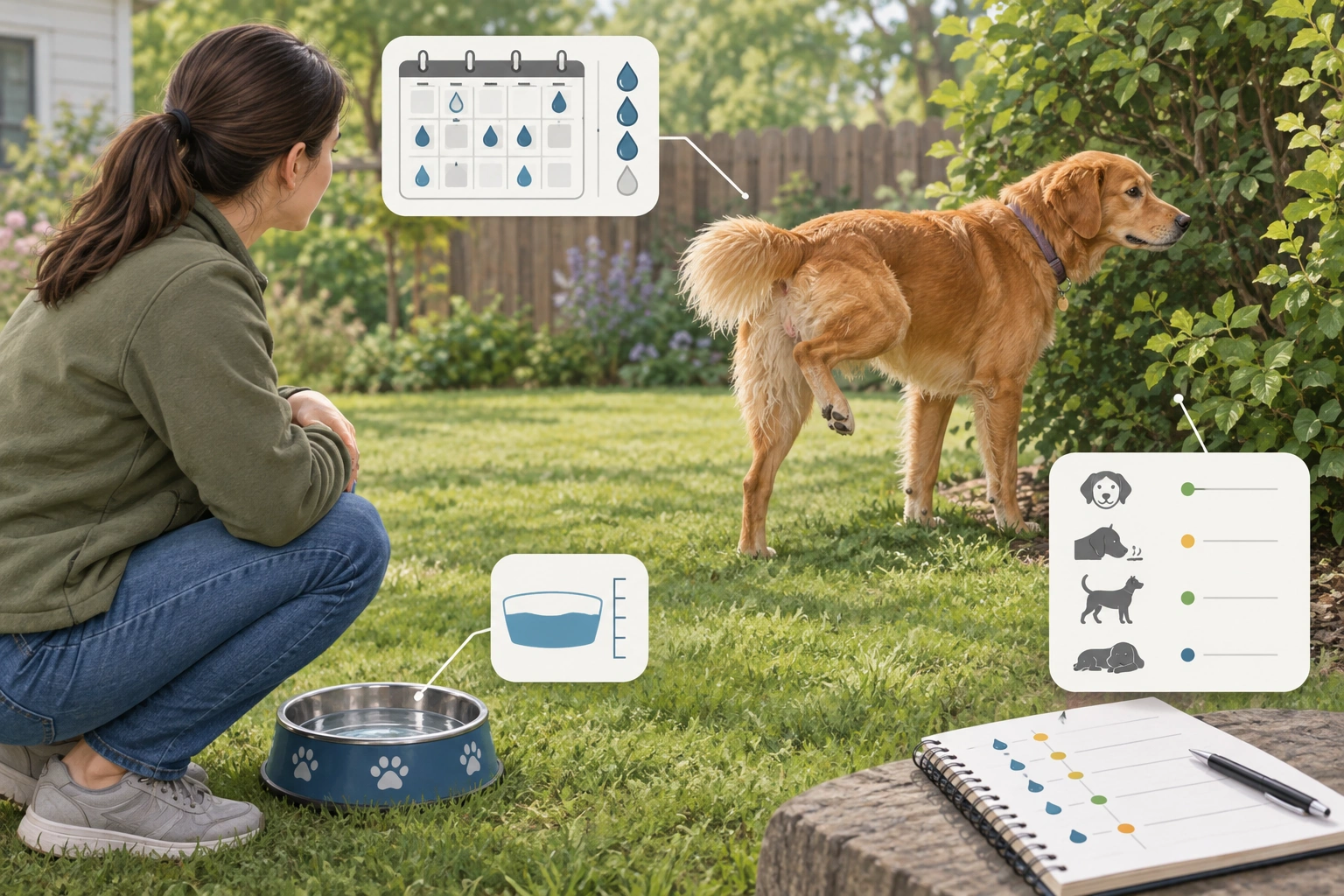
1) Frequent small pees
This is when your dog squats many times, but only produces a little urine each time. That pattern often points toward bladder or urinary tract irritation. A urinary tract infection is a common cause, and UTIs are among the most common reasons dogs urinate frequently. Female dogs may be at higher risk because bacteria may have a shorter route to travel through the urethra.
2) Large-volume urination
Here the dog empties a normal-looking or even large amount each time, but the total number of trips has increased. Polyuria means producing larger-than-normal volumes of urine. That pattern is more suggestive of a body-wide issue that makes the dog produce more urine overall. Conditions such as diabetes, kidney disease, Cushing’s disease, and some medication side effects can fit this picture.
3) Leaking or dribbling
This is not the same as choosing to pee. A dog may leave wet spots while resting, sleeping, or walking around. That can happen with urinary incontinence, especially in some spayed dogs and older dogs.
4) Marking or stress-related indoor accidents
These usually involve small amounts in specific spots, often in new places or after a change in routine. Stress, anxiety, environmental disruption, and submissive urination can all contribute.
If you only remember one thing from this section, make it this: frequency alone is not enough. The amount, timing, and context tell you much more than the raw number of bathroom trips.
How much urination is actually too much?
There is no single magic number that defines “too much” for every dog. A young, active dog with easy outdoor access will not have the same pattern as a senior dog or a puppy still learning bladder control.
Use these practical decision rules instead:
- A sudden change is more concerning than a lifelong pattern.
- Repeated squatting with only small amounts is more concerning than normal-looking full pees.
- Frequent urination plus more drinking is a stronger medical clue than frequent urination alone.
- Indoor accidents in a previously reliable adult dog deserve attention.
A puppy can still have accidents because bladder control is immature, but a house-trained adult female that suddenly starts peeing every hour is a different situation. That is especially true if the change came on quickly.
A useful question to ask yourself is: Is she peeing more often because she needs to empty a full bladder, or because she keeps feeling like she has to go? That difference helps separate systemic causes from bladder irritation.
When frequent peeing is a medical warning sign
Several medical problems can cause a female dog to pee more often. Some are uncomfortable but manageable. Others need prompt veterinary care.
Urinary tract infection
A UTI often causes urgency, frequent squatting, and small urine amounts. Dogs may lick the vulva more, seem restless, or show signs of discomfort when urinating. The urine may look cloudy or smell stronger than usual.
UTIs matter because they can start as a bladder problem and become more serious if ignored. If your dog is repeatedly trying to pee but only passing a little, a vet visit is warranted rather than a wait-and-see approach.
Diabetes mellitus
Diabetes often causes both more drinking and more peeing. If the water bowl is emptying faster and the dog is also urinating more, that combination should raise suspicion. Other clues can include appetite changes, weight loss, or low energy.
Kidney disease
Kidney problems can also lead to increased thirst and urination. The body loses its ability to concentrate urine properly, so the dog drinks more to keep up. This is one reason increased water intake matters so much in the history.
Bladder stones
Stones can irritate the bladder lining and create urgency, straining, or blood in the urine. Some dogs look like they need to pee constantly even when little comes out.
Urinary incontinence
Incontinence often looks like leaking rather than deliberate peeing. You may find wet bedding, damp fur, or urine spots where the dog had been resting. Older dogs and some spayed females are common cases to consider, but the exact cause still needs a vet’s judgment.
Pyometra in unspayed female dogs
This is the one diagnosis you do not want to miss.
Pyometra is a life-threatening uterine infection in unspayed female dogs. It can include increased urination, increased thirst, lethargy, fever, and vaginal discharge. It is commonly associated with middle-aged or senior intact females after a heat cycle, though younger dogs can also be affected.
If your unspayed female dog is drinking more, peeing more, and seems off in any other way, treat it as urgent.
Signs that point to pain, urgency, or urinary tract discomfort
Some signs tell you the bladder itself is unhappy, not just that the dog is peeing more.
Watch for:
- repeated squatting with little output
- straining to urinate
- blood in the urine
- licking at the vulva
- whining, restlessness, or obvious discomfort
- accidents soon after going outside
- strong or unusual urine odor
- a hunched posture while trying to pee
These signs push the case away from “maybe behavioral” and toward “needs veterinary attention.” A dog that is uncomfortable while urinating is not just being stubborn or forgetful. She may be trying to empty a bladder that feels irritated or inflamed.
If your dog is producing very little or no urine despite repeated attempts, that is more urgent still. A blocked or severely painful urinary tract problem needs prompt assessment.
How thirst changes the diagnosis
This is one of the most useful clues you can track at home.
Frequent urination with increased drinking
When both are happening together, think about body-wide causes first. Diabetes, kidney disease, Cushing’s disease, pyometra, some cancers, liver disease, and certain medications can all fit this pattern. PDSA also notes that steroids, some anti-seizure medications, and some heart medications can increase thirst or peeing.
Frequent urination without increased drinking
When the dog is not drinking more but is still peeing often, the problem may be more local to the bladder or urinary tract. That includes UTI, bladder stones, irritation, or sometimes behavior-related marking.
That does not mean a dog without extra thirst is “fine.” It just shifts the likely causes.
A simple home check helps: if the water bowl is being emptied much faster than usual, or you are refilling it more often, note that carefully. Increased thirst is a clue, not a side detail.
Behavioral and situational causes: marking, anxiety, excitement, and regression
Not every indoor pee is a medical problem, but behavior should be a diagnosis of pattern, not guesswork.
Marking
Marking usually involves small amounts in specific places. You may notice it more after changes in the home, around new smells, or in multi-dog households. It is not the same as a dog urgently trying to empty a full bladder.
Anxiety and environmental change
Stress, anxiety, and changes in the environment can lead to indoor accidents. A move, a new pet, a new baby, altered routines, or reduced access to the outdoors can all disrupt bladder habits. A Border Collie may be especially sensitive to routine changes because these dogs often notice and react to shifts quickly.
Submissive urination
PDSA notes that submissive urination can happen when a dog feels scared, anxious, or submissive. This usually shows up in specific social situations rather than as a constant pattern throughout the day.
House-training regression
If an adult dog suddenly starts peeing inside, do not assume it is “forgetting training.” Sudden regression more often points to a medical issue or stress than to a training failure.
A practical rule: if the behavior is new, sudden, or clearly different from her usual pattern, treat medical causes first. Behavior can be part of the picture, but it should not be the first assumption.
How spaying, age, and heat cycle status affect urination patterns
Whether your female dog is spayed matters.
Unspayed dogs
If your dog is not spayed, pyometra belongs high on the list when increased urination appears along with lethargy, thirst, or discharge. The timing after heat also matters. A change that shows up within a month or two after a cycle deserves respect, not reassurance.
Spayed dogs
Spaying does not automatically explain frequent urination. Some spayed females do develop urinary incontinence, but a spayed status does not rule out a UTI, bladder stones, diabetes, or kidney disease. It just changes the probabilities.
Puppies and younger dogs
Young dogs may have more accidents because bladder control is still developing. That said, a puppy that suddenly seems to pee far more than usual, especially with thirst or discomfort, still needs a closer look.
Older dogs
Age increases the odds of incontinence and chronic disease, so an older female dog with new urinary changes should be evaluated rather than assumed to be “just getting old.”
When to see a veterinarian or certified trainer
Use this triage framework.
Seek urgent veterinary care now if your dog has:
- straining with little or no urine
- blood in the urine
- marked lethargy
- vomiting
- fever
- obvious pain
- a swollen or very unwell appearance
- increased drinking and urination in an unspayed female dog, especially with discharge or weakness
Schedule a vet visit soon if your dog has:
- a sudden increase in urination
- frequent small pees
- indoor accidents in an adult dog that was previously reliable
- strong-smelling, cloudy, or unusual urine
- increased thirst without another clear explanation
- licking, restlessness, or repeated bathroom trips
Brief monitoring may be reasonable if:
- the dog is otherwise bright, eating, and acting normal
- the change is mild and very short-lived
- you can clearly link it to a temporary situation, such as extra water after hot weather
Even then, if the pattern does not settle quickly, book the appointment. Frequent urination is one of those symptoms where a short delay can be reasonable, but a long delay often is not.
What a veterinarian will likely check or test
The vet’s job is to figure out whether this is a bladder problem, a whole-body problem, or a behavior issue with a medical lookalike.
A workup often begins with a history and physical exam, then commonly includes a urinalysis to look for infection, inflammation, blood, glucose, and urine concentration. Depending on the case, the vet may also recommend a urine culture to confirm bacteria and guide antibiotic choice, bloodwork to check for diabetes, kidney disease, or other systemic problems, or imaging to look for bladder stones, uterine enlargement, or other structural issues.
That matters because different problems can look similar from the outside. A dog with a UTI may look a lot like a dog with bladder stones or diabetes at first glance. Testing is what separates them.
If your vet asks for a urine sample, that is not busywork. It can help show infection, inflammation, glucose, concentration problems, or blood.
For a practical guide on sample collection, see how much urine a dog urine sample needs.
What you can track at home before the appointment
A clean record often helps more than guessing.
Track these points for 24–48 hours if you can do so without delaying care:
- how often she urinates
- whether each pee is small, normal, or large
- how much water she drinks
- whether she is straining or squatting repeatedly
- any blood, odor, or cloudiness
- any accidents indoors, including where they happen
- appetite, energy, vomiting, or lethargy
- whether she seems painful, restless, or keeps licking herself
If possible, note whether the problem happens more at night, after exercise, after excitement, or after she drinks. Patterns matter.
A simple notebook or phone note is enough. You are trying to give the vet a timeline, not write a diary.
If the issue seems tied to both drinking and peeing, this companion guide on why dogs drink and pee so much will help you compare the pattern.
Common mistakes that delay the right diagnosis
These are the errors I see owners make most often:
Assuming it is “just training”
Adult dogs rarely start peeing more often for no reason. If the pattern changed suddenly, look for a medical cause first.
Ignoring increased thirst
More drinking is one of the biggest clues that the issue may be systemic rather than behavioral.
Treating blood or straining as minor
Blood in the urine, pain, and repeated attempts to pee are not wait-and-see signs.
Blaming spaying for everything
Spaying can be part of the story, especially with incontinence, but it does not explain every urinary change.
Waiting too long on an unspayed female with other symptoms
Pyometra can become dangerous quickly. If the dog seems off and is drinking or peeing more, act.
Not separating small frequent pees from large-volume urination
That distinction changes the entire list of likely causes.
Final takeaway
A female dog peeing more often can be dealing with anything from stress-related marking to a serious medical problem. The fastest way to sort it out is to look at the pattern: small frequent pees, large-volume urination, leaking, thirst, pain, and whether the change was sudden.
If your dog is otherwise bright and the change is mild, short-term monitoring may be reasonable. But if she is straining, uncomfortable, lethargic, drinking much more, or unspayed and recently off her cycle, do not wait.
When in doubt, get the urine checked. That one test often tells you more than days of guessing.
For more background on the medical side of the problem, the AKC’s guide to urinary frequency in dogs is a useful companion read, and the PDSA overview of drinking and peeing more than normal is helpful for comparing causes.