
Why Is My Dog Drinking and Peeing So Much? What It Means and What to Do Next

If your dog is suddenly emptying the water bowl and asking to go out constantly, don’t guess. In some cases, it’s a temporary response to heat, exercise, or diet changes. In others, it’s one of the earliest signs of a medical problem that needs testing.
The practical question is not just “is this more than usual?” It’s “is this explainable, stable, and mild — or persistent, worsening, or paired with other symptoms?” If your dog is drinking and peeing excessively and also seems tired, is losing weight, vomiting, or having accidents overnight, call your vet promptly. If your dog is straining to urinate, producing only small amounts, has blood in the urine, or seems weak or collapsed, treat it as urgent.
One rule matters right away: do not restrict water unless a veterinarian specifically tells you to. Limiting access can worsen dehydration and can be dangerous if the underlying problem is kidney-related or another illness that affects hydration.
Quick Answer: Is My Dog Drinking and Peeing Too Much?
The short version is this: yes, it can be normal for a dog to drink more for a day after heat, heavy exercise, or salty food — but persistent or unexplained changes deserve a vet visit.
A useful way to think about it:
- Likely temporary: your dog had a hot day, a long walk, or a salty treat, and is otherwise normal.
- Needs a routine or prompt appointment: the change lasts more than a day or two, keeps coming back, or comes with weight loss, appetite changes, accidents, or low energy.
- Needs urgent care: your dog is vomiting, collapsing, very lethargic, dehydrated, painful, or unable to pass urine normally.
Border Collies are active dogs, so it’s easy to dismiss extra thirst after exercise. Sometimes that’s exactly what it is. But activity should not be used as a blanket explanation if the pattern is continuing when rest days return.
What Counts as Excessive Drinking and Urination in Dogs?
Veterinarians use the terms polydipsia for excessive drinking and polyuria for excessive urination. In plain language, the dog is either taking in more water than usual, making more urine than usual, or both.
A commonly used general guideline is about 1 ounce of water per pound of body weight per day, though puppies, nursing dogs, very active dogs, and dogs in warm climates may drink more. That number is only a rough reference, not a diagnosis. A practical home check is to measure all water offered and leftover water over 24 hours so you can compare intake more accurately from day to day. A dog that drinks more than usual for one hot afternoon is different from a dog that starts draining the bowl every day.
A simple rule of thumb: if your dog is consistently drinking well above that rough guideline over 24 hours, or the amount is clearly climbing from its normal baseline, it’s worth a vet visit.
What matters most is the pattern:
- True excess drinking: the dog is repeatedly going back to the bowl or finishing much more water than normal.
- True excess urination: the dog is passing larger volumes of urine, not just having occasional house accidents.
- Frequent small urinations: this can point more toward bladder or urinary tract irritation or infection than a pure thirst problem.
That distinction helps your vet narrow the cause faster.
Normal Reasons Dogs Drink More vs. Medical Red Flags
Some dogs legitimately drink more because their body needs it. Heat, exercise, and diet changes are the most common everyday explanations. Warm weather, long play sessions, salty treats, and even a recent diet change can all cause temporary thirst. A dog that comes in from a run and drinks heavily may simply be replacing what was lost through panting.
The difference between normal and concerning is usually duration and context:
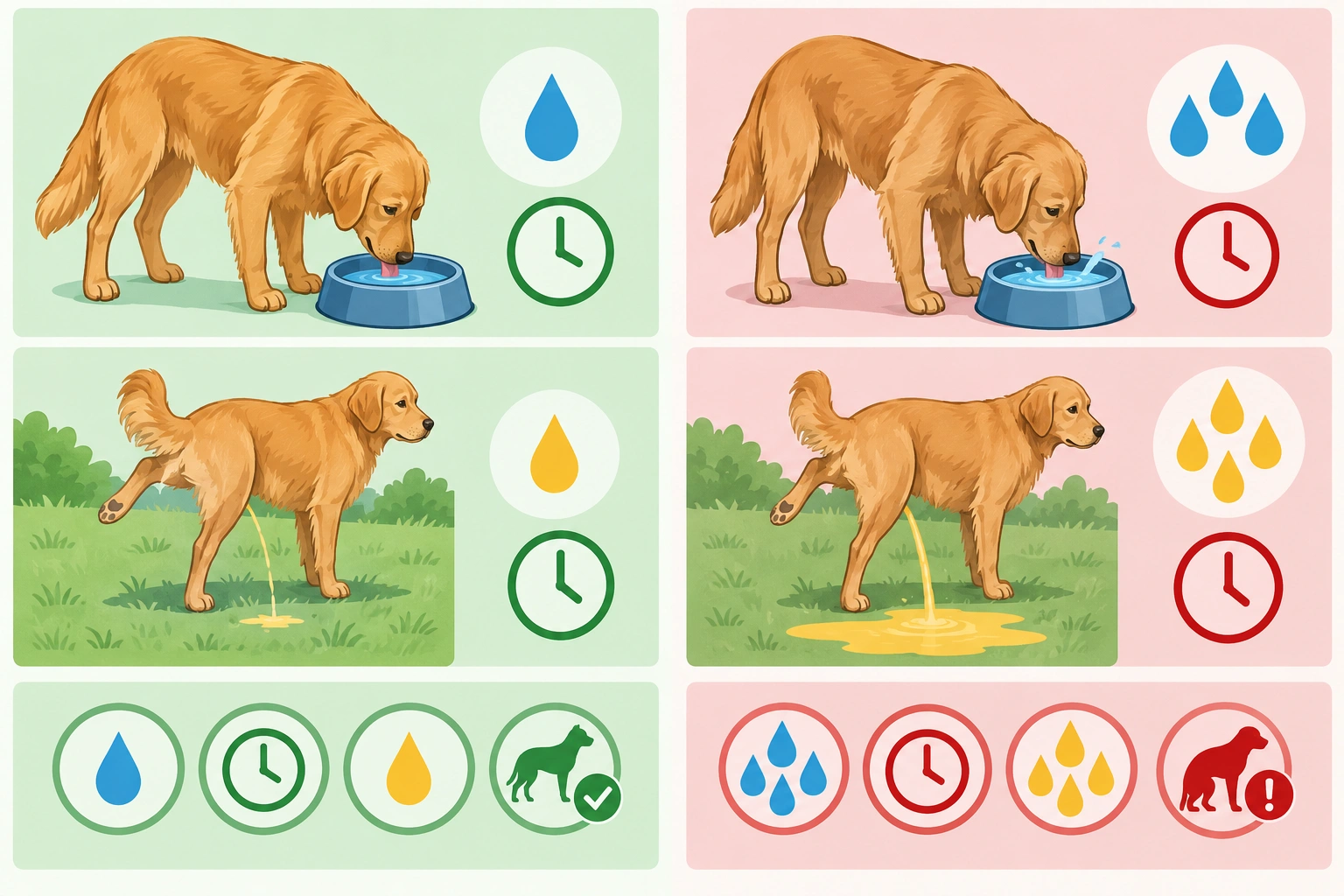
| More likely normal | More concerning |
|---|---|
| One-off increase after heat or exercise | Drinking and peeing more for days or weeks |
| Dog otherwise bright, playful, and eating normally | Low energy, vomiting, weight loss, or appetite changes |
| Clear trigger such as a salty treat | No obvious reason for the change |
| Water intake returns to baseline | Water bowl is drained repeatedly every day |
| Urination seems proportionate to drinking | Large-volume urination or frequent overnight accidents |
A practical example: if your Border Collie drank more after a long hike on a warm day, then returned to normal the next day, that’s a very different picture from a dog that is suddenly thirsty every day and waking you up to pee at night.
Medical Causes Veterinarians Think About First
When drinking and urinating increase without a simple explanation, vets think about medical causes early because some of them are common and treatable, while others can become serious if ignored.
The main conditions they often consider include:
- Diabetes mellitus
- Kidney disease
- Cushing’s disease
- Urinary tract or bladder problems
- Liver disease
- Certain cancers
- An infected womb (pyometra) in unspayed female dogs
These are not the only possibilities, but they are important because they can change how the body handles water and urine.
A dog with diabetes mellitus may drink and pee more because the body is not managing blood sugar normally. Kidney disease can reduce the kidneys’ ability to concentrate urine, so more fluid is lost. Cushing’s disease can also change thirst and urination patterns. Urinary tract problems may cause frequent trips outside, discomfort, or accidents. Liver disease can also be part of the picture. Frequent small urinations can point to bladder irritation or infection, while large-volume urination is more typical of systemic causes that affect the whole body.
The key point is not to self-diagnose from one symptom. Drinking and peeing more can look similar from the outside while the causes are very different underneath.
For a broader overview of related signs and urinary issues, you may also find this guide useful: why dogs may pee in the kennel.
Could Medications Be Causing This?
Yes. Some medications can increase thirst and urination, and that includes drugs many dogs take for common problems.
Some medications, including steroids, some anti-seizure medications, some heart medications, and diuretics, can increase thirst or urination. A diuretic is a medication that helps the body get rid of extra fluid, so increased urination is part of how it works.
This is where a lot of owners get tripped up. They assume, “The medication explains it, so it’s harmless.” Not necessarily. A known side effect can still be expected, but it should be monitored and discussed if the change is stronger than expected, starts suddenly, or is paired with vomiting, weakness, appetite loss, or accidents.
A classic scenario is a dog that starts prednisone for allergies and then begins drinking much more. That can be a known side effect, but it still needs to be documented and discussed rather than ignored.
When Increased Drinking and Peeing Is an Emergency
Some symptoms mean “call now” rather than “watch and wait.”
Seek urgent veterinary care if excessive drinking and urination come with:
- vomiting
- marked lethargy
- collapse or weakness
- signs of dehydration
- blood in the urine
- trouble urinating or straining
- pain
- a swollen or uncomfortable abdomen
- a sudden, severe change in behavior
A dog that keeps trying to pee but only produces small amounts is different from a dog that simply needs to go out more often. Straining, discomfort, or very little urine can be a possible emergency and should be checked right away.
Another red flag is the dog that is drinking and peeing more and losing weight or acting unusually hungry. That combination raises concern for a medical cause that should not sit for long.
What to Monitor at Home Before the Vet Visit
If your dog is stable enough to wait for an appointment, gather useful details before you go. Good notes save time and help the vet decide which tests are most likely to pay off.
Track these points:
- when the change started
- whether it came on suddenly or gradually
- whether your dog is drinking more, peeing more, or both
- whether the urine volume is large or the trips are frequent but small
- appetite changes
- weight changes
- energy level
- vomiting or diarrhea
- any accidents in the house or overnight
- recent heat exposure, exercise changes, or diet changes
- any new medications, especially steroids or diuretics
- any supplements or over-the-counter products that could affect thirst or urination
If you can, note whether the water bowl is being emptied more than once a day or whether your dog is asking to go out much more than usual. That kind of concrete observation is more useful than a general feeling that something is “off.”
What the Veterinarian Will Ask, Examine, and Test
A good vet workup usually starts with the history. Expect questions about water intake, urination habits, appetite, weight, medications, and whether the change is new or ongoing. The vet may also ask about supplements or over-the-counter products that could affect thirst or urination. The physical exam helps the vet look for dehydration, pain, weight loss, abdominal changes, or other clues.
The most common tests include:
- Urinalysis to check urine concentration, glucose, infection, blood, and other abnormalities
- Bloodwork to assess kidney values, blood sugar, liver values, and overall health
Those tests are usually first-line because they can quickly separate common causes like diabetes, kidney disease, infection, or hormone-related changes from less obvious problems. Urinalysis shows whether the kidneys are concentrating urine properly and whether there are signs of infection or sugar in the urine, while bloodwork helps assess overall organ function and hydration status.
Depending on what the first tests show, the vet may recommend additional diagnostics. If the initial results are inconclusive, common next steps may include imaging, repeat testing, or more specific hormone testing. The point is to narrow the cause step by step rather than guessing and treating the wrong problem.
For a general veterinary reference on common urinary concerns, VCA Hospitals’ pet health resources are a solid place to browse after your appointment.
How Treatment Depends on the Cause
There is no single treatment for a dog that drinks and pees too much, because the symptom is only the starting point.
If the cause is heat, exercise, or diet, the pattern may settle once the trigger passes. If it’s medication-related, the vet may adjust the prescription or timing. If it’s diabetes, kidney disease, Cushing’s disease, liver disease, or a urinary tract problem, treatment is cause-specific and may be more involved.
That’s why testing matters. A dog with a urinary infection and a dog with diabetes can look surprisingly similar at first glance, but they need very different care.
The practical trade-off is simple: waiting can be reasonable when the pattern is mild and clearly explainable, but early testing is the safer move when the cause is unclear or the dog is not acting normally.
What Not to Do at Home
The biggest mistake is restricting water to “see what happens.” That can make a dog more dehydrated and can create a worse problem if the underlying cause is kidney-related or another illness affecting fluid balance.
Also avoid:
- assuming it’s “just age” without checking
- blaming the weather if the pattern continues after the heat passes
- changing medications without vet guidance
- waiting too long because your dog is still eating
If your dog is drinking and peeing excessively, the safest home action is to observe, document, and call the clinic for guidance.
For a general reminder on not limiting access to water without veterinary advice, PDSA’s guidance on increased drinking and peeing is worth reading.
When It Can Wait for a Routine Appointment
A routine appointment is usually reasonable when all of these are true:
- the change is mild
- there is a clear reason such as heat, exercise, or a recent diet change
- your dog is otherwise bright and comfortable
- appetite is normal
- there is no vomiting, weakness, collapse, or pain
- the pattern is not worsening
- there are no medication concerns or the medication change has already been discussed with your vet
Even then, keep an eye on the trend. If the drinking and urination continue beyond the short-term trigger or start to increase, move the appointment sooner.
If you’re unsure where your dog falls on the spectrum, a same-day call to the clinic is the best middle ground. You don’t need to panic, but you also shouldn’t wait for the problem to become obvious.
FAQs
Is it normal for a dog to drink and pee more after exercise?
Yes, a temporary increase can happen after exercise, especially in warm weather. The concern is persistence: if your dog keeps drinking and peeing more after rest and recovery, it deserves a vet check.
Should I measure how much water my dog drinks?
If you can do it easily, yes. A rough daily picture helps your vet. Even a simple note like “the bowl was emptied twice today” is useful.
Could anxiety cause this?
Behavioral causes may be considered, but veterinarians will first rule out medical problems. Don’t assume stress is the explanation until illness has been checked.
What if my dog is peeing more but not drinking more?
That still matters. Increased urination can happen even when increased drinking isn’t obvious, so it’s worth discussing with your vet.
Can I wait a few days to see if it goes away?
Only if your dog is otherwise normal and you have a clear, short-lived reason such as heat or exercise. If the pattern persists, worsens, or comes with red flags, don’t wait.
Is this more concerning in older dogs?
Age alone doesn’t tell you the cause, but older dogs are more likely to have chronic medical issues worth checking sooner rather than later.
If your Border Collie is suddenly drinking and peeing far more than usual, treat the symptom as a clue, not a diagnosis. The goal is to separate a temporary, explainable change from a pattern that needs medical testing — and to do that before your dog becomes more unwell.
