
What Can Cause Hives on a Dog? A Practical Guide to Triggers, Warning Signs, and Next Steps

Hives on a dog can look alarming because they often appear suddenly. One minute your dog looks normal, and the next you notice raised bumps, puffy skin, or a face that seems a little swollen. The good news is that hives are a symptom, not a diagnosis. That means the real job is figuring out what triggered them and whether your dog needs urgent care.
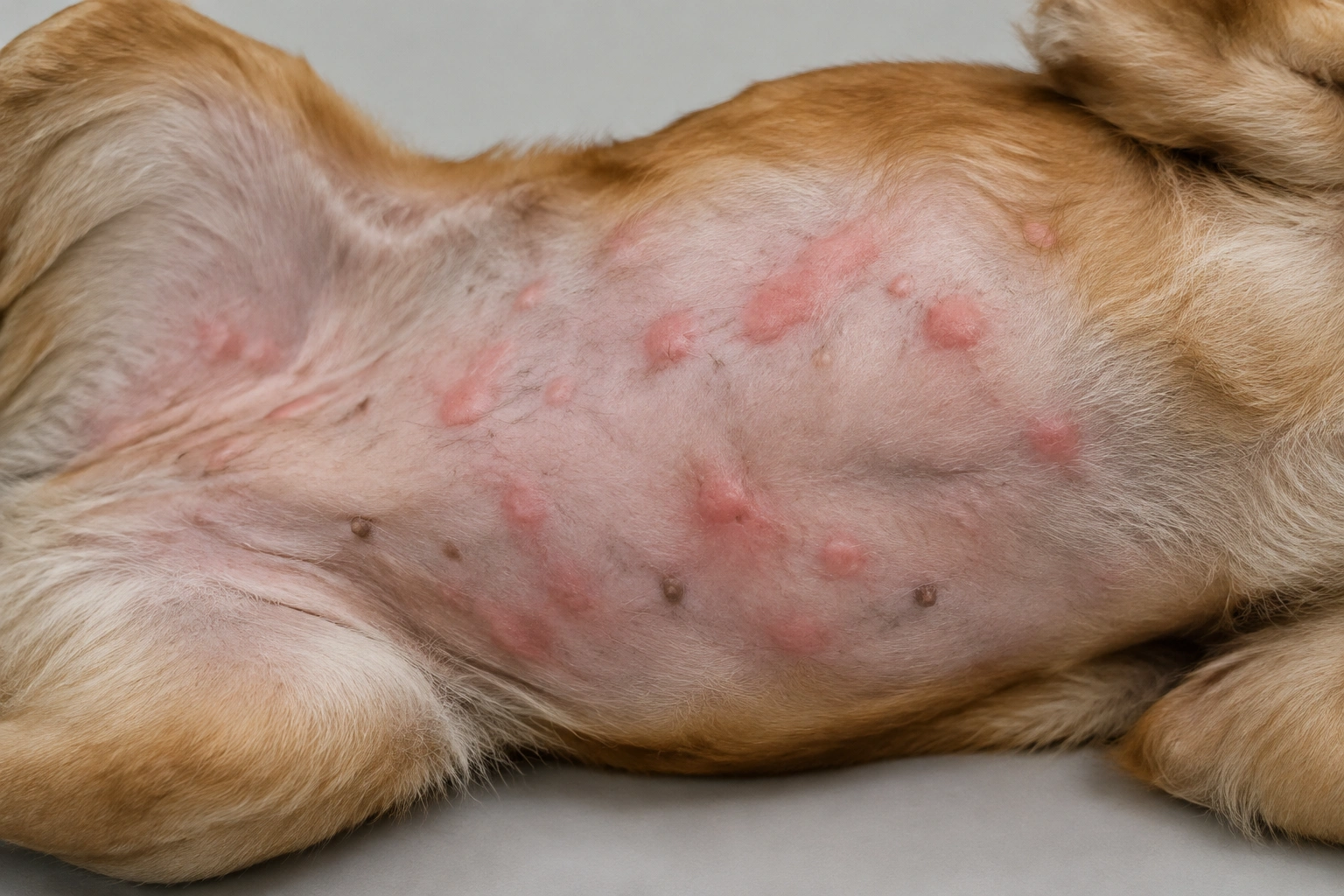
In dogs, hives are also called urticaria. They are usually raised, itchy welts that can show up anywhere on the body. Some cases stay mild and fade fairly quickly. Others are the first sign of a more serious allergic reaction.
What hives on a dog look like
Dog hives usually appear as small or medium raised bumps, welts, or puffy patches in the skin. They may be red, pale in the center, or clustered together so the skin looks uneven. Some dogs scratch a lot. Others seem mostly bothered by the swelling and may rub their face or body on furniture or the floor.
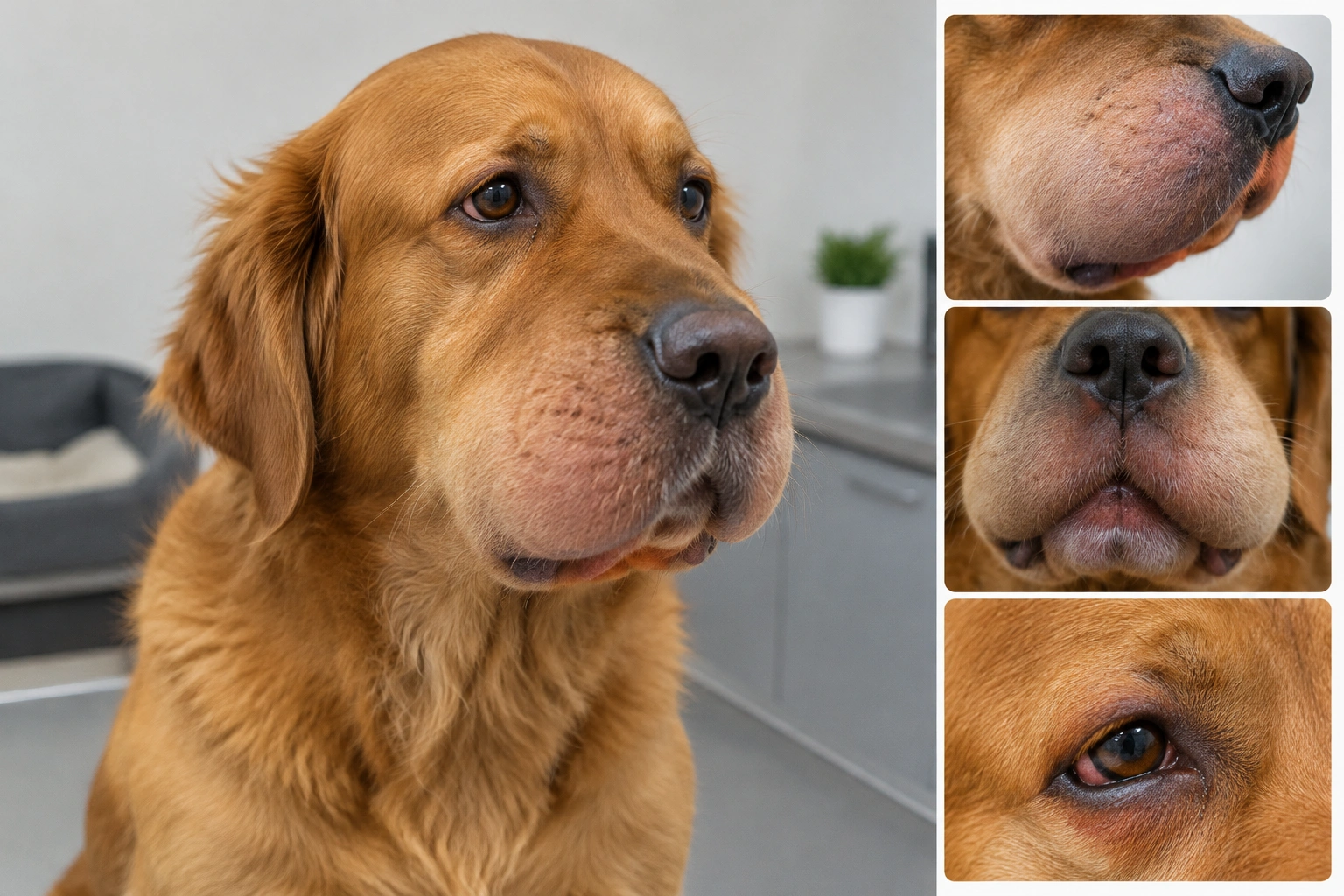
Hives can show up on the belly, chest, back, face, ears, or legs. If the reaction is more severe, you may also notice swelling around the muzzle, eyelids, or lips. That swelling is called angioedema, and it matters because it can be part of a stronger allergic reaction.
Hives usually come on suddenly and can shift in appearance, while infection-related bumps are more often crusty, painful, draining, or tied to hair loss, and bite wounds or localized trauma tend to stay in one spot.
When hives are an emergency
Some hives are uncomfortable but not immediately dangerous. Others need urgent veterinary help.
Seek emergency care right away if your dog has hives along with any of the following:
- trouble breathing
- repeated vomiting
- sudden weakness or collapse
- pale gums
- rapid worsening facial swelling
- extreme lethargy
- swelling of the tongue or throat
These signs can point to anaphylaxis, a severe allergic reaction that can become life-threatening. If your dog is breathing hard, seems faint, or is getting worse quickly, do not wait to “see if it passes.”
A useful rule: isolated itchy welts are concerning, but hives plus breathing changes or vomiting should be treated as urgent.
Most common causes of hives in dogs
The main causes of hives in dogs are broad, and that is actually helpful. It means you can narrow the possibilities by looking at what changed recently.
Environmental allergens
Pollen, mold, dust mites, and other environmental allergens can trigger hives in sensitive dogs. These reactions may happen after outdoor exposure, time in a dusty room, or contact with bedding or fabrics that hold allergens.
Environmental reactions can be frustrating because the trigger is not always obvious. A dog might seem fine after a walk, then develop welts later. That delay can make owners overlook the connection.
Food ingredients
Food ingredients can also cause hives. This may involve a new diet, a new treat, a flavored chew, or even a small ingredient your dog has eaten before but is now reacting to.
Food-related hives are often tricky because owners may think only a full bowl change matters. In reality, a single new training treat or table scrap can be enough to trigger a reaction in a sensitive dog.
Insect bites and stings
Fleas, ants, mosquitoes, bees, and wasps are common triggers. Insect-related hives often show up after outdoor play, a walk, or time in the yard. Bites and stings can also cause facial swelling, especially around the head and neck.
If your dog came in from the yard and suddenly has welts, insects move high on the list. That is especially true if the bumps are concentrated on the face, ears, or neck.
Medications
Some dogs develop hives after a new medication. This can happen with prescription drugs, but also with over-the-counter products if a vet has not specifically approved them for your dog.
Timing matters here. If hives started soon after a medication dose or after the first few doses of a new drug, tell your veterinarian exactly what was given and when.
Vaccines
Vaccines can occasionally cause an allergic reaction that leads to hives. Most dogs do well after vaccination, but a reaction can still happen. Because these reactions may progress, hives after a vaccine should be monitored closely.
If the hives begin soon after a vaccine appointment, call your veterinarian for advice. If swelling or breathing trouble also appears, treat it as an emergency.
Contact irritants
Shampoos, topical products, cleaning chemicals, and other contact irritants can trigger hives or a skin reaction, especially if the product touched the skin directly. This may happen after grooming, a bath, or contact with freshly cleaned bedding or floors.
This category is worth checking carefully because the trigger is often easy to remove once you identify it. A new shampoo or cleaning spray is a common culprit when hives appear after a bath or after time on a recently cleaned surface.
Less common causes
In some dogs, toxic plants or certain chemical exposures can be involved. Less commonly, hives may be tied to another underlying illness or infection, but that is not usually the first explanation when welts appear suddenly.
If hives keep returning and no clear trigger emerges, your vet may look deeper for recurring allergies or other causes.
How to tell which trigger is most likely
Timing is one of the best clues you have. The closer the reaction is to a new exposure, the easier it is to narrow down the trigger.
| Likely trigger | Typical timing | Clues that support it | Urgency |
|---|---|---|---|
| Insect bite or sting | Minutes to a few hours | Outdoor exposure, sudden facial swelling, welts on head/neck | Urgent if swelling is fast or breathing changes appear |
| Food ingredient | Minutes to several hours, sometimes longer | New food, treat, chew, or table scrap | Call your vet if hives are spreading or recurring |
| Medication reaction | Soon after a new drug or dose change | Hives after starting a new medicine | Contact your vet promptly |
| Vaccine reaction | Soon after vaccination | Hives after a recent vaccine visit | Call your vet; emergency if other severe signs appear |
| Shampoo or topical product | Soon after bathing or application | Reaction on areas that contacted the product | Usually prompt vet guidance is wise |
| Environmental allergen | Variable, sometimes after outdoor or indoor exposure | Seasonal pattern, repeated episodes, itchy skin | Vet visit if episodes keep coming back |
A simple way to document the episode is to write down:
– the time the hives started
– what your dog ate in the previous 24 hours
– any new medication, vaccine, shampoo, or topical product
– whether your dog was outdoors, in tall grass, or around insects
– whether swelling, vomiting, or breathing changes appeared
That record can save a lot of guesswork later.
What to do right away at home
If your dog has mild hives but is otherwise acting normal, focus on observation and trigger removal.
- Check breathing and gum color first. If anything seems off, go to urgent care.
- Remove a likely trigger if you can do so safely. That might mean stopping a new treat, rinsing off a shampoo, or bringing your dog indoors away from insects.
- Take photos. Hives can fade before you reach the clinic, and photos help your vet confirm what you saw.
- Write down the timeline. The exact order of events matters.
- Call your veterinarian for guidance. Even mild cases can worsen, and your vet may want to advise monitoring or treatment.
Do not give human medications unless your veterinarian has specifically told you the exact drug and dose for your dog. That caution matters because the wrong product, or the wrong amount, can cause harm.
If your dog is comfortable, breathing normally, and the hives are not spreading, short-term monitoring may be reasonable while you wait for your vet’s instructions. If the welts are increasing, the face is swelling, or your dog seems unwell, don’t keep watching at home.
How veterinarians find the cause
Vets usually start with the history because the trigger is often hidden in the timeline. They will ask what changed recently: food, treats, medication, vaccines, shampoo, yard exposure, or insect contact.
A physical exam helps them judge whether the problem looks like hives, another skin condition, or a more serious allergic reaction. Hives are usually identified by history and physical exam, and recurrent cases may need trigger investigation rather than a single definitive test. If the reaction is severe, treatment may begin before the exact cause is known.
For recurrent cases, your vet may recommend further allergy or trigger workup. That may include looking at patterns over time, reviewing diet, or discussing environmental exposure. The goal is not just to treat the welts, but to prevent the next episode.
How hives are treated
Treatment depends on severity and the underlying trigger.
- Mild cases may be managed with trigger removal and monitoring if the dog is stable.
- Antihistamines may be used in some cases, but only under veterinary direction, especially if your dog has other health issues or is taking other medications.
- Corticosteroids may be prescribed when swelling or itching is more significant.
- Epinephrine is reserved for anaphylaxis or other severe systemic reactions.
If the trigger is obvious, avoiding it is part of treatment. If a vaccine, medication, or insect sting seems likely, your vet may also suggest a plan for future prevention or pre-treatment.
The key trade-off here is speed versus certainty. Mild hives may settle quickly, but severe reactions can change fast. When in doubt, it is safer to err on the side of veterinary advice.
Will hives go away, and can they come back?
Mild hives may disappear on their own, especially if the trigger was brief and is no longer present. That said, “going away” does not mean the cause was solved. If the trigger remains in your dog’s environment, the hives can return.
Repeated episodes are worth investigating. A one-off reaction after a bee sting is different from hives that keep appearing after meals, walks, or grooming. Recurring hives are a sign to dig deeper rather than simply treat each flare the same way.
How to reduce the chance of future episodes
Prevention starts with pattern recognition. The best tool you have is a clear record of what happened before each episode.
Helpful habits include:
– keeping food and treats consistent when possible
– introducing one new product at a time
– noting vaccine dates and any reaction afterward
– watching for insect exposure during warm months
– using only vet-approved medications and topicals
If your dog has a known trigger, avoid it as strictly as you can. If the trigger is still unclear after more than one episode, ask your vet whether an allergy-focused investigation makes sense.
For readers who want to understand related allergic signs, this guide on whether allergies can cause a dog to cough may help you spot when a reaction is affecting more than the skin.
When to Call Your Veterinarian
Call your veterinarian the same day if:
– the hives are spreading
– your dog’s face is puffy
– the reaction followed a vaccine, medication, or new food
– your dog is very itchy or uncomfortable
– the hives keep coming back
Go to urgent or emergency care immediately if:
– your dog has trouble breathing
– there is vomiting plus hives
– your dog seems weak, collapses, or acts disoriented
– gums look pale
– swelling is rapidly worsening
If you are unsure which category your dog fits, err on the side of calling. With hives, the difference between mild and serious can be small at first.
FAQs
Can hives on a dog go away without treatment?
Yes, mild hives sometimes fade on their own. But you should still watch closely, because some reactions progress after they start.
Are hives after a vaccine normal?
They can happen occasionally as an allergic reaction. Because reactions may worsen, contact your veterinarian for guidance, especially if swelling or other symptoms appear.
Can fleas cause hives in dogs?
Yes. Fleas and other biting insects can trigger hives, and some dogs also react strongly to bites from ants, mosquitoes, bees, or wasps.
Should I give my dog Benadryl for hives?
Only if your veterinarian has already told you to use it and given the correct dose for your dog. Never guess with human medication.
How do I know if it is hives or something else?
Hives usually appear as sudden raised welts that are itchy and may move or change shape. If the bumps are crusty, draining, painful, or tied to hair loss, another skin problem may be more likely.
Can hives come back?
Yes. If the trigger is not found or not avoided, hives can recur. Repeated episodes are a good reason to work with your vet on a clearer plan.